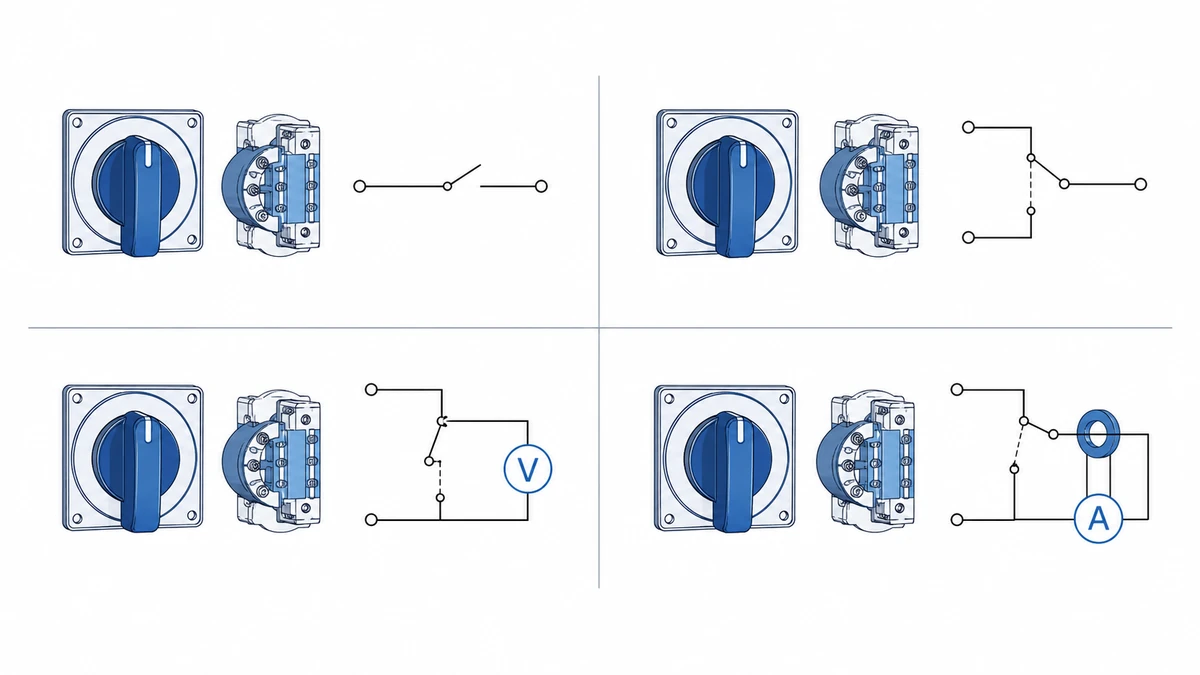
Схемы подключения кулачковых переключателей: Примеры вольтметра и амперметра при переключении ON-OFF
Схемы подключения кулисных переключателей представляют собой схемы расположения контактов. Перед подключением цепей включения-выключения, переключения, вольтметра или амперметра ознакомьтесь с положением каждой рукоятки.
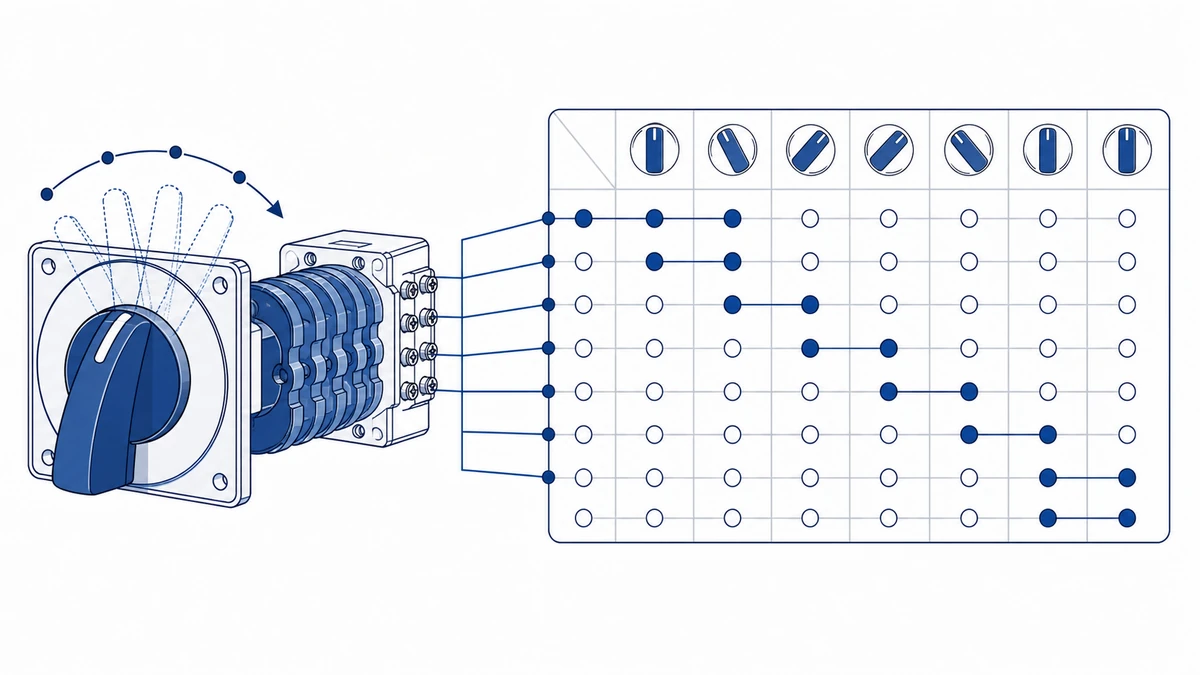
Схема подключения кулачкового переключателя показывает, какие пары клемм замыкаются или размыкаются в каждом положении поворотного фиксатора. Для конфигураций ON-OFF, переключения, селектора вольтметра и селектора амперметра схема определяет таблицу истинности контактов и соединения внешних цепей, чтобы сборщики панелей могли правильно подключить цепи перед подачей напряжения. В этой статье рассматриваются все четыре конфигурации с пошаговыми процедурами подключения, таблицами контактов, требованиями к замыканию ТТ и руководством по диагностике неисправностей для инженеров промышленных панелей управления, сборщиков панелей, групп технического обслуживания и покупателей комплектующих.
Что показывает схема подключения кулачкового переключателя
A поворотный кулачковый переключатель Электрическая схема содержит два уровня информации: таблицу истинности контактов, в которой перечислены пары клемм, соединенных мостом в каждой позиции, и соединения внешних цепей, которые показывают, как к этим контактам подключаются клеммы нагрузки, источника и прибора. Вместе они определяют логику переключения без двусмысленности.
В промышленных панелях управления инженеры сначала читают таблицу истинности, чтобы подтвердить количество полюсов и позиций, а затем прослеживают внешнюю проводку, чтобы убедиться, что две фазы под напряжением не могут быть закорочены во время вращения. IEC 60947-3:2020+AMD1:2025 распространяется на выключатели, разъединители, выключатели-разъединители и плавкие вставки для распределительных и моторных цепей с номинальным напряжением до 1000 В переменного тока или 1500 В постоянного тока. Номинальный рабочий ток Ie и номинальное напряжение изоляции Ui, определенные в этом стандарте, должны быть согласованы с цепью до начала электромонтажных работ. Полный текст стандарта доступен по адресу Веб-магазин IEC.
В этой статье рассматриваются четыре конфигурации
ON-OFF: Одно- или многополюсная изоляция, используемая для подключения или отключения нагрузки от питания.
Переключение: Передача груза или инструмента между двумя источниками без перекрытия со стороны груза.
Селектор вольтметра: Проводит один вольтметр через несколько точек измерения фаза-фаза или фаза-нейтраль с помощью многопозиционной последовательности кулачков.
Селектор амперметра: Вставляет один амперметр в различные вторичные цепи трансформатора тока (ТТ), с замыкающими контактами, которые защищают ТТ, когда измерительный прибор не включен в цепь.
Для каждой конфигурации требуется отдельная электрическая схема, поскольку последовательность замыкания контактов в них различна.
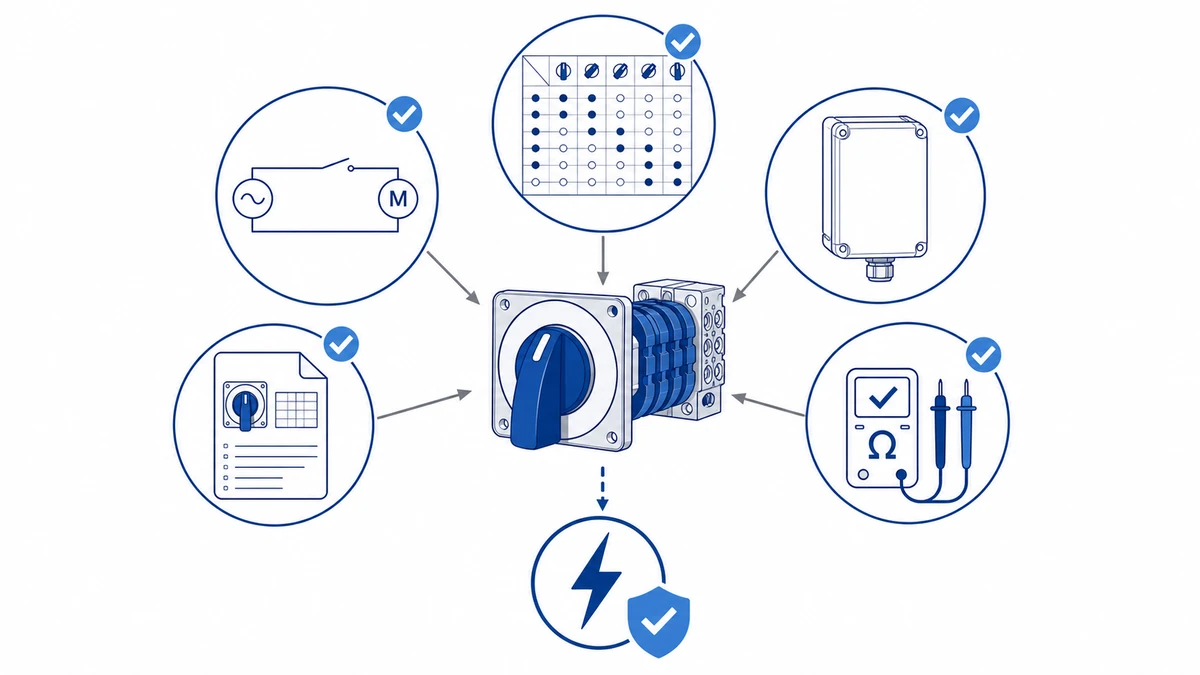
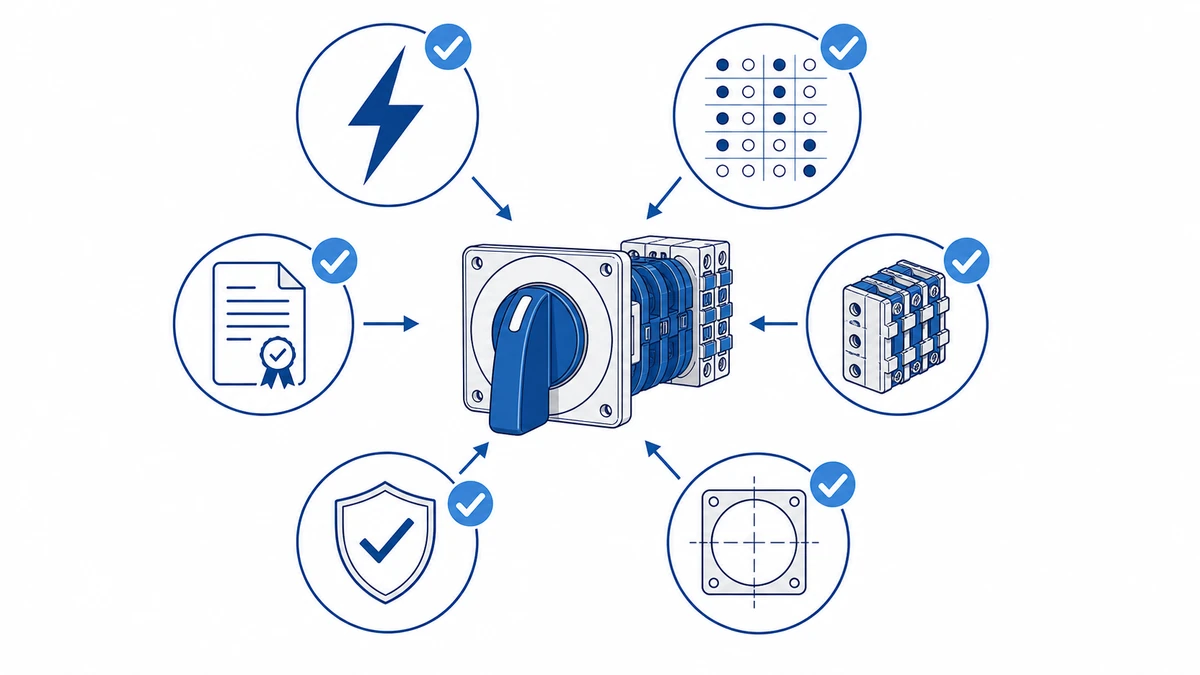
Рисунок 1. Основная концепция выбора схемы подключения кулачкового переключателя.
Конфигурация ON-OFF является отправной точкой для понимания схемы подключения кулачкового переключателя. Как только вы сможете прочитать схему однополюсной изоляции, многополюсные и селекторные варианты будут следовать той же логике.
Схема подключения кулачкового переключателя ON-OFF показывает, как подключить поворотный селекторный переключатель для прерывания или восстановления тока в одной цепи нагрузки. В своей простейшей форме переключатель имеет два положения - 0 (OFF) и 1 (ON) - и направляет сетевое напряжение через один контактный мост. Номинальный рабочий ток для этой функции зависит от даташита; уточните Ie и категорию использования на странице продукта производителя, прежде чем указывать.
Карта терминала
Для стандартного однополюсного кулачкового переключателя ON-OFF:
L1 (клемма 1): Линейный вход - подключите фазный провод от источника питания
T1 (Терминал 2): Выход нагрузки - подключение к нагрузке или устройству, расположенному ниже по течению
PE: Защитное заземление - подключите к шине заземления корпуса
Для трехфазной версии повторите схему через три пары полюсов: клеммы 1/2, 3/4 и 5/6, причем L1/L2/L3 входят в нечетные клеммы, а T1/T2/T3 выходят из четных клемм.
Пошаговая процедура подключения
Шаг 1 - Изолируйте источник питания
Прежде чем прикасаться к проводникам, обесточьте автоматический выключатель и проверьте нулевое напряжение с помощью калиброванного измерительного прибора.
Шаг 2 - Установите переключатель
Закрепите кулачковый переключатель в вырезе панели, соответствующем размеру корпуса переключателя. Сайт Поворотный кулачковый переключатель LW28 Используется монтажный формат 30 мм; перед установкой уточните точные размеры выреза и момент затяжки крепежа в техническом паспорте LW28.
Шаг 3 - Подключение линейных проводов
Вставьте фазные провода в нечетные входные клеммы (1, 3, 5). Затяните с моментом, указанным производителем для используемого сечения проводника. Типичные значения для клемм с сечением 4-16 мм2 находятся в диапазоне 1,2-2,5 Нм, но всегда сверяйтесь с техническим паспортом изделия.
Шаг 4 - Подключение проводников нагрузки
Вставьте проводники со стороны нагрузки в четные выходные клеммы (2, 4, 6). Соблюдайте цветовую маркировку проводников в соответствии с IEC 60446: коричневый/черный/серый для L1/L2/L3, зелено-желтый для PE.
Шаг 5 - Проверка целостности контактов
Когда переключатель находится в положении 1 (ON), используйте тестер для проверки целостности, чтобы убедиться, что каждая входная клемма соединяется с парной выходной клеммой. В положении 0 (OFF) все мосты должны быть разомкнуты.
Шаг 6 - Повторное включение и проверка работоспособности
Восстановите напряжение питания и переключите выключатель между OFF и ON не менее трех раз, убедившись, что нагрузка правильно реагирует в каждом положении.
В промышленных панелях управления такая конфигурация ON-OFF обычно используется в качестве локального разъединителя перед пускателем двигателя или трансформатором, обеспечивая обслуживающему персоналу определенное состояние выключения перед открытием корпуса - такая практика соответствует требованиям IEC 60204-1 для машинного электрооборудования.
Кулачковый переключатель ON-OFF: Полевые заметки
Всегда проверяйте нулевое напряжение на входных и выходных клеммах после изоляции. Обратный поток от ИБП или блока конденсаторов может удерживать напряжение на стороне нагрузки даже при разомкнутом выключателе.
Для работы в качестве разъединителя трехфазного двигателя выбирайте выключатель, рассчитанный на категорию использования AC-23A, а не AC-22A. В условиях индуктивной нагрузки разница в мощности включения и отключения существенна.
Затяните все клеммы в соответствии со спецификацией при первой установке и повторно проверьте после первых 48 часов работы. Термоциклирование вызывает оседание проводников, что ослабляет соединения.
Маркируйте каждое положение переключателя с помощью прочной гравированной таблички с легендой, а не клейкой этикетки. Клей разрушается при температуре выше 60 градусов C.
При наличии топологии ON-OFF конфигурация переключения расширяет эту логику для передачи цепи между двумя источниками, а не просто для прерывания одного из них.
Схема подключения переключающего кулачкового переключателя показывает, как нагрузка или прибор переключается между двумя источниками питания с помощью поворотного селекторного переключателя. В стандартной конфигурации переключения "прервать - сделать" вращение переключателя в определенных положениях подключает один источник, одновременно размыкая другой, без перекрытия, которое может привести к параллельному подключению двух источников питания под напряжением.
Принцип работы схемы переключения
Переключатель располагается между нагрузкой или инструментом и двумя источниками входного сигнала. Каждое положение переключателя соединяет одну пару входов с выходом, размыкая все остальные входные пути. Это предотвращает параллельные пути измерения, которые могут внести погрешность в измерения или создать непреднамеренные токовые петли - распространенная неисправность при неправильном подключении переключателя.
Для 3-позиционного переключателя (положения: ВЫКЛ / Источник 1 / Источник 2) состояние контактов в каждом положении соответствует этой схеме:
При переключении на уровне прибора сопротивление контактов должно оставаться стабильным по сравнению с базовым уровнем ввода в эксплуатацию и критериями приемки производителя, чтобы избежать смещения измерений. Подтвердите спецификацию контактного сопротивления в техническом паспорте производителя для используемой серии переключателей.
Рисунок 2. При выборе следует учитывать нагрузку, последовательность включения, корпус и требования к документации.
Принцип переключения используется непосредственно в селекторе вольтметра, где переключатель переключает определенную последовательность пар фаз, а не только два источника.
Схема подключения селекторного переключателя вольтметра показывает, как многопозиционный поворотный кулачковый переключатель подключает один вольтметр к нескольким точкам измерения в трехфазной системе. Обычно переключатель переключается в 7 положений - ВЫКЛ. плюс шесть положений измерения - для получения показаний фаза-фаза (линия-линия) и фаза-нейтраль от одного прибора.
Позиции измерения фазы к фазе и фазы к нейтрали
В стандартной трехфазной четырехпроводной панели (3P+N) селекторный переключатель вольтметра направляет сигналы напряжения через вторичные клеммы потенциального трансформатора (PT) или непосредственно от шин. Каждое положение кулачка замыкает определенную пару контактов, подключая клеммы L+ и L- вольтметра к выбранной паре фаз. Стандарт IEC 60038 определяет стандартные напряжения 400 В переменного тока от линии к линии и 230 В переменного тока от линии к нейтрали для низковольтных систем в соответствующем диапазоне напряжений.
Входной импеданс вольтметра обычно составляет 1 МОм или выше, поэтому ток через селекторный переключатель не превышает 1 мА. Это чисто вольт-сенсорная схема с незначительной нагрузкой на контакты. Стандартные поворотные кулачковые переключатели, рассчитанные на AC-23A, значительно превышают допустимый электрический ток, но механическая прочность и положительное срабатывание фиксатора в каждом положении являются основными критериями выбора для данного применения.
Предохранитель каждой фазы на селекторном переключателе с предохранителем 2A или 4A HRC для защиты вольтметра и проводки от неисправностей. Нейтральный проводник подключается непосредственно к общей клемме вольтметра без коммутации.
IEC 60947-3:2020+AMD1:2025 требует, чтобы положение контакта было четко обозначено - это требование выполняется благодаря выгравированной маркировке положения кулачкового переключателя и пружинному механизму, который удерживает каждое положение измерения под воздействием вибрации.
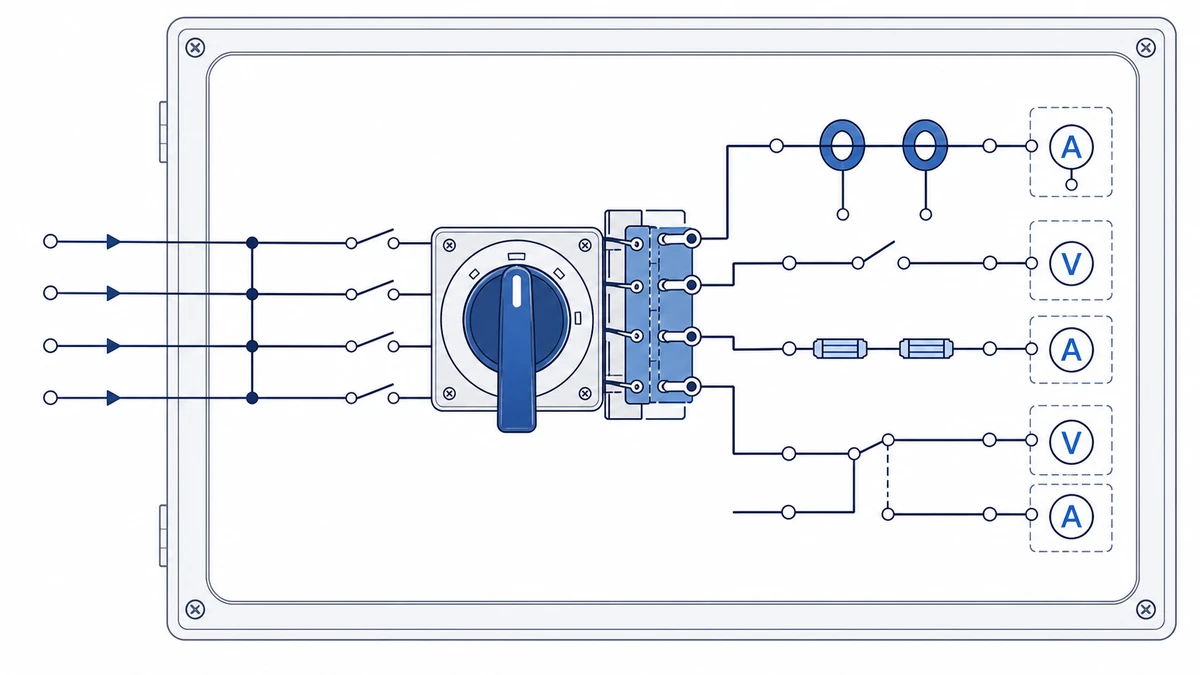
Рисунок 3. Перед подачей напряжения необходимо сверить контекст подключения с контактной схемой производителя.
Селектор вольтметра: Полевые заметки
Никогда не отключайте фазовые предохранители на входах селекторного переключателя. Неисправность вольтметра или ошибка в проводке без предохранителя может привести к нагару на контактах выключателя и повреждению изоляции шин.
Если вольтметр показывает правильные показания в положении фаза-фаза, но плавает или показывает низкие показания в положении фаза-нейтраль, значит, нейтральный проводник либо отсутствует, либо подключен не к той клемме. Сначала проверьте клемму N, прежде чем подозревать выключатель.
В щитах с потенциальными трансформаторами перед подачей напряжения убедитесь, что вторичное напряжение PT соответствует номинальному диапазону входного сигнала вольтметра. Вольтметр на 110 В, подключенный к вторичной обмотке на 400 В, будет немедленно поврежден.
В любой панели, подверженной вибрации, используйте переключатель с пружинным стопорным механизмом. Переключатель, дрейфующий между положениями, вносит периодические ошибки измерения, которые трудно отследить.
Схема подключения селекторного переключателя амперметра с интеграцией ТТ
Если селектор вольтметра представляет собой простую схему подачи напряжения, то селектор амперметра вводит жесткое ограничение безопасности, которое меняет весь подход к последовательности контактов.
Схема подключения селекторного переключателя амперметра для трехфазных систем должна учитывать одно критическое требование безопасности, которое не разделяют цепи вольтметра: вторичные цепи трансформатора тока (ТТ) никогда не должны оставаться разомкнутыми. Это единственное ограничение определяет всю топологию проводки и последовательность контактов при установке любого селекторного амперметра.
Почему замыкающие контакты КТ не подлежат обсуждению
При нормальном измерении трансформатор тока работает со своей вторичной обмоткой в условиях, близких к короткому замыканию. Если вторичная цепь размыкается при протекании первичного тока, сердечник ТТ может насытиться, и вторичное напряжение может вырасти до опасного уровня; точное напряжение зависит от коэффициента трансформации ТТ, нагрузки, первичного тока и условий установки. Стандарт IEC 61869-2, регулирующий приборные трансформаторы, включая измерительные ТТ, требует, чтобы вторичные выводы ТТ были закорочены или подключены к нагрузке в любое время во время работы под напряжением.
По этой причине селекторные переключатели амперметров специально разработаны с контактами типа "make-before-break" (замыкание) на вторичных цепях ТТ. Замыкающий контакт замыкает не выбранные вторичные цепи ТТ до того, как выбранная цепь разомкнется во время вращения, гарантируя, что вторичная цепь никогда не прервется.
Последовательность контактов в трехфазном амперметре-селекторе
В типичной трехфазной схеме селектора амперметра на фазах L1, L2 и L3 установлены три ТТ, каждый из которых имеет вторичный выход 5 А. Кулачковый переключатель - обычно это 4-позиционный поворотный кулачковый переключатель с положениями 0, L1, L2, L3 - направляет одну вторичную обмотку ТТ на амперметр, одновременно замыкая две другие вторичные обмотки ТТ через специальные замыкающие контакты.
Пошаговая процедура подключения
Шаг 1 - Подключение вторичных входов CT
Подключите каждую вторичную клемму S1 ТТ к входным контактам кулачкового переключателя для соответствующего положения фазы. Клеммы S2 имеют общий возврат к амперметру и шине замыкания ТТ.
Шаг 2 - Подключение замыкающих контактов
Подключите замыкающие контакты таким образом, чтобы в каждом положении переключателя не выбранные вторичные обмотки КТ имели внутреннее замыкание выводов S1-S2 через матрицу контактов переключателя.
Шаг 3 - Проверка замыкания в положении 0
В положении 0 (выключено) все три вторичные обмотки ТТ должны быть одновременно замкнуты - не должны оставаться разомкнутыми. Перед подачей питания проверьте это состояние по таблице истинности контактов выключателя.
Шаг 4 - Подключение амперметра
Подключите амперметр к вторичным выходным клеммам выбранного ТТ. Входной амперметр панели и значения нагрузки зависят от модели измерительного прибора; перед вводом в эксплуатацию проверьте номинальную нагрузку на ТТ.
Для производителей панелей, подбирающих переключатели для этого применения, можно использовать Серия LW28 и Серия LW42 Поворотные кулачковые переключатели поставляются в конфигурациях контактов, предназначенных для амперметров, с проверенными на заводе последовательностями замыкания. Перед вводом в эксплуатацию всегда сверяйте схему контактов, поставляемую с выключателем, с требованиями IEC 61869-2 по замыканию.
Рисунок 4. Полный запрос должен включать номинал, последовательность контактов, монтаж, корпус и требования к документам.
Кулачковый переключатель против поворотного селекторного переключателя: Что и когда использовать
Знание схемы подключения каждой конфигурации упрощает выбор. Уровень тока в приложении и требования к ТТ напрямую указывают на нужное устройство.
Кулачковые переключатели и поворотные селекторные переключатели часто путают, поскольку и те, и другие используют вращающийся привод для переключения между состояниями цепи. Практическая разница сводится к емкости контактов, гибкости положения и к тому, используются ли в данном случае цепи CT.
Стандартный поворотный селекторный переключатель обычно рассчитан на уровень сигнала или небольшие нагрузки и подходит для выбора входа ПЛК или переключения индикаторов. Кулачковый переключатель предназначен для переключения уровня мощности в соответствии с категориями использования IEC 60947-3. Замыкание ТТ является жестким требованием в цепях селектора амперметра. Кулачковые переключатели, предназначенные для работы с амперметрами, включают в себя последовательность контактов "make-before-break", которая закорачивает вторичную обмотку ТТ перед отключением счетчика - функция, отсутствующая в большинстве стандартных поворотных селекторных переключателей.
Сравнительная таблица: Кулачковый переключатель против поворотного селекторного переключателя
Параметр
Кулачковый переключатель
Поворотный селекторный переключатель
Контактная емкость
Уровень мощности; подтвердите Ie в техническом паспорте
Как правило, сигнальные или легкие
Счетчик позиций
Обычно 4-12 позиций
2-6 позиций обычно
Возможность замыкания ТТ
Да (сделать до перерыва)
Как правило, нет
Руководящий стандарт МЭК
IEC 60947-3
IEC 60947-5-1
Типичное применение
Селектор вольтметра/амперметра, переключение двигателя
Выбор входа ПЛК, переключение индикаторов
Если ваша задача ограничивается переключением уровня сигнала без участия ТТ, то более дешевым и простым выбором будет поворотный селекторный переключатель. Если схема включает в себя переключение уровня мощности или вторичную маршрутизацию ТТ, то правильным выбором будет кулачковый переключатель, соответствующий стандарту IEC 60947-3.
Поиск и устранение неисправностей в проводке кулачкового переключателя
Даже правильно установленный выключатель будет давать сбои, если проводка отклоняется от схемы. Приведенные ниже схемы охватывают неисправности, которые чаще всего возникают при вводе панели в эксплуатацию и первом включении.
Неисправность 1: показания счетчика равны нулю во всех положениях переключателя
Проверьте: Наличие напряжения питания на входной клемме кулачкового переключателя (измерьте фаза-нейтраль, ожидайте 230 В переменного тока или 400 В переменного тока от линии к линии в зависимости от точки измерения)
Проверьте: целостность общей клеммы - обрыв общей клеммы является наиболее частой причиной потери показаний счетчика
Действия по устранению неисправности: Заново заделайте общий провод правильным наконечником; момент затяжки должен соответствовать спецификации производителя.
Неисправность 2: Счетчик показывает правильные показания в одном положении, но не в других
Проверьте: Схема контактов в сравнении с фактическим подключением - неправильно проложенный провод на вторичной выходной клемме вызывает отказ селективного позиционирования
Проверьте: Сопротивление контактов на подозрительном месте; повышенные значения указывают на износ или окисление контактов
Действия по устранению неисправности: Очистите контакты спреем для сухих контактов или замените переключатель, если сопротивление контактов не может быть восстановлено.
Неисправность 3: Амперметр отклоняется назад
Проверьте: Полярность ТТ - клеммы S1/S2 переключены либо на ТТ, либо на выключателе
Действия по устранению неисправности: Поменяйте местами соединения S1 и S2 на клеммной колодке кулачкового переключателя; никогда не размыкайте вторичную обмотку ТТ под нагрузкой
Неисправность 4: Вольтметр показывает фазу на фазу, а не фазу на нейтраль
Проверьте: Подключение нейтральной клеммы на выключателе - отсутствие нейтрального провода заставляет счетчик плавать между двумя фазами
Действия по устранению неисправности: Убедитесь, что нейтраль подключена к правильной клемме в соответствии с электрической схемой.
Неисправность 5: положение переключателя кажется правильным, но схема не изменяется
Проверьте: Посадка кулачкового диска - ослабленный вал привода может позволить рукоятке вращаться без зацепления с кулачковым механизмом
Действия по устранению неисправности: Проверьте фиксацию вала и замените переключатель, если подтвердится проскальзывание кулачка; в сериях LW28 и LW42 используется конструкция вала со шпонкой, которая противостоит этому способу отказа
Как Shieldhz проверяет проводку кулачкового переключателя перед производством
Поддержка схемотехники Shieldhz начинается с таблицы истинности контактов. Для цепей ON-OFF, переключения, селектора вольтметра и селектора амперметра команда проверяет, какие пары контактов должны замыкаться в каждом положении рукоятки, имеет ли значение синхронизация моста и требуются ли вторичные защитные элементы CT. Это снижает риск заказа переключателя с нужным количеством положений, но неправильной последовательностью контактов.
До начала производства или подтверждения предложения покупатели должны прислать эскиз схемы, желаемые маркировки рукояток, данные о трансформаторах приборов, где это необходимо, рабочее напряжение и предпочтительную маркировку клемм на панели. Затем Shieldhz может согласовать программу кулачков, расположение клемм и пакет документации, чтобы сборщик панели мог проверить целостность перед подачей напряжения на шкаф.
Часто задаваемые вопросы
В чем разница между кулачковым и поворотным селекторным переключателем?
Кулачковый переключатель рассчитан на переключение уровня мощности и соответствует стандарту IEC 60947-3. Он включает последовательности замыкающих контактов ТТ для работы в режиме селектора амперметра. Поворотный селекторный переключатель работает с нагрузками сигнального уровня или легкими нагрузками и соответствует стандарту IEC 60947-5-1. Эти два устройства не являются взаимозаменяемыми во вторичных цепях ТТ.
Можно ли подключить кулачковый переключатель без таблицы истинности контактов?
Подключение кулачкового выключателя без таблицы истинности контактов чревато замыканием фаз под напряжением во время вращения или обрывом вторичных цепей ТТ, что представляет собой угрозу безопасности. Перед подключением всегда получайте схему контактов производителя для конкретного кода выключателя. Схема является частью документации по закупке и должна храниться вместе с записями панели.
Почему вторичные цепи ТТ никогда не должны быть разомкнуты?
Когда первичный ток протекает через ТТ, а вторичная цепь разомкнута, сердечник может насытиться, и напряжение на вторичной обмотке может вырасти до опасного уровня. Точное напряжение зависит от ТТ и условий цепи. Согласно стандарту IEC 61869-2 вторичная цепь должна быть постоянно закорочена или подключена к нагрузке во время работы под напряжением. Кулачковые селекторные переключатели амперметров решают эту задачу с помощью замыкающих контактов.
Сколько положений обычно имеет селекторный переключатель вольтметра?
Стандартный селекторный переключатель трехфазного четырехпроводного вольтметра имеет 7 положений: одно положение OFF и шесть положений измерения трех фазных напряжений (U12, U23, U31) и трех фазных напряжений нейтрали (U1N, U2N, U3N). В некоторых панелях используется 4-позиционный переключатель, обеспечивающий только измерение фазного напряжения; уточните необходимые точки измерения перед заказом.
Какой момент затяжки следует использовать при заделке проводников на кулачковом переключателе?
Момент затяжки клемм зависит от сечения проводника и размера клемм. Всегда следуйте техническому описанию производителя для конкретной серии выключателей. Применение типового значения момента затяжки без проверки спецификации чревато недозатяжкой, которая вызывает резистивный нагрев, или перезатяжкой, которая повреждает клемму.
Как проверить правильность подключения кулачкового переключателя перед подачей напряжения?
При изолированном питании проведите тестером непрерывности через каждое положение переключателя и убедитесь, что нужные пары клемм соединены мостом, а все остальные разомкнуты, сравнивая каждый результат с таблицей истинности контактов. Для селекторных переключателей амперметра также убедитесь, что не выбранные вторичные цепи ТТ закорочены в каждом положении, включая ВЫКЛ. Задокументируйте результаты как часть протокола ввода панели в эксплуатацию.
Какой номинал предохранителя следует использовать на входах селекторного переключателя вольтметра?
Каждый фазовый вход селекторного переключателя вольтметра должен быть защищен предохранителем, подобранным с учетом схемы измерительного прибора и уровня неисправности панели. Нейтральный проводник подключается непосредственно к общей клемме вольтметра и не требует коммутации или предохранителя. При выборе предохранителя следует также учитывать предполагаемый ток короткого замыкания в точке установки; убедитесь, что отключающая способность предохранителя соответствует уровню неисправности панели.
Ши, Мукси
Ши, Мукси пишет технические статьи Shieldhz для покупателей промышленных систем управления и электрических компонентов, охватывая поворотные кулачковые переключатели, разъединители, PV DC разъединители, кнопки, индикаторные лампы, водонепроницаемые корпуса и клеммные блоки. Статьи основаны на опыте производства и экспорта компании Zhejiang Shihe Electric Co., Ltd., с практическим акцентом на выборе модели, технических характеристиках, чертежах, сертификации, рейтингах IP и деталях запроса, которые покупатели должны подтвердить перед заказом.