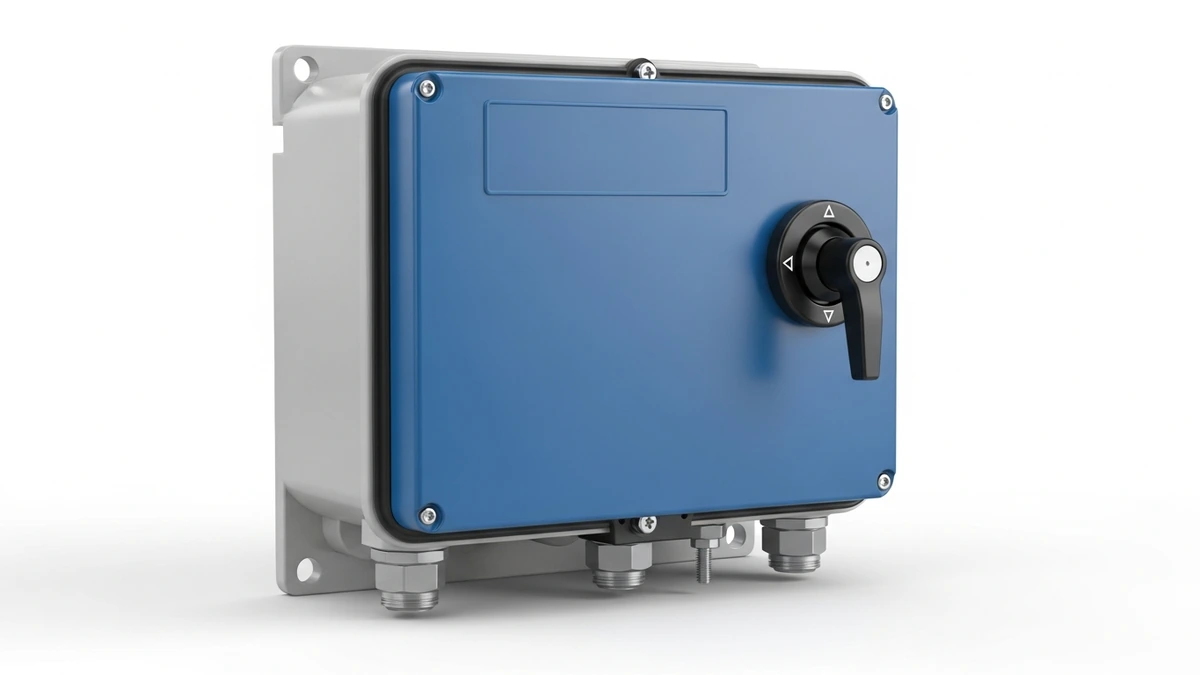
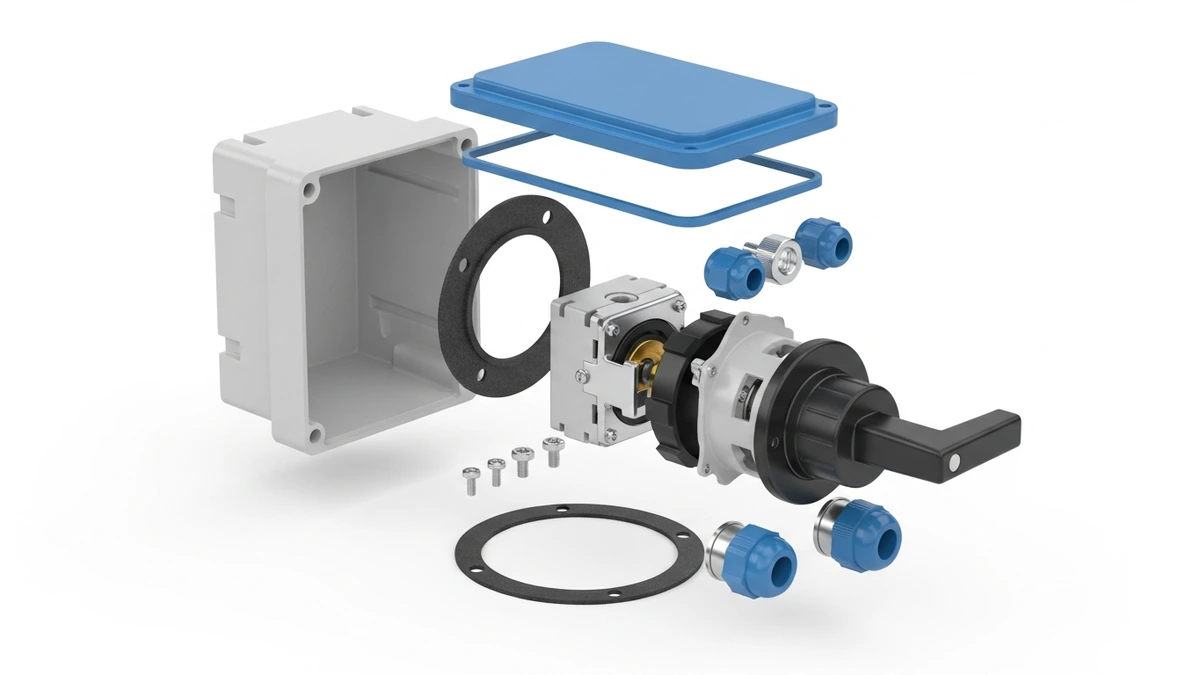
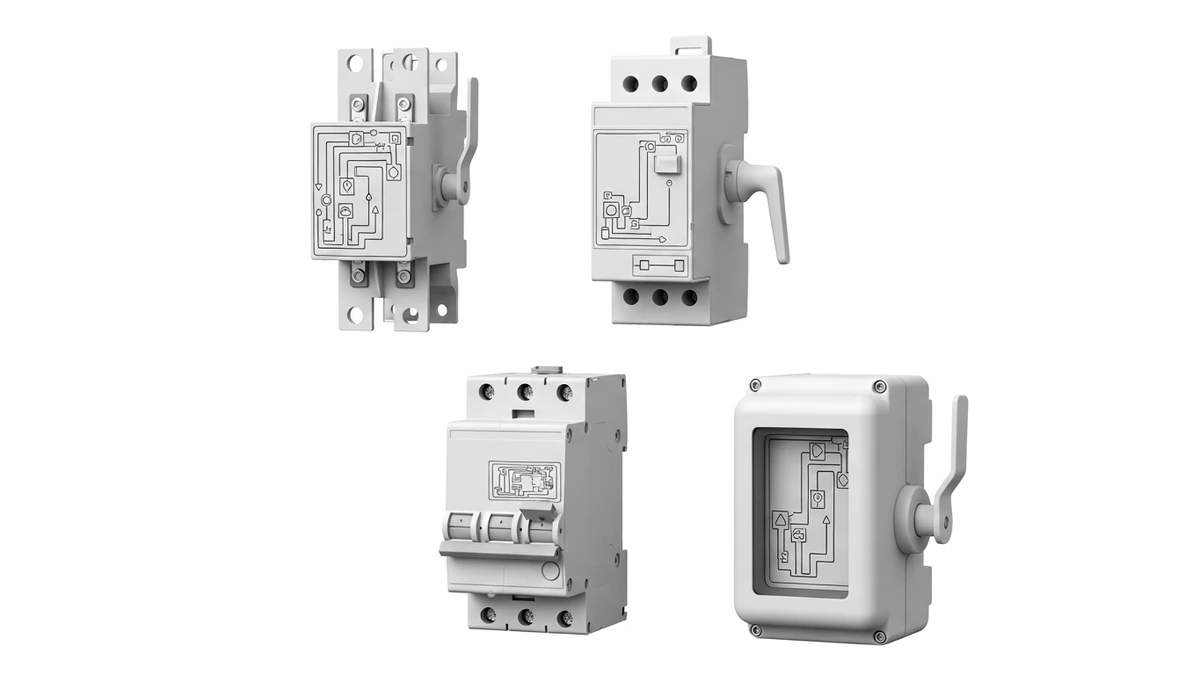
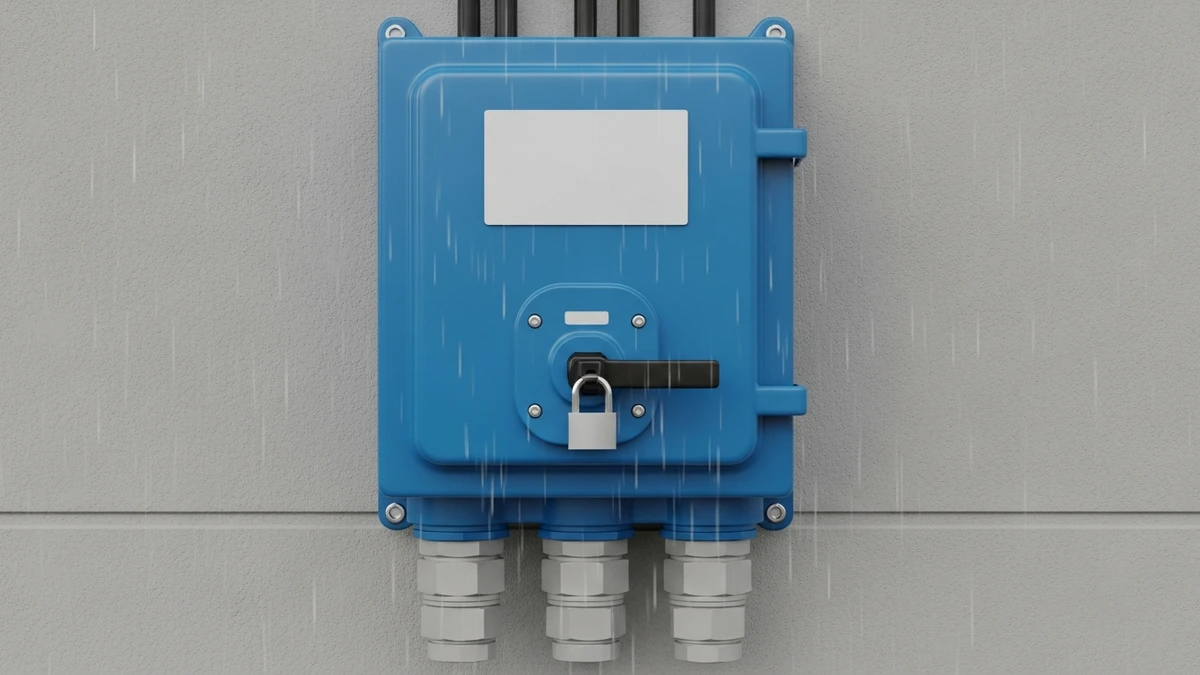
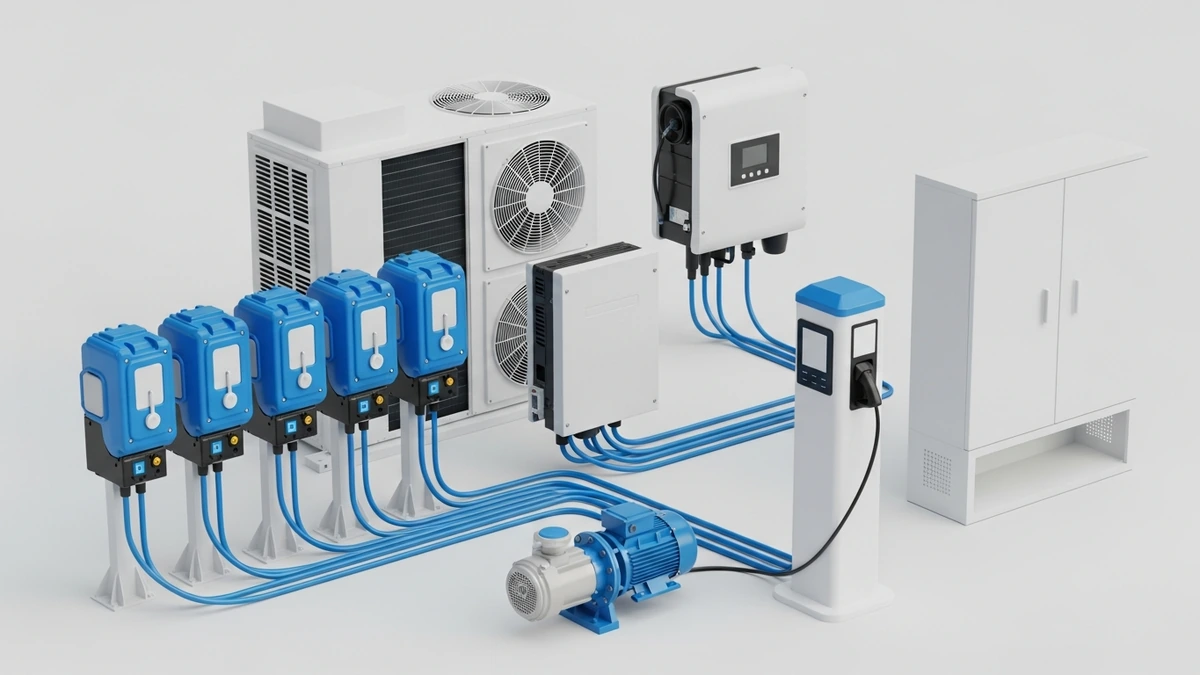
مفصل التبديل المغلق هو آلية مفصل تبديل ومفصل موضوعة داخل ضميمة واقية. تحمي الضميمة التلامسات الداخلية وقضبان التوصيل والأطراف من الطقس والغبار والتلامس العرضي. يوفر المفصل-المفصل نفسه نقطة عزل مرئية وقابلة للقفل تفصل الدائرة بالكامل عن مصدر إمدادها.
إذا كنت تعمل في مجال بناء اللوحات أو المشتريات أو الصيانة الكهربائية، فربما تكون قد رأيت كلا المصطلحين مستخدمين بشكل فضفاض. تشرح هذه المقالة ماهية الجهاز بالضبط، وكيف يختلف عن المنتجات المماثلة، وما الذي يجب التحقق منه قبل تحديد أحدها لتركيب خارجي أو صناعي.
الجهاز عبارة عن نظام: الضميمة، والمقبض، وآلية التبديل، والأطراف، ومداخل الكابلات، ونقطة القفل.
دليل الفيديو
شاهد قائمة التحقق من مفصل المفتاح المرفق
يشرح هذا الدليل الذي يستغرق دقيقتين العزل المرئي، والقفل، واختلافات تصنيف التيار المتردد/ التيار المستمر، واختيار تصنيف IP، وفحوصات إدخال الكابلات، وقائمة مراجعة المشتري قبل طلب مفصل مفاتيح مغلق.
المفصل-المفتاح هو جهاز تبديل يتم تشغيله يدويًا يفي بوظيفتين في آن واحد: يمكنه توصيل تيار الحمل وقطعه (مثل المفتاح)، ويوفر فجوة عزل موثوقة تلبي متطلبات الزحف والخلوص لفاصل.
الشرط الرئيسي هو أن يكون وضع OFF مرئيًا أو مشارًا إليه بشكل إيجابي. عندما تفتح المقبض، يمكنك أن ترى - أو تتحقق من خلال نافذة - أن الملامسات منفصلة فعليًا. هذا العزل المرئي هو ما يميز مفصل المفتاح عن مفتاح الحمل القياسي أو قاطع الدائرة الكهربائية.
مفصلات المفاتيح مصنفة لتيار الحمل العادي. وهي غير مصممة لقطع تيار العطل. في حالة حدوث دائرة كهربائية قصيرة في التيار العادي، قد لا يزيلها الجهاز بأمان إلا إذا كانت تحمل تصنيفًا محددًا لكسر العطل. تحقق دائماً من ورقة البيانات.
الضميمة
الضميمة عبارة عن غلاف مصنّف - عادةً ما يكون من البولي كربونات أو البوليستر المقوى بالزجاج أو الفولاذ - يحيط بمفصل المفتاح والمفتاح. يحمل الغلاف تصنيف IP (حماية من الدخول) الذي يخبرك بمدى مقاومته للغبار والماء.
للاستخدام الخارجي، IP65 هو الحد الأدنى الشائع. يتم استخدام IP66 و IP67 حيث قد تواجه الضميمة نفاثات الماء أو الغمر المؤقت. توفر الضميمة أيضًا درجة من الحماية الميكانيكية (تصنيف IK) ضد الصدمات.
يشكل مفصل المفتاح والحاوية معًا ما يُباع كفاصل مفاتيح مغلق: نقطة عزل جاهزة للتركيب يمكن تركيبها في الهواء الطلق أو على أسطح المنازل أو في محطات الضخ أو على جانب معدات التدفئة والتهوية وتكييف الهواء بدون لوحة أو خزانة منفصلة.
سبب أهمية العزل المرئي
تشترط لوائح السلامة الكهربائية في معظم الولايات القضائية أن يتمكن موظفو الصيانة من التأكد من أن الدائرة مفصولة عن التيار قبل العمل عليها. لا يستوفي قاطع الدائرة الكهربائية في وضع التعطل هذا الشرط دائمًا لأن نقاط التلامس قد لا تكون مفتوحة بشكل واضح.
يوفر مفصل المفاتيح المزود بغطاء شفاف أو مؤشر ميكانيكي إيجابي لفني الصيانة تأكيدًا مباشرًا على أن التلامسات مفتوحة. وبالاقتران مع مرفق القفل على المقبض، فإن ذلك ينشئ نقطة قفل تمنع إعادة تنشيط الدائرة أثناء العمل.
هذا هو السبب الأساسي وراء ظهور مفاتيح الفصل المغلقة عند نقطة إمداد المعدات الخارجية: وحدات مناولة الهواء، والمبردات، وصناديق تجميع سلسلة الطاقة الشمسية، ولوحات مضخات الري، والأحمال المماثلة حيثما تكون نقطة العزل المحلية مطلوبة بموجب الكود أو بموجب ممارسات العمل الآمنة.
لوحة داخلية للوحة أو سكة DIN داخلية أو قضيب التثبيت DIN أو عمود التوصيل
قاطع الدائرة الكهربائية المصغر (MCB)
جزئي (موضع المقبض)
نعم (الحمل الزائد وقصر الدائرة الكهربائية)
لا يوجد
حماية ضد التيار الزائد داخل اللوحة
قاطع دارة كهربائية مصبوب (MCCB)
جزئي
نعم
لا يوجد
حماية التيار الزائد الأعلى من التيار الزائد
صندوق عازل مقاوم للماء
نعم (إذا كان من نوع مفصل التبديل)
يعتمد على الجهاز الداخلي
نعم
عزل التيار المستمر أو المتردد، والطاقة الشمسية، والبطارية، والمركبات الكهربائية
مفتاح فصل التيار المستمر
نعم
لا (استراحة تحميل التيار المستمر فقط)
في بعض الأحيان
الطاقة الشمسية الكهروضوئية وتخزين البطاريات وتوزيع التيار المستمر
بعض النقاط الجديرة بالذكر
مفصل التبديل المكشوف: نفس آلية التحويل بدون ضميمة. تستخدم داخل لوحات المفاتيح ولوحات التوزيع حيث توفر اللوحة نفسها الضميمة. أقل تكلفة، ولكنها غير مناسبة للتركيب الخارجي المباشر.
قاطع الدائرة الكهربائية: يوفر حماية من التيار الزائد وقصر الدائرة الكهربائية. لا يكون موضع المقبض دائماً مؤشراً موثوقاً لفصل التلامس بنفس الطريقة التي يكون بها قاطع الفصل. قاطع الدائرة الكهربائية هو جهاز حماية؛ ومفصل المفتاح هو جهاز عزل. تتطلب العديد من التركيبات كلاهما.
صندوق عازل مقاوم للماء: فئة أوسع. تحتوي بعض الصناديق العازلة المقاومة للماء على مفصل-مفتاح، وبعضها الآخر يحتوي على حاملات صمامات أو وحدات MCB أو كتل طرفية. يصف المصطلح نوع العلبة أكثر مما يصف الجهاز الداخلي. اقرأ المزيد في ما هو صندوق العازل المقاوم للماء؟
مفتاح فصل التيار المستمر: مصنفة ومصممة لدوائر التيار المستمر. أقواس التيار المستمر أصعب في الإطفاء من أقواس التيار المتردد، لذا فإن الجهاز المصنف للتيار المستمر يستخدم هندسة تلامس ومزالق قوس مختلفة. لا تستخدم أبدًا مفصل مفاتيح تيار متردد فقط على دائرة تيار مستمر. انظر مفاتيح عزل التيار المستمر للمنتجات الخاصة بالعاصمة.
يعتمد الاختيار على ما إذا كانت الوظيفة هي العزل أو التحويل أو الحماية من الأعطال أو الحماية البيئية.
تصنيفات التيار المتردد مقابل تصنيفات التيار المستمر: تمييز حاسم
يتم تصنيف معظم مفاتيح الفصل المغلقة التي تباع للاستخدام الصناعي العام والتدفئة والتهوية وتكييف الهواء للاستخدام الصناعي العام لدوائر التيار المتردد - عادة 230 فولت أو 400 فولت تيار متردد، 50/60 هرتز. يفترض تصنيف التيار المتردد أن التيار يمر عبر الصفر 100 أو 120 مرة في الثانية، مما يساعد على إطفاء القوس عند فتح التلامسات.
لا تحتوي دوائر التيار المستمر على تقاطع صفري طبيعي. يستمر القوس لفترة أطول ويمكن أن يتلف الملامسات المصنفة للتيار المتردد فقط. إذا كنت تحدد جهازًا لسلسلة الطاقة الشمسية الكهروضوئية أو بنك البطاريات أو أي مصدر تيار مستمر آخر، فأنت بحاجة إلى جهاز ذي تصنيف واضح لجهد التيار المستمر وتيار التيار المستمر.
عادةً ما يكون تصنيف التيار المستمر أقل من تصنيف التيار المتردد لنفس الجهاز المادي. فالجهاز المصنّف 32 أمبير عند 400 فولت تيار متردد قد يكون مصنّف 32 أمبير عند 250 فولت تيار مستمر أو 16 أمبير عند 500 فولت تيار مستمر. تحقق من ورقة البيانات بعناية.
IP54: مناسب للأماكن الخارجية المحمية والمحمية من رذاذ المطر ولكن ليس من رشاش الماء المباشر.
IP65: محكم ضد الغبار ومحمي ضد نفاثات المياه منخفضة الضغط من أي اتجاه. مناسبة لتركيب معظم المعدات الخارجية.
IP66: مانعة للغبار ومحمية ضد نفاثات المياه القوية. تستخدم في الأماكن التي قد يحدث فيها غسل بالضغط.
IP67: محكم ضد الغبار ومحمي ضد الغمر المؤقت حتى عمق 1 متر. يُستخدم في المواقع المعرضة للفيضانات أو تحت الأرض.
ينطبق تصنيف IP على الضميمة كما تم توريدها. بمجرد حفر فتحات إدخال الكابلات أو تركيب غدد الكابلات، يعتمد تصنيف IP للتجميع على الغدد التي تستخدمها. ستقلل الغدة غير المجهزة بشكل جيد أو الفتحات غير محكمة الغلق من تصنيف IP الفعال إلى أي نقطة أضعف تسمح بذلك.
مواد الضميمة
بولي كربونات: خفيفة الوزن ومثبتة بالأشعة فوق البنفسجية، وتتوفر خيارات غطاء شفاف لعزل مرئي بدون فتح. جيد لمعظم الاستخدامات الخارجية.
البوليستر المقوى بالزجاج (GRP): مقاومة كيميائية أفضل، ومناسبة للبيئات المسببة للتآكل مثل معالجة مياه الصرف الصحي أو المنشآت الساحلية.
فولاذ (مطلي بالمسحوق أو غير قابل للصدأ): قوة ميكانيكية أعلى، مطلوبة في بعض البيئات الصناعية. أثقل وأكثر تكلفة. الفولاذ المقاوم للصدأ للبيئات البحرية أو البيئات عالية الرطوبة.
إدارة التكثيف
تتعرض الضميمة الخارجية لتدوير درجة الحرارة. يدخل الهواء الدافئ الرطب من خلال غدد الكابلات أو الفجوات الصغيرة، ثم يتكثف على الأسطح الأكثر برودة داخل الضميمة. وبمرور الوقت، يمكن أن يتسبب التكثيف بمرور الوقت في حدوث تآكل على الأطراف وتقليل مقاومة العزل.
تشمل خيارات التخفيف ما يلي:
- فتحات التنفس (الحفاظ على معادلة الضغط مع استبعاد الماء السائل)
- عبوات هلام السيليكا المجففة (تتطلب الاستبدال الدوري)
- سخانات الضميمة (للتركيبات في المناخات الباردة حيث يكون التكثيف شديدًا)
- التأكد من أن غدد الكابلات محكمة الإحكام والإغلاق بشكل صحيح
إرشادات التركيب والتركيب
تعتمد جودة التركيب الخارجي على اتجاه التركيب الخارجي، ومدخل الكابل، وحالة الحشية والصرف، والوصول إلى القفل.
اتجاه التركيب
معظم فواصل المفاتيح المغلقة مصممة بحيث يتم تركيبها بحيث يكون مقبض التشغيل على الوجه الأمامي ومداخل الكابلات في الأسفل. يقلل مدخل الكابل السفلي من فرصة تعقب الماء على طول الكابلات إلى داخل الضميمة.
إذا كان الدخول الجانبي أو العلوي لا يمكن تجنبه، استخدم غدد الكابل مع حلقة تنقيط على الكابل خارج الضميمة. تضمن الحلقة جريان الماء من الكابل قبل الوصول إلى الغدة.
تحقق من ورقة بيانات الشركة المصنعة لمعرفة اتجاهات التركيب المسموح بها. بعض آليات مفاتيح المفاتيح والمفصلات حساسة للاتجاه: يمكن أن يؤثر تركيبها على جانبها أو مقلوبة على ضغط التلامس أو أداء إطفاء القوس الكهربائي.
غدد الكابلات
استخدم غدد الكابلات المصنفة بنفس مستوى IP مثل الضميمة. تعتبر الغدد اللولبية المترية (M20، M25، M32) قياسية في معظم الأسواق. تستخدم الغدد اللولبية NPT في تركيبات أمريكا الشمالية.
أغلق القوابس غير المستخدمة بسدادات طمس مصنفة حسب مستوى IP للحاوية. ستؤدي فتحة واحدة مفتوحة إلى تقليل الضميمة IP65 إلى IP20 تقريبًا.
أحكام الإغلاق
تشتمل معظم مفاتيح الفصل المغلقة على قفل قفل على المقبض. تحقق من أن المشبك يقبل قطر القفل الذي يستخدمه برنامج الإغلاق والإغلاق (LOTO) في موقعك. تقبل بعض المقابض أقفالاً متعددة في نفس الوقت، وهو أمر مفيد عندما يعمل العديد من المقاولين على نفس الدائرة.
عدد الأعمدة
2 - قطبان: تيار متردد أحادي الطور (تبديل الخط والمحايد)، أو تيار مستمر (تبديل موجب وسالب).
3 أقطاب: تيار متردد ثلاثي الأطوار بدون تبديل محايد.
4 أقطاب: تيار متردد ثلاثي الأطوار مع تبديل محايد. مطلوب في بعض أنظمة التأريض TN-S و TT حيث يجب عزل المحايد.
تحقق من لوائح الأسلاك المحلية الخاصة بك. في بعض الولايات القضائية، يجب تبديل المحايد في نفس الوقت مع موصلات الخط. وفي البعض الآخر، يكون تبديل المحايد محظورًا أو مقيدًا.
المعايير والامتثال
المعيار الدولي الأساسي لمفصلات المفاتيح الكهربائية هو IEC 62626-1, التي تغطي مجموعة المفاتيح الكهربائية ومجموعات التحكم ذات الجهد المنخفض. وقد تم اختبار الأجهزة المتوافقة مع هذه المواصفة القياسية من حيث قدرة التصنيع والكسر، وفجوة العزل، والتحمل الميكانيكي.
ابحث عن علامة CE (السوق الأوروبية)، أو علامة UL (سوق أمريكا الشمالية)، أو شهادة CCC (السوق الصينية) حسب مكان التركيب. تشير هذه العلامات إلى اختبار طرف ثالث مقابل المعيار ذي الصلة.
تحقق دائماً من الامتثال للكود الكهربائي المحلي الخاص بك. يتم اعتماد معايير IEC بشكل مختلف عبر الولايات القضائية. السلطة المحلية المختصة (AHJ) أو المعيار الوطني ذي الصلة (NEC، BS 7671، AS/NZS 3000، إلخ) له الأسبقية على معيار IEC في تحديد ما هو مقبول لتركيب معين.
قائمة الاختيار
استخدم قائمة المراجعة هذه عند تحديد فاصل مفاتيح مغلق لمشروع ما.
المعلمة
ما الذي يجب التحقق منه
الملاحظات
تصنيف الجهد
تيار متردد أم تيار مستمر؟ ما الجهد؟
لا تستخدم أجهزة التيار المتردد فقط على دوائر التيار المستمر
التصنيف الحالي
تيار الحمل المستمر
خفف من درجة الحرارة المحيطة العالية إذا لزم الأمر
عدد الأعمدة
2P أو 3P أو 4P؟
تحقق من متطلبات التبديل المحايد لنظام التأريض الخاص بك
تصنيف IP
بيئة التثبيت
IP65 كحد أدنى لمعظم الاستخدامات الخارجية
مواد الضميمة
التعرض للمواد الكيميائية/الأشعة فوق البنفسجية/الميكانيكية
البولي كربونات الخضراء (GRP) للمواد المسببة للتآكل، والبولي كربونات للأماكن الخارجية العامة
إدخال الكابل
عدد الكابلات وحجمها واتجاهها
طابق مقاس الغدة مع العمود الخارجي للكابل
مرفق الإغلاق
حجم قفل القفل وإمكانية القفل المتعدد الأقفال
التحقق من برنامج التشغيل والتشغيل والإدارة والتشغيل والنقل في الموقع
اتجاه التركيب
يفضل تشغيل المقبض العمودي
تحقق من ورقة البيانات لمعرفة الاتجاهات المسموح بها
الامتثال للمعايير
IEC, CE, UL, CCC حسب الاقتضاء
التحقق من الكود المحلي
كسر العيب
هل الانقطاع عن الخطأ مطلوب؟
إذا كانت الإجابة بنعم، أضف صمام MCB أو صمام كهربائي كهربائي في المنبع
العزل المرئي
غطاء شفاف أو نافذة شفافة؟
مطلوب لبعض إجراءات الصيانة
التحكم في التكثيف
هل يلزم وجود فتحة تنفس أو مجفف؟
النظر في تدوير درجة الحرارة في الموقع
التطبيقات الشائعة
التدفئة والتهوية وتكييف الهواء والتبريد: تتطلب المبردات ووحدات مناولة الهواء ووحدات التكثيف نقطة عزل محلية للصيانة. ويفي مفصل التبديل المغلق المركب بجوار الوحدة بهذا الشرط ويوفر نقطة قفل لمهندسي الصيانة.
الطاقة الشمسية الكهروضوئية (جانب التيار المتردد): على جانب خرج التيار المتردد من عاكس الطاقة الشمسية، يوفر فاصل التبديل المغلق نقطة عزل التيار المتردد المطلوبة. لاحظ أن جانب التيار المستمر في التركيبات الشمسية يتطلب جهازاً مصنفاً للتيار المستمر.
الري ومعالجة المياه: تحتاج محركات المضخات في المواقع الخارجية إلى نقطة عزل محلية يمكنها تحمل الغسيل والتعرض للأسمدة أو المواد الكيميائية. حاويات GRP ذات تصنيف IP66 شائعة في هذه التطبيقات.
لوحات توزيع خارجية: في حالة وجود لوحة توزيع صغيرة تغذي الإضاءة الخارجية أو معدات مواقف السيارات أو خدمات الموقع، يوفر مفصل التبديل المغلق في الإمداد الوارد نقطة العزل الرئيسية.
البنية التحتية لشحن السيارات الكهربائية: تتطلب شواحن المركبات الكهربائية الخارجية نقطة عزل محلية يمكن لموظفي الصيانة الوصول إليها. وتستخدم مفاتيح فصل مغلقة، مصنفة لتيار إمداد الشاحن عند نقطة إمداد الشاحن.
تشمل الاستخدامات الخارجية الشائعة عزل خدمة التدفئة والتهوية وتكييف الهواء، وعزل التكييف الشمسي، والتحكم في المضخات، وشحن السيارات الكهربائية، ولوحات التوزيع.
الأسئلة الشائعة
ما هو الفرق بين مفصل المفاتيح ومفصل المفاتيح والفاصل؟
تم تصميم الفاصل (يسمى أيضًا العازل) فقط لعزل دائرة مفصولة عن التيار الكهربائي. يجب ألا يتم فتحه تحت الحمل. يمكن للمفصل-المفتاح أن يقوم بتوصيل تيار الحمل وكسره، لذلك يمكن تشغيله بينما تحمل الدائرة تيارًا عاديًا. بالنسبة لمعظم تطبيقات عزل الصيانة، يعتبر مفصل المفتاح هو الخيار الصحيح لأنه يسمح للمشغل بإيقاف تشغيل الحمل قبل العزل.
هل يمكنني استخدام مفصل مفتاح مغلق كقاطع للدائرة الكهربائية؟
لا. لم يتم تصنيف مفصل المفاتيح القياسي على أنه يقطع تيار العطل. سوف يقطع تيار الحمل العادي، ولكن إذا حدثت دائرة كهربائية قصيرة، فقد يتلف الجهاز أو قد لا يزيل العطل. تحتاج إلى مصهر أو قاطع دائرة كهربائية لتوفير الحماية من التيار الزائد والدائرة القصيرة. يوفر مفصل المفتاح-المفتاح العزل؛ ويوفر الصمام أو القاطع الحماية.
ما هو تصنيف IP الذي أحتاجه للتركيب في الهواء الطلق؟
IP65 هو الحد الأدنى العملي لمعظم تركيب المعدات الخارجية. يوفر حماية ضد الغبار ومقاومة لنفاثات المياه من أي اتجاه. إذا كان من الممكن غسل الضميمة بالضغط، استخدم IP66. إذا كان هناك أي خطر فيضان أو غمر مؤقت، استخدم IP67. تذكر أن تصنيف IP لا ينطبق إلا إذا كانت جميع مداخل الكابلات محكمة الغلق بشكل صحيح باستخدام غدد مصنفة بشكل صحيح.
كيف أحافظ على تصنيف IP بعد حفر فتحات إدخال الكابلات؟
استخدم غدد الكابلات المصنفة بنفس مستوى IP مثل الضميمة. اضبط عزم دوران الغدد حسب مواصفات الشركة المصنعة - الغدد ذات عزم الدوران الأقل من المطلوب تتسرب. قم بإغلاق جميع القوابس غير المستخدمة بسدادات طمس من نفس تصنيف IP. افحص الحشيات والغدد سنوياً، أو بعد أي حدث قد يكون قد أخلّ بمانع التسرب (الصدم، الاهتزاز، درجة الحرارة القصوى).
هل يمكنني استخدام مفصل مفتاح مغلق ثلاثي الأقطاب على دائرة أحادية الطور؟
من الناحية الفنية ستعمل جهات الاتصال، لكنها ليست ممارسة جيدة. الجهاز ثلاثي الأقطاب المستخدم على دائرة أحادية الطور يترك موصلات حية متصلة بأقطاب غير مستخدمة، مما يخلق خطرًا. استخدم جهاز ثنائي القطب لدوائر أحادية الطور. إذا كان الجهاز ثلاثي الأقطاب هو الخيار الوحيد المتاح، استشر الشركة المصنعة والرمز المحلي قبل المتابعة.
ما الفرق بين فاصل المفاتيح المغلق وصندوق العازل المقاوم للماء؟
صندوق العازل المقاوم للماء هو فئة منتجات أوسع نطاقاً. وهو يصف ضميمة مصنفة وفقًا لمعيار IP تحتوي على جهاز عزل، والذي يمكن أن يكون مفصل مفاتيح أو حامل صمامات أو MCB أو مزيجًا من ذلك. مفصل المفاتيح المغلق هو نوع محدد من صناديق العازل المقاومة للماء حيث يكون الجهاز الداخلي عبارة عن مفصل مفاتيح يوفر عزل مرئي وقابل للقفل. لا تحتوي جميع الصناديق العازلة المقاومة للماء على مفصل مفاتيح.
أين يمكنني الحصول على الدعم الفني لاختيار الجهاز المناسب؟
إذا لم تكن متأكدًا من الجهاز المناسب للاستخدام الخاص بك، اتصل بالشركة المصنعة أو المورد مع ذكر جهد الدائرة الكهربائية والتيار وعدد الأعمدة وبيئة التركيب وأي متطلبات كود محلي ذات صلة. إن صفحة التواصل مع شيلدهز متاح للاستفسار عن اختيار المنتج.
تحقق من جميع تقييمات الجهاز، وتوافقه مع المعايير، ومتطلبات التركيب مقابل ورقة بيانات الشركة المصنعة والرمز الكهربائي المحلي قبل تحديد أو تركيب أي جهاز عزل كهربائي.
شي، موكسي
يكتب شي، موكسي مقالات شيلدهز الفنية لمشتري التحكم الصناعي والمكونات الكهربائية، والتي تغطي مفاتيح الكامات الدوارة، ومفاتيح العازل، ومفاتيح فصل التيار المستمر الكهروضوئية، وأزرار الضغط، وأضواء المؤشر، والحاويات المقاومة للماء، والكتل الطرفية. تستند المقالات على خبرة شركة Zhejiang Shihe Electric Co., Ltd. في التصنيع والتصدير، مع التركيز العملي على اختيار الطراز وأوراق البيانات والرسومات والشهادات وتصنيفات IP وتفاصيل الاستفسار التي يجب على المشترين التأكد منها قبل الطلب.