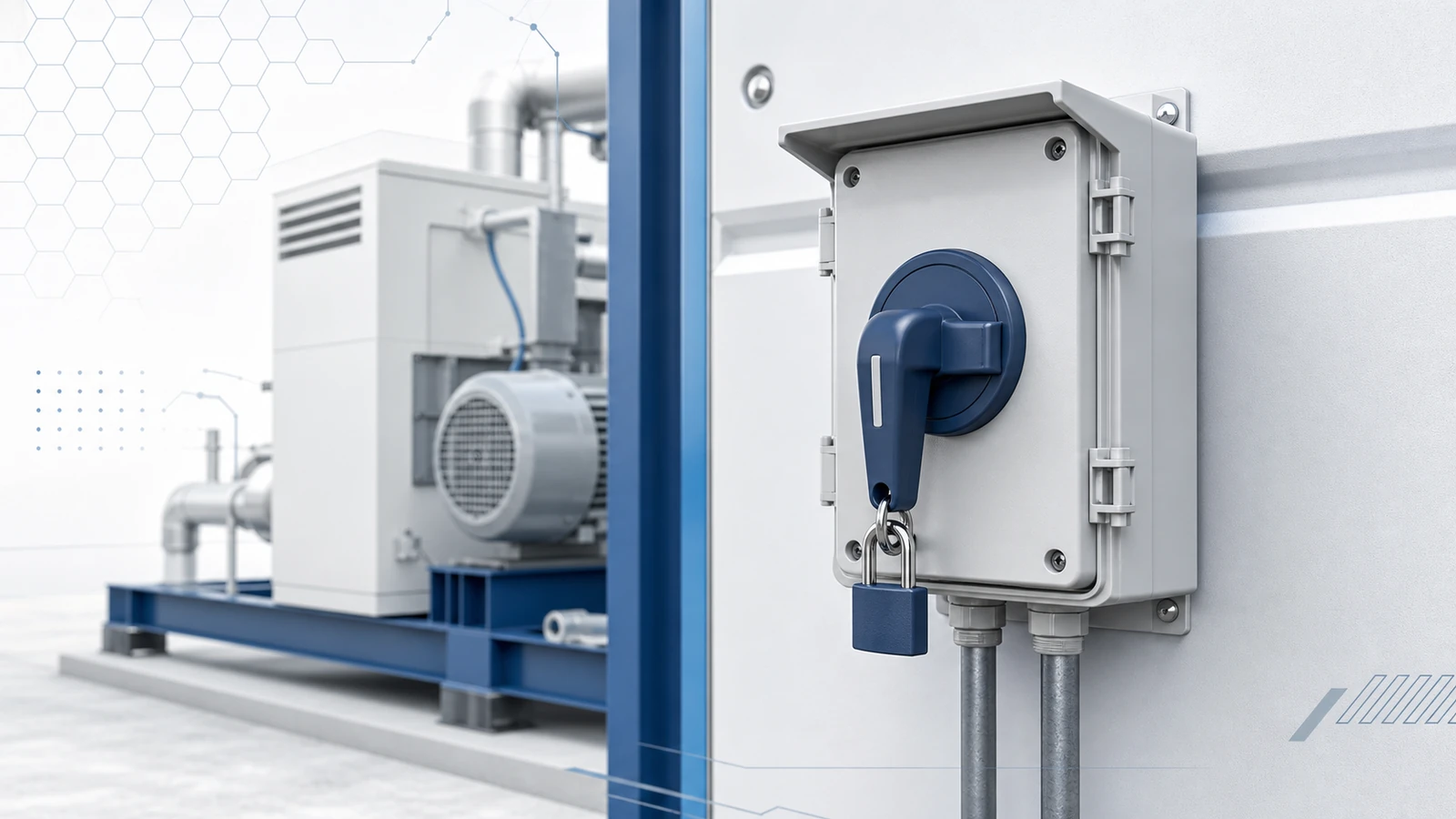
A lockable isolator switch gives a physical energy-isolation point that can be secured against re-energisation; control circuitry is not a replacement for that function.
Outdoor installations add enclosure, cable-entry, mounting, and environmental checks to the basic electrical selection.
A lockable handle is a component feature, not a complete site lockout/tagout programme; local procedures and verification remain the site’s responsibility.
Confirm the exact model’s ratings, pole configuration, enclosure condition, lock provision, and documents against the applicable datasheet, drawing, and certificate before ordering.
Why Local Isolation May Need Lockability
Industrial equipment needs a clear point at which its energy source can be isolated before service, inspection, or maintenance. A local isolator switch places that point at or near the equipment rather than relying on a remote panel. That makes the isolation point easier for the person doing the work to identify and control, but proximity alone does not prevent an unintended re-energisation.
OSHA’s lockout/tagout definitions describe a disconnect switch as an energy-isolating device. They also describe three ways an isolating device can be capable of being locked out: it has an attachment point for a lock, it has a built-in locking mechanism, or it can accept an external lock without dismantling, rebuilding, or replacing the device. For a buyer, that is a useful component-screening test. A model name, an enclosure type, or a handle colour is not evidence that a particular variant has the required lock route.
Outdoor equipment often makes this decision more important. HVAC units, pumps, skids, PV support equipment, and charging infrastructure can be serviced by personnel who are not near the main distribution board. A suitably selected local isolation point lets the work team identify the relevant device and secure it in the required position. The device still has to be selected for the actual electrical system and local environment.
The article ما هو مفصل التبديل المغلق؟ explains the broader component category. This guide has a narrower purpose: how to specify a lockable local-isolation route for an outdoor location without assuming the feature set of an individual product.
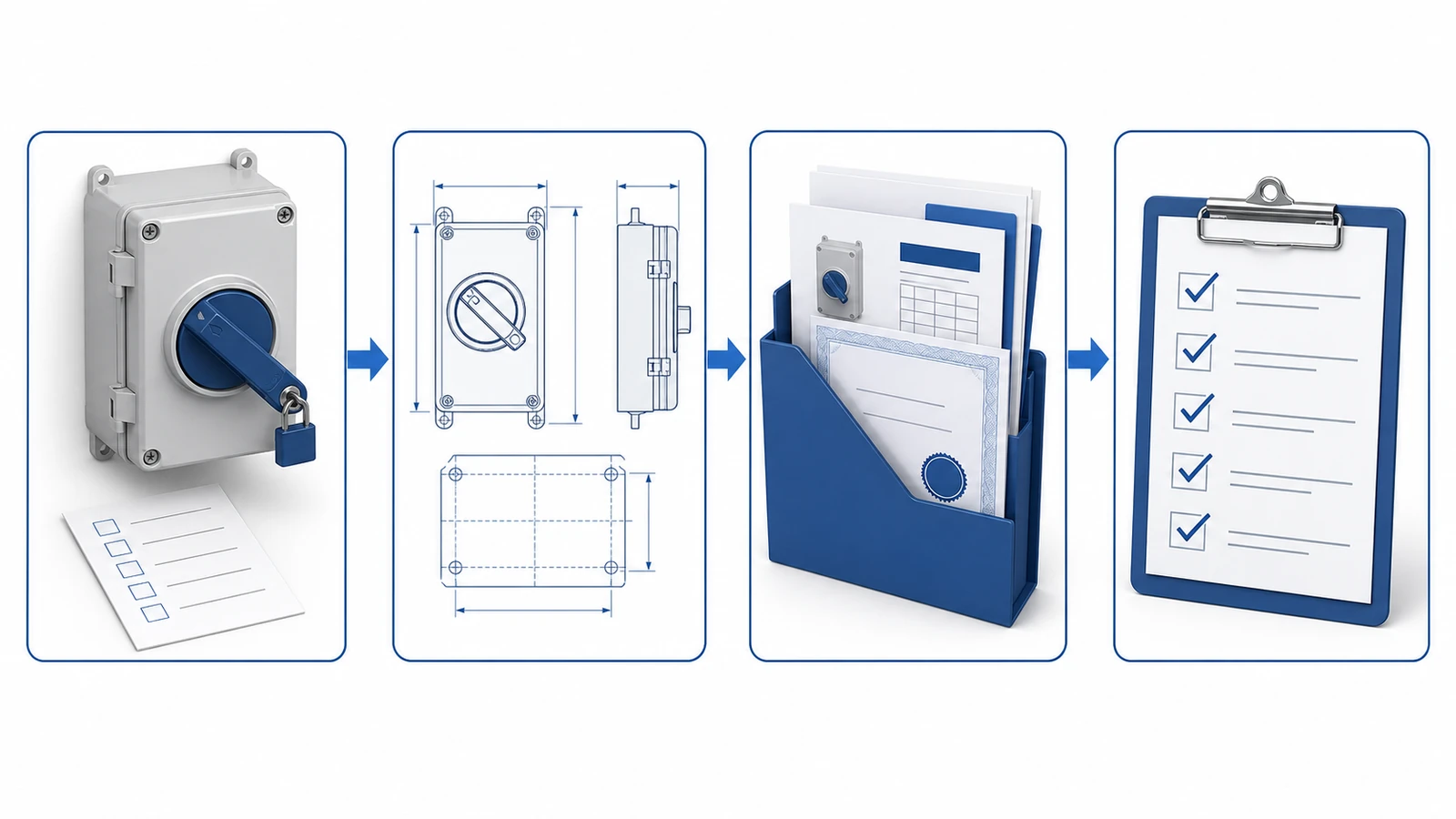
Figure 1. A lock provision and the isolation route must be confirmed for the exact model.
Lockable Handle Versus a Site Lockout/Tagout Procedure
A lockable handle and a padlock are hardware. A lockout/tagout procedure is the site’s documented process for identifying energy sources, isolating them, controlling stored energy, applying locks or tags, and verifying the safe condition before work begins. The hardware supports that process; it does not replace it.
In particular, a stop command, interlock, selector switch, VFD command, or emergency-stop push button controls a circuit. It is not automatically a physical energy-isolating device. The selection question for the local isolator is therefore not merely whether it can stop equipment. It is whether the exact device and installation provide the required isolation and a confirmed lockable position for the intended procedure.
Ask for the handle drawing and clarify these points before choosing a model:
Is the lock provision integral to the handle or an approved accessory for that exact configuration?
Is the stated lock position the position required by the site’s procedure?
Is the padlock opening compatible with the site’s lock or hasp arrangement?
Does fitting the lock leave the handle position legible and accessible?
Does the installation need one personal lock or a multi-worker lockout method?
This is component-selection guidance, not legal or safety-procedure advice. A competent person must apply the applicable local rules, site risk assessment, stored-energy controls, and de-energisation verification to the actual installation.
Outdoor Enclosure, Cable-Entry, and Mounting Checks
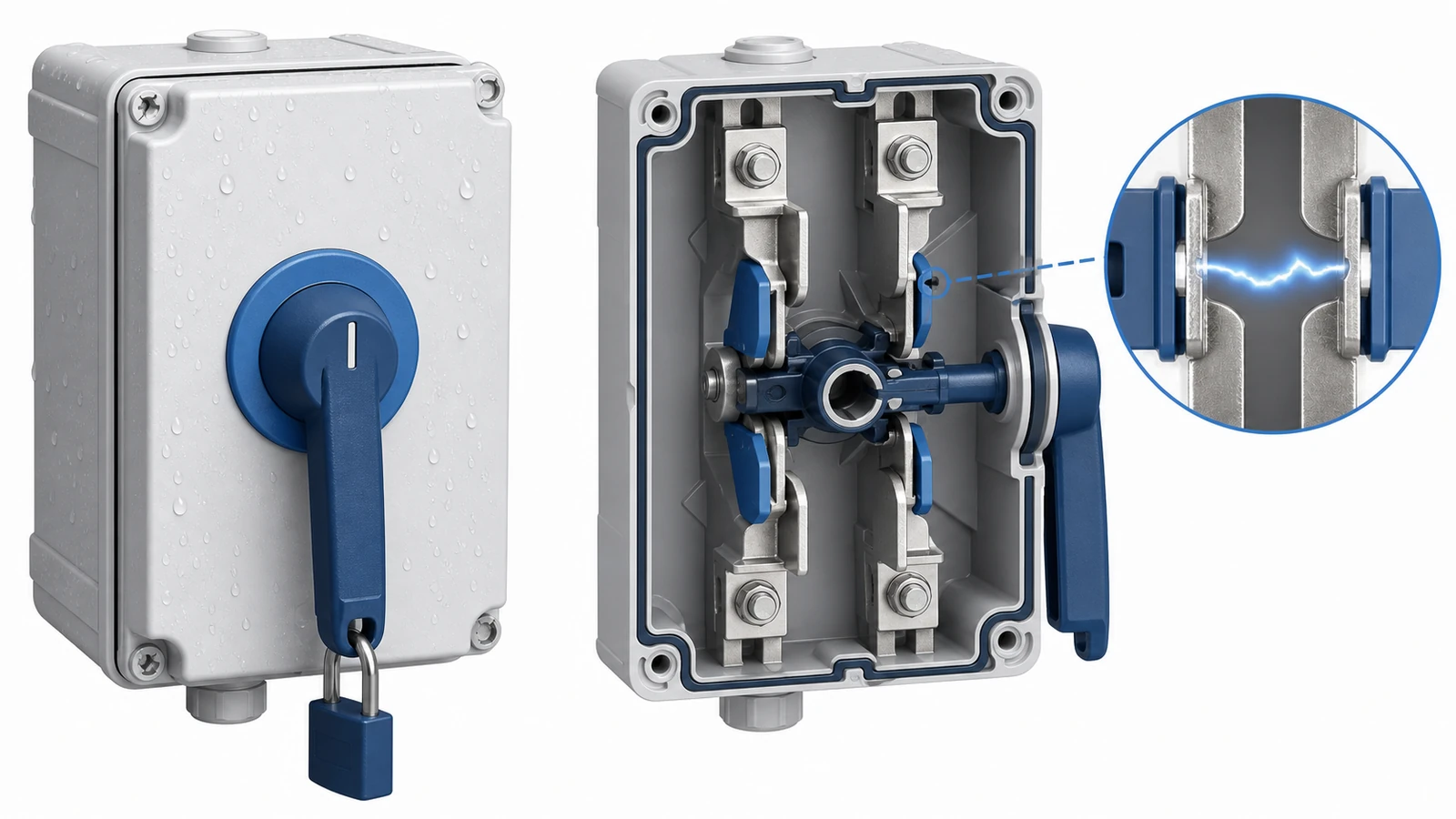
An outdoor isolator is only as suitable as the installed assembly. The enclosure body, door or cover, handle seal, cable entries, unused openings, mounting face, and external hardware all affect whether the component remains appropriate in service.
Enclosure condition. Start by identifying the real exposure: rain, washdown, dust, sunlight, salt air, cleaning chemicals, condensation, or vibration. An IP designation must be interpreted for the exact model and tested configuration, not used as a generic promise about every installation. The existing IP65, IP66, and IP67 enclosure comparison helps structure that discussion, but the relevant product drawing and certificate remain the evidence for the requested configuration.
Cable-entry integrity. A nominal enclosure rating can be undermined by an incorrectly selected gland, an oversized entry, an unsealed knockout, or an unsuitable conduit fitting. Provide the quantity, position, cable outer diameter, routing direction, and any conduit requirement in the enquiry. Request confirmation of the entry arrangement rather than assuming that a field modification preserves the original enclosure performance.
Mounting and access. Verify the mounting-hole pattern, door or cover clearance, handle access, visibility of the switch position, and the suitability of the mounting surface. Consider corrosion exposure for external hardware and vibration exposure for the overall assembly. A location that makes the lock difficult to fit or the handle difficult to see defeats much of the benefit of a local isolation point.
Figure 2. Enclosure, cable entry, and mounting must be assessed as one installed assembly.
إن Waterproof Isolator Box product family is the appropriate product-family destination for evaluating enclosure and configuration routes. Use a model-specific drawing to check dimensions, entry positions, mounting, and accessory compatibility before an order is released.
Electrical and Application Data to Verify
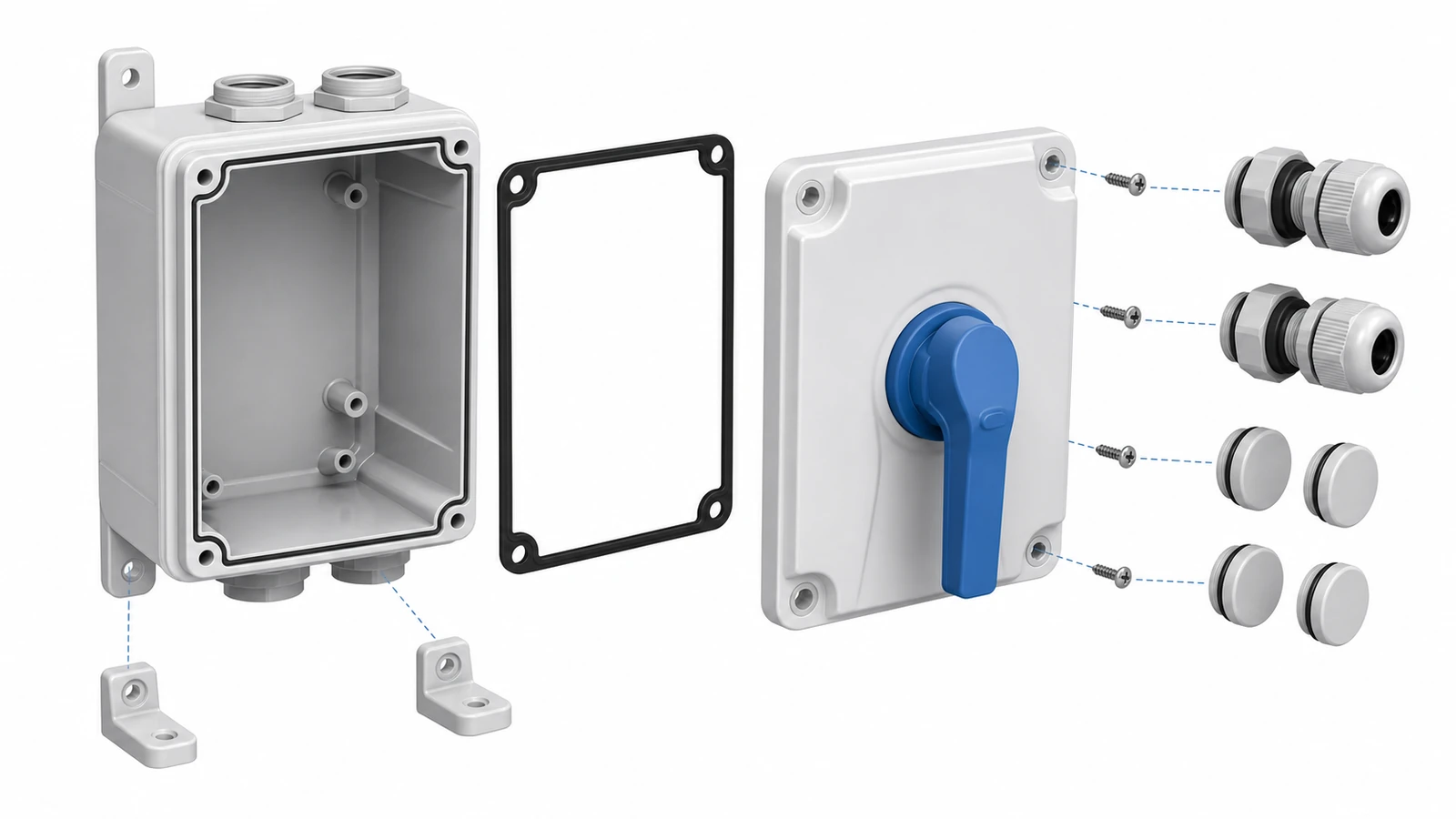
Environmental protection is only one part of the selection. The installed switch route must also be verified for the circuit and the duty that it will see. The following information should be treated as a documented input rather than an assumption:
Buyer input
Why it needs confirmation
Supply type and rated voltage
The selected model’s rated voltage and insulation data must match the actual circuit and application.
Maximum load and duty
Continuous load, motor duty, switching frequency, and utilisation category can lead to different model routes.
Prospective short-circuit conditions
The coordinated protection and the device’s applicable short-circuit data must be checked for the installation.
تكوين العمود
The required conductors and isolation arrangement must match the circuit design.
Ambient and installation conditions
Temperature, UV, corrosion, water exposure, and mounting conditions can affect the suitable enclosure and accessories.
Remote indication or interlock needs
If an auxiliary contact or another accessory is needed, its availability and circuit rating must be documented for the specific model.
IEC 60947-3 is the relevant family of standards for switches, disconnectors, and switch-disconnectors in the applicable low-voltage scope. It does not mean every isolator product is interchangeable. Confirm the exact product’s rating table, switching duty, documentation package, and required approvals with the supplier. Do not treat a catalogue image, a similar enclosure, or a general reference to a standard as proof for the item being quoted.
Where the installation also includes upstream overcurrent protection or other protective devices, their role should be engineered as part of the circuit. This article does not offer or specify those devices; it addresses the local isolator selection and the evidence a buyer should request.
Figure 3. The exact electrical duty and accessory requirement should be documented for the selected route.
Buyer Documentation and Enquiry Checklist
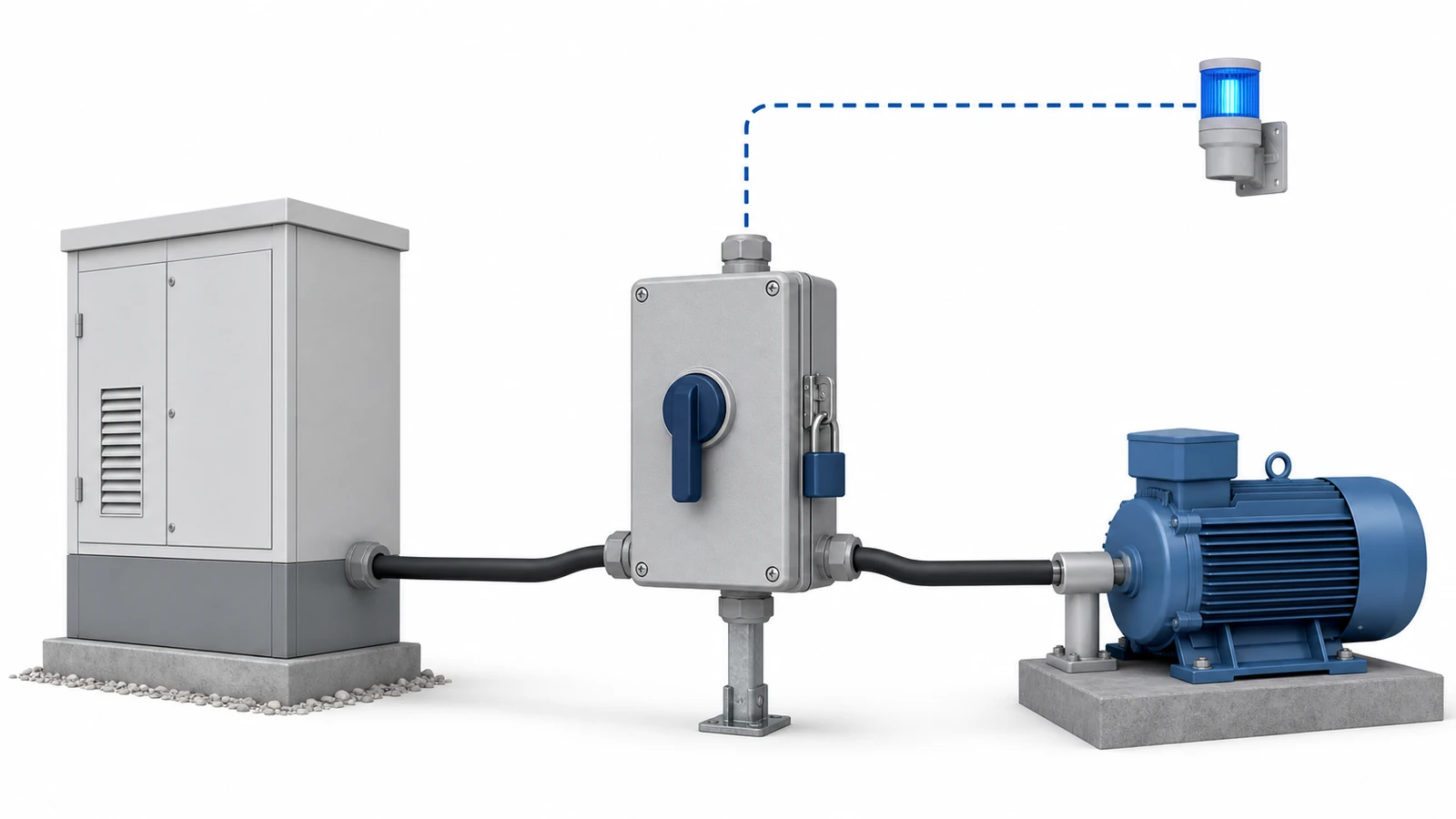
A complete enquiry reduces the risk that a supplier quotes an enclosure or operator arrangement that does not fit the real installation. Include the application data, document needs, and locking requirement in one request.
Application data to provide
Supply type, rated voltage, and frequency where applicable
Maximum load current and the nature of the connected load
Circuit duty and any available prospective short-circuit information
Required pole arrangement and any neutral-isolation requirement
Target enclosure/IP condition and the actual environmental exposure
Cable-entry count, preferred positions, cable diameters, and conduit requirements
Mounting space, orientation, and access constraints
Ambient-temperature range, UV, corrosion, chemical, or vibration conditions
Required destination-market documentation or certificates
Lockability details to state
Required lock position and the site’s operating sequence
Padlock or hasp interface expectations
Whether more than one worker may need to secure the point at the same time
Any visibility, signage, access, or permit-to-work constraints at the location
Documents to request
Current datasheet and model code
Dimensional drawing showing mounting and cable-entry arrangement
Handle/accessory drawing that identifies the lock provision
Applicable rating table and certificate or declaration requested for the exact route
Enclosure/IP evidence for the selected configuration where it is required
Zhejiang Shihe Electric Co., Ltd. uses the buyer’s requested current/voltage, poles, enclosure/IP condition, cable entry, handle/lock requirement, mounting space, and requested drawing or certificate package to confirm the model route before quote release. Buyers should compare that written response with the application and request clarification whenever a variable specification or document scope is not explicit.
Figure 4. Clear application inputs and documentation requests support an accurate quotation route.
Conclusion
A lockable isolator switch for outdoor local isolation should be selected as an installed system, not only as an enclosure with a handle. Confirm the physical lock route, the exact isolation and switching data, the enclosure and cable-entry arrangement, the mounting/access conditions, and the documentation needed for the project. A component that appears suitable in a product category may still be unsuitable if its lock provision, accessories, or configuration have not been verified.
Use the local isolation point within the site’s established energy-control procedure. The final responsibility for the safety procedure, regulatory compliance, installation design, and verification of de-energisation remains with the competent parties for the site.
الأسئلة الشائعة
What makes an isolator switch lockable?
A device may be capable of being locked out when it has a purpose-designed attachment point for a lock, a built-in locking mechanism, or an approved external locking route that does not require dismantling or permanent alteration. Confirm the exact handle or accessory drawing for the selected model rather than relying on a generic product name.
Can an emergency-stop button replace a lockable isolator?
No. An emergency-stop button is a control device. A local isolation point used in an energy-control process must be selected and applied as a physical energy-isolating device in accordance with the applicable site procedure and regulations.
Is a lockable handle enough for a lockout/tagout programme?
No. The handle is a component feature. The site still needs its own procedure for identifying energy sources, applying locks or tags, controlling stored energy, training authorised personnel, and verifying the de-energised condition before work starts.
How should I select an outdoor enclosure condition?
Start with the actual water, dust, UV, corrosion, chemical, temperature, and mounting exposure. Then request the model-specific enclosure information, cable-entry arrangement, and supporting documentation for the exact configuration. Do not assume that later field drilling or a different gland preserves the original condition.
What should I ask for in a lockable isolator quotation?
Provide the electrical application, pole arrangement, environment, cable entries, mounting constraints, and lock requirement. Ask for the current datasheet, dimensional drawing, handle/accessory drawing, applicable rating information, and the document package required for your market or project.
Does this article specify a particular Shieldhz model?
No. It provides a selection and enquiry framework. The correct model route, lockability arrangement, enclosure condition, and documentation depend on the actual application and must be confirmed against the current datasheet, drawing, and certificate package before quote release.
شي، موكسي
يكتب شي، موكسي مقالات شيلدهز الفنية لمشتري التحكم الصناعي والمكونات الكهربائية، والتي تغطي مفاتيح الكامات الدوارة، ومفاتيح العازل، ومفاتيح فصل التيار المستمر الكهروضوئية، وأزرار الضغط، وأضواء المؤشر، والحاويات المقاومة للماء، والكتل الطرفية. تستند المقالات على خبرة شركة Zhejiang Shihe Electric Co., Ltd. في التصنيع والتصدير، مع التركيز العملي على اختيار الطراز وأوراق البيانات والرسومات والشهادات وتصنيفات IP وتفاصيل الاستفسار التي يجب على المشترين التأكد منها قبل الطلب.