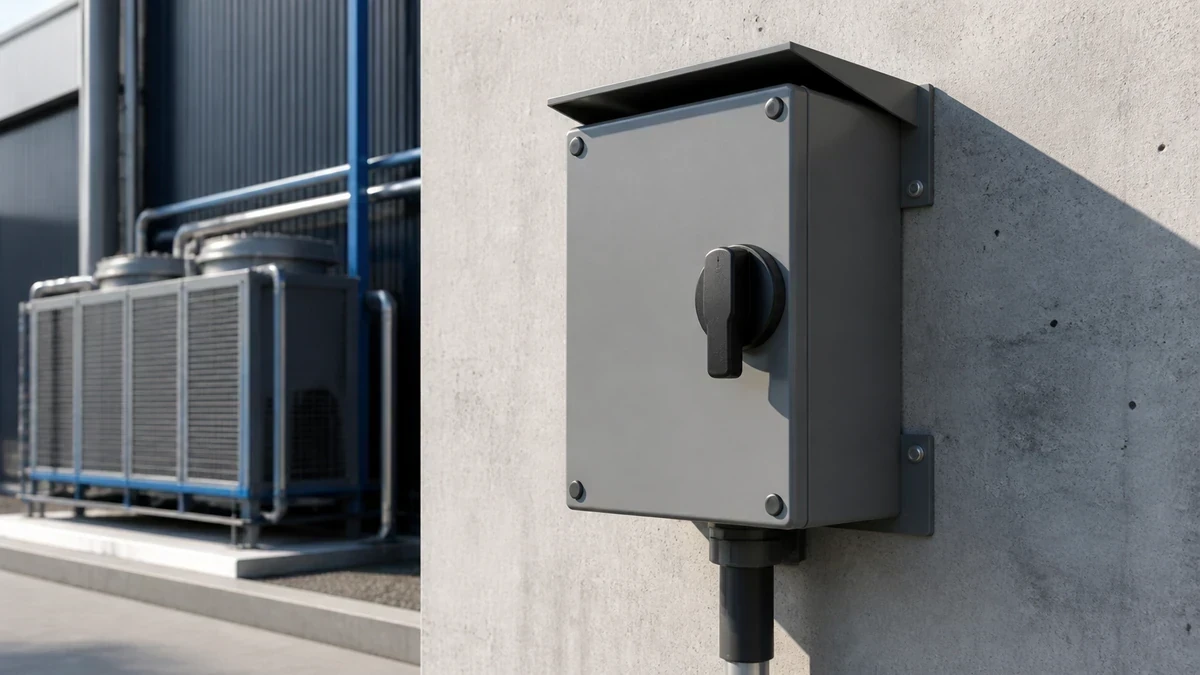
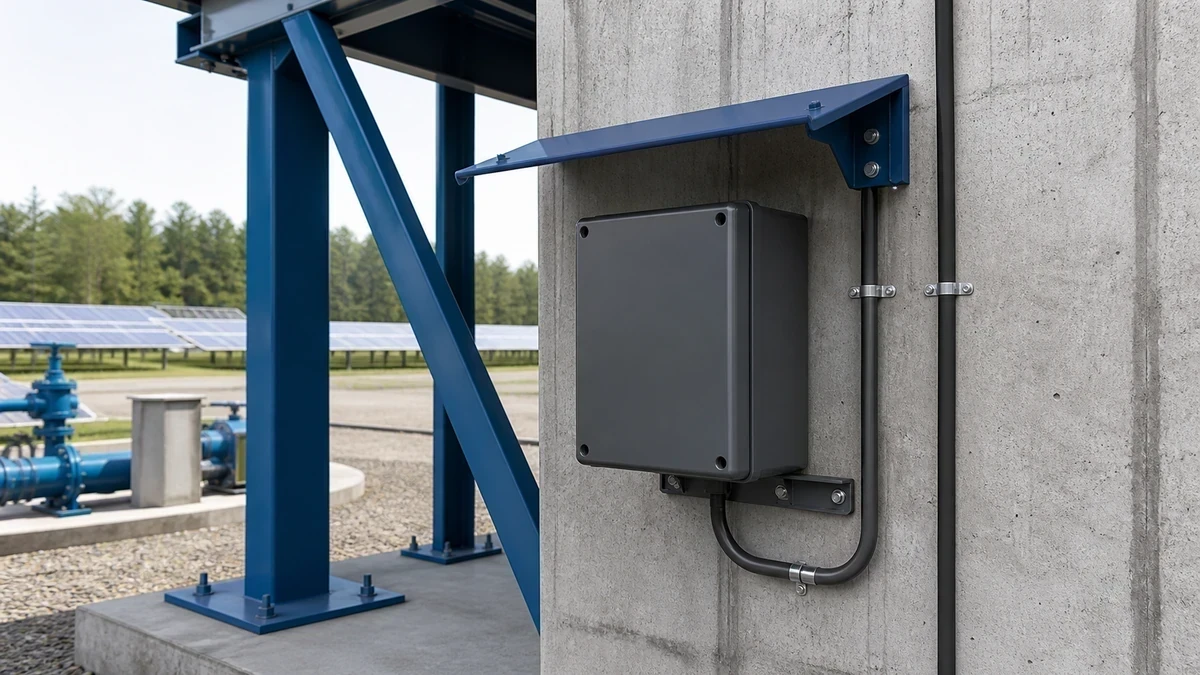
Agricultural Irrigation Pump Isolator Boxes: Local Isolation and Weather Exposure Inputs
Use a practical buyer checklist to evaluate irrigation pump isolator switch inputs, documentation, approval controls and the exact weatherproof isolator switch box route.
An irrigation pump isolator switch should be specified from the pump load, isolation role, enclosure exposure and installation details—not from a generic “outdoor switch” description alone. For irrigation environments, the buyer’s RFQ must state the local isolation need and the weather-exposure inputs so the exact model, drawing, datasheet and any requested certificate package can be checked before a suitability claim is made.
Confirm whether the device is for local isolation beside a pump, inside a pump panel route, or part of a larger equipment package.
Provide AC/DC duty, voltage, current, enclosure exposure, IP requirement, cable-entry route, mounting position and handle-access needs.
Treat ratings, documentation and application fit as exact-model and buyer-application dependent.
Why irrigation pump isolator switches need irrigation-specific RFQ inputs
An irrigation pump isolator switch should be quoted against the actual pump environment, not only against a catalog current value. Field pumps, fertigation skids, pivot systems and booster packages can expose the enclosure to water spray, dust, sun, cable movement and operator access constraints.
For a broader product foundation, see the waterproof isolator box basics. This article stays focused on the RFQ decisions that matter when the isolator box is used around agricultural irrigation equipment.
Local isolation role, not overcurrent protection
A local isolator is normally specified to provide a visible, accessible isolation point near equipment or as part of a panel-builder route. It should not be described as a circuit breaker, and it should not be positioned as overcurrent protection unless a separate, properly selected protective device and design documentation are part of the complete electrical system.
For quotation, state what the isolator must disconnect and where it sits in the equipment architecture. This avoids mixing the isolation function with protection, control logic or emergency-stop assumptions.
Typical irrigation locations that change the request
The same pump current can lead to different enclosure and accessory requirements depending on the location. A pump house wall, outdoor skid, center-pivot control area and open-field bore pump may have different exposure, access and cable-entry constraints.
An exact drawing identifies the interfaces that must be controlled for the approved model route.
Use the RFQ to describe the real installation position. Photos, layout sketches and cable direction notes often prevent the wrong enclosure route from being proposed.
Define pump electrical duty before selecting the isolator box
The electrical duty should be defined before a model route is discussed. AC motor duty, DC pump duty, inverter-fed equipment and mixed control packages can require different switch-disconnector characteristics and documentation checks.
AC pump and panel-builder inputs
For AC irrigation pumps, provide the supply system, motor rating, operating voltage, full-load current and expected isolation point. If the isolator is mounted outside a pump panel, include the upstream and downstream cable route and the enclosure mounting surface.
Panel teams should also state whether the isolator is part of a packaged pump controller, an OEM equipment build, or a contractor-installed field isolation point. That distinction affects drawing review and documentation expectations.
DC, solar and variable-speed routes
DC and solar-pump circuits need separate confirmation because DC switching duty is not the same as AC switching duty. Variable-speed drive systems also require clear identification of whether isolation is on the line side, load side or a separately designed equipment section.
Do not assume an AC-rated isolator box is suitable for a DC pump or inverter-related circuit. Final selection depends on the exact model datasheet and the buyer’s circuit design.
RFQ input
ما أهمية ذلك
What to send
AC or DC duty
Switching characteristics and documentation differ
Supply type, wiring diagram and load description
الجهد والتيار
Determines the model route to check
Rated operating voltage, current and load data
Motor or pump type
Affects duty assumptions
Pump nameplate or equipment datasheet
Isolation location
Defines local access and cable route
Panel layout, field sketch or installation photo
Upstream protection
Keeps roles separated
System diagram showing protective devices separately
Weather exposure inputs that change enclosure selection
Outdoor exposure should be specified as a set of conditions, not as a single word like “waterproof.” Agricultural sites can combine rain, sprinkler spray, mud splash, dust, fertilizer atmosphere, UV exposure and seasonal temperature variation.
IEC identifies IEC 60529 as the IP Code for degrees of protection provided by enclosures; see the IEC 60529 listing. A rating still depends on the exact product and installation conditions, including cable entries, gasket condition and mounting method.
Rain, spray and washdown are different inputs
Rain exposure does not automatically equal pressure spray or washdown exposure. If irrigation sprinklers, hose cleaning or water jets may contact the box, say so in the RFQ.
Also state the likely direction of water exposure. Top, side and underside exposure can affect cable-entry planning and mounting orientation.
Dust, mud, sun and chemical surroundings
Dry-field dust, mud splash and fertilizer-adjacent locations should be listed separately. These conditions may affect enclosure material review, sealing route, label durability and accessory selection.
For a focused explanation of IP language, use the IP65, IP66 and IP67 enclosure guide. Do not translate an IP number into suitability without checking the exact model documentation and installation details.
Exposure input
Buyer question
Quotation implication
Rain only
Is the box under a roof, canopy or open sky?
Helps define enclosure route and mounting notes
Sprinkler spray
Can rotating or fixed irrigation spray hit the box?
Requires direction and frequency details
Hose cleaning
Will operators wash nearby equipment?
Needs exact cleaning method and pressure assumption
Dust and soil
Is the pump in a dry field, road edge or enclosure?
Affects sealing and maintenance review
Fertilizer/chemical area
Is fertigation or chemical dosing nearby?
Requires material and documentation check
Sun exposure
Is the box continuously exposed outdoors?
May affect material, color and label discussion
Cable entry, gasket and handle details should be decided before quotation
Cable entry and sealing details should be treated as part of the isolator-box selection, not as installation afterthoughts. Many weather-exposure failures are related to entry points, gasket interfaces, orientation or handle access rather than the enclosure shell alone.
For a deeper entry-and-sealing reference, see the weatherproof switch-box cable-entry guide. The RFQ should still identify the exact cable, conduit, gland and orientation requirements for the buyer’s installation.
Cable-entry route checklist
Use this checklist before requesting price or drawings:
State top, bottom, side or rear entry preference.
Identify cable quantity, outside diameter range and conduit or gland style.
Confirm whether entry holes are requested from Shieldhz or handled by the installer.
Show any drip-loop, conduit bend or strain-relief constraints.
Identify whether spare entries are required and how unused entries will be sealed.
Sample review should connect the exact item to its current drawing and requested evidence package.
Gasket, cover and handle access checklist
The gasket and handle route should remain compatible with mounting position and operator access. If the box is mounted near a pump skid frame, pipework, fence or wall corner, the handle swing and cover access may become the limiting factor.
Provide mounting orientation and clearance around the handle.
Confirm whether glove operation is expected.
State whether the cover must open for inspection in the mounted position.
Avoid placing cable entries where they interfere with gasket compression or handle movement.
Request the current drawing for the exact model under consideration.
How Shieldhz confirms a weatherproof isolator switch box route
Shieldhz confirms a weatherproof isolator switch box route by matching the buyer’s RFQ inputs to current product documentation and the buyer’s application requirements. The confirmation is not a blanket suitability statement across all irrigation pumps or all outdoor installations.
The practical pre-quotation route starts with the isolation role, load information and exposure description. Shieldhz then checks the requested model path against available drawings, datasheets and any requested certificate package for that exact product.
Pre-quotation information Shieldhz needs
Send the following information as one RFQ package:
Load and isolation role: what the isolator disconnects and where it is installed.
AC/DC duty: supply type, motor or pump circuit, and any inverter or solar route.
Voltage and current: operating values and relevant nameplate data.
Enclosure exposure: rain, spray, dust, mud, sun, chemical surroundings and cleaning method.
IP requirement: the target IP level requested by the buyer or destination project.
Cable entry and gasket route: cable size, entry direction, gland or conduit plan and sealing expectations.
Mounting and handle access: wall, skid, frame or panel location with clearance notes.
Documentation request: drawing, datasheet and certificate package required for review.
Documentation package and final confirmation
For available model paths, Shieldhz can route the discussion through the waterproof isolator box range. The buyer should request the latest drawing, datasheet and any relevant certificates needed for the destination market or procurement file.
Final suitability is confirmed against current product documentation and the buyer’s application. If the buyer changes duty, cable-entry method, mounting orientation or market requirement, the quotation route should be rechecked.
Choose the model route from documentation, not from appearance
The model route should be selected from the documented electrical and enclosure requirements, not from box size or visual similarity. Two isolator boxes may look similar while having different switch configurations, enclosure details or documentation packages.
When a standard range route may be enough
A standard range route may be appropriate when the buyer’s pump duty, IP requirement, cable entry and mounting layout align with an available documented model. Even then, the exact model datasheet and drawing should be checked before procurement.
This route suits distributors and contractors who already know the application conditions and need a repeatable item reference. It still requires model-level confirmation, not a generic outdoor assumption.
When the SH30 route should be reviewed
If the buyer is comparing a specific Shieldhz route, the SH30 weatherproof isolator box guide can support an initial technical review. The guide should not replace the latest product drawing, datasheet or application-specific confirmation.
Buyer situation
Better next step
Do not assume
Known AC pump duty and outdoor wall mount
Request exact model datasheet and drawing
That any similar box has the same rating
Solar or DC pump circuit
Ask for DC-duty confirmation against documentation
That AC duty transfers to DC duty
Hose-cleaned pump skid
Describe cleaning method and water direction
That “outdoor” means washdown-suitable
Distributor stock review
Confirm destination-market documentation needs
That one certificate package fits all markets
Panel-builder integration
Share panel layout and isolation position
That handle access is acceptable without checking clearance
Installation and procurement checks reduce quotation errors
Installation and procurement teams should align the site constraints before placing the order. A technically correct isolator box route can still become a poor purchase if cable entry, handle access or documentation expectations were not stated early.
Site-access checklist for contractors
Before installation planning, verify the operator can reach and identify the isolator in the intended position. Also check that pipework, pump guards, fences and irrigation risers do not block the handle or cover.
Confirm the isolator is locally accessible for the intended maintenance procedure.
Keep handle travel clear of pipes, guards and posts.
Check that the mounting surface is flat and stable.
Plan cable bends before drilling or specifying entry positions.
Confirm labeling needs with the buyer or project specification.
Installation conditions change the product-route and document questions a buyer must resolve.
Procurement checklist for distributors and OEM teams
Procurement teams should avoid reducing the RFQ to “irrigation pump isolator switch, outdoor.” That phrase is not enough to confirm a model, documentation route or destination-market file.
Include target model if known, but allow documentation review.
Attach load data, installation photos or layout sketches.
State requested IP level and exposure details.
List required drawings, datasheets and certificate documents.
Confirm whether the product is for resale, OEM integration or contractor installation.
Emergency-stop and control-operator requests must stay separate from isolation selection
Emergency-stop and control-operator requests should be treated as separate machine-design inputs from the isolator-box selection. Adding an operator or choosing a visible handle does not validate a complete machine safety function.
Isolation handle versus emergency-stop function
An isolator handle is selected for the isolation role defined in the electrical design. An emergency-stop function requires a complete safety assessment, suitable components, wiring, control architecture, validation and applicable standards review by the machine builder or responsible designer.
Do not describe an isolator as proving emergency-stop compliance. If an emergency-stop operator is requested on the same equipment package, it must be reviewed as part of the complete machine safety function.
RFQ wording that avoids role confusion
Use clear language in the RFQ so the quotation team can separate electrical isolation, control operation and safety-function requirements. If a red/yellow operator, padlockable handle or emergency-stop device is requested, state the intended function and the design responsibility.
Documentation control, sample acceptance and protective packing are separate handover checks.
Recommended wording:
“Local isolator for pump maintenance isolation; overcurrent protection is provided separately in the system design.”
“Emergency-stop operator requested for panel layout review only; complete safety function validation remains by the machine builder.”
“Please quote against the attached drawing, datasheet requirements and destination-market documentation request.”
Conclusion
An agricultural irrigation pump isolator switch should be specified from real field conditions: load duty, isolation role, weather exposure, cable-entry route, mounting position, handle access and documentation needs. The strongest RFQs describe the irrigation environment instead of assuming that any outdoor isolator box is suitable.
Shieldhz can support model-route review when the buyer provides the required electrical, enclosure and documentation inputs. Final suitability must always be confirmed against the current product documentation and the buyer’s actual application.
الأسئلة الشائعة
Can I specify an irrigation pump isolator switch by current rating alone?
No. Current is only one input. You should also provide AC/DC duty, voltage, pump type, isolation location, enclosure exposure, IP requirement, cable-entry route, mounting position and documentation needs.
Is an isolator switch the same as a circuit breaker?
No. An isolator switch should not be positioned as a circuit breaker or as overcurrent protection. If overcurrent protection is required, it belongs to the separate electrical protection design and must be selected by the responsible designer.
Is a higher IP number always the correct choice for an irrigation pump site?
Not automatically. The correct IP requirement depends on the exact exposure, product documentation and installation conditions. Cable entries, gasket condition, mounting orientation and cleaning method can all affect the result.
What should a distributor include in a quotation request?
A distributor should include the target model if known, pump voltage and current, AC/DC duty, exposure description, IP requirement, cable-entry plan, mounting notes and required drawing, datasheet or certificate documents. Destination-market requirements should also be stated.
Can the same isolator box be used for AC and DC irrigation pump circuits?
Do not assume that. AC and DC switching duties are different, and suitability depends on the exact model documentation and the buyer’s circuit design. Send the circuit details before requesting confirmation.
Does adding an emergency-stop operator validate machine safety?
No. Selecting an operator does not validate a complete machine safety function. Emergency-stop performance depends on the full machine design, components, wiring, control architecture, risk assessment and validation by the responsible machine builder or designer.
شي، موكسي
يكتب شي، موكسي مقالات شيلدهز الفنية لمشتري التحكم الصناعي والمكونات الكهربائية، والتي تغطي مفاتيح الكامات الدوارة، ومفاتيح العازل، ومفاتيح فصل التيار المستمر الكهروضوئية، وأزرار الضغط، وأضواء المؤشر، والحاويات المقاومة للماء، والكتل الطرفية. تستند المقالات على خبرة شركة Zhejiang Shihe Electric Co., Ltd. في التصنيع والتصدير، مع التركيز العملي على اختيار الطراز وأوراق البيانات والرسومات والشهادات وتصنيفات IP وتفاصيل الاستفسار التي يجب على المشترين التأكد منها قبل الطلب.