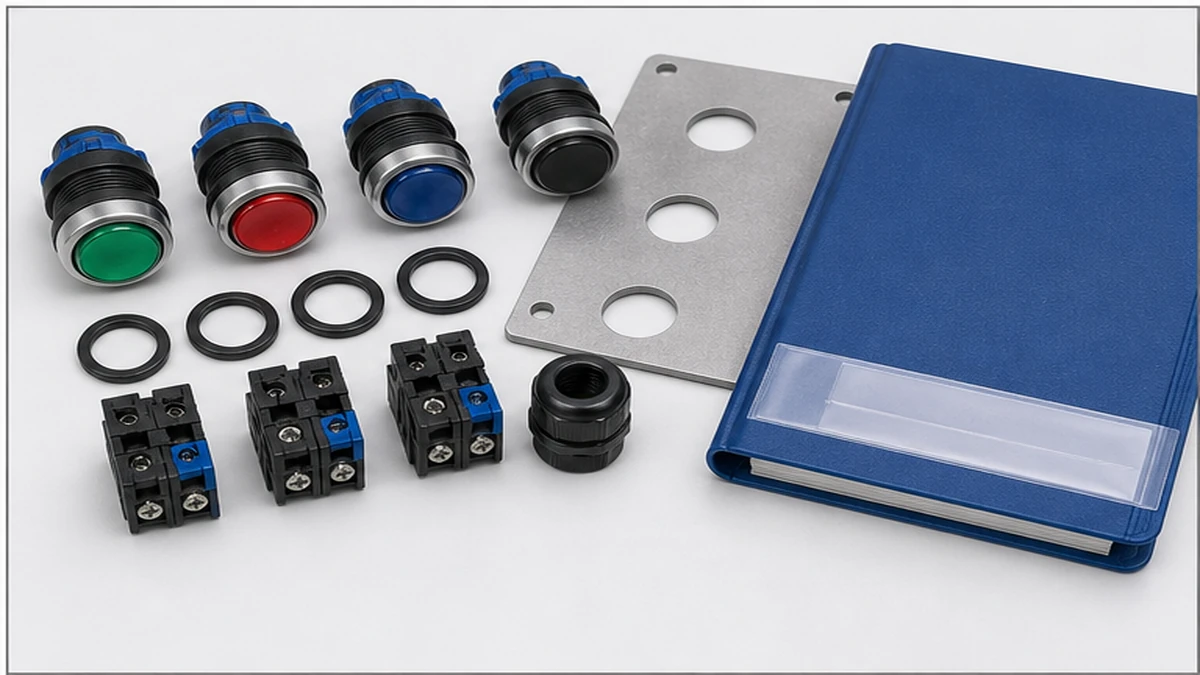
مفاتيح الضغط من فئة IP65 هي أجهزة تحكم محكمة الإغلاق مصممة لمنع دخول الغبار ومقاومة نفاثات الماء، شريطة التحقق من مطابقة كل من المشغل بالكامل، والحشية، وفتحة اللوحة، وظروف التركيب معًا. ويؤدي اختيار مستوى حماية غير مناسب من دخول العوامل الخارجية في هذه البيئات إلى تأكسد نقاط التلامس، وتدهور العزل الكهربائي، وتعطل اللوحة. يشرح هذا الدليل كيفية عمل الختم وفقًا لمعيار IP65، والمواصفات الكهربائية المهمة بخلاف رقم IP، وكيفية مطابقة أنواع المشغلات وموادها مع ثلاث بيئات قاسية محددة، وكيفية التحقق من أن التصنيف الذي يدعيه المورد حقيقي وقابل للتتبع. سيجد المهندسون ومصنعو اللوحات وفرق المشتريات لدى الشركات المصنعة للمعدات الأصلية (OEM) هنا إرشادات عملية للاختيار والتركيب.
كيفية عمل مانع التسرب IP65 في أزرار الضغط بلوحة التحكم
يُعرَّف تصنيف IP65 بموجب المعيار IEC 60529، وينقسم إلى رقمين مستقلين يعبّران عن درجة الحماية. الرقم الأول، 6، يؤكد الحماية الكاملة ضد الغبار — أي عدم دخول أي جسيمات صلبة مهما كانت مدة التلامس أو فرق الضغط. أما الرقم الثاني، 5، فيؤكد مقاومة الماء المنبعث من فوهة قطرها 6.3 مم بمعدل 12.5 لترًا في الدقيقة تقريبًا من أي اتجاه. وفي الممارسة العملية، يعني هذا أن مفتاح الضغط المصنف IP65 والمُركَّب بشكل صحيح يمكنه تحمل دورات التنظيف بخرطوم المياه، والأمطار الغزيرة، والجسيمات الصناعية الدقيقة دون وصول الرطوبة أو التلوث إلى جسر التلامس الداخلي.
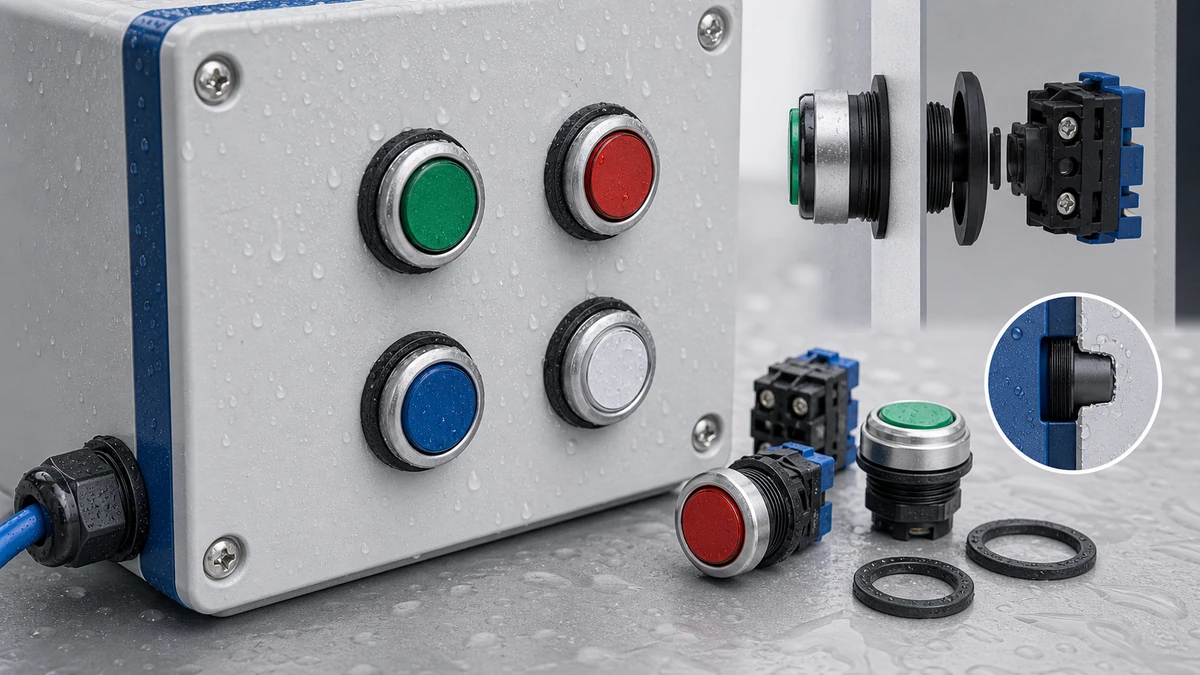
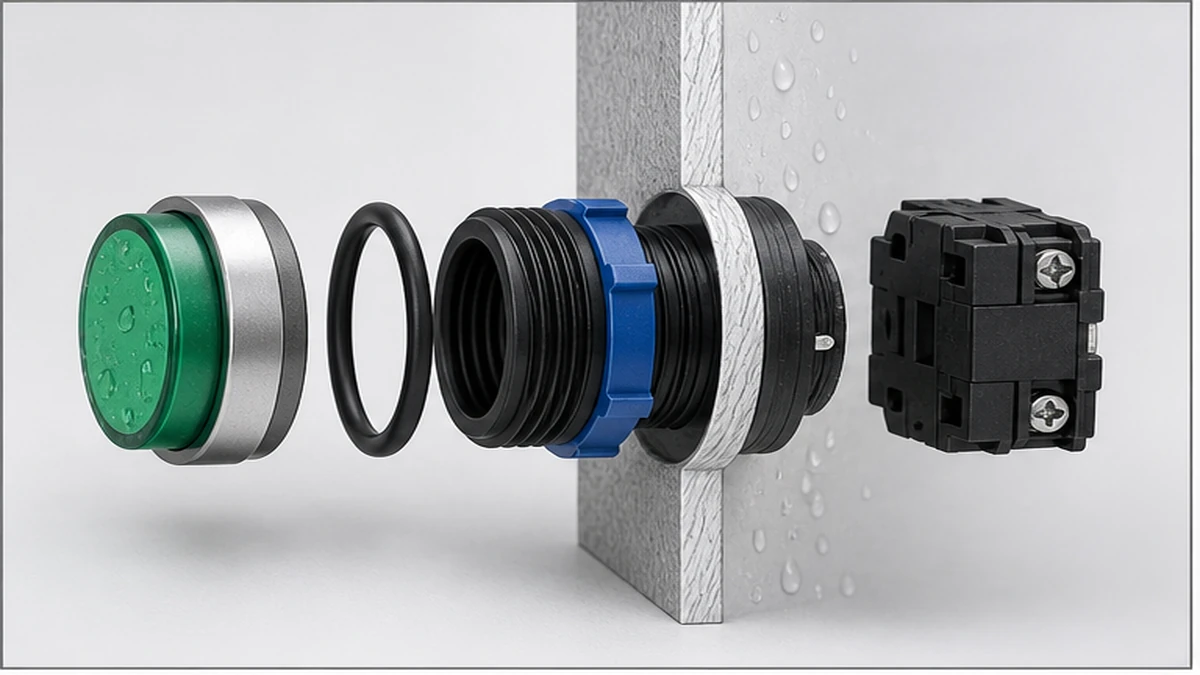
يحقق نظام الإحكام في زر الضغط ذي الهيكل المعدني ذلك من خلال مجموعة من الحواجز المترابطة. حيث تشكل الحشية الأمامية المصنوعة من مادة مرنة، والمضغوطة بين حافة هيكل الزر ووجه اللوحة، الحاجز الأساسي ضد الماء والغبار على محيط الفتحة. كما تمنع جلبة المشغل المُحكمة الإغلاق دخول الجسيمات على طول العمود الترددي. ويعمل مانع التسرب أو الغطاء الخلفي لحجرة التوصيلات على عزل الوصلات الكهربائية من التكثيف أو الرذاذ الذي قد يدخل إلى العلبة من خلال فتحات أخرى.
في أزرار الضغط غير المُحكمة الإغلاق والمُركَّبة في نفس البيئات، يكون مسار الفشل قابلاً للتنبؤ به. يتراكم الغبار الناعم على أسطح التلامس، مما يؤدي إلى زيادة مقاومة التلامس تدريجيًّا. وتُسرِّع الرطوبة من تكوُّن أكسيد الفضة على سبائك التلامس. ويؤدي التلوث المركَّب إلى حدوث تقلبات متقطعة في التبديل أو فشل تام في التلامس. تحدد المعايير المعمول بها لأجهزة التحكم وورقة بيانات المنتج قيم التحمل الكهربائي والميكانيكي لنظام التلامس الداخلي، لكن هذه القيم لا تصح إلا عندما يحمي نظام الإحكام نقاط التلامس من التدهور البيئي في المقام الأول.
بالنسبة للمهندسين الذين يحددون مواصفات لوحات التحكم الصناعية، ينبغي التعامل مع تصنيف IP65 باعتباره معيارًا للتحقق من حالة الوحدة بعد تركيبها، وليس مجرد علامة تسويقية أو ضمانًا شاملاً.
الشكل 1. المفهوم الأساسي وراء اختيار مفتاح الضغط من فئة IP65.
المواصفات الفنية الرئيسية التي يجب تقييمها قبل اختيار مفتاح ضغط بمعيار IP65
يُعد التحقق من وجود تصنيف IP65 الخطوة الأولى، وليس الأخيرة. فقد يستوفي الزر متطلبات مقاومة دخول الغبار والماء، في حين أنه قد يكون غير ملائم من الناحية الكهربائية أو غير متوافق من حيث المواد المستخدمة مع بيئة التركيب. وتحدد المعايير التالية ما إذا كان الزر المختار سيؤدي وظيفته بشكل موثوق طوال عمره التشغيلي.
الجهد العازل المقنن والتيار التشغيلي
بالنسبة لنظام التوصيلات الكهربائية، فإن القيم التصنيفية الرئيسية التي يجب التحقق منها في ورقة بيانات المنتج هي الجهد العازل المقنن (Ui) والتيار التشغيلي في فئة الاستخدام المطبقة. أما بالنسبة لأزرار الضغط التي تتحكم في الأحمال الحثية التي تعمل بالتيار المتردد، مثل الملامسات أو الملفات اللولبية، فإن تصنيف فئة الاستخدام AC-15 هو المعيار المحدد. تعرض بعض أوراق البيانات بشكل بارز الرقم الأعلى AC-12 (الحمل المقاوم)، مما يؤدي إلى المبالغة في تقدير السعة الحقيقية للتبديل الحثي. تأكد من قيمة التيار AC-15 عند جهد الإمداد الخاص بك قبل قبول أي عرض أسعار.
بالنسبة لدوائر الإدخال في أجهزة التحكم المنطقية القابلة للبرمجة (PLC) ذات التيار المنخفض، والتي تعمل بتيار يبلغ 10 مللي أمبير أو أقل، يُنصح باستخدام أنواع التلامس المطلية بالذهب. فالتلامس القياسي المصنوع من سبيكة الفضة والنيكل يتشكل عليه طبقة أكسيد عند كثافات التيار المنخفضة، مما يؤدي إلى ظهور قراءات خاطئة تشير إلى انقطاع الدائرة في بطاقات الإدخال الرقمية.
تكوين جهة الاتصال
تُصنف برامج ملامسات أزرار الضغط إلى ملامسات مفتوحة عادةً (NO)، أو مغلقة عادةً (NC)، أو كتل مركبة. بالنسبة لدوائر تشغيل وإيقاف المحركات، تستخدم محطة ذات زرين عادةً كتلة ملامسة واحدة من النوع NO للتشغيل وكتلة ملامسة واحدة من النوع NC للإيقاف، ويتم توصيل كل منهما بشكل مستقل في دائرة التحكم. تأكد من برنامج التلامس من مخطط الأسلاك الوارد في ورقة بيانات المورد، وليس من وصف الكتالوج وحده. وتعد الأخطاء في تخصيص NO مقابل NC أثناء بناء اللوحة من بين الأسباب الأكثر شيوعًا لفشل تشغيل دوائر التحكم.
مادة هيكل المشغل والحشية
تحدد مادة هيكل المشغل أداءه من حيث مقاومة التآكل في البيئات الرطبة أو ذات التأثيرات الكيميائية القوية. وتُعد الهياكل المصنوعة من سبائك الزنك مناسبة للاستخدام الداخلي في الأماكن الجافة، لكنها تتعرض لتآكل نقطي (الصدأ الأبيض) في البيئات الساحلية أو التي تتعرض للغسل بالماء، وأحيانًا في غضون 12 شهرًا من التركيب. أما الأجسام المصنوعة من الفولاذ المقاوم للصدأ — عادةً من الدرجة 304 للاستخدام العام في الهواء الطلق، ومن الدرجة 316 للبيئات الساحلية أو الكيميائية أو بيئات معالجة الأغذية — فتوفر مقاومة للتآكل أعلى بكثير. يجب التأكد من أن مادة الحشية هي EPDM أو السيليكون للتطبيقات الخارجية المعرضة للأشعة فوق البنفسجية؛ ويُعتبر NBR مقبولاً للبيئات التي لا تحتوي إلا على الغبار، لكنه يتحلل بشكل أسرع عند التعرض المطول للأشعة فوق البنفسجية.
توافق قطر التثبيت مع سماكة اللوحة
تبلغ الأقطار القياسية لجلبة المشغل 16 مم و22 مم و30 مم. يجب التأكد من تفاوت فتحة اللوحة وطول سن اللولب وعمق انغماس صامولة التثبيت وفقًا لسمك لوح اللوحة الفعلي الوارد في ورقة بيانات المنتج أو الرسم الأبعاد. عادةً ما يكون هيكل زر الضغط القياسي المثبت بصامولة متوافقًا مع نطاق سماكة اللوحة المحدد في رسم المنتج؛ حيث إن تركيب الزر في لوحة أكثر سماكة أو أقل سماكة من هذا النطاق إما يمنع الضغط الكامل للحشية أو يؤدي إلى عدم كفاية انغماس الخيط، وكلا الأمرين يضعفان من فعالية الختم IP65.
تصنيفات القدرة على التحمل
تحدد قيم التحمل الميكانيكي والكهربائي عدد العمليات التي يُصنف الجهاز على أنه قادر على إكمالها دون أن ينخفض أدائه إلى ما دون مستويات الأداء المحددة للتلامس. بالنسبة للتطبيقات ذات الدورات العالية، مثل الأزرار التي يتم تشغيلها عدة مرات في كل نوبة عمل على خط إنتاج مستمر، يجب مقارنة قيمة التحمل الواردة في ورقة البيانات بعدد الدورات السنوية المتوقعة. فالزر المصنف وفقًا لمؤشر تحمل ميكانيكي معين يتم الوصول إليه عند 50 عملية تشغيل في كل نوبة عمل وفقًا لجدول عمل من نوبتين يتطلب تخطيطًا مبكرًا للاستبدال مقارنةً بنفس الزر عند 5 عمليات تشغيل في كل نوبة عمل.
أنواع أزرار الضغط من فئة IP65 وتطبيقاتها في اللوحات
بعد التأكد من المواصفات الكهربائية، تصبح وظيفة المشغل هي العامل الحاسم التالي في اتخاذ القرار. فكل طراز يتحكم في عملية تشغيل مختلفة جذريًا للوحة، ويؤدي اختيار النوع الخاطئ إما إلى حدوث خطأ في منطق التحكم أو إلى عدم الامتثال لمعايير السلامة.
لحظي (بالعودة الزنبركية)
تعود أزرار الضغط اللحظية إلى حالة التلامس الافتراضية عند تحريرها. وهي الخيار القياسي لأوامر التشغيل والإيقاف والتشغيل المتقطع في دوائر التحكم في المحركات، حيث يؤدي إغلاق التلامس لمرة واحدة لفترة وجيزة إلى تشغيل موصل كهربائي أو مدخل وحدة التحكم المنطقية القابلة للبرمجة (PLC) أو ملف مرحل في المرحلة التالية من الدائرة. ولا يوفر الزر أي آلية تثبيت؛ حيث يحافظ الجهاز الموجود في المرحلة التالية على حالة الإخراج.
التثبيت (مستمر)
تحتفظ أزرار الضغط ذات ميزة التثبيت بوضع التبديل الذي وصلت إليه بعد أن يحرر المشغل المشغل. وتُستخدم هذه الأزرار في الحالات التي تتطلب استمرار حالة التبديل دون الحاجة إلى وجود المشغل بشكل مستمر — مثل دوائر تشغيل المراوح، أو التحكم في الإضاءة، أو اختيار الوضع في لوحات المعدات الخارجية. يجب تحديد طريقة إعادة الضبط — سواء كانت بالضغط لإعادة الضبط أو باستخدام مفتاح — وفقًا لمتطلبات التحكم في الوصول الخاصة بالتطبيق.
مُضاء
تتضمن أزرار الضغط المضيئة مصباحًا إرشاديًا من نوع LED خلف غطاء المشغل. وهي تؤدي وظيفة مزدوجة كجهاز تحكم ومؤشر للحالة، مما يقلل من عدد المكونات المنفصلة في واجهة اللوحة. يجب التأكد من أنواع جهد المصباح — التي عادةً ما تكون 24 فولت تيار مستمر، أو 110 فولت تيار متردد، أو 230 فولت تيار متردد — ومطابقتها مع سكة إمداد المؤشرات في اللوحة. ويتطلب الامتثال لمعيار IP65 بالنسبة للأنواع المضيئة أن يشمل اختبار الاعتماد فحص إحكام إغلاق عدسة المصباح، وليس فقط هيكل الزر الخارجي.
إيقاف الطوارئ
تستخدم أزرار الإيقاف في حالات الطوارئ مشغلًا ذو رأس فطري قابل للتأمين يعمل بنظام «اللف للتحرير» أو «المفتاح للتحرير»، ويبلغ قطره عادةً 40 ملم، مع كتل تلامس تعمل بنظام الفتح المباشر. وفقًا للمعيار IEC 60947-5-5، الذي ينظم على وجه التحديد أجهزة الإيقاف في حالات الطوارئ، يضمن آلية الفتح المباشر عدم إمكانية بقاء التلامس مغلقًا بسبب انصهار التلامس أو فشل الزنبرك — وهي خاصية إلزامية تميز زر الإيقاف في حالات الطوارئ المتوافق مع المعايير عن زر القفل القياسي الذي له مظهر مادي مشابه. تأكد من وجود آلية الفتح المباشر من خلال ورقة البيانات، وليس من لون المشغل أو شكله وحده.
نوع الزر
عملية التبديل
تطبيق نموذجي للوحة نموذجية
المواصفات الأساسية التي يجب التأكد منها
"NO" مؤقت
نابض رجعي، مفتوح عادةً
تشغيل المحرك، تشغيل المضخة
تصنيف التيار المسموح به لموصل AC-15 عند جهد الإمداد
NC مؤقت
نابض رجعي، مغلق عادةً
موقف المحرك، قفل الأمان
آلية الفتح المباشر لدوائر الأمان
التثبيت
المواقف متبادلة
اختيار الوضع، تشغيل المروحة
طريقة إعادة ضبط المزلاج، تصنيف التلامس
مضيء مؤقت
نظام الرجوع الزنبركي مع نظام التوجيه المدمج
تغذية راجعة مشتركة للتشغيل/الإيقاف
جهد المصباح، تغطية مانع تسرب العدسة بمعيار IP65
الإيقاف في حالات الطوارئ
فتح باللف أو بالمفتاح، مزود بقفل
عزل دائرة الأمان
التوافق مع المعيار IEC 60947-5-5، آلية الفتح المباشر
الشكل 2. يجب أن تراعي معايير الاختيار العوامل التالية: حجم المشغل، ونوع التوصيل، والجهد الكهربائي للمصباح، واللون، ومستوى الحماية IP، وفتحة اللوحة، والوثائق المرفقة.
مطابقة مواصفات أزرار الضغط من فئة IP65 مع ثلاث بيئات محددة
يحدد تصنيف IP65 الحد الأدنى للحماية من العوامل البيئية، لكن البيئات الخارجية والبيئات الصناعية المتربة والبيئات التي تتطلب الغسل تفرض كل منها مجموعة مختلفة من الضغوط التي تتطلب اختيارات تكميلية للمواد والتصميم تتجاوز رقم تصنيف IP نفسه.
الألواح الخارجية: التعرض للأشعة فوق البنفسجية، والتقلبات الحرارية، والمطر
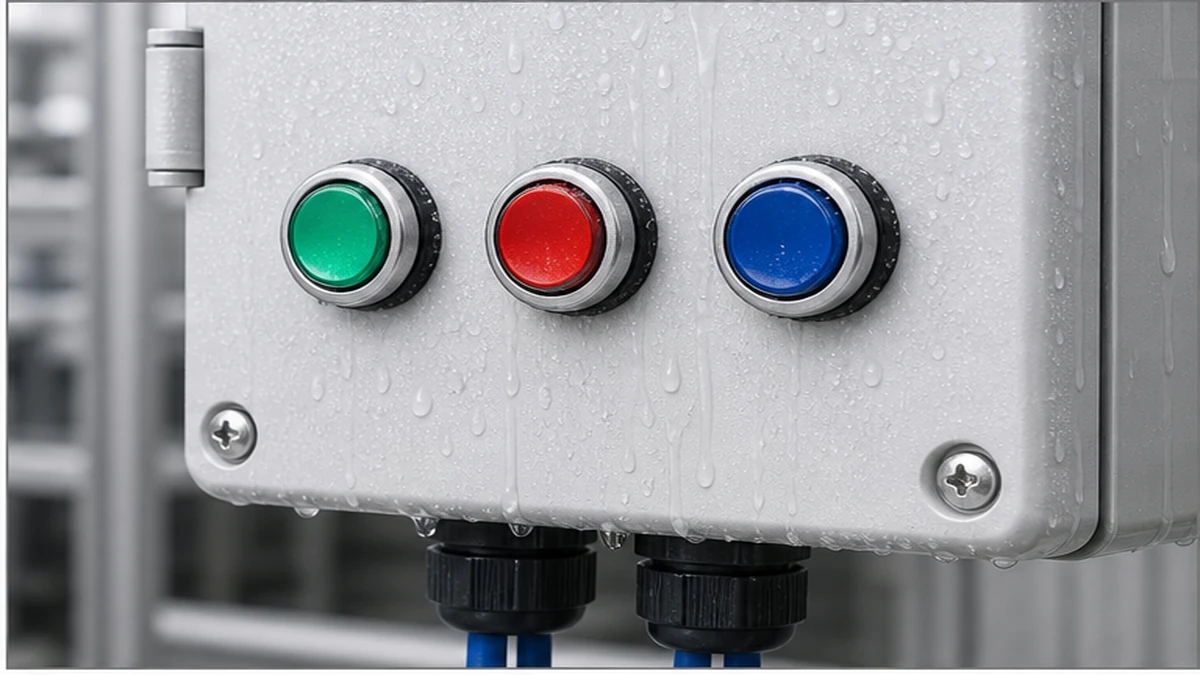
تتعرض أزرار الضغط الخارجية للتدهور الناتج عن الأشعة فوق البنفسجية، مما يؤدي بمرور الوقت إلى هشاشة أغطية المشغلات المصنوعة من البلاستيك الحراري، وتورم أو تصلب الحشيات المطاطية. تُعد أزرار الضغط ذات الهيكل المعدني التي تستخدم مشغلات من الفولاذ المقاوم للصدأ وحشيات من السيليكون أو مادة EPDM المقاومة للأشعة فوق البنفسجية هي المواصفات المناسبة للوحات التحكم المثبتة على الأسطح أو في الساحات أو على جوانب الطرق. في حالة التعرض المستمر لأشعة الشمس المباشرة، تأكد من أن نطاق درجة حرارة التشغيل المذكور في ورقة البيانات يشمل أقصى درجة حرارة محيطة متوقعة في موقع التركيب، بما في ذلك الكسب الحراري الناتج عن أشعة الشمس داخل العلبة.
لضمان مقاومة التآكل في البيئات الخارجية الساحلية، يُعد اختبار التحمل لرذاذ الملح وفقًا للمعيار IEC 60068-2-11 المرجع المعتمد في هذا الصدد. يجب التحقق من مدة الاختبار الواردة في الشهادة بدلاً من الاكتفاء بادعاء عام بمقاومة التآكل.
البيئات الصناعية المتربة: الأسمنت، والحبوب، والمحاجر
تتسرب الجسيمات الدقيقة الموجودة في مصانع الأسمنت، ومنشآت مناولة الحبوب، ومحطات النقل في المحاجر، إلى المناطق المحيطة بأعمدة المشغلات بسرعة أكبر من سرعة تراكم الغبار المرئي على أسطح الألواح. ويتناول معيار مقاومة الغبار (الرقم الأول 6 في تصنيف IP65) هذا المسار على وجه التحديد، لكن جودة مانع التسرب الخاص بجلبة المشغل هي التي تحدد ما إذا كان هذا التصنيف سيصمد في ظل الدورات المتكررة. يجب تحديد الأزرار التي يكون فيها مانع التسرب الخاص بالجلبة مكونًا مطاطيًا مصبوبًا، وليس مانع تسرب على شكل غطاء ذي حافة مطوية يتآكل بشكل أسرع تحت تأثير الجسيمات الكاشطة. وتساعد هندسة المسح الذاتي للتلامس — حيث يتحرك جسر التلامس أفقيًّا وعموديًّا أثناء التشغيل — على إزالة تراكم الأكسيد والجسيمات على أسطح التلامس طوال العمر التشغيلي.
من المستحسن استخدام طلاءات المشغلات المضادة للكهرباء الساكنة في البيئات التي قد يؤدي فيها تراكم الشحنة الكهروستاتيكية على سطح اللوحة إلى جذب الغبار الموصّل وتركيزه بالقرب من جلبة المشغل.
الألواح المقاومة للغسل والمعالجة الغذائية: المواد الكيميائية ونفاثات الضغط العالي
تتضمن بيئات الغسل استخدام المنظفات القلوية وعوامل التنظيف الحمضية والمطهرات المكلورة التي تؤثر سلبًا على الأجزاء المعدنية المصنوعة من سبائك الزنك، والحشيات القياسية المصنوعة من مطاط النيتريل (NBR)، وأسطح الفولاذ المقاوم للصدأ غير المُعالجة بالتصفيح. المواصفات الدنيا المقبولة لأزرار الضغط في مصانع تجهيز الأغذية والمشروبات هي أن يكون المشغل والجسم من الفولاذ المقاوم للصدأ 316، مع تشطيب مصقول كهربائيًا أو مُعالج بالتصفيح، وحشيات من السيليكون المخصص للاستخدام الغذائي. عندما يكون امتثال مادة الحشية للوائح الخاصة بالتلامس مع الأغذية مطلوبًا، تأكد من مطابقة تركيبة الحشية المحددة لمتطلبات FDA 21 CFR أو لائحة الاتحاد الأوروبي 10/2011؛ حيث تتنوع تركيبات السيليكون بشكل كبير وليست جميعها متوافقة مع معايير التلامس مع الأغذية.
بالنسبة لمناطق التنظيف بالخرطوم ذات الضغط العالي، حيث يتجاوز ضغط النفاثة شروط اختبار IP65، قد يكون تصنيف IP66 (نفاثة قوية بقدرة 100 لتر في الدقيقة) أو IP67 (الغمر المؤقت) أكثر ملاءمة. يجب التحقق من ضغط الخرطوم الفعلي المستخدم في عملية التنظيف ومقارنته بشروط اختبار IP قبل اعتبار تصنيف IP65 كافياً.
معايير الاختيار
التركيب في الهواء الطلق
صناعي مغبر
الغسل / تجهيز الأغذية
الحد الأدنى لتصنيف IP
IP65
IP65
IP65، يرجى التحقق من تصنيف IP66/67 للخرطوم المقاوم للضغط العالي
مادة المشغل
الفولاذ المقاوم للصدأ 304 أو 316
البولي كربونات أو الفولاذ المقاوم للصدأ
الفولاذ المقاوم للصدأ 316
مادة الحشية
EPDM أو السيليكون المقاوم للأشعة فوق البنفسجية
NBR أو EPDM
سيليكون مخصص للاستخدام الغذائي
اختبار مرجعي للتآكل
اختبار رش الملح وفقًا للمعيار IEC 60068-2-11
تسرب الغبار وفقًا لطريقة اختبار رمز IP
مقاومة المواد الكيميائية، توافق مركب الحشية
تشطيب السطح
مُعالج بالتحميض أو مطلي بالمسحوق
طلاء مضاد للكهرباء الساكنة (اختياري)
مصقول كهربائيًا أو مُعالج بالتحميض
مادة التلامس
AgNi، طلاء ذهبي سريع للتطبيقات ذات التيار المنخفض
AgNi مع منديل ذاتي التنظيف
AgNi أو مطلي بالذهب لمدخلات PLC ذات التيار المنخفض
الشكل 3. يجب التحقق من سياق الأسلاك التطبيقية بالمقارنة مع مخطط التلامس الخاص بالشركة المصنعة قبل التنشيط.
كيفية التحقق من صحة تصنيف IP65 وإمكانية تتبعه
إن الزر الذي يحمل علامة IP65 مطبوعة على عبوته أو في ورقة البيانات الخاصة به لم يخضع بالضرورة للاختبار وفقًا لطريقة رمز IP. وهناك منتجات غير مطابقة للمعايير موجودة في سلسلة التوريد. وتوفر عملية التحقق الموضحة أدناه لفرق المشتريات نهجًا منظمًا للتأكد من أن التصنيف الذي يتم شراؤه مدعوم بأدلة اختبارية.
الخطوة 1: طلب شهادة اختبار من جهة خارجية
اطلب من المورد شهادة اختبار IP65 صادرة عن هيئة اختبار خارجية معتمدة — ومن الأمثلة على ذلك TUV، أو SGS، أو Bureau Veritas، أو مختبر معتمد من CNAS. يجب أن تنص الشهادة صراحةً على أساس اختبار الحماية من دخول العناصر الخارجية، وتصنيف IP65، ورقم الطراز الذي خضع للاختبار، وتاريخ إصدار صالح. لا تعتبر صفحة الكتالوج أو ورقة البيانات شهادة اختبار. ولا ينبغي اعتبار المورد الذي لا يستطيع تقديم شهادة من جهة خارجية لمنتج يدعي أنه يحمل تصنيف IP65 مؤهلاً للاستخدام في اللوحات الصناعية دون تقديم أدلة إضافية.
الخطوة 2: التحقق من مطابقة الشهادة للطراز المحدد الذي يتم توريده
تأكد من أن رقم الطراز الوارد في الشهادة يتطابق تمامًا مع التكوين المذكور في عرض الأسعار، بما في ذلك نوع المشغل، ومواد تصنيع الهيكل، ونوع الحشية، ونوع كتلة التلامس. قد تحمل المنتجات التي تظهر عليها اختلافات طفيفة — مثل رأس مشغل مختلف، أو مركب حشية بديل، أو عدسة مضيئة مضافة — تصنيفًا فعليًّا مختلفًا إذا لم تكن تلك المكونات جزءًا من الوحدة التي خضعت للاختبار.
الخطوة 3: فحص الحشية المادية قبل التركيب
يجب أن تكون حشية الواجهة الأمامية موجودة ومتصلة وسليمة من حيث الأبعاد عند استلام الزر. تشير الحشية المتصلبة أو المتشققة أو غير المتماثلة إما إلى عيب في التصنيع أو إلى تخزينها لفترة تجاوزت العمر الافتراضي للحشية. ويمكن أن يؤدي كلا الحالتين إلى حدوث انضغاط خارج نطاق التفاوت المسموح به عند تركيب الزر، مما يقلل من فعالية الإحكام إلى ما دون عتبة IP65 دون ظهور أي مؤشر مرئي بعد التجميع.
الخطوة 4: مراجعة إعلان المطابقة
يجب أن يكون المنتج الذي يحمل علامة CE مصحوبًا بإقرار مطابقة موقّع يحدد الكيان القانوني للمُصنِّع، وطرازات المنتج المشمولة، والمعايير المحددة التي يُعلن المطابقة لها. بالنسبة لأزرار الضغط من فئة IP65، يجب أن يشير هذا الإقرار إلى أساس اختبار IP ومعيار أجهزة التحكم المعمول به حيث يتم الإعلان عن القيم الكهربائية. ولا يُعتبر إعلان المطابقة الذي يحدد الاسم التجاري فقط دون ذكر الكيان القانوني للمصنع وثيقة مطابقة للمعايير.
الخطوة 5: التأكد من علامات الاعتماد الخاصة بالسوق
بالنسبة للتركيبات في أمريكا الشمالية، يُشترط عادةً الحصول على شهادة UL أو CSA بالإضافة إلى تصنيف IP65. أما بالنسبة للتركيبات في المملكة المتحدة بعد خروج بريطانيا من الاتحاد الأوروبي، فيُطبق علامة UKCA. تأكد من أن تنسيق الشهادة وعلامتها ونطاقها مناسبان للسلطة القضائية المختصة بالتركيب قبل الموافقة على استخدام المنتج في تصنيع اللوحة.
أفضل الممارسات في تركيب أزرار الضغط المطابقة لمعيار IP65 في العلب الميدانية
قد يفشل زر تم تحديده واعتماده بشكل صحيح في تلبية معايير تصنيف الحماية من دخول العوامل الخارجية أثناء التشغيل، إذا تسبب التثبيت في ظهور فجوات أو اختلال في المحاذاة أو اتباع ممارسات في توصيل الأسلاك تقوض فعالية نظام الإحكام. تتناول قائمة المراجعة التالية أكثر حالات الفشل شيوعًا في التثبيت الميداني.
التحضير لفتحة اللوحة
تأكد من أن قطر الفتحة يتطابق مع قطر الجلبة المحدد للزر ضمن حدود التفاوت الموضحة في الرسم الأبعاد للمنتج. فإن وجود فتحة أكبر بكثير من القيمة الاسمية يؤدي إلى انضغاط الحشية الأمامية بشكل غير متساوٍ، مما يؤدي إلى ظهور مسارات تسرب حول جزء من المحيط. قم بإزالة النتوءات من حافة الفتحة تمامًا على كلا الوجهين؛ حيث إن أي نتوء على الوجه الداخلي للوحة يقطع أخدود الحلقة الدائرية أثناء شد صامولة التثبيت، مما يؤدي إلى عيب دائم في الإحكام لا يمكن رؤيته بعد التجميع.
قم بتنظيف سطح التثبيت لإزالة قشور الصقل، أو رذاذ الطلاء الزائد، أو التآكل السطحي قبل إدخال هيكل الزر. يؤدي وجود الشوائب تحت منطقة التلامس مع الحشية إلى ضغط غير منتظم، وقد يتسبب في انزياح الحشية أثناء التغيرات الدورية في درجة الحرارة.
موضع الحشية وعزم التثبيت
قم أولاً بربط صامولة التثبيت يدويًّا لتوسيط جسم الزر في الفتحة قبل تطبيق عزم الدوران النهائي. يؤدي الإفراط في عزم الدوران إلى تشويه الحشية، مما يقلل من قدرتها على الاستعادة أثناء الدورات الحرارية. أما نقص عزم الدوران فيؤدي إلى ضغط غير كافٍ لإغلاق الختم. قم بتطبيق عزم الدوران باستخدام أداة ربط مخصصة للتركيب على الألواح بدلاً من الزردية؛ حيث تتلامس الزردية مع الصامولة بضغط موضعي مرتفع وقد تتسبب في ارتباط غير متساوٍ للخيوط. نطاق عزم الدوران المستهدف مذكور في ورقة تركيب المنتج — تأكد من هذه القيمة من ورقة البيانات الخاصة بالسلسلة المختارة قبل التجميع.
ممارسات توصيل الأسلاك الخلفية
استخدم أطراف الأسلاك المزودة بحلقات في جميع الوصلات ذات الأطراف اللولبية في البيئات المعرضة للغسل بالماء أو للتكثف. فخيوط الأسلاك المكشوفة تمتص الرطوبة عن طريق الظاهرة الشعرية باتجاه كتلة التلامس، مما يؤدي إلى دخول تلوث لم يُصمم مانع التسرب IP65 الموجود على الواجهة الأمامية للتعامل معه أبدًا. قم بتوجيه الأسلاك مع وضع حلقة تقطير على بعد 150 مم على الأقل أسفل نقطة دخول اللوحة لمنع تسرب الماء عبر غلاف الكابل إلى داخل العلبة. استخدم وصلات الكابلات المصنفة وفقًا لمعيار IP في جميع نقاط دخول القنوات أو الكابلات، بحيث تكون مصنفة بشكل مستقل وفقًا لمعيار IP65 أو أعلى وفقًا للتصنيف البيئي للعلبة.
التحقق بعد التثبيت
قبل إغلاق الغلاف، تأكد مما يلي:
يتحرك المشغل عبر مساره الكامل دون أن يواجه أي احتكاك ميكانيكي مع حافة فتحة اللوحة.
يتم ضغط الحشية الأمامية بشكل متساوٍ دون وجود أي فجوة مرئية حول محيط جسم الزر.
يتم ربط جميع براغي الأطراف بالعزم المحدد، ولا يظهر أي جزء مكشوف من الموصل خارج لوحة التوصيل.
أختام باب الحاوية سليمة، ويُغلق الباب بحيث يضغط بشكل كامل على الختم المحيط به.
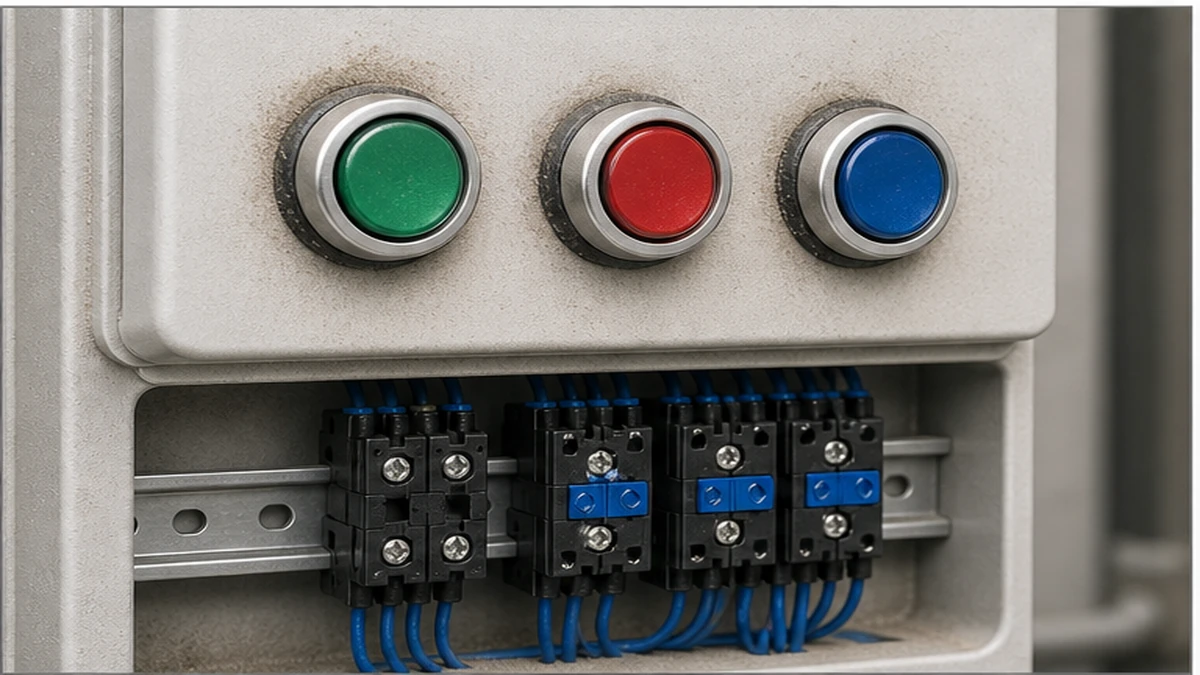
الشكل 4. يجب أن يتضمن الاستفسار الكامل التصنيف وتسلسل التلامس والتركيب والحاوية ومتطلبات المستند.
كيف تتأكد شركة Shieldhz من تكوين أزرار الضغط وفقًا لمعيار IP65 وتوثيقها لمشروع لوحة التحكم الخاصة بك
يتطلب تحديد مفتاح زر ضغط بمعيار IP65 لتطبيق لوحة معين اتخاذ سلسلة من القرارات — مثل نوع المشغل، وبرنامج التلامس، ودرجة جودة المواد، والمواصفات الكهربائية، ونطاق الوثائق — والتي يُفضل تأكيدها من خلال مراجعة منظمة قبل الطلب بدلاً من حلها أثناء التركيب. تطبق Shieldhz، العلامة التجارية التصديرية لشركة Zhejiang Shihe Electric Co., Ltd.، عملية تأكيد المنتج المصممة للتحقق من صحة كل قرار من هذه القرارات مقارنة بمتطلبات اللوحة الفعلية للمشتري قبل تقديم الطلب.
تأسست شركة تشجيانغ شيهي الكهربائية المحدودة في عام 2014، وتدير أعمالها من مدينة يوتشينغ بمقاطعة تشجيانغ — وهي منطقة صناعية تشتهر بتركيزها على تصنيع المكونات الكهربائية ذات الجهد المنخفض. تبلغ مساحة المصنع أكثر من 5,000 متر مربع، ويعمل فيه أكثر من 100 موظف، ويضم أكثر من 40 آلة للإنتاج والاختبار. تشمل شهادات اعتماد المنتجات ISO 9001 وCE وRoHS وTUV وUL وUKCA وCCC وCB، مع تأكيد قابلية تطبيق الشهادات المحددة وفقًا لسلسلة المنتجات وسوق الوجهة.
مراجعة مدخلات التكوين قبل تقديم عرض الأسعار
عندما يقدم أحد المشترين استفسارًا بشأن مفاتيح الضغط من فئة IP65، تقوم شركة Shieldhz بمراجعة العناصر التالية لتحديد المسار الصحيح لاختيار الطراز المناسب:
جهد الإمداد والتيار التشغيلي المقنن وفقًا لفئة الاستخدام المطلوبة (AC-15 أو DC-13 حسب الحالة)
برنامج التلامس: NO، NC، أو تركيبة NO مع NC، تم التحقق من صحتها مقارنةً بمخطط التوصيلات الكهربائية أو مخطط الدائرة التحكمية الخاص بالمشتري
قطر فتحة اللوحة — 22 مم أو 30 مم هما الخياران القياسيان؛ وتلبي سلسلة الأزرار المعدنية SH-GQ وسلسلة SH-B2 مواصفات التثبيت والهيكل المختلفة ضمن هذا النطاق
نوع المشغل: مؤقت، أو قابل للتثبيت، أو مضيء (مع تحديد جهد المصباح)، أو إيقاف الطوارئ
التصنيف البيئي: التعرض للأشعة فوق البنفسجية في الهواء الطلق، أو البيئات الصناعية المليئة بالغبار، أو الغسل القياسي، أو الغسل الكيميائي بالضغط العالي، وهو ما يحدد اختيار مادة الحشية ودرجة جودة الهيكل
متطلبات الاعتماد والتوثيق الخاصة بسوق الوجهة: شهادة الامتثال (CE DoC)، وتقرير اختبار TUV، وشهادة IP65 المرتبطة بالطراز الذي خضع للاختبار، وإدراج UL، أو إعلان UKCA
حزمة الوثائق المقدمة عند تأكيد الطلب
بمجرد تأكيد المسار النموذجي، تتضمن حزمة الوثائق المُعدة للطلب عادةً شهادة اختبار IP65 الصادرة عن جهة خارجية معتمدة، ورسمًا أبعاديًا يوضح قطر فتحة اللوحة وعمق التثبيت، وطول التداخل اللولبي، ومخطط توصيلات كهربائية يتوافق مع تكوين برنامج التلامس المؤكد، وإعلان المطابقة CE للشحنات الموجهة إلى الأسواق الأوروبية أو الأسواق المشمولة بشهادة UKCA. يمكن للمشترين الذين يحتاجون إلى تنسيقات شهادات مخصصة، أو نطاقات محددة لتقارير الاختبار، أو علامات اعتماد إضافية للصناعات الخاضعة للتنظيم، تأكيد هذه المتطلبات من خلال عملية الاستفسار قبل تحديد موعد الإنتاج.
بالنسبة لتصميمات اللوحات التي تجمع بين أزرار الضغط المحكمة الإغلاق، ومفاتيح الاختيار، ومصابيح الإشارة، تقوم شركة Shieldhz بمراجعة مجموعة المشغلات، ومسار كتلة التوصيلات، والجهد الكهربائي للمصابيح، ولوحة التسميات التوضيحية، وشروط تركيب اللوحة معًا. إن أساسيات مفاتيح الضغط يقدم مزيدًا من السياق لإجراءات الاتصال، في حين أن أساسيات مصابيح الإشارة يشرح الجهد الكهربائي للمصباح وكيفية اختيار اللون.
الأسئلة الشائعة
ما الفرق بين تصنيفي IP65 وIP66 في مفاتيح الضغط؟
يوفر تصنيف IP65 الحماية ضد نفاثات الماء ذات الضغط المنخفض بمعدل 12.5 لترًا في الدقيقة تقريبًا من أي اتجاه. أما تصنيف IP66 فيتحمل نفاثات أقوى بمعدل 100 لتر في الدقيقة من أي اتجاه. وبالنسبة للتنظيف القياسي بالخرطوم في البيئات الصناعية العامة، يُعد تصنيف IP65 هو الحد الأدنى المقبول للمواصفات. قد تفرض محطات الغسل بالضغط العالي في صناعة الأغذية أو المشروبات أو الصناعات الدوائية ضغوطًا لنفث الماء تتجاوز شروط اختبار IP65، مما يجعل تصنيف IP66 أو IP67 هو الاختيار الأنسب. تأكد من مطابقة الضغط الفعلي للخرطوم المستخدم في عملية التنظيف بالمنشأة لمعايير اختبار IP قبل تحديد أي من هذين التصنيفين.
هل يمكن استخدام أزرار الضغط المصنفة IP65 في ظروف تكون فيها العلبة مغمورة بالمياه أو مغمورة بالكامل؟
لا. لا يوفر تصنيف IP65 أي حماية ضد الغمر. يتطلب الغمر المؤقت حتى عمق متر واحد لمدة 30 دقيقة تصنيف IP67، بينما يتطلب الغمر المستمر أو إلى عمق أكبر تصنيف IP68، مع مراعاة العمق والمدة المحددين من قبل الشركة المصنعة. تتناول تصنيفات IP65 وIP66 نفاثات الماء فقط؛ أما العلبة المعرضة للغمر أو تجمع المياه على واجهة لوحة التحكم فتتطلب تصنيفًا أعلى للحماية من دخول الماء.
هل ينطبق تصنيف IP65 على زر الضغط بأكمله أم على الحشية الأمامية فقط؟
يجب أن ينطبق تصنيف IP65 الصحيح على الوحدة المُجمَّعة بالكامل — غطاء المشغل، والجسم، والحشية الأمامية، وحجرة الأطراف، وجميع واجهات الإحكام التي يتم تقييمها معًا. اطلب شهادة اختبار أو مجموعة وثائق تحدد رقم الطراز المُجمَّع بالكامل، وليس شهادة خاصة بجسم الغلاف الذي تم اختباره بشكل منفصل عن مجموعة المشغل وكتلة التلامس. فالتصنيف الذي ينطبق فقط على الغلاف دون عمود المشغل وتكوين الأطراف الخلفية لا يعكس أداء الختم الفعلي للزر المركب.
ما هي مادة المشغل التي ينبغي أن أختارها للوحة خارجية تقع في منطقة ساحلية؟
بالنسبة للتركيبات الخارجية الساحلية، غالبًا ما يُنظر إلى الفولاذ المقاوم للصدأ من النوع 316 كخيار أول نظرًا لمقاومته للتآكل الناتج عن الكلوريد، لكن الاختيار النهائي للمادة يجب أن يتماشى مع بيئة المشروع ووثائق المورد. يوفر الفولاذ المقاوم للصدأ من النوع 304 مقاومة معتدلة للتآكل في الظروف الخارجية العامة، لكنه قد يتعرض للتآكل النقطي في البيئات عالية الكلوريد. لا تُعد أجسام المشغلات المصنوعة من سبائك الزنك مناسبة للاستخدام في المناطق الساحلية. كما أن التشطيب السطحي للفولاذ المقاوم للصدأ، سواء كان مصقولًا كهربائيًا أو مُخمدًا، يطيل العمر التشغيلي في الأجواء الغنية بالملح عن طريق تقليل خشونة السطح في المناطق التي يتركز فيها الكلوريد.
كيف يمكنني التأكد من أن علامة CE الموجودة على زر الضغط المصنف IP65 هي علامة أصلية؟
اطلب من المورد تقديم «إعلان المطابقة» الموقع. ويحدد إعلان المطابقة المتوافق مع المتطلبات هوية الكيان القانوني للمصنع بالاسم والعنوان، ويورد قائمة بالمعايير المحددة التي تم الإعلان عن المطابقة لها، بما في ذلك أساس تصنيف IP ومعيار التصنيف الكهربائي المعمول به عند الاقتضاء، ويحمل تاريخ إصدار قابل للتتبع وتوقيعًا معتمدًا. إن علامة CE المطبوعة على العبوة دون وجود إعلان مطابقة (DoC) مطابق يحدد هوية المصنع لا يُعد إعلانًا مطابقًا للمواصفات ويجب التعامل معه على أنه غير مُثبت.
ما هي فئة استخدام التلامس الأكثر أهمية بالنسبة لأزرار التحكم في المحركات؟
تُعد AC-15 فئة الاستخدام الحرجة للأزرار التي تقوم بتحويل الأحمال الحثية للتيار المتردد، مثل موصلات المحركات، أو ملفات المرحلات، أو الصمامات الكهرومغناطيسية. تحدد AC-15 معدل التشغيل عند قطع التيار في ظروف الأحمال الحثية، والتي تفرض ضغطًا على نقاط التلامس أعلى بكثير مقارنةً بفئة AC-12 المقاومية. تُظهر أوراق البيانات أحيانًا تصنيف التيار الأعلى AC-12 بشكل بارز؛ لذا يجب دائمًا تحديد وتأكيد تصنيف التيار AC-15 عند جهد الإمداد المحدد لديك، حيث إن هذا يحدد ما إذا كانت نقاط التلامس في الزر ستتحمل عبء التبديل على مدار عدد دورات التحمل المحددة.
كم مرة ينبغي فحص حشيات IP65 في اللوحات الخارجية أو اللوحات القابلة للغسل؟
يجب فحص الحشيات بصريًّا في كل فترة صيانة مجدولة للوحات. ويُعد الفحص السنوي معيارًا عمليًّا للوحات المثبتة في الهواء الطلق، بينما يُعد الفحص كل ستة أشهر معيارًا عمليًّا للوحات المثبتة في بيئات تتعرض للغسل بالماء. تشمل المؤشرات التي تدل على أن الحشية تحتاج إلى الاستبدال: التصلب الظاهر أو تشقق السطح، أو الضغط غير المتماثل الذي يظهر عند فحص جسم الزر في مكانه، أو أي تشوه يمنع الحشية من الاستقرار بشكل مستوٍ على سطح اللوحة. يُعد استبدال الحشية أحد بنود الصيانة المجدولة للمواد الاستهلاكية في البيئات القاسية، وليس إصلاحًا تفاعليًّا ناتجًا عن تسرب المياه المرئي — فبحلول الوقت الذي تصل فيه المياه إلى نقاط التلامس، يكون فشل الختم قد حدث بالفعل.
شي، موكسي
يكتب شي، موكسي مقالات شيلدهز الفنية لمشتري التحكم الصناعي والمكونات الكهربائية، والتي تغطي مفاتيح الكامات الدوارة، ومفاتيح العازل، ومفاتيح فصل التيار المستمر الكهروضوئية، وأزرار الضغط، وأضواء المؤشر، والحاويات المقاومة للماء، والكتل الطرفية. تستند المقالات على خبرة شركة Zhejiang Shihe Electric Co., Ltd. في التصنيع والتصدير، مع التركيز العملي على اختيار الطراز وأوراق البيانات والرسومات والشهادات وتصنيفات IP وتفاصيل الاستفسار التي يجب على المشترين التأكد منها قبل الطلب.