اختيار حاوية عازل التيار المستمر بمعيار IP66 للأنظمة الشمسية الخارجية
تحتاج علب عوازل التيار المستمر (DC) ذات تصنيف IP66 إلى أكثر من مجرد ملصق. فالحشية، والممر، ومانع تسرب المقبض، ومستوى التعرض أثناء التركيب هي العناصر التي تحدد التصنيف أثناء التشغيل.
إن اختيار الصندوق المناسب لعازل التيار المستمر (DC) بمعيار IP66 لمشروع طاقة شمسية خارجي يعني التأكد من ستة متغيرات مترابطة في آن واحد: الجهد المقنن للتيار المستمر، والتيار المقنن، وتكوين الأقطاب، ومواد الصندوق، ومستوى الحماية من دخول العوامل الخارجية، وحزمة الشهادات. قد يؤدي عدم التوافق في أي من هذه المتغيرات إلى فشل عمليات الفحص، أو حدوث أعطال قوس كهربائي، أو تسارع الأعطال الميدانية. يرشد هذا الدليل مهندسي لوحات التحكم الصناعية، ومصنعي اللوحات، وفرق المشتريات لدى مصنعي المعدات الأصلية (OEM) عبر كل قرار من قرارات الاختيار بالتسلسل، ويحدد أخطاء تحديد الحجم التي من المرجح أن تتسبب في فشل عمليات فحص أنظمة الطاقة الشمسية، ويشرح كيفية التحقق من تجميع العلبة بالكامل قبل الشراء.
حدود الاختيار: يُعد تصنيف IP66 تصنيفًا يخص حالة التركيب بالنسبة للعازل المُجمَّع، والغلاف، ومداخل الكابلات، والحشية، وواجهة المقبض، وسطح التثبيت. وينبغي التأكد من ذلك من خلال الرسم الفني الحالي، وورقة البيانات، والشهادة، وحالة التركيب في المشروع، ولا ينبغي اعتباره ضمانًا عامًّا لكل عملية تجميع ميدانية.
ما هو غلاف عازل التيار المستمر من فئة IP66 ولماذا يعتبر مهمًا في مجال الطاقة الشمسية؟
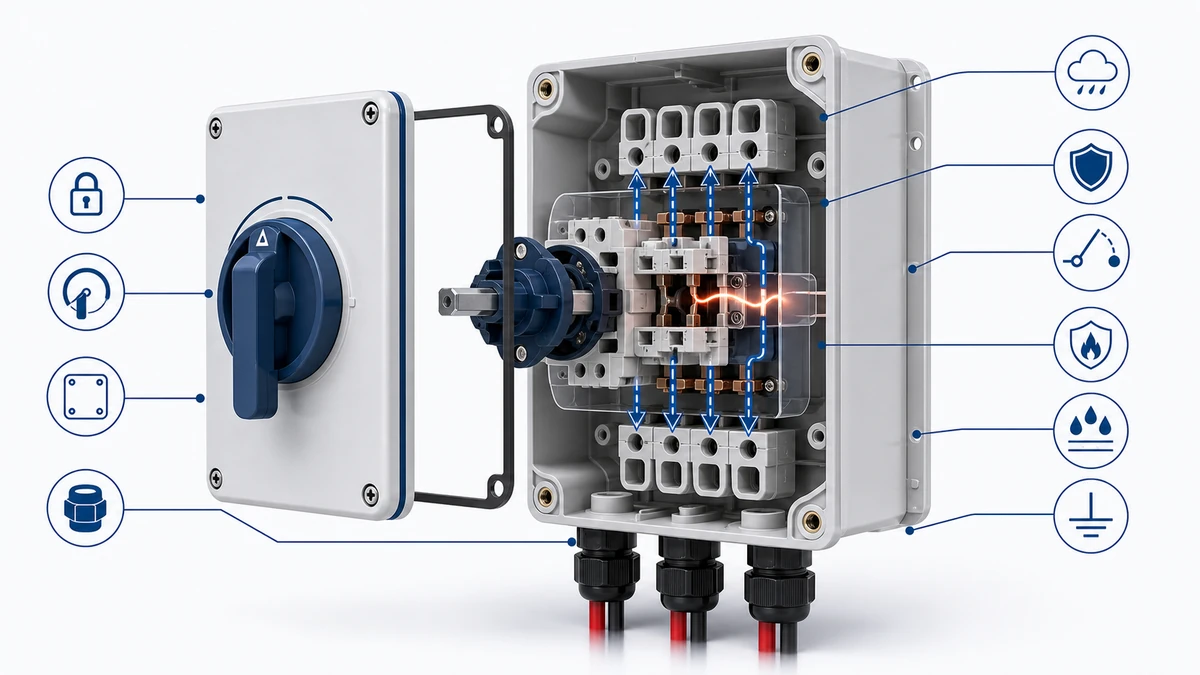
صندوق عازل التيار المستمر (DC) من فئة IP66 هو غلاف مقاوم للعوامل الجوية يضم مفتاح فصل مصمم للتيار المستمر داخل غلاف محكم الإغلاق يستوفي معايير الحماية من دخول العوامل الخارجية (IP) من الفئة 66. ويشير الرقم الأول إلى الحماية الكاملة من دخول الغبار؛ بينما يشير الرقم الثاني إلى الحماية من نفاثات الماء القوية القادمة من أي اتجاه. في الأنظمة الكهروضوئية الخارجية، يوفر هذا المزيج نقطة عزل متوافقة وقابلة للصيانة مباشرةً على سلسلة التيار المستمر أو دائرة المصفوفة.
شرح تصنيف IP66
يحدد رمز IP مستوى الحماية من دخول العناصر الخارجية باستخدام رقمين. الرقم الأول (6) يؤكد الحماية الكاملة من دخول الغبار في ظل ظروف اختبار تعادل الفراغ. أما الرقم الثاني (6) فيؤكد الحماية من نفاثات الماء عالية الضغط التي تصل إلى 100 لتر في الدقيقة من أي اتجاه. بالنسبة للمنشآت الكهروضوئية المثبتة على الأسطح أو على الأرض والمعرضة للمطر والعواصف الترابية والغسيل بالضغط أثناء الصيانة، يُعد هذا المستوى المزدوج من الحماية الحد الأدنى العملي. وعادةً ما تكون العلب ذات تصنيف IP54 أو IP55 — التي تسمح بدخول كمية محدودة من الغبار وتحمي فقط من رذاذ الماء — غير كافية لعزل التيار المستمر على مستوى السلسلة المثبت على هياكل الرفوف المكشوفة.
لفهم كيفية تصنيف معيار IP لدرجات الحماية من دخول العوامل الخارجية بشكل كامل، يرجى الاطلاع على دليل تصنيف IP.
لماذا يُعد تصنيف التيار المستمر (DC) أمرًا لا يمكن التنازل عنه في الدوائر الكهروضوئية
تختلف طريقة إطفاء أقواس التيار المستمر عن أقواس التيار المتردد، وذلك لعدم وجود تقاطع طبيعي للتيار مع الصفر كل 10 مللي ثانية. فمفتاح الفصل غير المصمم للتيار المستمر سيستمر في توليد قوس كهربائي كان جهاز مصمم للتيار المتردد سيطفئه بشكل طبيعي، مما يشكل خطر نشوب حريق عند جهد أنظمة الطاقة الكهروضوئية الذي يتراوح عادةً بين 600 فولت تيار مستمر و1,500 فولت تيار مستمر عند مخرج المصفوفة. اختيار مفتاح عازل التيار المستمر الكهروضوئي يُعد اختيار المكونات المصنفة صراحةً للاستخدامات الكهروضوئية — مع فئة استخدام تيار مستمر مؤكدة وقيمة جهد كهربائي محددة — الخطوة الأولى الحاسمة قبل الشروع في اختيار العلبة.
وظيفتها ضمن النظام الكهروضوئي
في التركيبات النموذجية لمحولات التيار المتسلسل السكنية أو التجارية، يتم تركيب غلاف عازل التيار المستمر (DC) ذي تصنيف IP66 بين صندوق التوصيل الخاص بمصفوفة الألواح الكهروضوئية ومدخل التيار المستمر (DC) الخاص بالمحول. ويوفر هذا الغلاف حالة الإيقاف المحددة المطلوبة قبل قيام الفنيين بفتح غلاف المحول أو غلاف وحدة التجميع. كما يحمي الغلاف أيضًا الوصلات الطرفية — التي غالبًا ما تكون نقطة الفشل في دوائر التيار المستمر الخارجية — من تسرب الرطوبة الذي يزيد من مقاومة التلامس ويسرع من التآكل عند نقاط التوصيل بين الموصلات المصنوعة من الألومنيوم أو النحاس.
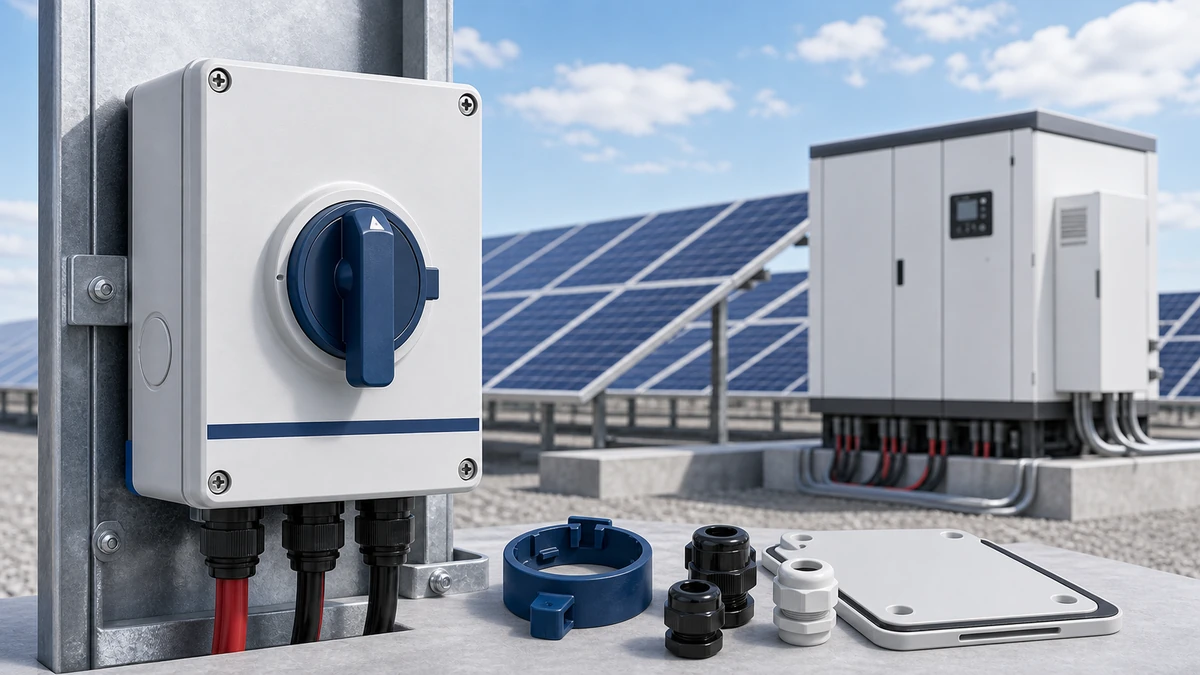
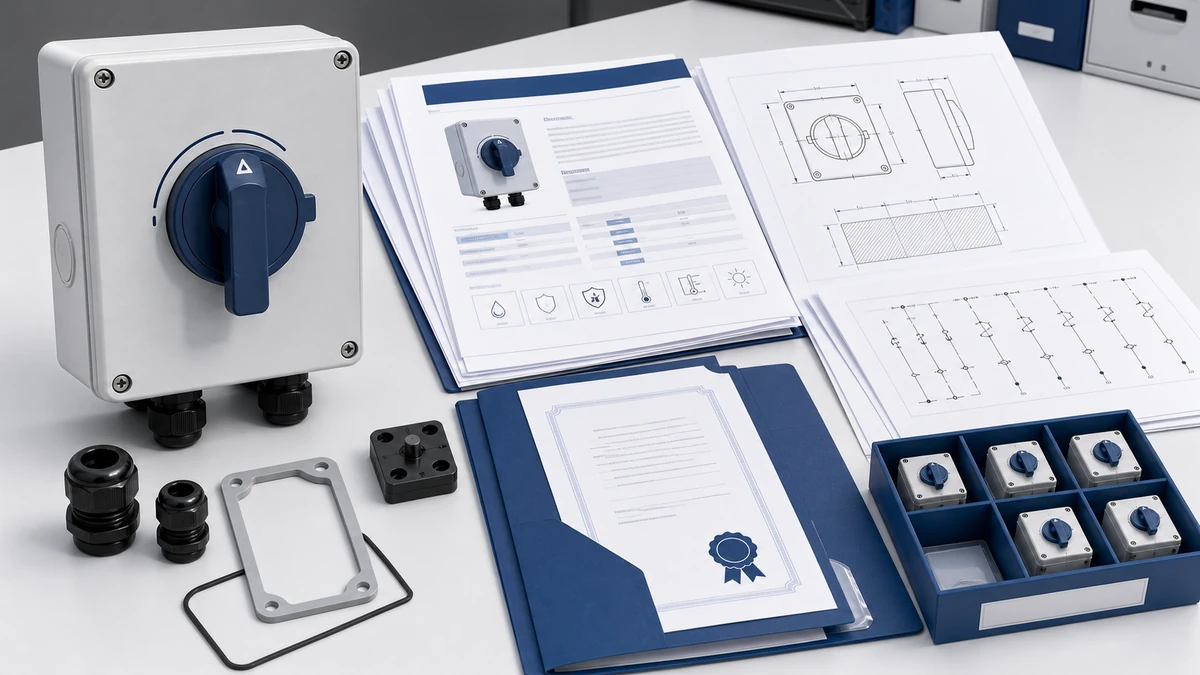
الشكل 1. المفهوم الأساسي وراء اختيار غلاف عازل التيار المستمر المطابق لمعيار IP66.
معايير الاختيار الرئيسية: مواءمة المواصفات مع ظروف التركيب
يتطلب اختيار الصندوق المناسب لمفصل التيار المستمر (DC) بمعيار IP66 مطابقة خمسة مواصفات أساسية مع ظروف التركيب لديك: الجهد المقنن، والتيار المقنن، وتكوين الأقطاب، ومواد الصندوق، والامتثال لمعايير الاعتماد.
القيمة الاسمية للجهد الكهربائي
يحدد جهد الدائرة المفتوحة لسلسلة الألواح الكهروضوئية (Voc) الحد الأدنى المطلوب لجهد التيار المستمر. ونظرًا لارتفاع جهد الدائرة المفتوحة (Voc) في الطقس البارد، تُصمم معظم أنظمة السلاسل السكنية والتجارية بحيث لا تتجاوز القيم القصوى للنظام 600 فولت تيار مستمر، أو 1,000 فولت تيار مستمر، أو 1,500 فولت تيار مستمر. يجب أن يتحمل مفتاح العزل جهد عزل مقنن (Ui) يساوي أو يزيد عن الجهد الأقصى للنظام في ظل أسوأ ظروف درجة الحرارة — وليس مجرد جهد التشغيل الاسمي.
صيغة تصحيح مفيدة: Voc(المصححة) = Voc(STC) مضروبة في العدد 1 مضافًا إليه حاصل ضرب معامل درجة الحرارة للجهد والفرق بين أدنى درجة حرارة للموقع و25 درجة مئوية. يتراوح معامل درجة الحرارة للجهد عادةً بين سالب 0.30 في المائة لكل درجة مئوية وسالب 0.45 في المائة لكل درجة مئوية، اعتمادًا على تقنية الألواح. لا تحدد الحجم بناءً على جهد التشغيل في ظروف STC وحدها.
بالنسبة للأنظمة التي يصل جهدها إلى 1,000 فولت تيار مستمر، يُعد مفتاح العزل GF40 PV DC نقطة انطلاق مرجعية على نطاق واسع لفصل الدوائر على مستوى السلسلة. يرجى التأكد من قيم الجهد المحددة في ورقة بيانات المنتج الحالية قبل تحديد المواصفات.
التصنيف الحالي
يجب أن يتحمل العازل تيار الدائرة القصيرة الأقصى (Isc) مضروبًا في عدد السلاسل المتوازية التي تمر عبره. يبلغ التصنيف النموذجي لعازل السلسلة السكني 32 أمبير تيار مستمر، في حين تتطلب العلب على مستوى المجمّع غالبًا تصنيفات تبلغ 63 أمبير تيار مستمر أو أعلى. تأكد من سعة التوصيل والقطع وفقًا لفئة استخدام التيار المستمر المطبقة وفقًا لمعيار المفتاح-الفاصل الوارد في ورقة بيانات المنتج، وليس من تعريفات الفئات العامة وحدها.
تكوين الأعمدة
تتطلب معظم أنظمة المحولات السلسلية قاطعًا ثنائي الأقطاب يعمل على فصل الموصلات الموجبة والسالبة في آن واحد. وقد تتطلب الأنظمة التي تستخدم مصفوفات كهروضوئية غير مؤرضة أو عائمة تكوينات رباعية الأقطاب. يرجى التحقق من عدد الأقطاب المطلوب مع الشركة المصنعة للمحول ومعايير التركيب المعمول بها قبل الطلب.
مواد الضميمة
يُعد البولي كربونات (PC) الخيار القياسي لمقاومة التآكل والاستقرار في مواجهة الأشعة فوق البنفسجية في المواقع الساحلية أو تلك التي تتسم بارتفاع مستويات الأشعة فوق البنفسجية. وتوفر أنواع النايلون المقوى بالألياف الزجاجية صلابة إضافية في الحالات التي تشكل فيها الأحمال الميكانيكية مصدر قلق. تأكد من أن مادة الغلاف تحمل تصنيفًا لمقاومة الأشعة فوق البنفسجية مناسبًا للمنطقة المناخية ومؤشر الأشعة فوق البنفسجية السنوي في موقع التركيب.
الشهادات
تشمل المتطلبات الدنيا لمعظم الأسواق معيار «المفتاح-الفاصل» الخاص بالمفاتيح-الفاصلات، ورمز IP للحماية من دخول العناصر الخارجية بمستوى IP66، وحيثما ينطبق ذلك، شهادة TUV أو المعيار IEC 62109-1 لسلامة المكونات الخاصة بأنظمة الطاقة الكهروضوئية. اطلب شهادة الاختبار التي تتضمن الرقم المرجعي للجهة المصدرة، لا الاكتفاء بمجرد ادعاء وارد في ورقة البيانات الفنية. للتحقق المستقل من نطاق معيار المفتاح-الفاصل — الذي ينطبق على المفاتيح، والفواصل، والمفاتيح-الفواصل، ووحدات الصمامات المركبة لدوائر التوزيع ودوائر المحركات ذات الجهد المقنن الذي يصل إلى 1,000 فولت تيار متردد أو 1,500 فولت تيار مستمر — راجع النشر الرسمي لـ«كود IP». للاطلاع على شرح عملي لكيفية تطبيق معيار قاطع التوصيل على تطبيقات فصل الألواح الكهروضوئية، انظر نطاق معيار قاطع التوصيل.
IP66 مقابل IP65 مقابل IP67: اختيار مستوى الحماية المناسب من التسرب
يحدد معيار IP تصنيف الحماية من التسرب، حيث يحدد كلًّا من منع دخول الجسيمات الصلبة (الرقم الأول) ومقاومة تسرب السوائل (الرقم الثاني). وبالنسبة لمعظم تطبيقات الألواح الكهروضوئية الخارجية، يُعد الرقم الخاص بالحماية من السوائل هو العامل الحاسم في الاختيار.
مقارنة التصنيفات الثلاثة جنبًا إلى جنب
يتميز التصنيف IP65 بمقاومته لنفثات الماء ذات الضغط المنخفض القادمة من أي اتجاه. أما التصنيف IP66 فيتحمل نفثات الماء القوية ذات الضغط الأعلى بكثير من أي زاوية، مما يجعله أكثر متانة بشكل ملحوظ في مواجهة المطر المدفوع بالرياح، والغسيل بالضغط العالي، والأمطار الغزيرة التي تصل إلى قوة الرياح الموسمية. يضيف تصنيف IP67 القدرة على الغمر — وهو أمر مهم في المواقع التي يُعد تجمع المياه فيها خطرًا موثقًا، ولكنه غير ضروري عمومًا في حالات تركيب العوازل على الحائط أو على الرفوف.
بالنسبة للتركيبات على الأسطح أو على الأرض، غالبًا ما يكون الفارق العملي بين معياري IP65 وIP66 أكثر أهمية من الانتقال من معيار IP66 إلى معيار IP67.
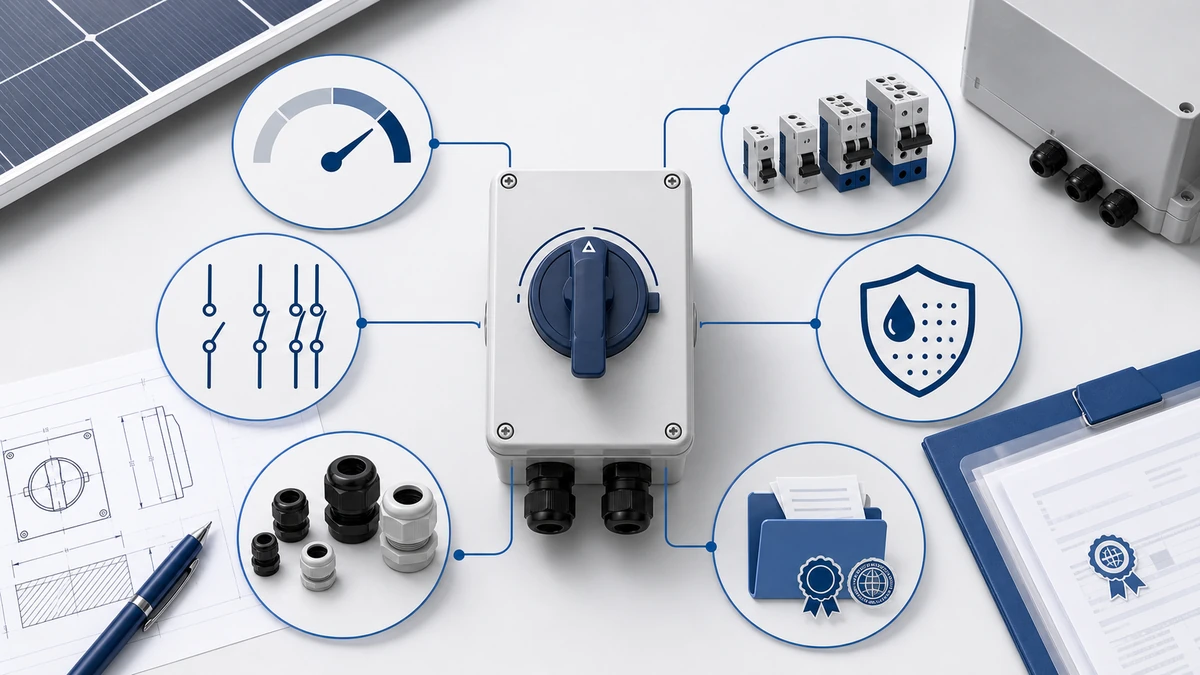
الشكل 2. يجب أن تربط فحوصات الاختيار جهد التيار المستمر، وتيار السلسلة، وعدد الأعمدة، والحاوية، ومدخل الكابل، والوثائق.
بيئة التثبيت
عوامل الإجهاد الرئيسية
الحد الأدنى الموصى به للتصنيف
الملاحظات
على السطح، سكني أو تجاري
المطر، الأشعة فوق البنفسجية، التنظيف بالضغط العالي من حين لآخر
IP65
يُفضل استخدام معيار IP66 في الأماكن التي يُجرى فيها الغسل بالضغط بشكل روتيني
مركب على الأرض في حقل مفتوح
المطر الذي تحمله الرياح، رذاذ الطين، رشاشات الرش الزراعية
IP66
التعرض الميكانيكي للتيار النفاث أعلى منه على السطح
منطقة ساحلية تقع على بعد 1 كم من الشاطئ
رذاذ الملح، الرطوبة، دورات التكثيف
IP66
يُستخدم مع قطع تثبيت من الفولاذ المقاوم للصدأ 316 أو المطلية؛ يرجى مراجعة تصنيف مقاومة ضباب الملح بشكل منفصل
صحراوية أو قاحلة مع عواصف ترابية
تسرب الغبار، التغيرات الحرارية المتكررة، الأشعة فوق البنفسجية
من IP65 إلى IP66
الرقم الأول 6 (الاستبعاد التام للغبار) هو المعلمة الحاسمة
ملاحظات حول اختيار الحقول
في المواقع الزراعية أو الصناعية المثبتة على الأرض، تُستخدم أحيانًا آلات الغسيل بالضغط لتنظيف هياكل الرفوف. يجب تحديد تصنيف IP66 بغض النظر عن التصنيف البيئي الرسمي في تلك الحالة.
يُعد اختبار الأداء في ظروف الضباب الملحي وفقًا للمعيار IEC 60068-2-52 اختبارًا منفصلاً عن معيار IP66. تأكد من أن الغلاف يحمل كلا التصنيفين للتركيبات الساحلية الواقعة على مسافة لا تزيد عن 1 كم من الخط الساحلي، وتحقق من أن مادة الحشية مصنفة للتعرض للضباب الملحي.
يُعد تدهور الحشوات تحت تأثير الأشعة فوق البنفسجية أكثر أنماط الفشل شيوعًا على المدى الطويل في تصنيف IP للعلب الخارجية. يجب فحص أختام الأبواب كل خمس سنوات على الأقل. ويجب استخدام حشوات بديلة من الشركة المصنعة الأصلية للعلبة، حيث إن الحشوات البديلة العامة قد لا تحافظ على الشكل الهندسي للضغط المطلوب للحفاظ على تصنيف IP66 طوال عمر المنتج.
في المواقع الصحراوية المرتفعة، تؤدي الدورات الحرارية إلى إجهاد متكرر ناتج عن التمدد والانكماش على مفاصل الأغلفة. وعادةً ما يتفوق تصميم الحشية ذات الضغط المزدوج في الأداء على السدادات ذات الحافة المفردة في هذه البيئة.
الأخطاء الشائعة في تحديد المقاسات التي تؤدي إلى الرسوب في فحوصات أنظمة الطاقة الشمسية
الخطأ الأول — تحديد تصنيف المفتاح بناءً على تيار STC بدلاً من جهد الفولط في أسوأ الحالات
يقوم المصممون أحيانًا بتحديد حجم مفتاح العزل للتيار المستمر بناءً على تيار التشغيل في ظروف الاختبار القياسية، بدلاً من الجهد الأقصى للدائرة المفتوحة عند أبرد درجة حرارة محيطة متوقعة. يجب أن تكون مفاتيح العزل للتيار المستمر مصنفة وفقًا لأقصى جهد للنظام، بما في ذلك الجهد المفتوح (Voc) المُصحح حسب درجة الحرارة. قم بتطبيق صيغة التصحيح الموضحة في قسم تصنيف الجهد، واختر مفتاحًا مصنفًا على الأقل وفقًا لتلك القيمة المُصححة قبل تحديد العلبة.
الخطأ الثاني — تجاهل عدد الأعمدة في مخطط تأريض المصفوفة
يؤدي الفصل أحادي القطب في مصفوفة الألواح الكهروضوئية غير المؤرضة إلى بقاء أحد الموصلات تحت الجهد أثناء الصيانة. وتشترط معظم الهيئات التنظيمية عزلًا ثنائي القطب أو رباعي القطب للدوائر التي تعمل بالتيار المستمر غير المؤرضة. يرجى التحقق من عدد الأقطاب مقارنةً بمخطط تأريض المصفوفة قبل الطلب. الـ مفتاح عزل التيار المستمر الكهروضوئي GF40 يتوفر هذا المنتج بتكوينات متعددة الأقطاب تناسب هذا المطلب؛ يرجى التحقق من خيارات عدد الأقطاب المتاحة في ورقة البيانات الحالية.
الخطأ الثالث — اختيار حجم الصندوق الأصغر من اللازم بالنسبة لمساحة مرور الكابلات
غالبًا ما يختار الفنيون حاوية تتناسب مع هيكل المفتاح، لكنها لا تترك مسافة كافية حول فتحات الكابلات، مما يجعل من الصعب تركيب حشوات الكابلات وإعادة إحكام إغلاقها وفقًا لمعيار IP66 المطلوب بعد توصيل الأسلاك. يجب توفير منطقة عازلة كافية على الأقل لدخول الأنابيب في الأبعاد الداخلية. تحقق من الرسم التفصيلي للأبعاد — وليس فقط المساحة التي يشغلها المفتاح — قبل تأكيد حجم الحاوية.
الخطأ الرابع — إغفال تخفيض السعة الحرارية في البيئات ذات درجات الحرارة المحيطة المرتفعة
قد ترتفع درجات الحرارة الداخلية في العلب المركبة تحت أشعة الشمس المباشرة بشكل كبير عن درجة الحرارة المحيطة المرجعية البالغة 25 درجة مئوية، والتي تُستخدم في تحديد تصنيفات تلامس المفاتيح. قد يتطلب المفتاح المصنف للتيار الكامل عند 25 درجة مئوية تخفيضًا في تقييم التيار عند ارتفاع درجات الحرارة الداخلية. راجع منحنى تخفيض التقييم في ورقة البيانات وتأكد من أن التيار المصنف عند أقصى درجة حرارة داخلية يساوي أو يزيد عن 125 في المائة من التيار Isc لسلسلة التصميم.
الخطأ الخامس — اختيار علب حماية من فئة IP54 لمواقع التثبيت المكشوفة
لا يوفر تصنيف IP54 الحماية ضد نفاثات الماء المستمرة أثناء التنظيف بالضغط العالي. تتطلب التركيبات المكشوفة على الأسطح أو المثبتة على الأرض تصنيف IP65 كحد أدنى، ويفضل أن يكون IP66، وفقًا لمعايير اختبار كود IP. تأكد من أن تصنيف IP66 ينطبق على كل من الغلاف ومجموعة المفتاح كوحدة كاملة. راجع مجموعة مفاتيح العزل للتيار المستمر الكهروضوئي للتحقق من تصنيف المجموعة الكاملة قبل تحديد المواصفات.
الخطأ السادس — عدم تطابق تصنيف IP لممر الكابلات
يُعتبر الغلاف المصنف IP66 والمزود بموصلات كابلات مصنفة IP54، مصنفًا افتراضيًّا وفقًا لتصنيف النظام الأدنى IP54 عند كل نقطة دخول غير متوافقة. يجب تحديد وصلات الكابلات المصنفة IP66 ذات حجم الخيط المتري الصحيح لتتوافق مع فئة الحماية من دخول العناصر الخارجية المصنفة للعلبة. تأكد من تصنيف IP للوصلة من خلال ورقة بيانات الوصلة، وليس من خلال رسم العلبة وحده.
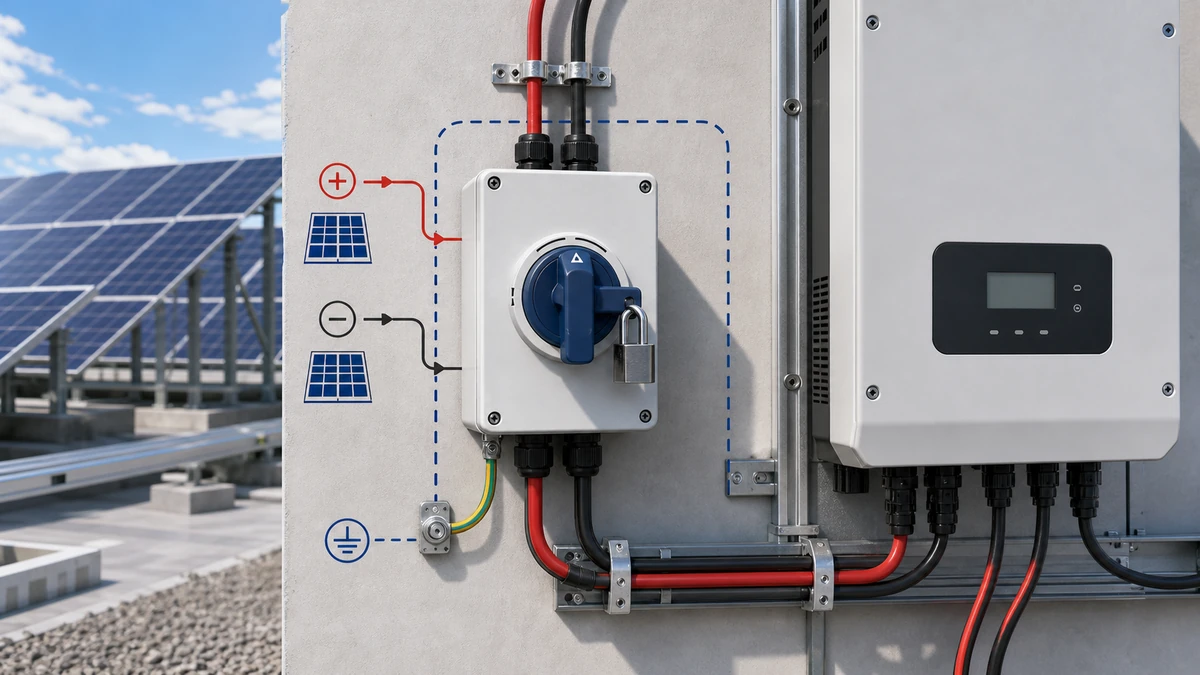
الشكل 3. يجب التحقق من سياق الأسلاك التطبيقية بالمقارنة مع مخطط التلامس الخاص بالشركة المصنعة قبل التنشيط.
ملاءمة العلبة مع بنية نظامك الشمسي
يتطلب اختيار غلاف عازل التيار المستمر (DC) من فئة IP66 التوفيق بين ثلاثة متغيرات في آن واحد: بنية النظام، وتكوين الأقطاب، وفئة الجهد.
مصفوفة قرارات بنية النظام
نوع النظام
نوع الغلاف الموصى به
عدد الأعمدة
فئة الجهد
التطبيق النموذجي
محول أحادي السلسلة للاستخدام المنزلي
صندوق IP66 صغير الحجم مثبت على الحائط
تيار مستمر ثنائي القطب
ما يصل إلى 1,000 فولت تيار مستمر
السطح؛ من سلسلة واحدة إلى ثلاث سلاسل متصلة بالمحول
سلسلة تجارية متعددة المحولات
علبة متوسطة الحجم بمعيار IP66 مزودة بقضيب DIN
4 أقطاب أو قطبان مزدوجان
ما يصل إلى 1,000 فولت تيار مستمر
سقف مسطح أو موقف سيارات مغطى؛ من أربعة إلى اثني عشر صفًا
وحدة تجميع على نطاق المرافق أو نظام تخزين الطاقة بالبطاريات (BESS)
صندوق تجميع شديد التحمل بمعيار IP66
من 6 أقطاب إلى 12 قطبًا
ما يصل إلى 1,500 فولت تيار مستمر
مصفوفات الألواح المثبتة على الأرض؛ كتل بقدرة تتجاوز عدة ميغاواط
بالنسبة لتركيبات السلاسل السكنية، يوجد غلاف مدمج يحتوي على مفتاح عزل التيار المستمر الكهروضوئي GF51 أو إن مفتاح العزل GF40 PV DC يفي عمومًا بمتطلبات القطبين والجهد البالغ 1,000 فولت تيار مستمر، مع تقليل المساحة التي يشغلها على سطح المبنى إلى أدنى حد. يرجى التحقق من خيارات الأقطاب المتاحة والقيمة الاسمية للجهد من ورقة بيانات المنتج الحالية.
إرشادات بشأن فئة الجهد وعدد الأقطاب
غالبًا ما تجمع أنظمة السلاسل التجارية بين عدة سلاسل قبل العاكس، مما يرفع جهد الأعطال المتاح إلى ما يزيد عن 600 فولت تيار مستمر في ظروف الدائرة المفتوحة. وعلى هذا النطاق، يضمن الترتيب رباعي الأقطاب انقطاع كل من الموصلات الموجبة والسالبة لكل سلسلة في آن واحد — بما يتوافق مع المهام القياسية لمفتاح الفصل في فئة استخدام التيار المستمر (DC) المعمول بها. تأكد من فئة الاستخدام وسعة التوصيل والقطع من ورقة بيانات المفتاح الخاصة بمجموعة الجهد والتيار المستمر (DC) المحددة في تصميمك.
تتطلب المشاريع على نطاق المرافق التي تعمل بجهد نظام يبلغ 1,500 فولت تيار مستمر (DC) استخدام علب وعوازل مصنفة لهذا الجهد الكامل للعزل (Ui). تتطلب طاقة القوس الكهربائي في فئة الجهد هذه استخدام مواد تلامس ومواصفات هندسية لغرفة القوس الكهربائي تم التحقق من ملاءمتها؛ لذا يجب التأكد من قدرة الإغلاق والقطع المقدرة عند 1,500 فولت تيار مستمر من ورقة بيانات المنتج قبل تحديد المواصفات. لا تستند إلى القيم المقدرة عند 1,000 فولت تيار مستمر.
كيف تتأكد شركة Shieldhz من مطابقة تكوينات علب عازلات التيار المستمر (DC) ذات تصنيف IP66 لمتطلبات مشروعك
«Shieldhz» هي العلامة التجارية المخصصة للتصدير لشركة «Zhejiang Shihe Electric Co., Ltd.»، وهي شركة تصنيع تأسست عام 2014 ومقرها في يوتشينغ، بمقاطعة تشجيانغ — وهي منطقة تشتهر بتركيز صناعة المكونات الكهربائية فيها. تعمل الشركة من مصنع تبلغ مساحته أكثر من 5,000 متر مربع، ويعمل بها أكثر من 100 موظف وتضم 40 آلة إنتاج. وتشمل الشهادات المعتمدة لمجموعة المنتجات ISO 9001 وCE وRoHS وTUV وUL وUKCA وCCC وCB، حسب نوع المنتج.
عندما يقدم المشتري معايير المشروع في إطار استفسار بشأن حاوية عازل التيار المستمر IP66، يتبع الفريق الفني في Shieldhz سلسلة تأكيدات منظمة قبل التوصية بنموذج قابل للتصنيع.
مراجعة المعلمات الكهربائية
يبدأ الاستعراض بأربع قيم أساسية: الجهد الأقصى في الدائرة المفتوحة (Voc) عند أدنى درجة حرارة للموقع، والتيار الأقصى المصمم للسلسلة، وعدد الأقطاب المطلوب، وفئة استخدام التبديل وفقًا للطبعة الحالية من معيار المفاتيح-الفاصلات — والتي تنطبق على المفاتيح، والفاصلات، والمفاتيح-الفاصلات، ووحدات الصمامات المركبة لدوائر التوزيع ودوائر المحركات ذات الجهد المقنن الذي يصل إلى 1,000 فولت تيار متردد أو 1,500 فولت تيار مستمر. تؤكد Shieldhz أن الجهد المقنن للتيار المستمر لنموذج العازل المقترح يغطي قيمة Voc المصححة، وأن السعة المقننة للربط والقطع تستوعب تيار السلسلة التصميمي ضمن فئة الاستخدام المحددة.
تقييم بيئة التثبيت
يقدم المشترون تفاصيل موقع التركيب — التعرض المباشر لأشعة الشمس، والقرب من رذاذ الملح الساحلي، والارتفاع عن سطح البحر، وإجراءات الصيانة المتوقعة. وتقوم Shieldhz بالتحقق مما إذا كان تصنيف الحماية من دخول العناصر الخارجية IP66 للغلاف وفقًا لمعيار IP كافيًا، أم أن هناك حاجة إلى غلاف من البولي كربونات المقاوم للأشعة فوق البنفسجية، أو تصميم حشية ذات ضغط مزدوج، أو تدابير إضافية للسد والمنع، وذلك وفقًا لظروف الموقع المحددة.
التحقق من برنامج الاتصال ومخطط الأسلاك
قبل تأكيد رقم الطراز، تقوم شركة Shieldhz بمقارنة مخطط التوصيلات مع مخطط الدائرة الكهربائية الخاص بالمشتري. ويتم مراجعة مخطط الأسلاك، والرسم التفصيلي للأبعاد مع نمط فتحات التثبيت ومواضع دخول الكابلات، وجدول التوصيلات معًا للتأكد من توافق الوحدة مع تخطيط لوحة المشتري وأحجام الموصلات.
حزمة الشهادات والوثائق
تقوم شركة Shieldhz بالتحقق من الشهادات المصاحبة للوحدة المؤكدة وإعداد حزمة الوثائق: ورقة بيانات المنتج، ومخطط الأسلاك، ورسم التثبيت مع أبعاد الفتحة، وشهادات الاختبار ذات الصلة، وإعلان المطابقة. يمكن للمشترين الذين يحتاجون إلى وثائق الامتثال الخاصة بالمشروع للحصول على موافقة التوصيل بالشبكة تحديد هذه الاحتياجات في مرحلة الاستفسار. أما المشاريع التي تتطلب عددًا مخصصًا من الأعمدة، أو لغة معينة للملصقات، أو لونًا معينًا للعلبة، فيجب أن تذكر هذه المتطلبات عند الاستفسار حتى يمكن تأكيد المهلة الزمنية بدقة.
الشكل 4. يجب أن يتضمن الاستفسار الكامل التصنيف وتسلسل التلامس والتركيب والحاوية ومتطلبات المستند.
قائمة مراجعة للتحقق من الشراء قبل الشراء
الشهادات والتحقق من الامتثال
تأكد من أن تصنيف IP66 وفقًا للمعيار IEC 60529 موثق في ورقة بيانات المنتج، وليس مذكورًا فقط في النصوص التسويقية
تحقق من أن الجهد المقنن للتيار المستمر لا يقل عن 1,000 فولت تيار مستمر لتطبيقات سلاسل الألواح الكهروضوئية القياسية، أو 1,500 فولت تيار مستمر للمصفوفات على نطاق شبكات الكهرباء؛ وتأكد من قيمة Ui المقننة من ورقة البيانات
تأكد من أن المفتاح الداخلي يفي بمعايير المفتاح-الفاصل الخاصة بفئة الاستخدام ذات الصلة للتيار المستمر
اطلب رقم تقرير الاختبار أو الشهادة وقم بمقارنته مع السجل العام للجهة المصدرة
نقاط مراجعة ورقة البيانات
تأكد من أن نطاق درجة حرارة التشغيل يغطي القيم القصوى لدرجة الحرارة المحيطة في الموقع؛ فعادةً ما تحدد ورقة بيانات أي حاوية شمسية خارجية نطاقًا مثل من ناقص 25 درجة مئوية إلى زائد 60 درجة مئوية — قم بمقارنة ذلك مع ظروف الموقع
التحقق من درجة مقاومة مادة الغلاف للأشعة فوق البنفسجية، وتوافق حشية مدخل الكابل مع معيار خيط الغلاف
قم بمراجعة منحنى تخفيض القيمة الاسمية لتيار التلامس مقارنةً بتيار التيار المستمر للسلسلة عند درجة الحرارة القصوى للتشغيل الداخلي، مع هامش تصميمي لا يقل عن 125 في المائة من الحد الأقصى للتيار المستمر
تأكد من أن الرسومات الأبعادية تتضمن نمط فتحات التثبيت، ومواقع مداخل الكابلات، وأبعاد الفتحات في نفس مجموعة الوثائق
اعتبارات تتعلق بالعينات ومدة التسليم
اطلب عينة ما قبل الإنتاج قبل تقديم طلبات الشراء بالجملة؛ وقم بتقييم إحكام إغلاق الغلاف، وملمس تشغيل المفتاح، ومتانة الملصق عند التعرض للأشعة فوق البنفسجية
يرجى التأكد من مدة التسليم كتابةً قبل الالتزام بالطلب؛ حيث تختلف مدة التسليم باختلاف التكوين وحجم الطلب
يرجى توضيح ما إذا كان عدد الأعمدة المخصصة، أو أحجام فتحات مرور الكابلات، أو لغة الملصقات تؤثر على مدة التسليم والحد الأدنى لكمية الطلب
بالنسبة للمشاريع التي تتطلب تكوينات محددة، تقوم Shieldhz بمراجعة مخطط الدائرة الكهربائية، ومعلمات الجهد والتيار المستمر، والشهادات المطلوبة، ومعايير التركيب قبل تأكيد نموذج قابل للتصنيع. قم بإرسال مواصفات المشروع إلى فريق Shieldhz مباشرةً لتتلقى ورقة بيانات ملائمة، وحزمة الشهادات، وتأكيدًا لمدة التسليم لتطبيقك للطاقة الشمسية في الأماكن الخارجية.
الأسئلة الشائعة
ما الفرق بين العلبة ذات تصنيف IP65 والعلبة ذات تصنيف IP66 الخاصة بفاصل التيار المستمر (DC) للطاقة الشمسية؟
تقاوم العلب ذات تصنيف IP65 نفاثات الماء ذات الضغط المنخفض القادمة من أي اتجاه. أما العلب ذات تصنيف IP66 فتتحمل نفاثات قوية ذات ضغط أعلى بكثير قادمة من أي اتجاه — وهو فرق مهم للتركيبات المعرضة للغسيل بالضغط العالي أو هطول الأمطار بمستويات موسمية. بالنسبة لمعظم المواقع المكشوفة للأنظمة الكهروضوئية المثبتة على الأسطح أو على الأرض، يُعد تصنيف IP66 هو الحد الأدنى الموصى به. ولا يتطلب الانتقال من تصنيف IP65 إلى IP66 سوى تكلفة بسيطة من حيث الأجهزة، ولكنه يوفر حماية أكبر بكثير على المدى الطويل عند نقاط العزل على مستوى السلسلة.
هل يمكنني استخدام مفتاح عازل مصمم للعمل مع التيار المتردد داخل حاوية بمعيار IP66 في نظام الطاقة الكهروضوئية؟
لا. لا تُعد المفاتيح المصنفة للتيار المتردد (AC) مناسبة لدوائر الطاقة الكهروضوئية التي تعمل بالتيار المستمر (DC)، لأن الأقواس الكهربائية للتيار المستمر لا تنطفئ تلقائيًا عند مرور التيار عبر نقطة الصفر الطبيعية، على عكس ما يحدث مع أقواس التيار المتردد. يجب أن يحمل المفتاح الداخلي تصنيفًا صريحًا للجهد الكهربائي للتيار المستمر وفئة استخدام للتيار المستمر تتوافق مع جهد النظام وتياره. ويُعد استخدام مفتاح مصمم للتيار المتردد في دائرة كهروضوئية تعمل بالتيار المستمر خطرًا معروفًا لحدوث حريق، ولن يجتاز الفحص في الولايات القضائية التي تتبع معايير التركيب الصادرة عن اللجنة الكهروتقنية الدولية (IEC). انظر ما هو مفتاح عزل التيار المستمر الكهروضوئي للاطلاع على شرح كامل لأسباب ضرورة وجود تصنيفات خاصة بالتيار المستمر.
كيف أحسب القيمة الاسمية الصحيحة للجهد المستمر لعازل السلسلة الخاص بي؟
قم بتصحيح جهد الدائرة المفتوحة للوحدة (Voc) وفقًا لأدنى درجة حرارة محيطة متوقعة باستخدام معامل درجة الحرارة للجهد الخاص باللوحة. اختر عازلًا يكون جهد العزل المقنن (Ui) فيه مساويًا لتلك القيمة المصححة أو أكبر منها. يستخدم التصحيح النموذجي الصيغة التالية: Voc (المصحح) يساوي Voc (STC) مضروبًا في العدد واحد زائد حاصل ضرب معامل درجة الحرارة والفرق بين أدنى درجة حرارة للموقع و25 درجة مئوية. لا تحدد الحجم بناءً على جهد التشغيل الاسمي وحده أبدًا، ولا تستنتج أبدًا من تصنيف فئة جهد أقل لتغطية جهد نظام أعلى.
هل ينطبق تصنيف IP66 على مجموعة الغلاف بأكملها أم على الهيكل فقط؟
ينطبق تصنيف IP66 على المجموعة المغلقة بالكامل كما تم اختبارها، بما في ذلك جميع نقاط دخول حشيات الكابلات. وإذا كان أي ممر كابل يحمل تصنيف IP أقل من IP66، فإن المجموعة بأكملها تتخذ هذا التصنيف الأقل كقيمة افتراضية عند نقطة الدخول تلك. وهذا هو السبب الأكثر شيوعًا لعدم الامتثال لمعايير IP في العلب المُجمَّعة ميدانيًّا. يجب تحديد والتحقق من أن ممرات الكابلات ذات تصنيف IP66 مزودة بأحجام لولبية تتوافق مع فتحات العلب.
ما هو عدد الأعمدة التي أحتاجها لمجموعة الألواح الكهروضوئية غير المؤرضة؟
تتطلب المصفوفات الكهروضوئية غير المؤرضة أو العائمة فصل كل من الموصلين الموجب والسالب في آن واحد، مما يجعل العازل ثنائي الأقطاب هو الحد الأدنى المطلوب. وتحدد بعض التركيبات تكوينات رباعية الأقطاب لقطع التيار عن موصلين في كل سلسلة في عملية تبديل واحدة. تأكد من المتطلبات مع الشركة المصنعة للعاكس ومعيار التركيب المعمول به في منطقتك قبل تحديد عدد الأقطاب. يحدد مخطط التأريض الحد الأدنى لمتطلبات العزل؛ فلا تفترض أن العازل ثنائي الأقطاب يكفي دائمًا لكل تصميم نظام غير مؤرض.
كم مرة ينبغي فحص حشيات IP66 المثبتة على علب عوازل التيار المستمر الخارجية؟
يجب فحص الحشيات كل خمس سنوات على الأقل، وبشكل أكثر تواتراً في البيئات التي تتسم بارتفاع مستويات الأشعة فوق البنفسجية أو الدورات الحرارية المتكررة، مثل المواقع الصحراوية التي تشهد تقلبات كبيرة في درجات الحرارة على مدار اليوم. استخدم فقط الحشيات البديلة المحددة من قبل الشركة المصنعة. فقد لا تحافظ الحشيات البديلة العامة على الشكل الهندسي للضغط المطلوب للحفاظ على تصنيف IP66 على المدى الطويل، خاصة في العلب ذات ملامح إحكام الأبواب غير القياسية أو تصاميم الضغط ذات الحافة المزدوجة.
ما هي الوثائق التي يجب أن أطلبها قبل شراء حاوية عازلة للتيار المستمر بمعيار IP66 لمشروع ربط بالشبكة؟
اطلب ورقة بيانات المنتج، وشهادة اختبار IP66 مع الرقم المرجعي للجهة المصدرة، وشهادة الامتثال لمعايير قاطع التبديل، ورسمًا أبعاديًّا يتضمن تفاصيل التركيب ومدخلات الكابلات، ومخططًا للأسلاك. عادةً ما تتطلب المشاريع التي تحتاج إلى موافقة على التوصيل بالشبكة أيضًا إعلان مطابقة، وشهادة سلامة خاصة بالطاقة الكهروضوئية من TUV أو ما يعادلها، حيثما ينطبق ذلك. بالنسبة للمشاريع على نطاق المرافق العامة أو مشاريع التصدير، تأكد عند الاستفسار مما إذا كانت حزمة الوثائق تغطي جميع الشهادات المطلوبة من قبل السوق المقصودة، حيث تختلف المتطلبات بين ولايات CE وUKCA وUL وCCC.
شي، موكسي
يكتب شي، موكسي مقالات شيلدهز الفنية لمشتري التحكم الصناعي والمكونات الكهربائية، والتي تغطي مفاتيح الكامات الدوارة، ومفاتيح العازل، ومفاتيح فصل التيار المستمر الكهروضوئية، وأزرار الضغط، وأضواء المؤشر، والحاويات المقاومة للماء، والكتل الطرفية. تستند المقالات على خبرة شركة Zhejiang Shihe Electric Co., Ltd. في التصنيع والتصدير، مع التركيز العملي على اختيار الطراز وأوراق البيانات والرسومات والشهادات وتصنيفات IP وتفاصيل الاستفسار التي يجب على المشترين التأكد منها قبل الطلب.