Choosing between a metal push button and a modular 22mm push button comes down to four engineering realities: ingress protection requirement, contact program flexibility, installation environment, and procurement model. A metal push button — such as a stainless steel or zinc-alloy IP67-rated unit — is the correct choice when the panel face is exposed to washdown, impact, or outdoor weathering. A modular 22mm push button is the correct choice when contact reconfiguration, stackable functions, and lower installed cost matter more than housing robustness. Both types mount to a nominal 22mm round panel cutout, fall under the applicable control-device standard as low-voltage control circuit devices, and are available from Shieldhz with full datasheet, dimensional drawing, and certification documentation. This guide explains how to make the selection with confidence.
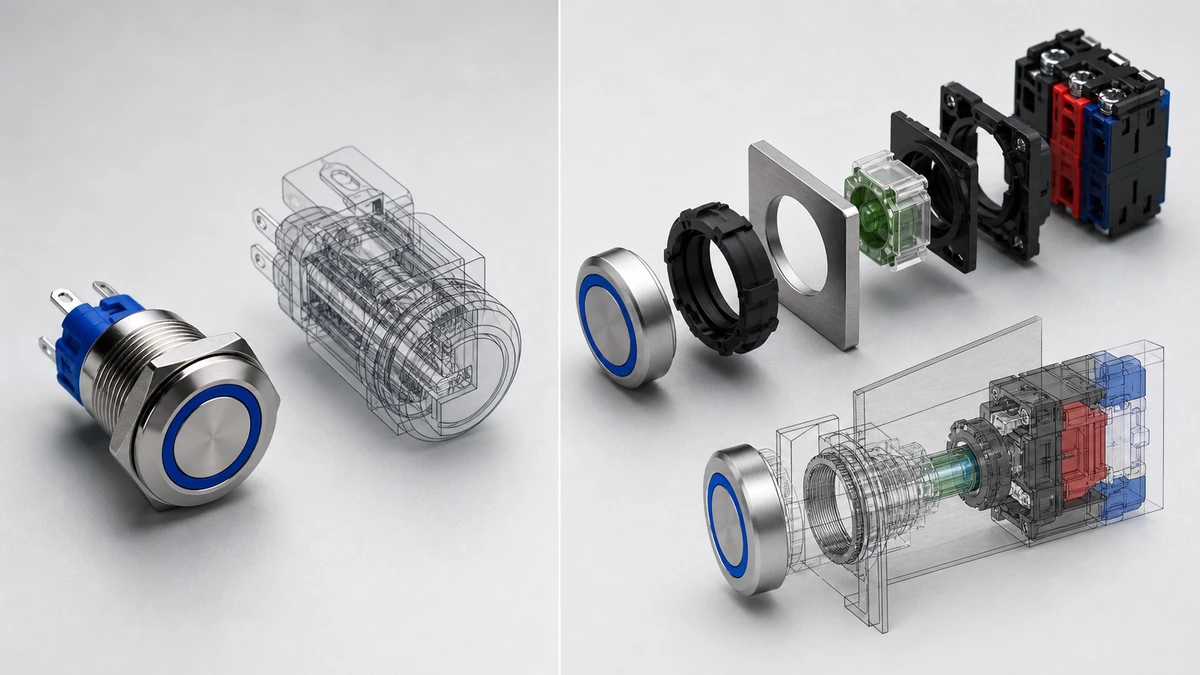
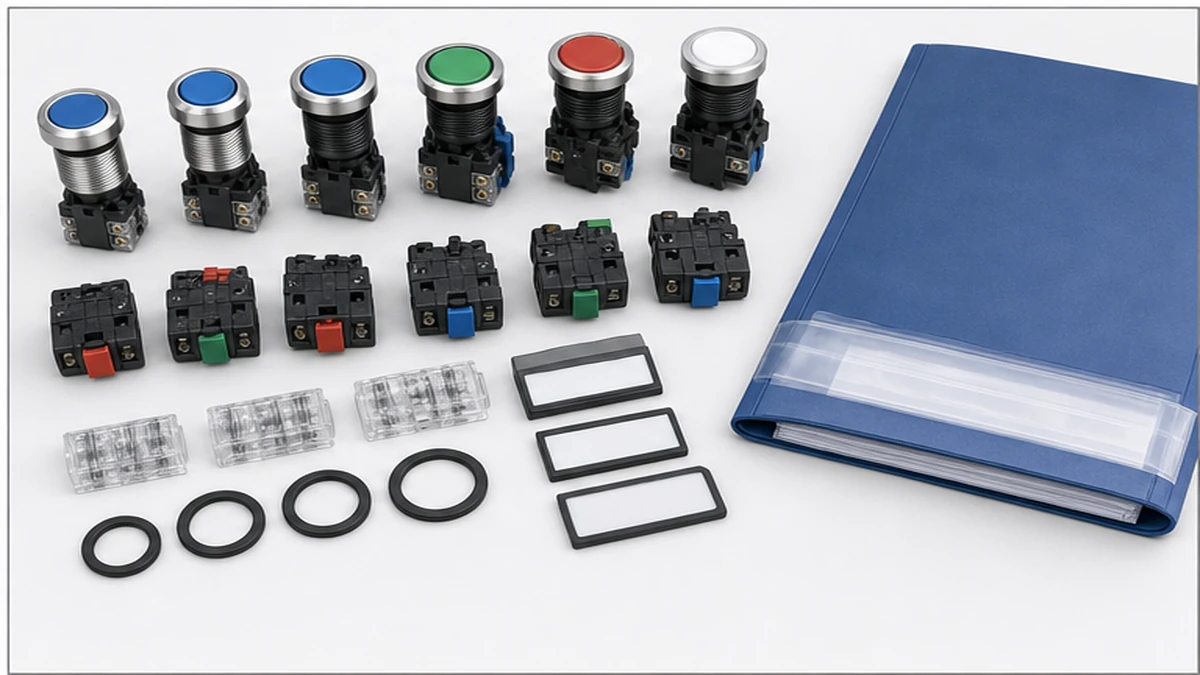
Figure 1. Core concept behind metal push button vs 22mm push button selection.
Specification boundary: Dimensions, contact stack, lamp voltage, IP condition, certification scope, and mounting depth must be confirmed from the current Shieldhz datasheet, drawing, and certificate package for the exact model ordered.
What Defines Each Push Button Type
Metal Push Button Construction
A metal push button is built around a one-piece threaded barrel, typically 16mm, 22mm, or 25mm in mounting diameter depending on the series. The actuator head seats directly into the barrel and is locked against the panel face by a rear nut. Contact blocks attach to the rear of the barrel through a friction-fit or screw-locking collar. Because the operator, housing, and sealing gasket are integrated into a single assembly, the contact program options are fixed or limited to the contact block types compatible with that barrel geometry.
Stainless steel variants — typically grade 304 or 316 — provide resistance to panel vibration, impact loads, and cleaning agents that would degrade polymer housings over time. Zinc-alloy variants are lighter and adequate for general industrial use. The actuator face gasket is the primary sealing element; its condition determines whether the declared IP rating is maintained across the service life. Housing wall thickness, gasket compression, and locknut torque all affect long-term ingress protection — confirm the correct installation torque range against the specific model’s dimensional drawing rather than applying a universal figure.
Modular 22mm Push Button Construction
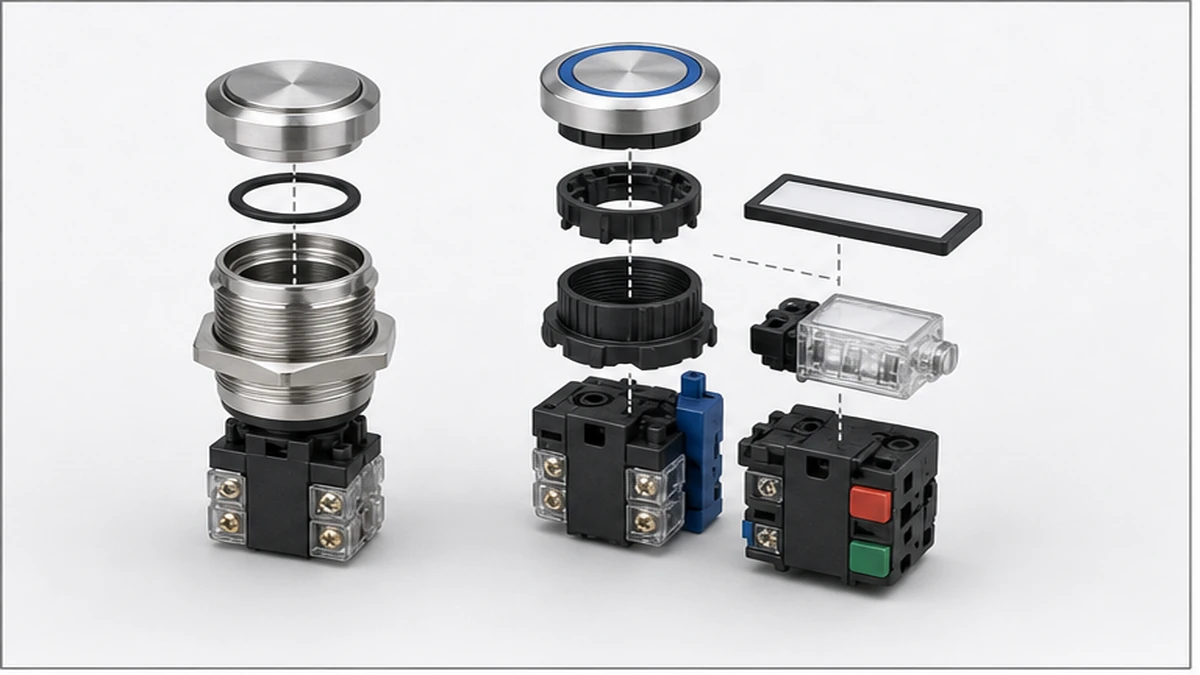
A modular 22mm push button separates the assembly into three independently replaceable layers: an operator unit containing the actuator and bezel, a holder or adapter block, and one or more rear-mounted contact modules. Each contact module snaps onto the rear of the holder and can be replaced or supplemented without removing the operator from the panel.
Housings are typically glass-filled polyamide or polycarbonate rated to carry the insulation voltage requirements of the applicable control-device standard. The snap-fit contact block retention is designed to maintain contact bridge alignment under normal conditions, but the integrity of that fit should be verified during installation and at scheduled maintenance intervals, particularly in applications with significant panel vibration.
This architecture is common in the applicable control-device standard Category AC-15 and DC-13 control circuits inside motor control centers, machine door panels, and enclosed distribution assemblies where the operator interface is not directly exposed to harsh environmental conditions.
Contact Interface Comparison
In a metal push button, the contact block geometry is constrained by the barrel, which limits the number of contact elements that can be fitted but ensures a sealed, tamper-resistant assembly with no reliance on snap-fit tolerances for contact alignment. In a modular 22mm assembly, the contact block stack can typically accommodate two to four modules depending on the series and holder adapter, but confirm the maximum permitted stack depth in the product datasheet — physical fit and rated alignment tolerance are not the same thing. For either type, contact resistance, endurance rating, and breaking capacity must be read from the selected product datasheet under the declared utilization category before the unit is specified.
Key Selection Parameters at a Glance
المعلمة
Metal Push Button
Modular 22mm Push Button
قطع اللوحة
16mm, 22mm, or 25mm (series-dependent)
22mm standard
تصنيف IP
IP65 to IP67 (front/body); rear varies
IP65 front face; IP20 to IP40 rear
Housing Material
Stainless steel, zinc alloy, or nickel-plated brass
Glass-filled polyamide or polycarbonate
Contact Expandability
Fixed or limited to barrel-compatible blocks
Stackable modules, typically 2 to 4 elements
Primary Environment
Outdoor, washdown, marine, food processing
Indoor control panels, MCC enclosures
Certification Route
CE, RoHS, CCC, TUV, UL, CB (product-specific)
CE, RoHS, CCC, TUV, UL, CB (product-specific)
Confirm exact ratings, tolerances, and certification scope against the relevant product datasheet and drawing before finalizing the specification.
Head-to-Head Performance: IP Rating, Durability, and Electrical Ratings
Ingress Protection
The IP67 rating achievable by many metal push buttons — dust-tight sealing and resistance to temporary immersion at 1 m depth for 30 minutes per IEC 60529 — makes them the correct choice for washdown zones, outdoor pump panels, marine deck controls, and food-processing control stations. Metal actuator surfaces resist the chloride-based sanitizers and hypochlorite solutions used in hygienic processing lines; polymer actuator caps may degrade under repeated chemical exposure or prolonged UV irradiance.
Modular 22mm push buttons are commonly rated IP65 at the front face, meaning dust-tight and jet-water resistant. The rear of a modular assembly — where the contact block stack is exposed — typically carries IP20 or IP40, which is acceptable inside a sealed enclosure but not adequate for direct environmental exposure. When specifying a modular unit for a panel door that opens to a wet or dusty environment, confirm whether the front-face IP65 rating is achieved by the operator alone or requires the panel door to provide secondary enclosure protection.
Electrical and Mechanical Ratings
Both types fall under the applicable control-device standard, which sets requirements for rated insulation voltage (Ui), rated impulse withstand voltage (Uimp), making and breaking capacity under utilization categories AC-12, AC-15, DC-12, and DC-13, and mechanical endurance. The standard applies to both metal and modular variants equally — the housing material and construction method are engineering decisions, not compliance classifications.
Rated operational current, rated voltage, and mechanical cycle life vary by product model, contact block type, and utilization category. Do not apply a single universal endurance figure across the full range of models; read the endurance rating from the datasheet for the specific contact block under the operating category relevant to your load — AC-15 for electromagnetic AC loads such as contactor coils, or DC-13 for electromagnetic DC loads such as solenoid valves. DC-13 breaking duty is more demanding than AC-15 because there is no natural current zero-crossing to assist arc extinction.
Utilization category selection is the most consequential electrical decision in push button specification. Confirm the load type, operating voltage, and inrush current profile before selecting the contact block rating.
الشكل 2. يجب أن تراعي معايير الاختيار العوامل التالية: حجم المشغل، ونوع التوصيل، والجهد الكهربائي للمصباح، واللون، ومستوى الحماية IP، وفتحة اللوحة، والوثائق المرفقة.
Where Each Type Belongs: Application Scenarios and Industry Use Cases
Application Scenario Matrix
التطبيق
Recommended Type
Primary Reason
Outdoor machine enclosures
Metal push button
IP65 to IP67 sealed body; corrosion-resistant materials
Washdown and food processing
Metal push button, 316 SS actuator
Hygienic wipe-down cycles; resistance to sanitizing agents
Marine deck controls
Metal push button
Salt-spray and immersion resistance
Industrial MCC door panels
Modular 22mm
22mm DIN standard; stackable contact block reconfiguration
Automotive line panel interiors
Modular 22mm
Lower cost; contact flexibility during commissioning
In a food-processing control station where quaternary ammonium or hypochlorite sanitizers are applied during cleaning cycles, a 316 stainless steel actuator is preferable to 304 because the higher molybdenum content resists pitting corrosion that can compromise the IP gasket seat over time. In an automotive press bay, the decision splits by location: machine-periphery buttons receive splash, vibration, and gloved-hand actuation force, making a metal unit appropriate; buttons inside a protected panel cabinet can use modular 22mm format without the same risk.
For emergency stop circuits, metal push buttons are generally preferred when the actuator is located on an exposed machine surface. A modular 22mm unit can be used in an E-stop application when equipped with a direct-opening action contact block meeting IEC 60947-5-5, and when the actuator complies with ISO 13850 on color, shape, and guarding requirements — but the housing durability argument still favors metal for exposed positions.
When operators wear heavy protective gloves, verify the actuator’s operating force against the expected actuation profile. A button that passes bench testing at a nominal force value may generate missed actuations at the line when the tactile feedback through thick PPE is insufficient. Both metal and modular types have series-specific actuator force ranges that should be confirmed from the product datasheet before finalizing a manned-workstation design.
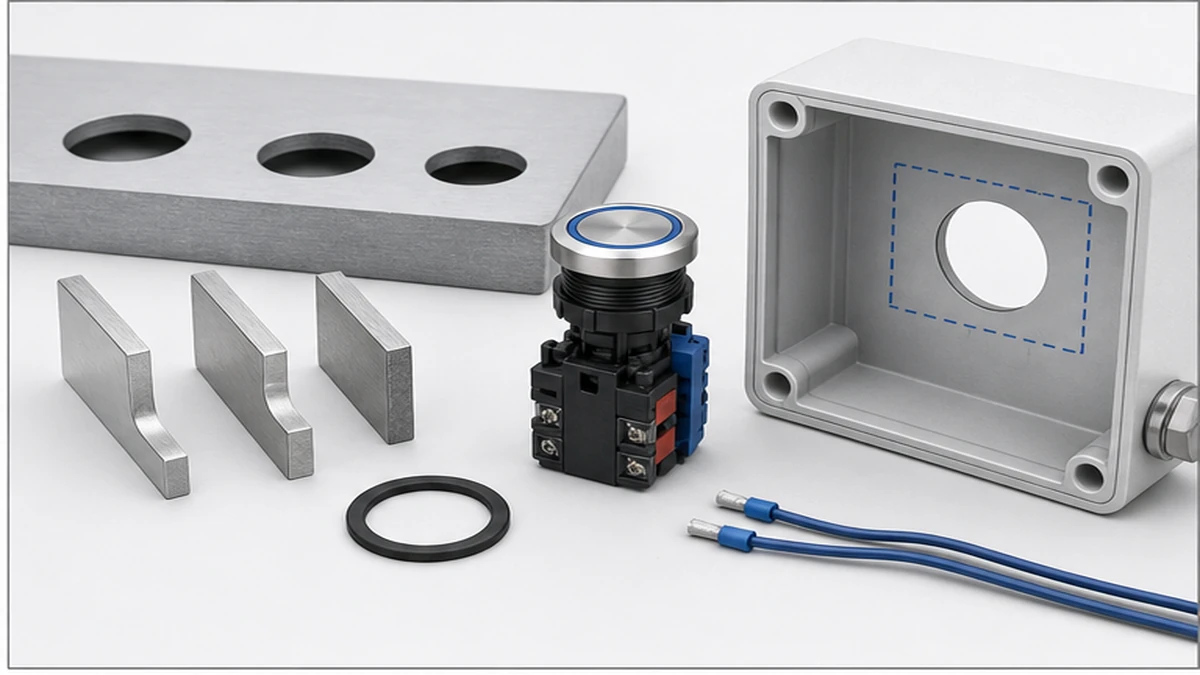
الشكل 3. يجب التحقق من سياق الأسلاك التطبيقية بالمقارنة مع مخطط التلامس الخاص بالشركة المصنعة قبل التنشيط.
Installation, Wiring, and Panel Cutout Requirements
Panel Cutout and Mounting
Both button families share a nominal 22mm round cutout as the standard mounting dimension. Exact tolerance requirements — typically a close fit on the positive side to prevent rotation — vary by model and must be confirmed against the specific dimensional drawing. Panel thickness compatibility also varies: metal push button series with long threaded barrels generally accommodate thicker panel stock than modular plastic-body types with shorter engagement threads. Confirm the minimum and maximum panel thickness range from the product drawing before specifying a cutout in sheet metal above 3mm gauge.
Mounting nut torque for metal threaded-bushing designs must be taken from the product installation instruction. Over-torquing a stainless bushing against a thin aluminum panel face risks deforming the panel or cracking a recessed bezel; under-torquing allows rotation under repeated actuation. Some modular 22mm bases use a snap-lock ring rather than a threaded nut, which eliminates torque tooling but requires the panel thickness tolerance to be held precisely for positive engagement.
For stainless-to-stainless panel interfaces, apply a thin bead of anti-seize compound to the barrel thread before installing the locknut; galling on stainless threads during future removal is a preventable maintenance problem.
Wiring and Rear Clearance
Metal push buttons with deep stainless or zinc-alloy bodies require adequate rear clearance inside the enclosure for conductor routing. Allow sufficient depth behind the panel face — the exact minimum depends on the series body length, which is stated in the dimensional drawing. Modular 22mm assemblies with stackable contact blocks allow contact elements to be added or replaced without disturbing the base wiring, which reduces panel modification time during commissioning changes or post-installation upgrades.
Terminal screw torque on contact blocks must be applied per the terminal marking diagram for the specific model. Under-torqued terminals generate contact resistance over time; over-torqued terminals deform the terminal seat. Neither failure mode is detectable by visual inspection after the enclosure is closed.
Always verify cutout tolerances, mounting nut torque, conductor cross-section ratings, and terminal torque values against the individual product datasheet and installation drawing before final assembly.
How Shieldhz Confirms the Right Push Button Configuration for Your Order
Shieldhz is the export brand of Zhejiang Shihe Electric Co., Ltd., founded in 2014 and based in Yueqing, Wenzhou, Zhejiang — a production center with a 5,000-plus square meter factory, more than 100 employees, and over 40 dedicated production machines. The company holds ISO 9001, CE, RoHS, TUV, UL, UKCA, CCC, and CB certifications across its product range, with applicable certification scope confirmed product-by-product.
Every push button inquiry at Shieldhz is processed through a structured model-confirmation workflow before a quotation or production order is accepted. That workflow applies directly to both push button types covered in this guide.
Model Confirmation and Contact Program Review
For metal push button inquiries — the SH-GQ series — Shieldhz reviews the actuator head type (flush, extended, mushroom, or key-release), the contact configuration (NO, NC, or NO+NC), the current rating, the panel cutout diameter, and the ingress protection requirement. For modular 22mm inquiries, the review extends to contact block stacking arrangement, total number of contact elements required, compatibility between the operator head and any legend plate or indicator lamp module to be fitted, and whether the holder adapter supports the declared IP rating at the front face.
Both types require the buyer to confirm operating voltage, rated operational current under the applicable utilization category — AC-15 or DC-13 per the applicable control-device standard — and the expected mechanical endurance relative to the application cycle count. If the projected operating cycle count over the planned service life approaches the rated endurance figure in the datasheet, Shieldhz will flag that in the review and recommend either a higher-rated variant or a planned replacement interval built into the maintenance schedule.
Wiring Diagram and Dimensional Drawing Alignment
Before production is released, Shieldhz aligns the contact program to the buyer’s wiring diagram and verifies the panel cutout dimension and rear-clearance requirement against the enclosure drawing. Buyers are asked to supply the panel cutout drawing, the circuit wiring diagram, and any load nameplate data so the contact block selection and documentation set reflect the actual installation rather than a generic specification. This review step prevents contact rating mismatches that are not visible until the panel is under load.
Certification Package and IP Rating Confirmation
The required certification package — CE, RoHS, and CCC for China-market deployments where applicable — is confirmed before production release. IP rating is cross-checked against the declared installation environment: IP65 is the standard baseline for control panel door applications, while IP67 is specified for washdown or outdoor locations. If the buyer’s installation requires a certification not in the standard package for the selected model, that is identified at the quotation stage rather than at delivery.
The Shieldhz engineering team is available to review circuit voltage, load category, IP requirement, cutout constraints, and documentation requirements before the configuration is locked. Submit application details — including operating voltage, rated current, utilization category, panel thickness, environment classification, and required certifications — to receive a confirmed model recommendation with the corresponding datasheet, dimensional drawing, and wiring diagram.
Explore the SH-GQ metal push button switch to begin a configuration review for metal-body applications. If your control panel specification also includes rotary switching functions, the Shieldhz push button selection reference covers LW28, LW42, and SH30 series alongside the push button product family. For reference on the broader switching and isolation standards context, the SH-B2 push button route explains how the applicable control-device standard edition — which applies to switches, disconnectors, switch-disconnectors, and fuse-combination units for distribution and motor circuits with rated voltage up to 1000 V AC or 1500 V DC — relates to the the applicable control-device standard control circuit device standard under which push buttons are classified. The current published edition of the applicable control-device standard is available through the official IEC control-device publication.
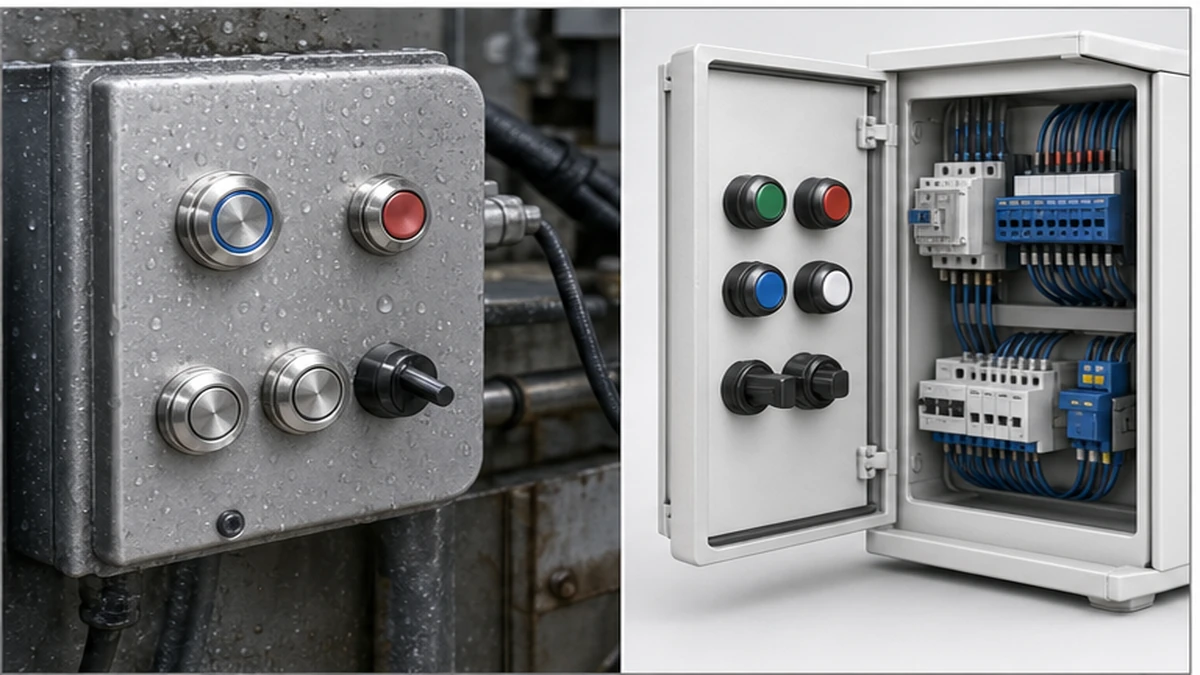
الشكل 4. يجب أن يتضمن الاستفسار الكامل التصنيف وتسلسل التلامس والتركيب والحاوية ومتطلبات المستند.
Decision Framework: Four Questions That Determine the Right Choice
Question 1 — What Is the Installation Environment?
Does the panel face expose the button to water, dust, coolant, cleaning agents, or impact? If ingress protection at IP65 or higher is required and the actuator will be handled by personnel in wet or outdoor conditions, a metal push button with a stainless steel or zinc-alloy body is the defensible choice. If the panel is inside a sealed enclosure in a clean, indoor control room or MCC, a modular 22mm unit at IP40 to IP65 front-face rating is sufficient and less expensive.
Metal: harsh, outdoor, washdown, marine, or food-processing environments.
Modular 22mm: indoor control panels, enclosed MCC door fronts, and protected machine cabinets.
Question 2 — What Does the Circuit Load Require?
Confirm the rated operational current and voltage and identify the utilization category — AC-15 for AC electromagnetic loads, DC-13 for DC electromagnetic loads. Both metal and modular 22mm contact blocks can be rated for these categories, but the specific endurance and breaking capacity values are model-specific. High-inductive load applications demand that the contact block’s rated making and breaking capacity under the applicable category is confirmed from the datasheet before the unit is ordered.
Question 3 — How Complex Is the Control Function?
If the panel station requires illuminated actuation, key-lock interlocking, selector switching, or multiple NO and NC contacts on a single 22mm cutout, the modular 22mm platform is more practical — operator heads, indicator modules, and stacked contact blocks share one hole. If the function is a single dedicated momentary or maintained contact action, a metal push button is simpler and more robust.
Multi-function or illuminated station: modular 22mm.
Single dedicated action: metal push button.
Question 4 — What Are the Volume and Documentation Requirements?
For repeat OEM production runs where contact program flexibility and fast sourcing matter, modular 22mm platforms simplify kitting and inventory. For smaller quantities of ruggedized assemblies going into named certification packages — such as CE-marked machine control panels or UL-listed enclosure assemblies — metal push buttons with a fixed, documented configuration are easier to certify and trace. In either case, confirm that the supplier can provide the datasheet, dimensional drawing, wiring diagram, and certificate of conformity as part of the standard delivery documentation.
الأسئلة الشائعة
Can a metal push button and a modular 22mm push button share the same panel cutout diameter?
Both types use a nominal 22mm round cutout as the standard mounting dimension. However, body flange depth, thread engagement length, and the acceptable panel thickness range differ between the two architectures and between individual series within each type. Always verify the dimensional drawing for the specific model before drilling. Mixing both types in the same panel is common practice, provided each unit’s cutout tolerance and rear-clearance requirement are independently confirmed against the enclosure drawing.
What IP rating should I specify for a push button in a food-processing washdown area?
IP67 is the minimum defensible rating for direct washdown exposure, confirming dust-tight sealing and immersion resistance at 1 m depth for 30 minutes per IEC 60529. For lines where high-pressure steam cleaning is routine, IP69K — which covers high-pressure, high-temperature spray — is the appropriate specification. In either case, also confirm that the actuator material is compatible with the specific sanitizing agents used on the line; 316 stainless steel is preferable to 304 in chloride-rich cleaning environments because its higher molybdenum content resists the pitting corrosion that can compromise the IP gasket seat.
How many contact blocks can be stacked on a modular 22mm push button?
The maximum stack depth is series-specific and depends on the holder adapter and the contact block dimensions. Most industrial modular platforms support two to four contact modules on a single operator, but contact alignment tolerances are only guaranteed within the stack configuration defined in the product datasheet. Physical fit beyond that limit does not guarantee rated electrical performance. Confirm the maximum permitted configuration in the product documentation before building a deep stack.
Does the applicable control-device standard apply differently to metal push buttons versus modular 22mm units?
the applicable control-device standard applies equally to both types as the governing standard for low-voltage control circuit devices, covering rated insulation voltage, rated impulse withstand voltage, making and breaking capacity under utilization categories, and mechanical endurance requirements. The standard does not mandate housing material or construction method. The metal-versus-modular distinction is an engineering and application decision made by the panel designer, not a compliance classification created by the standard.
What is the difference between the AC-15 and DC-13 utilization categories for push button contact selection?
AC-15 covers the control of electromagnetic AC loads — typically contactor coils and relay coils — where the contact breaks current at a natural zero-crossing in the AC waveform. DC-13 covers the control of electromagnetic DC loads such as solenoid valves and DC coils, where no natural zero-crossing exists and the arc must be extinguished by contact gap geometry alone, creating a more demanding breaking duty. Always specify the utilization category that matches the actual load type and verify that the selected contact block meets the rated operational current for that category at the circuit operating voltage.
Can modular 22mm push buttons be used in emergency stop circuits?
A modular 22mm push button can be used in an emergency stop application when it is equipped with a direct-opening action contact block meeting IEC 60947-5-5, and when the actuator head complies with ISO 13850 requirements on color, shape, and guarding. However, metal push button formats are generally preferred for E-stop positions on exposed machine exteriors because the rigid metal housing resists accidental mechanical damage that could compromise actuator function. Confirm both the contact standard and the actuator standard compliance before specifying any push button in a safety function.
How do I verify that a push button’s mechanical endurance rating covers my application’s expected cycle count?
Estimate the projected operating cycles over the intended service life by multiplying the actuation frequency per shift by the number of operating shifts per year and the planned years of service before scheduled replacement. Compare that total against the rated mechanical endurance figure stated in the product datasheet under the applicable utilization category. If the projected cycle count approaches or exceeds the rated endurance, either select a higher-endurance model or define a planned replacement interval in the maintenance schedule before the unit is ordered. Do not apply a generic industry figure; endurance ratings are model-specific and vary with contact block type and utilization category.
شي، موكسي
يكتب شي، موكسي مقالات شيلدهز الفنية لمشتري التحكم الصناعي والمكونات الكهربائية، والتي تغطي مفاتيح الكامات الدوارة، ومفاتيح العازل، ومفاتيح فصل التيار المستمر الكهروضوئية، وأزرار الضغط، وأضواء المؤشر، والحاويات المقاومة للماء، والكتل الطرفية. تستند المقالات على خبرة شركة Zhejiang Shihe Electric Co., Ltd. في التصنيع والتصدير، مع التركيز العملي على اختيار الطراز وأوراق البيانات والرسومات والشهادات وتصنيفات IP وتفاصيل الاستفسار التي يجب على المشترين التأكد منها قبل الطلب.