Outdoor Isolator Box Replacement: Why Current Rating Alone Is Not Enough
Use a practical buyer checklist to evaluate outdoor isolator switch replacement inputs, documentation, approval controls and the exact weatherproof isolator switch box route.
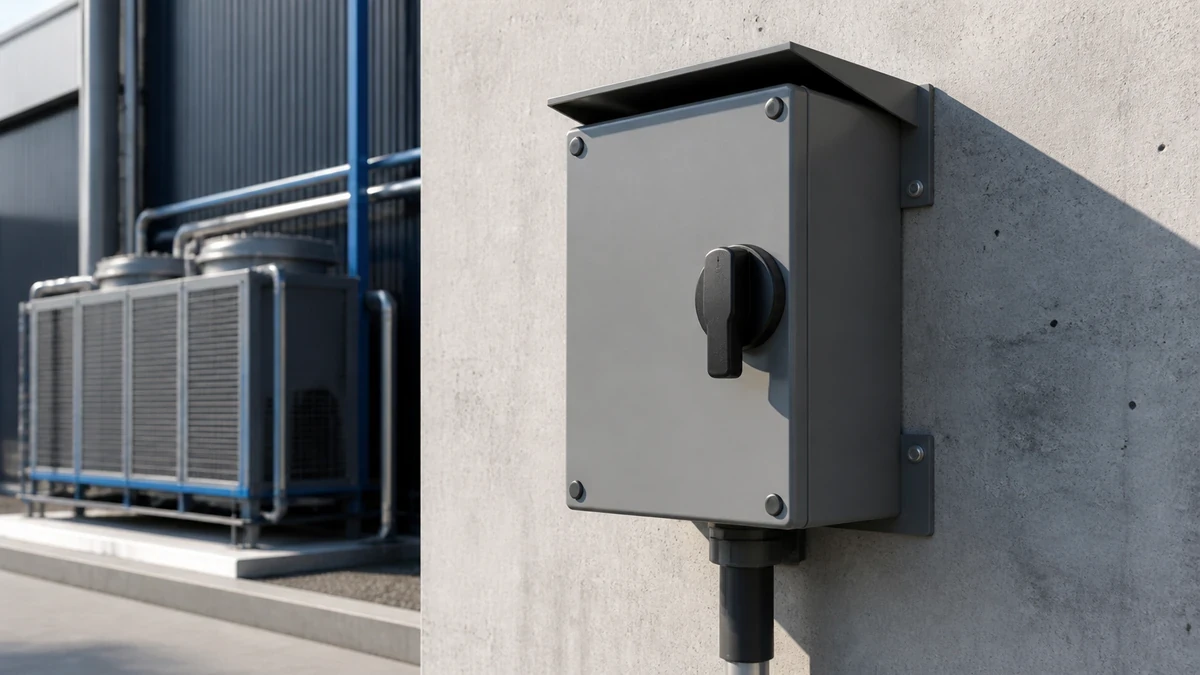
أن outdoor isolator switch replacement should not be selected by current rating alone. The replacement route also depends on switching duty, voltage, enclosure exposure, IP evidence, cable-entry geometry, gasket path, mounting footprint, handle access, and the documentation available for the exact model.
Confirm the existing installation: label data, enclosure size, mounting holes, cable entries, handle position, and exposure.
Compare the replacement against the buyer’s load, AC/DC duty, isolation role, destination-market expectations, and current product documents.
Request drawings, datasheets, and certificate information before treating a model as commercially comparable.
Why current rating is only the starting filter
A current rating can narrow the search, but it cannot confirm retrofit compatibility or outdoor suitability by itself. For a replacement isolator box, the buyer must check the complete assembly route: switch duty, enclosure, handle/operator, cable entry, gasket interface, mounting, and documentation.
If your team needs a broad definition before making a replacement decision, start with the waterproof isolator box basics. This article focuses on the retrofit review that follows.
An exact drawing identifies the interfaces that must be controlled for the approved model route.
Current rating does not describe the whole installation
Two boxes may show the same current value while differing in voltage rating, AC/DC duty, pole configuration, enclosure size, handle layout, cable-entry preparation, gasket design, and documentation package. Any one of those differences can affect whether the unit can replace the installed box without redesign.
Current rating also does not confirm that the replacement matches the buyer’s destination-market requirements. Certificates, markings, and declarations must be checked against the exact product and the buyer’s application.
Use current rating as a filter, not as approval
Buyer question
Why current rating alone is not enough
What to verify before quotation
Will it match the load?
Load type and duty can change the required switch route.
AC/DC duty, voltage, current, poles, utilization category if specified.
Ratings and certificates are exact-model dependent.
Current datasheet, drawing, certificate or declaration package.
Action list for first screening
Photograph the installed box, nameplate, handle, entries, and mounting area.
Record voltage, current, phase/pole requirement, and AC or DC duty.
Note whether the replacement must reuse existing holes, cable glands, conduit, or bracketry.
Ask for the latest drawing and datasheet for the candidate model.
Do not approve the route until the candidate documentation matches the buyer’s application review.
Map the existing box before selecting a replacement
The installed box should be mapped before comparing catalogues, because retrofit constraints often decide the workable replacement route. The goal is to determine whether the new box can fit the existing envelope and cable path without assuming that equal amperes means equal geometry.
Sample review should connect the exact item to its current drawing and requested evidence package.
Critical retrofit dimensions
Measure the enclosure height, width, depth, mounting-hole pattern, handle position, and clearance around the cover. Include nearby obstructions such as pipework, ducting, pump frames, HVAC service panels, or wall brackets.
Cable-entry position is equally important. A replacement that changes the entry face or internal cable path may require new glands, conduit changes, or a different mounting orientation.
Evidence to capture on site
Use a simple site-recording checklist before requesting pricing:
Nameplate or marking on the installed isolator box.
Overall box dimensions and cover-opening direction.
Mounting hole spacing and available flat mounting surface.
Number, position, and size route of cable entries.
Handle orientation in the normal mounted position.
Any buyer-required documentation, label language, or destination-market requirement.
The site record does not replace engineering approval. It gives the supplier enough information to propose a model route that can be checked against current documentation.
Match the switching duty, not only the amperes
The replacement should match the switching duty and isolation role required by the buyer’s equipment, not just the current value printed on a label. A motor load, pump panel, HVAC unit, heater circuit, or DC equipment may require different confirmation from the exact datasheet.
AC and DC assumptions must be separated
AC and DC ratings should not be treated as interchangeable. A model’s current value at one voltage or duty does not automatically carry across to another voltage, duty, or load type.
For commercial comparison, ask the supplier to confirm the model route against the stated voltage, current, AC/DC duty, number of poles, and intended isolation role. Where the buyer specifies a utilization category or duty reference, include it in the quotation request.
Handle and operator choices must match the use case
Handle style, color, locking provision, shaft arrangement, and access direction can affect the replacement decision. These are exact-model and buyer-application dependent, so they should be checked on the drawing and datasheet.
If an emergency-stop style operator or red/yellow visual scheme is requested, selecting that operator does not validate a complete machine safety function. The complete safety function must be assessed at machine or system level by the responsible party.
Duty-related item
Replacement risk if ignored
Buyer confirmation needed
AC or DC duty
Same current value may not apply to the buyer’s load.
Exact voltage, current, duty, and datasheet reference.
عدد الأعمدة
Existing wiring route may not match the new unit.
Pole requirement and wiring diagram review.
Isolation role
The device may be selected for a different operating purpose.
Intended manual isolation role in the equipment design.
Operator format
Handle access or lockout method may not match site practice.
Handle position, padlock route if required, and access clearance.
Checklist for duty confirmation
State the load type in the request: motor, pump, HVAC equipment, heater, lighting, control panel feed, or other defined load.
Provide rated voltage and current instead of only installed box size.
Identify AC or DC duty clearly.
Confirm the pole count and wiring arrangement expected by the buyer.
Request the exact datasheet for the proposed model, not only a catalogue image.
Weather exposure and IP claims must be checked on the exact assembly
Outdoor use should be reviewed through the exact enclosure, installation condition, cable-entry method, gasket route, and documentation, not through a generic weatherproof label. IP class can support comparison, but it is not a standalone approval for every outdoor installation.
For more background on enclosure codes, use the IP65, IP66 and IP67 enclosure guide. IEC identifies the IEC 60529 listing as the IP Code for degrees of protection provided by enclosures; a rating still depends on the exact product and installation conditions.
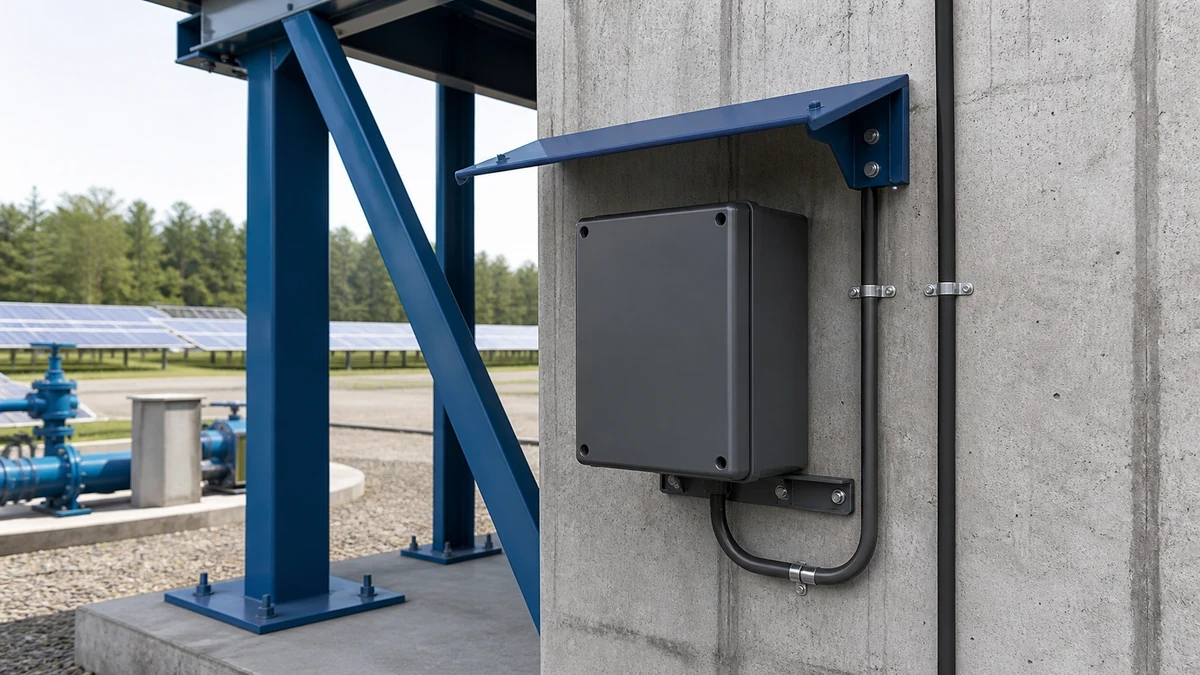
Installation conditions change the product-route and document questions a buyer must resolve.
Outdoor exposure profile
A wall-mounted HVAC disconnect location, a pump skid, and a rooftop equipment bay can expose the box differently. Rain direction, dust, condensation, UV exposure, service washing, vibration, and temperature range should be described in the buyer’s application notes.
Do not assume that a higher-looking enclosure claim solves all installation issues. Cable entries, gasket compression, cover closure, mounting flatness, and installer practice can affect the final enclosure route.
IP evidence and installation dependency
Ask for the IP rating claimed for the exact model and the document that supports it. Also confirm whether the rating depends on specified cable glands, blanking plugs, mounting orientation, tightening method, or accessory choices.
Exposure factor
ما أهمية ذلك
What to ask for
Rain and spray direction
Entry and cover interfaces may be exposed differently.
Recommended mounting orientation and entry route.
Dust or debris
Cover and handle interfaces may need closer review.
Exact IP documentation and enclosure drawing.
Condensation
Internal environment may differ from simple outdoor rain exposure.
Buyer-side application review and accessory requirements if any.
Washdown or cleaning
Spray pressure, angle, and chemical exposure may be outside a generic assumption.
Exact model evidence and buyer cleaning conditions.
Sun and temperature
Materials and labels may have model-dependent limits.
Datasheet material and operating condition information.
Action list for outdoor review
Define the exposure instead of only writing “outdoor”.
Confirm the required IP class and destination-market documentation.
Check whether the cable-entry method is part of the enclosure rating route.
Review gasket position and cover closure on the drawing.
Treat final IP suitability as dependent on exact product documentation and installation conditions.
Cable entry, gasket route and handle access can decide retrofit success
Cable-entry layout and operator access can make or break an outdoor isolator switch replacement, even when electrical ratings appear aligned. These details determine whether the box can be installed cleanly without compromising the intended enclosure route.
Confirm entry face, entry size, gland or conduit route, spacing from the switch body, and clearance for cable bend radius. If the replacement moves the cable entry, the installer may need new conduit work or a different mounting position.
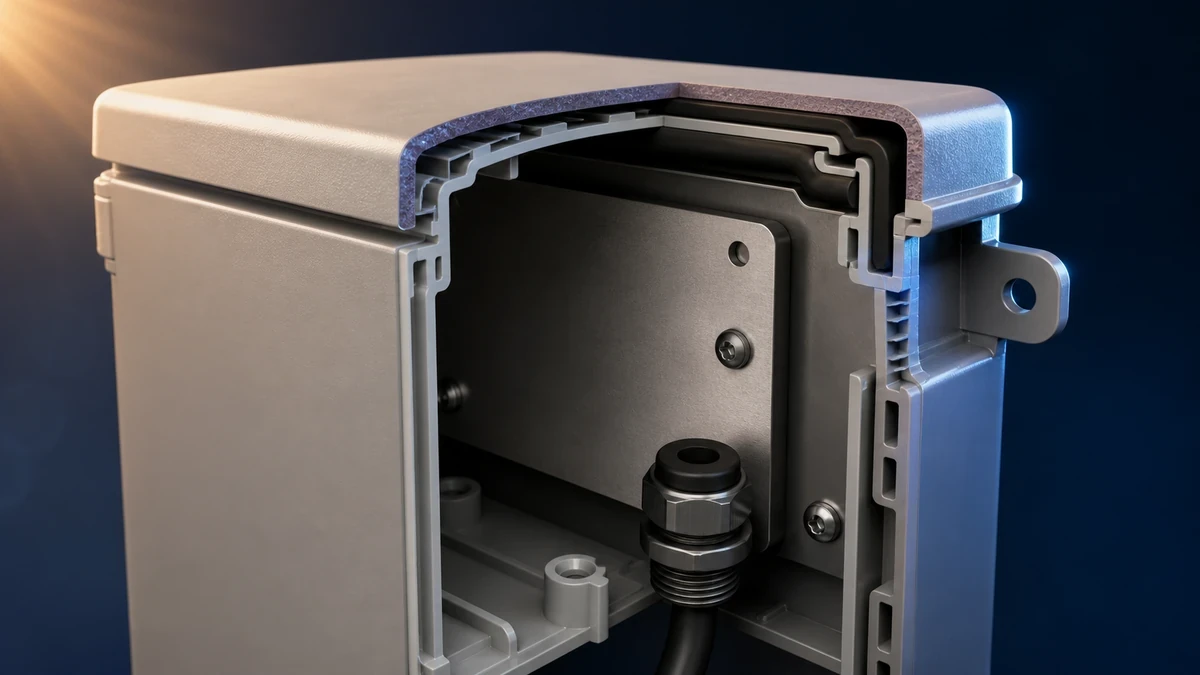
The gasket route should be reviewed as part of the assembly, not as a loose component decision. Cover flatness, screw pattern, compression path, and accessory choices can affect whether the installed enclosure matches the intended documentation route.
Mounting and handle access
The handle must be accessible in the installed location. Check projection from the wall, clearance for gloved operation if relevant to the buyer’s site practice, and whether the cover can open for service access after mounting.
Retrofit projects often fail commercially when handle access is discovered late. A dimensional drawing is usually more useful than a catalogue photo for confirming this.
Cable-entry and access checklist
Confirm top, bottom, side, or rear entry requirements.
Record existing gland or conduit sizes and spacing.
Check cover-opening clearance against nearby equipment.
Ask whether the proposed drawing shows entry knockouts, prepared holes, or blank enclosure faces.
Confirm any buyer-required gasket, gland, or accessory assumptions before purchase.
How Shieldhz confirms a weatherproof isolator switch box route
Shieldhz confirms a proposed route by matching the buyer’s stated application inputs to current product documentation before quotation or model confirmation. Final suitability is confirmed against current product documentation and the buyer’s application, not by current rating alone.
The starting point can be the waterproof isolator box range, but the model route should still be checked against the details below.
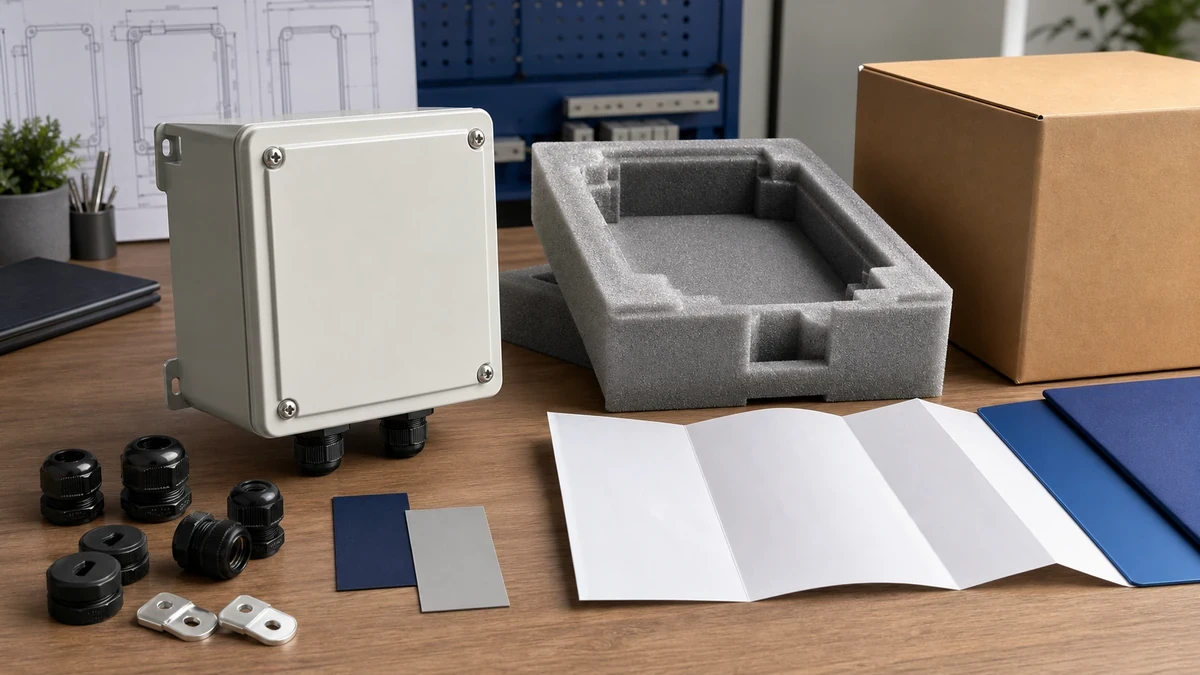
Documentation control, sample acceptance and protective packing are separate handover checks.
Pre-quotation confirmation inputs
Shieldhz reviews the intended load and isolation role first. The request should state whether the box is for equipment isolation, local service access, or another defined manual isolation purpose in the buyer’s design.
The buyer should then provide AC or DC duty, voltage, current, pole requirement, enclosure exposure, requested IP requirement, cable-entry route, gasket expectations, mounting method, and handle access constraints. Photos, sketches, and existing box dimensions help reduce quotation ambiguity.
Information to provide with the enquiry
Load type and isolation role.
AC or DC duty.
Voltage and current.
Pole count and wiring expectation.
Outdoor exposure description.
Required IP class or buyer specification.
Cable-entry direction, gland or conduit route, and unused-entry treatment.
Mounting footprint and available space.
Handle orientation, access clearance, and lockout expectation if specified.
Destination-market documentation needs.
Drawing, datasheet and certificate package
For commercial review, the buyer can request the drawing, datasheet, and certificate or declaration package available for the proposed exact model. The content and applicability of that package depend on the current product documentation and the buyer’s destination-market requirements.
Where a buyer has a procurement specification, it should be sent before model confirmation. Shieldhz can then align the proposed model route with the stated requirements and identify which points need buyer-side engineering approval.
Choosing between like-for-like replacement and redesign
A like-for-like route is useful only when the installed constraints and current documentation align closely enough for the buyer’s application. If the existing layout, duty, exposure, or documentation need has changed, a redesign route may be the more controlled commercial option.
For buyers considering the SH30 route specifically, the SH30 weatherproof isolator box guide can support model-level discussion before requesting drawings and datasheets.
When a like-for-like route is reasonable
A like-for-like route may be practical when the existing box data is known, the installation envelope is fixed, and the buyer’s duty and documentation requirements have not changed. Even then, the proposed replacement should be checked against current model documents.
Like-for-like should not mean “same amperes only.” It should mean the buyer has compared the installed requirement against the replacement’s electrical, mechanical, enclosure, and documentation route.
When redesign is the cleaner decision
A redesign route may be better when the old model is unavailable, the cable path must change, the IP requirement has changed, the site exposure is different, or the buyer now needs different documentation. It may also be appropriate when handle access or mounting clearance is poor in the existing installation.
Replacement route
Use when
Main documents to compare
Like-for-like review
Existing envelope and requirements are well documented.
Existing photos, nameplate, new drawing, new datasheet.
Controlled retrofit
Some geometry or entry details differ.
Dimensioned drawing, cable-entry plan, gasket and accessory notes.
Redesign route
Duty, exposure, mounting, or documentation requirements have changed.
Exact part numbers, drawings, ratings, markings, and available documents.
Decision steps
Identify whether the objective is minimum site change or improved alignment with a new specification.
Compare electrical duty first, then mechanical fit, then enclosure route.
Flag any difference in cable-entry position or handle access.
Confirm documentation before committing to purchase.
Keep buyer-side approval tied to the exact model and application.
Procurement notes for distributors, panel builders and contractors
Procurement should compare exact models and document packages, not only headline ratings and enclosure descriptions. This reduces substitution risk when several outdoor isolator boxes look similar in a quotation table.
Data package for quotation comparison
Ask each supplier for the exact part number or model route, drawing, datasheet, available certificate or declaration information, and accessory assumptions. If the quotation includes cable glands, plugs, labels, or handle options, those should be listed clearly.
Avoid treating catalogue families as interchangeable. Ratings, materials, dimensions, markings, and documentation can differ by exact model and configuration.
Change control before purchase
Contractors and panel teams should control changes between the quoted model and the delivered or installed model. If a substitute is proposed, repeat the compatibility review instead of approving by current rating.
Procurement checklist
Exact model or part number stated on the quotation.
Drawing revision or document date available for review.
Datasheet matched to the proposed model.
IP claim and supporting document identified where required.
Voltage, current, duty, and pole count checked.
Cable-entry route and accessories clarified.
Handle option and mounting orientation confirmed.
Destination-market documentation requirement stated by the buyer.
Any substitution routed back through engineering or buyer approval.
Conclusion
An outdoor isolator switch replacement is a retrofit compatibility decision, not a current-rating match. The buyer should confirm switching duty, voltage, enclosure exposure, IP evidence, cable-entry route, gasket path, mounting footprint, handle access, and documentation for the exact model.
Shieldhz can support the commercial route by reviewing buyer inputs before quotation and aligning the proposed model with available drawings, datasheets, and certificate information. Final acceptance remains dependent on current product documentation and the buyer’s application requirements.
الأسئلة الشائعة
Is current rating enough for an outdoor isolator switch replacement?
No. Current rating is only one filter. The buyer should also confirm voltage, AC/DC duty, pole count, enclosure exposure, IP requirement, cable-entry route, mounting dimensions, handle access, and documentation for the exact model.
Can I replace an old outdoor isolator box with any model showing the same amperes?
Not without a retrofit review. Two models with the same current value may differ in enclosure size, entry layout, handle position, duty rating, IP documentation, and certificate package.
What documents should I request before approving a replacement?
Request the current drawing, datasheet, and available certificate or declaration package for the exact proposed model. If accessories or cable-entry components are part of the route, ask that they be listed in the quotation or supporting documents.
Does an IP rating alone confirm outdoor suitability?
No. An IP rating supports enclosure comparison, but final suitability depends on the exact product, installation conditions, cable-entry method, gasket route, mounting orientation, and buyer application.
Should cable entries be checked before ordering?
Yes. Entry direction, gland or conduit size, unused-entry treatment, spacing, and bend clearance can affect both installation work and the intended enclosure route.
Does choosing a specific handle or operator validate machine safety?
No. A handle or operator selection may support the equipment layout, but it does not validate a complete machine safety function. Any safety function must be assessed at machine or system level by the responsible party.
شي، موكسي
يكتب شي، موكسي مقالات شيلدهز الفنية لمشتري التحكم الصناعي والمكونات الكهربائية، والتي تغطي مفاتيح الكامات الدوارة، ومفاتيح العازل، ومفاتيح فصل التيار المستمر الكهروضوئية، وأزرار الضغط، وأضواء المؤشر، والحاويات المقاومة للماء، والكتل الطرفية. تستند المقالات على خبرة شركة Zhejiang Shihe Electric Co., Ltd. في التصنيع والتصدير، مع التركيز العملي على اختيار الطراز وأوراق البيانات والرسومات والشهادات وتصنيفات IP وتفاصيل الاستفسار التي يجب على المشترين التأكد منها قبل الطلب.