DC-PV1 vs DC-PV2 is a switching-duty decision, not a complete product-selection shortcut. Use the utilization category to ask whether the quoted PV DC isolator switch route matches the intended PV circuit arrangement, switching expectation, voltage/current conditions, and destination-market documentation.
Confirm the utilization category on the exact model datasheet, drawing, certificate package, or manufacturer confirmation before locking the RFQ.
Do not compare DC-PV1 and DC-PV2 without also checking maximum DC voltage/current, pole arrangement, enclosure, mounting, cable entry, and required markings.
Treat DC-PV2 as a closer engineering review trigger for more demanding PV switching assumptions, not as a universal upgrade for every build.
DC-PV1 vs DC-PV2 in one purchasing decision
Use DC-PV1 vs DC-PV2 as a switching-duty filter: it helps you decide which PV isolator route to investigate, but it does not approve a complete assembly by itself. The right choice remains exact-model and buyer-application dependent.
An exact drawing identifies the interfaces that must be controlled for the approved model route.
What the utilization category can tell you
The category indicates the type of PV DC switching duty claimed for a device under stated conditions. For buyers, that means it belongs in the same review line as rated DC voltage, current, pole configuration, and the manufacturer’s product documentation.
As an evidence boundary, the IEC 60947-3 scope describes the standard’s scope as switches, disconnectors, switch-disconnectors and fuse-combination units within stated distribution- and motor-circuit AC/DC limits. This article uses utilization category as a procurement and engineering decision point; it does not replace the current standard text, a model certificate, or the supplier’s technical file.
What the category does not decide
The category does not tell you whether a specific enclosure, handle, cable entry, mounting method, destination-market marking, or accessory set is suitable. Those points depend on the exact model route, drawing, datasheet, certificate package, and the buyer’s application.
It also should not be used as a wiring guide. If the commercial question is “which isolator route should we request,” stay with utilization category and documentation; if the question is circuit layout, use the buyer’s design rules and project standards.
The engineering difference: making and breaking PV DC current
The practical difference is the switching condition the product is being selected and documented for. DC-PV1 is typically investigated for defined PV DC switching duties under the product’s stated limits, while DC-PV2 should be investigated when the PV architecture may create more demanding switching assumptions, such as array conditions that require closer review against the manufacturer’s documentation.
DC-PV1 as a defined PV switching-duty route
For many OEM and panel-building discussions, DC-PV1 may be the first category checked when the isolator is expected to operate within a clearly defined PV circuit arrangement. The buyer still needs the exact voltage, current, pole arrangement, environmental, and documentation match.
Do not assume that a DC-PV1 statement on one model applies to another housing, current size, pole configuration, or destination market. Confirm it against the current product data.
DC-PV2 as a closer review route
DC-PV2 should be treated as a signal to review more demanding PV switching duty assumptions before purchase. The practical question is not “is DC-PV2 better,” but “does this application require the duty claimed under DC-PV2 on this exact model?”
Buyer question
DC-PV1 investigation
DC-PV2 investigation
Is the PV circuit arrangement simple and clearly defined?
Often reviewed first
Still possible, but may be more than needed
Are parallel strings, reverse-current assumptions, or array-level switching questions present?
Requires caution and documentation review
More likely to be part of the review
Can the supplier provide exact-model evidence?
Required
Required
Does the category alone approve the isolator?
Нет
Нет
Should price be compared before technical confirmation?
Not recommended
Not recommended
When DC-PV1 may be the commercial route
DC-PV1 may be a suitable enquiry direction when the buyer’s PV circuit duty is clearly defined and the requested model documentation supports the stated voltage, current, and configuration. The decision should be made from the actual datasheet and drawing, not from a family name alone.
OEM and panel-builder use cases to clarify
For PV equipment builders and panel builders, DC-PV1 may be investigated where the switch is specified for a known string or circuit arrangement and the operating assumptions are not being stretched beyond the documented product route. The buyer should state whether the isolator is inside an enclosure, supplied as a housed unit, or integrated into a larger assembly.
If the project uses different current sizes, operator types, or pole combinations across variants, each variant should be checked. A category shown for one line item should not be copied across the bill of materials without confirmation.
DC-PV1 enquiry checklist
Use this checklist before accepting a DC-PV1 quotation:
Confirm the exact model code, not only the product family.
State maximum system DC voltage and operating current for the item.
Confirm the pole arrangement and how the PV conductors are switched.
Ask for the current datasheet and dimensional drawing.
Confirm enclosure, mounting, and cable-entry requirements.
State destination market and any required approval or marking.
Verify whether the quoted category applies to the selected configuration.
When DC-PV2 should be investigated before RFQ lock
DC-PV2 should be investigated before RFQ lock when the PV circuit arrangement or buyer specification suggests a more demanding PV switching-duty review. This is especially important when the purchasing team is comparing offers from suppliers that quote category labels without the same level of supporting documentation.
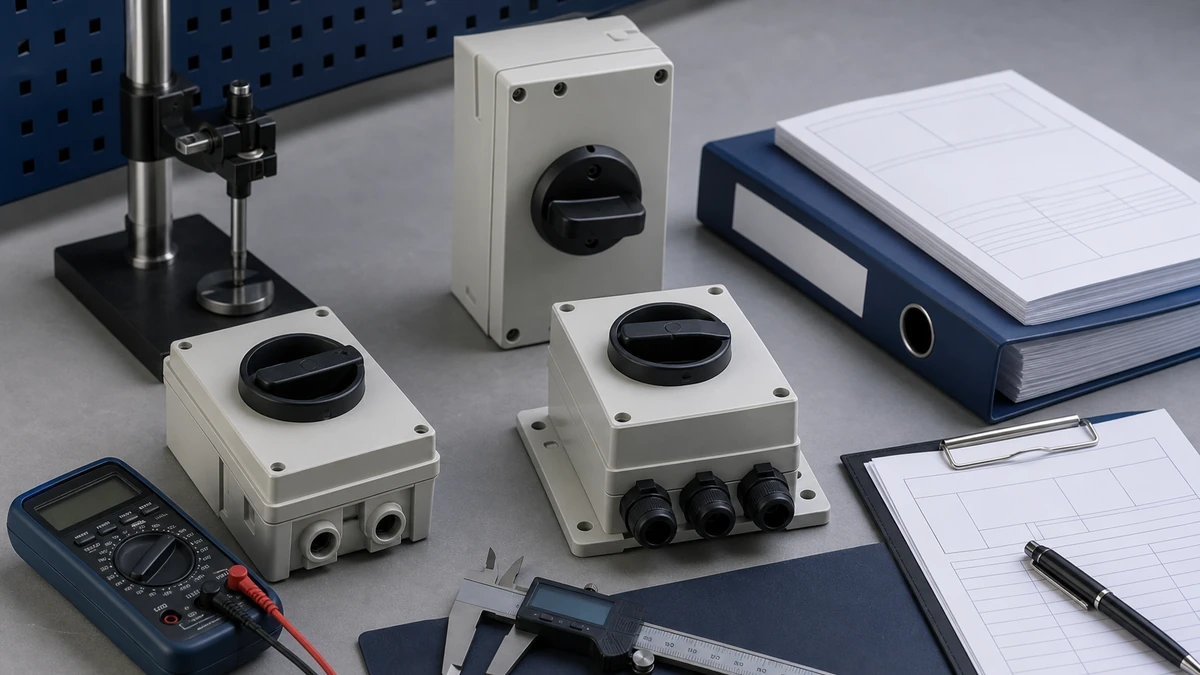
Sample review should connect the exact item to its current drawing and requested evidence package.
Switching-duty assumptions to confirm
Ask the design team whether the isolator is expected to operate only within a defined string condition, or whether the array architecture introduces parallel-source, reverse-current, or other switching assumptions that need to be reviewed. The supplier should confirm the category against the selected model and configuration.
If the answer is unclear, do not resolve the uncertainty by buying the highest-looking label. Resolve it by documenting the actual voltage, current, circuit arrangement, and intended switching role.
Procurement risks if category is not confirmed
The commercial risk is not only technical mismatch. It can also include quotation delays, drawing revisions, destination-market documentation gaps, and last-stage substitution when the selected route does not match the requested marking or configuration.
RFQ situation
Risk if ignored
Buyer action
Supplier quotes “DC-PV2” without model detail
Category may not apply to the selected configuration
Request exact model code and supporting documents
Drawing does not show pole arrangement
Wiring and switching assumptions may be unclear
Request updated drawing or configuration sheet
Destination market is not stated
Required marking package may be missed
State country/region and approval requirement
Enclosure is chosen after switch selection
Cut-out, handle, and cable-entry fit may change
Confirm mechanical route before purchase
Current or voltage is rounded in the RFQ
Offer may be based on the wrong rating line
Provide maximum design values
Pole arrangement, voltage, and current: do not compare category in isolation
Do not select between DC-PV1 and DC-PV2 without checking pole arrangement, voltage, and current on the exact product documentation. The utilization category is only one part of the selection evidence.
Voltage and pole configuration
PV DC voltage and pole arrangement are linked in the isolator selection. A product route may require a specific number of poles, switching path, or connection arrangement to match a stated DC voltage and category.
Ask for a drawing that shows the selected configuration. If the drawing is generic, request confirmation that it applies to the quoted model and the intended PV circuit arrangement.
Current, enclosure, and environment
Current ratings can be affected by the exact model and installation conditions stated by the manufacturer. Enclosure type, ambient assumptions, cable entry, and installation layout should be reviewed using the supplier’s documentation rather than assumed from a catalog heading.
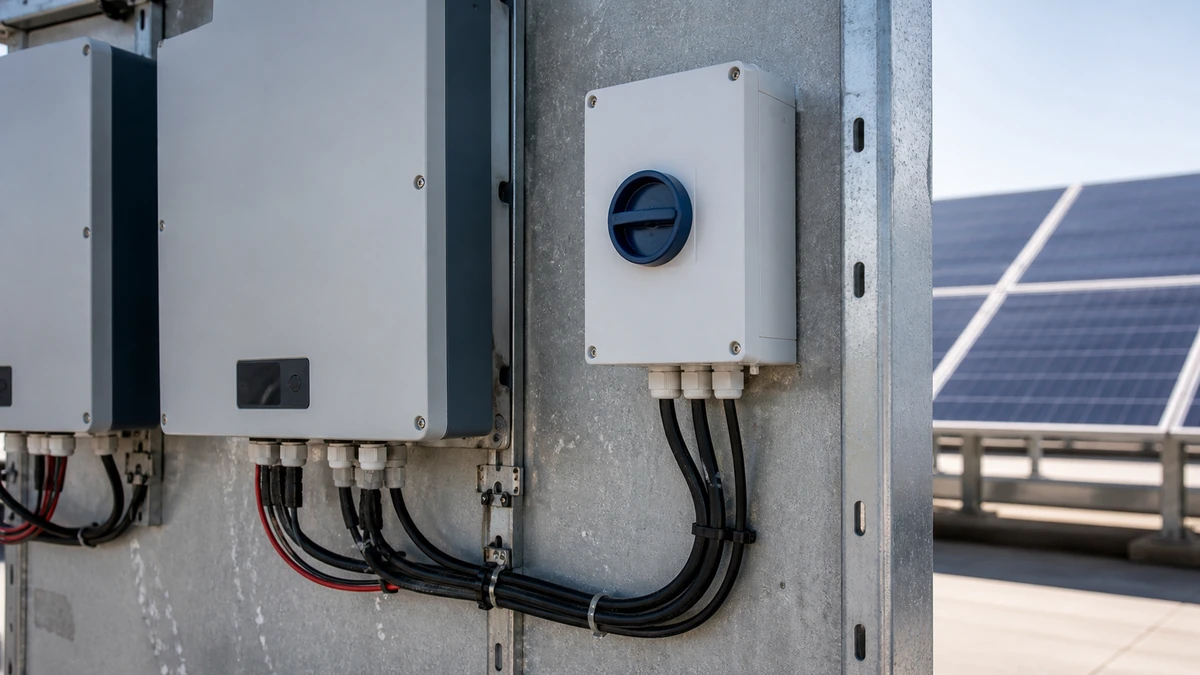
Installation conditions change the product-route and document questions a buyer must resolve.
Selection parameter
Why it matters commercially
Evidence to request
Максимальное постоянное напряжение
Drives model and pole-route review
Datasheet and configuration confirmation
Maximum DC current
Affects size and selected rating line
Datasheet for exact model
Расположение полюсов
Determines the switching path
Drawing or wiring/configuration sheet
Enclosure or open mounting
Changes mechanical and environmental assumptions
Product drawing and enclosure details
Cable entry direction and size
Affects build layout and installation fit
Drawing and bill-of-material confirmation
Рынок назначения
May change requested markings or certificate package
Current certificate or declaration package, where applicable
Model-route comparison for Shieldhz PV isolator selection
Choose the Shieldhz model route only after the application duty and documentation package are clear. A family page helps you start the enquiry, but the final decision depends on the selected model, configuration, and buyer requirements.
Start with the product route, then narrow the evidence
If the project has not yet fixed the current size, enclosure style, or mounting method, begin by reviewing candidate PV isolator routes. From there, request the exact drawing and documentation for the selected configuration.
Shortlist model routes against voltage/current and mounting
Do not assume one route fits all platform variants
Replacement sourcing
Match the existing functional and mechanical requirements
Do not copy a category label without documents
Distributor stock planning
Separate common demand from application-specific approvals
Do not treat one certificate package as universal
Panel-builder project
Confirm cut-out, handle position, cable entry, and drawing
Do not wait until assembly to check fit
Export build
State destination market at RFQ stage
Do not assume markings are identical across markets
How Shieldhz confirms a PV DC isolator switch route
Shieldhz confirms a PV DC isolator switch route by matching the buyer’s application inputs to current product documentation before quotation. Final suitability is confirmed against current product documentation and the buyer’s application.
Pre-quotation inputs to provide
A useful enquiry gives the supplier enough information to confirm the model route without guessing. Include the following items in the first RFQ message when possible:
Application and destination market.
Maximum DC voltage and maximum DC current.
String, array, or pole arrangement to be switched.
Enclosure and environment assumptions.
Mounting method and cable-entry requirement.
Requested drawing, datasheet, and certificate package.
Any required approval, label, or marking requirement.
Documentation control, sample acceptance and protective packing are separate handover checks.
Documentation package to request
The documentation package should correspond to the exact model and selected configuration. A datasheet alone may not answer mechanical fit, destination-market marking, or category confirmation questions.
Используйте PV DC isolator documentation checklist to structure the buyer-side document request. For time-sensitive quotations, identify which documents are needed for engineering approval and which are needed for purchasing release.
Buyer-verification action list
Before approving the quoted route, check:
The model code matches the quotation, drawing, and datasheet.
The stated utilization category applies to the selected configuration.
The voltage/current line matches the application maximums.
The drawing matches mounting, handle orientation, and cable entry.
The certificate or declaration package matches the destination-market request, where applicable.
Any required marking is stated in writing before purchase.
Commercial RFQ wording that prevents category mismatch
Write the RFQ so the supplier must confirm the utilization category against the exact model and application, not merely quote a product family. This reduces back-and-forth and helps engineering, purchasing, and distribution teams compare offers on the same basis.
Minimum RFQ wording
Use concise wording that ties category to configuration:
Please quote a PV DC isolator switch route for the following application. Confirm whether the selected exact model and configuration are documented for DC-PV1, DC-PV2, or another stated category under the supplied voltage, current, pole arrangement, enclosure, mounting, cable-entry, and destination-market requirements. Provide the current datasheet, drawing, and requested certificate or declaration package.
This wording avoids treating DC-PV1 vs DC-PV2 as a standalone price label. It also makes it easier for the supplier to respond with a route that can be checked by engineering.
Evaluation checklist for procurement teams
When comparing offers, check the evidence line by line:
Does each supplier quote an exact model code?
Is the utilization category stated for the selected configuration?
Are voltage and current values shown in the same way across offers?
Is the pole arrangement documented?
Are enclosure, mounting, and cable entry included?
Is the destination-market documentation package identified?
Are exclusions or assumptions clearly written?
Has engineering approved the documentation before purchasing release?
How to compare quotations without overbuying or underspecifying
Compare quotations by documented fit, not by category label alone. DC-PV2 may be necessary for some applications, while DC-PV1 may be the appropriate route for others when supported by the exact product documentation and application data.
Technical-to-commercial comparison
A fair comparison starts with identical inputs. If one quotation is based on complete voltage, current, pole, enclosure, and market information while another is based on a generic request, the prices are not technically comparable.
Ask suppliers to state any assumptions. If an offer is cheaper because it excludes a required marking, enclosure detail, or drawing package, that difference should be visible before purchasing approval.
Decision table for quotation review
Comparison point
Acceptable buyer evidence
Escalate if
Category confirmation
Exact model and configuration are stated
Only a family category is shown
Напряжение/ток
Values match the RFQ maximums
Values are missing, rounded, or lower than required
Mechanical fit
Drawing matches the assembly need
Drawing is generic or not supplied
Документация
Requested package is listed
Certificate or declaration scope is unclear
Рынок назначения
Market and marking request are acknowledged
Supplier assumes a default market
Substitution control
Alternative route is clearly identified
Supplier changes model without written confirmation
Conclusion
DC-PV1 vs DC-PV2 is a practical way to narrow PV DC isolator switch selection, but it is not a complete approval method. The category should be reviewed together with maximum DC voltage/current, pole arrangement, enclosure, mounting, cable entry, destination market, and the exact documentation package.
For commercial teams, the best result comes from a clear RFQ and a documented model-route confirmation. For engineering teams, the key is to verify the utilization category against the current datasheet, drawing, certificate package, and the buyer’s actual PV application before release.
Часто задаваемые вопросы
What is the main difference in DC-PV1 vs DC-PV2 for buyers?
The main difference is the PV DC switching-duty condition being claimed for the device under stated documentation. Buyers should treat the category as a technical filter that must be checked against the exact model, configuration, and application.
Is DC-PV2 always the better choice?
No. DC-PV2 may be the correct route for some applications, but it is not a universal upgrade. The correct selection depends on the PV circuit arrangement, voltage/current, model documentation, and destination-market requirements.
Can I approve a PV isolator using utilization category alone?
No. Utilization category should be checked with the datasheet, drawing, model code, pole arrangement, enclosure details, and required documentation package. Final approval is application and exact-model dependent.
What should procurement ask for when a supplier quotes DC-PV1 or DC-PV2?
Ask for the exact model code, configuration, current datasheet, dimensional drawing, category confirmation, and any requested certificate or declaration package. Also state the destination market and required marking before accepting the quotation.
Does the PV utilization category cover separate fault-current or fusing decisions?
No. A PV isolator switch should be selected for its documented switching and isolation role. Any separate fusing or other design requirements should be specified and verified separately by the buyer’s engineering process.
Why does the destination market matter when selecting between DC-PV1 and DC-PV2?
Destination market can affect the requested markings, document package, and buyer approval route. Do not assume that one quotation package satisfies every market; confirm the requirement in the RFQ and verify it against current product documentation.
Ши, Мукси
Ши, Мукси пишет технические статьи Shieldhz для покупателей промышленных систем управления и электрических компонентов, охватывая поворотные кулачковые переключатели, разъединители, PV DC разъединители, кнопки, индикаторные лампы, водонепроницаемые корпуса и клеммные блоки. Статьи основаны на опыте производства и экспорта компании Zhejiang Shihe Electric Co., Ltd., с практическим акцентом на выборе модели, технических характеристиках, чертежах, сертификации, рейтингах IP и деталях запроса, которые покупатели должны подтвердить перед заказом.