PV Isolator Thermal Derating: Inputs to Confirm Without Guessing a Current Rating
Use a practical buyer checklist to evaluate pv isolator thermal derating inputs, documentation, approval controls and the exact PV DC isolator switch route.
PV isolator thermal derating should be confirmed from the actual ambient, enclosure, conductor, mounting and DC circuit inputs for the selected model route, not from a guessed universal current factor.
Ask for the exact-model datasheet, drawing and relevant certificate or approval package before locking the current rating.
Confirm enclosure temperature, cable size, cable entry, pole arrangement and destination-market requirements in the RFQ.
Treat headline current as a starting point only; final suitability is application and documentation dependent.
Why pv isolator thermal derating starts with inputs, not a universal factor
Do not buy a PV DC isolator by applying a generic derating percentage to the catalogue current. Thermal performance depends on how the device is installed, how conductors remove or retain heat, and what ambient temperature surrounds the switch body in service.
PV isolator thermal derating is therefore a confirmation workflow. The buyer supplies the thermal and electrical context, and the selected route is checked against current product documentation for that exact model and configuration.
What changes heat in real assemblies
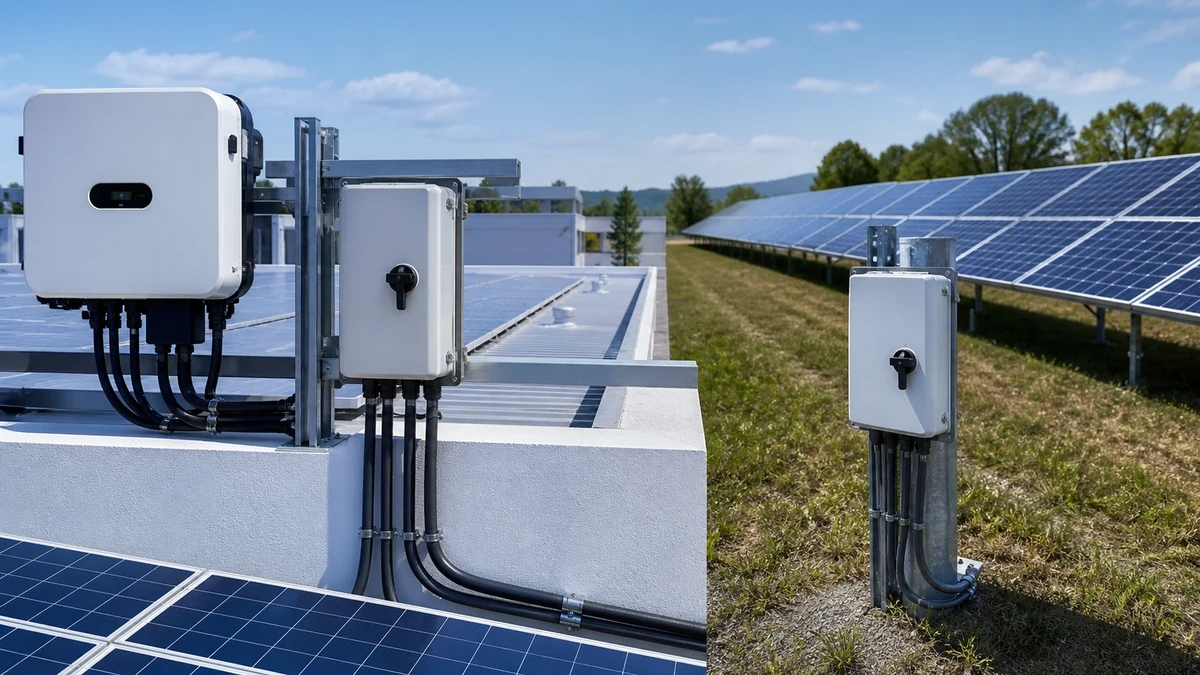
The same nominal current can produce different temperature results when the enclosure size, conductor size, cable gland position or nearby heat sources change. A roof-mounted inverter disconnect, a sealed combiner enclosure and a factory-built control panel may all expose the isolator to different internal temperatures.
Important heat-related inputs include:
Maximum air temperature around the switch body, not only outdoor site temperature.
Enclosure size, material, ventilation and nearby heat-generating devices.
Conductor cross-section, insulation temperature rating and cable routing.
Pole configuration and whether poles are linked in series for the DC voltage route.
Mounting orientation, spacing and accessibility constraints.
Where standards stop and model documents begin
For scope context only, the IEC 60947-3 scope is described by IEC as switches, disconnectors, switch-disconnectors and fuse-combination units within stated distribution- and motor-circuit AC/DC limits. That scope statement does not provide a universal thermal derating factor for every PV enclosure or every product route.
The practical buying decision is narrower: confirm whether the exact switch model, pole arrangement, voltage/current condition and enclosure context match the documentation offered for the destination market.
Ambient temperature input: confirm the air temperature the switch actually sees
Use the maximum local air temperature around the isolator body, not a broad weather number, when discussing current suitability. The switch may sit inside a hotter enclosure, near inverter electronics or under direct sun conditions depending on the buyer’s assembly.
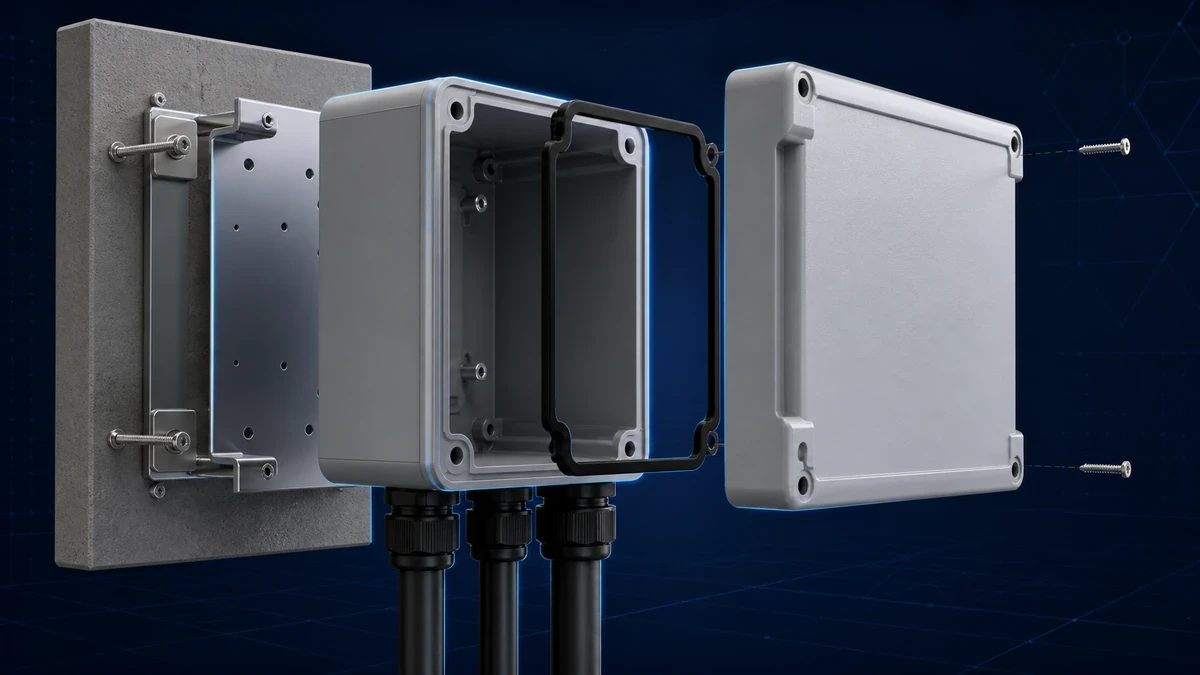
An exact drawing identifies the interfaces that must be controlled for the approved model route.
Site ambient is not always enclosure ambient
Procurement often receives a project ambient temperature and assumes it applies to every component. For PV isolators, the more useful number is the expected maximum temperature inside the enclosure where the current-carrying parts operate.
If the isolator is mounted through a door, the handle may be in one environment while the switch body is in another. That difference should be made clear in the RFQ and drawing review.
Ambient confirmation checklist
Before asking for a current rating confirmation, provide:
Maximum expected internal enclosure temperature at the isolator position.
Whether the enclosure is indoors, outdoors, shaded, roof-mounted or inverter-integrated.
Any nearby heat sources such as power electronics, bus conductors or transformers.
Whether the temperature is measured, simulated or specified by project assumption.
Destination market, because documentation and marking expectations may differ.
Ambient input
Почему это важно
Buyer action
Outdoor site maximum
Indicates external exposure conditions
Provide project maximum and installation location
Internal enclosure maximum
Better reflects switch body conditions
Use measured, modelled or specified enclosure temperature
Solar exposure
Can raise enclosure temperature
State shaded, exposed or covered installation
Nearby heat sources
Changes local thermal stress
Show layout or describe adjacent devices
Temperature uncertainty
Affects route confidence
Ask for model-specific review rather than guessing
Enclosure and mounting input: define how heat can leave the device
Confirm the enclosure and mounting details because they influence the heat path around the PV isolator. A sealed box, compact inverter compartment or high-density panel can change thermal behavior compared with an open or ventilated layout.
Enclosure attributes to specify
The isolator supplier cannot infer the thermal environment from current and voltage alone. Enclosure volume, material, sealing approach and airflow conditions all affect the review.
Provide the following when available:
Enclosure dimensions or internal free volume.
Enclosure material and wall thickness if relevant.
Ventilated, sealed or filtered airflow design.
Other heat-generating equipment in the same compartment.
Maximum number of isolators installed together in the same enclosure.
Mounting position and operator arrangement
Door mounting, base mounting and external handle arrangements may place the switch body and operator in different environments. The selected handle, shaft and mounting accessories should be checked against the exact drawing and product route.
Do not assume that an operator style validates the whole assembly. If a red/yellow operator is requested for an emergency-stop appearance or function, the complete machine safety function still requires buyer-side risk assessment and validation beyond selecting the operator.
Mounting question
If the answer is yes
Что подтвердить
Is the switch body inside a sealed enclosure?
Internal heat may be higher than ambient
Internal maximum temperature and enclosure volume
Is the handle mounted through a door?
Body and handle environments differ
Shaft length, door thickness and drawing fit
Are multiple isolators installed together?
Mutual heating may matter
Spacing and internal layout
Is the cable entry tight or crowded?
Conductors may retain heat
Cable bend radius and entry location
Is orientation constrained?
Layout may differ from documentation assumptions
Exact drawing and mounting position
Conductor and cable-entry input: confirm what connects to the isolator
Conductor details must be confirmed because the cable is part of the thermal path. Cross-section, material, insulation class, termination method shown in the drawing and cable routing can affect whether a selected route is appropriate.
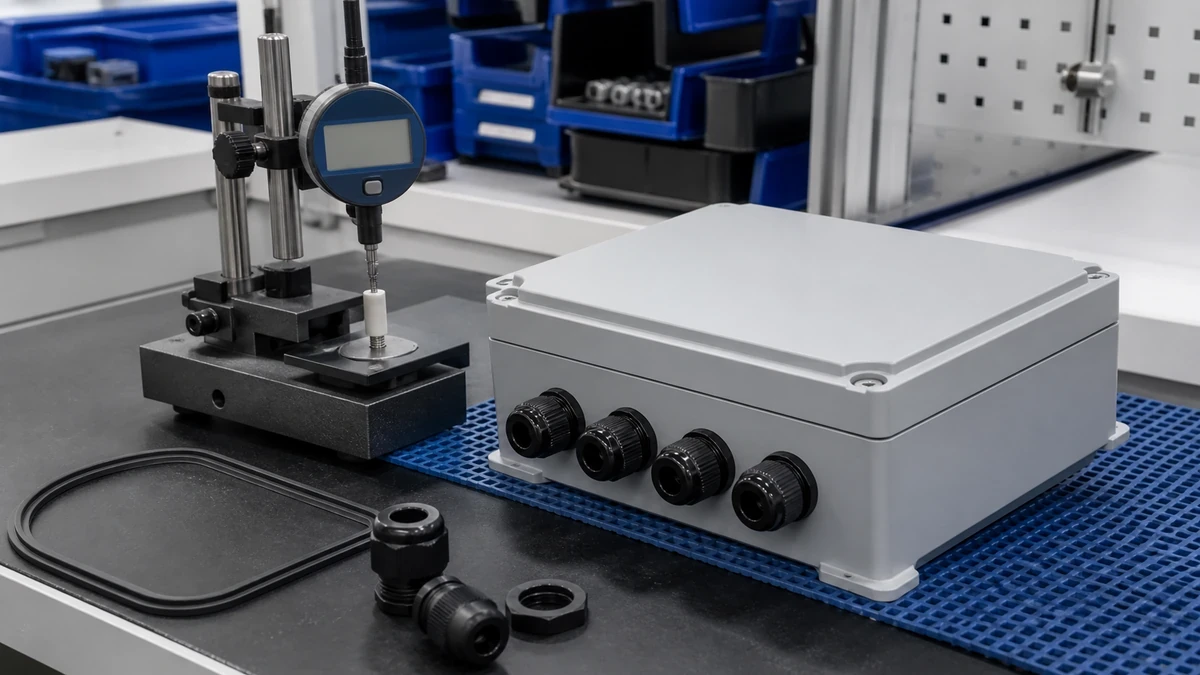
Sample review should connect the exact item to its current drawing and requested evidence package.
Conductor size, material and temperature class
The conductor should be specified exactly rather than described as “standard PV cable.” The buying team should state the planned conductor cross-section, copper or other conductor material where relevant, insulation temperature rating and number of conductors per entry.
If the actual conductor differs from the drawing or datasheet assumptions, ask for confirmation before approving the current rating. Do not substitute a different conductor size after approval without checking the route again.
Cable entry and routing checklist
Cable entry can concentrate heat or force tight bends near the device. Confirm these inputs early:
Top, bottom, side or rear cable entry.
Cable gland or conduit type, if already selected.
Number of cables entering the same side of the enclosure.
Bend radius and free conductor length inside the enclosure.
Whether positive and negative conductors are routed close together.
Any field wiring limitations from the buyer’s assembly standard.
Conductor input
Procurement wording to use
Engineering reason
Cross-section
“Planned conductor size is ___ mm² or AWG ___.”
Affects heat transfer and connection condition
Material
“Conductor material is ___.”
Electrical and thermal properties may differ
Insulation rating
“Cable insulation temperature rating is ___.”
Must suit local thermal conditions
Entry side
“Cable entry is from ___.”
Changes routing and bend space
Количество
“There are ___ conductors per enclosure/entry zone.”
Helps review crowding and heating
DC voltage, current, pole and string arrangement: route the model before comparing ratings
Select the model route only after confirming the DC voltage, current and pole arrangement. A PV isolator current value is not meaningful without the circuit configuration that the switch is expected to disconnect.
PV DC switching routes may use different pole arrangements depending on maximum DC voltage and circuit design. The buyer should state the maximum DC voltage, rated operating current, number of strings and how poles are expected to be connected.
Do not treat a current value from one voltage or pole route as automatically valid for another. The selected model documentation should show the applicable route.
String, combiner or inverter location
A string-level isolator, a combiner-mounted isolator and an inverter-integrated isolator can have different enclosure temperatures and wiring patterns. The location should be included in the RFQ because it affects both thermal and mechanical checks.
Application position
Typical buyer decision
Inputs to provide
String-level enclosure
Compact local disconnecting point
String current, voltage, enclosure ambient
Combiner enclosure
Multiple circuits in one box
Number of strings, conductor grouping, internal temperature
Inverter-integrated position
Space and heat may be constrained
Inverter compartment temperature and mounting drawing
Panel-built assembly
Procurement may standardize parts
Destination market, enclosure class requested by buyer, documentation package
Documentation inputs procurement should request before approval
Request current product documentation before approving the route, because thermal suitability is verified against exact-model data, drawings and applicable certificate or approval materials. A quotation line alone is not enough for engineering sign-off.
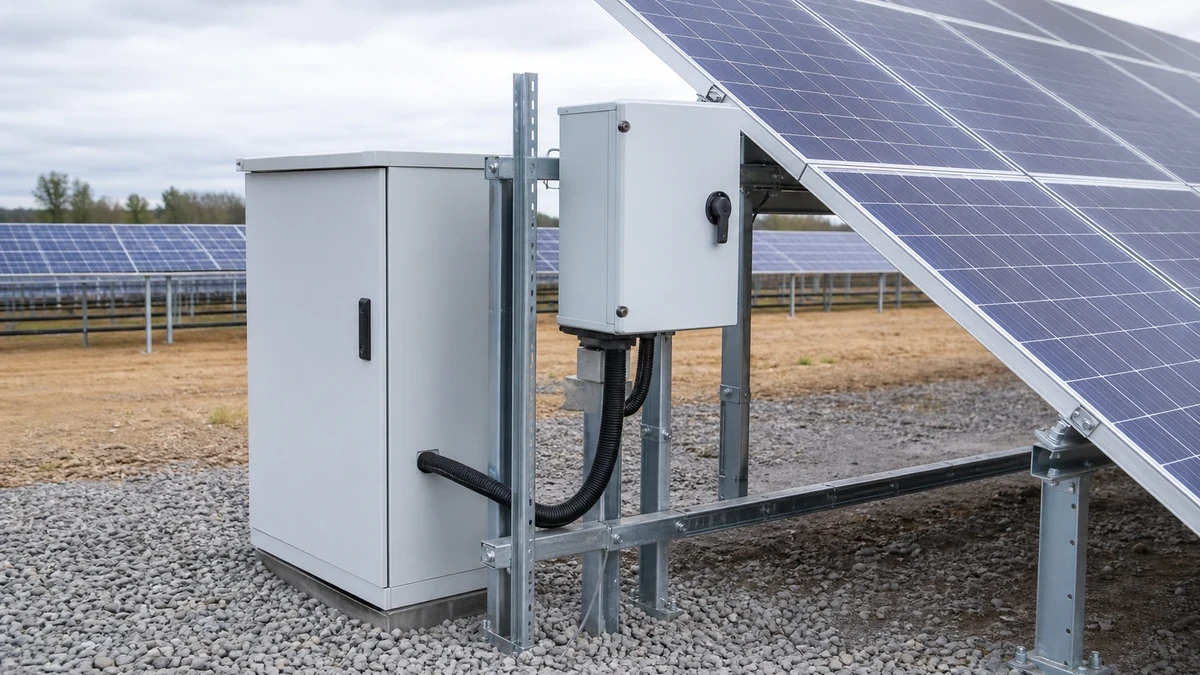
Installation conditions change the product-route and document questions a buyer must resolve.
Drawing, datasheet and certificate package
Ask for the drawing, datasheet and available certificate or approval package that corresponds to the exact model, pole arrangement and accessory combination. If a buyer has destination-market marking requirements, state them directly rather than assuming they apply to every variant.
Shieldhz has a separate PV DC isolator documentation checklist for broader document control questions, so this article keeps the focus on thermal derating inputs.
Revision control checklist
Use this checklist before releasing a purchase order or engineering approval:
Confirm the exact model code and route.
Confirm the drawing revision and datasheet revision.
Match the voltage/current condition to the proposed pole arrangement.
Record the destination market and requested marking or approval requirement.
Keep the approved documentation package with the buyer’s assembly file.
Документ
Что проверить
Почему это важно
Информационный лист
Current, voltage and configuration notes
Prevents comparing unrelated conditions
Drawing
Dimensions, mounting and wiring route
Confirms assembly fit
Certificate or approval file
Exact model and scope stated in the file
Supports destination-market review
Quotation
Model code, accessory set and requested documents
Aligns commercial and engineering approval
Buyer specification
Ambient, enclosure and conductor inputs
Links application conditions to model selection
How Shieldhz confirms a PV DC isolator switch route
Shieldhz confirms a PV DC isolator switch route by collecting the buyer’s application, electrical, enclosure and documentation inputs before quotation or final model confirmation. Final suitability is confirmed against current product documentation and the buyer’s application.
Pre-quotation input set
A practical pre-quotation review should include:
Application and destination market.
Maximum DC voltage and current.
String count, circuit arrangement and pole arrangement.
Enclosure type, expected internal ambient and environmental exposure.
Mounting method, handle/operator request, shaft length and cable entry.
Conductor size, material and insulation temperature rating.
Requested drawing, datasheet and certificate package.
Any approval, marking or buyer-specific documentation requirement.
The useful output is not a universal derating multiplier. The useful output is a proposed model route, documentation package and any open items that must be resolved before the buyer approves the current rating.
A clear response should identify:
Proposed model route and configuration.
Assumed maximum DC voltage and current.
Assumed enclosure and ambient conditions.
Drawing and datasheet revision used for review.
Any destination-market document or marking request still to be checked.
Buyer-side conditions that remain outside the product documentation.
Buyer decision matrix: when to ask for review instead of choosing from headline current
Ask for model-route review whenever the installation differs from a simple, documented condition. This is especially important when enclosure heat, conductor selection or destination-market approval requirements are still unsettled.
Documentation control, sample acceptance and protective packing are separate handover checks.
Red flags for procurement and distributors
A distributor or procurement team should slow down the buying process if the RFQ only says “PV isolator, ___ A” without the installation context. That wording leaves too many thermal and documentation variables undefined.
Common red flags include:
Current is stated without maximum DC voltage.
Enclosure internal temperature is unknown.
Cable size is not selected.
Pole arrangement is not shown.
Destination market is not stated.
Buyer requests a marking or approval but does not specify the exact requirement.
Multiple isolators will be installed in one compact enclosure.
Clean RFQ action list
A cleaner RFQ reduces back-and-forth and helps the supplier confirm the correct route:
State the application: string, combiner, inverter-integrated or panel-built assembly.
Provide maximum DC voltage and current.
Attach a wiring sketch or pole arrangement.
State maximum internal enclosure temperature.
Provide conductor size and cable entry plan.
List requested documents: drawing, datasheet and certificate or approval file.
State destination market and any required marking.
Ask for confirmation against current documentation, not a generic derating factor.
If this is known
Buyer can do next
If this is unknown
Voltage, current and pole route
Request exact model documentation
Do not approve current rating yet
Internal enclosure temperature
Compare with documented route assumptions
Ask engineering to estimate or measure
Conductor size
Check drawing and wiring feasibility
Hold model approval until cable is selected
Рынок назначения
Request relevant document package
Clarify approval or marking requirement
Mounting layout
Check drawing fit
Provide enclosure drawing before purchase
Commercial approval: separate price selection from engineering confirmation
Use price and availability discussions only after the engineering route is clear enough for documentation review. Commercial selection should not force an unconfirmed current rating into the buyer’s assembly file.
What purchasing can approve early
Purchasing can shortlist a supplier route, request drawings, request datasheets and collect destination-market document options. It can also compare accessory needs such as handle type, mounting style and cable entry direction.
However, purchasing should avoid approving final substitution solely because a current number appears similar. The selected model and route must still match the buyer’s electrical and thermal inputs.
What engineering should approve before release
Engineering should approve the maximum DC voltage/current condition, pole arrangement, enclosure temperature assumption, conductor choice and mounting drawing. If any of these change later, the route should be checked again.
A practical approval split is:
Decision
Purchasing role
Engineering role
Supplier shortlist
Request route and documents
Review technical fit
Model code
Align quotation and accessories
Confirm configuration
Текущий рейтинг
Do not infer from headline value
Verify against inputs and documents
Destination-market documents
Request files named in RFQ
Confirm relevance to assembly
Final release
Issue order after approval
Record assumptions and revisions
Conclusion
PV isolator thermal derating is not a guessing exercise. The correct commercial and engineering decision is to confirm the ambient, enclosure, conductor, cable-entry, voltage/current and pole-arrangement inputs for the exact model route.
A useful RFQ gives the supplier enough information to check current documentation and identify open items. That approach helps procurement avoid false comparisons between headline current ratings and gives engineering a clearer basis for approval.
Часто задаваемые вопросы
Is there a universal derating factor for every PV isolator?
No. A universal factor is not a reliable basis for purchase approval because enclosure temperature, mounting, conductor size, pole arrangement and documentation scope vary by application and model route.
Which ambient temperature should I provide?
Provide the maximum expected air temperature around the switch body inside the enclosure. Outdoor site ambient is useful context, but it may not represent the local temperature around the isolator.
Can I choose only by matching the DC current rating?
No. The current must be reviewed with maximum DC voltage, pole arrangement, conductor details, enclosure conditions and exact-model documentation.
What documents should procurement request?
Request the exact-model datasheet, drawing and relevant certificate or approval package for the proposed configuration. Also record the revision and destination-market requirement used for the review.
Does selecting a red/yellow operator validate an emergency-stop function?
No. Selecting an operator does not validate a complete machine safety function. Emergency-stop or safety-related functions require buyer-side risk assessment, system design and validation for the complete machine or assembly.
When should I ask Shieldhz for route confirmation?
Ask before approving the current rating, especially if the enclosure temperature, cable size, pole arrangement, destination market or requested marking is not yet fully defined. Final suitability is confirmed against current product documentation and the buyer’s application.
Ши, Мукси
Ши, Мукси пишет технические статьи Shieldhz для покупателей промышленных систем управления и электрических компонентов, охватывая поворотные кулачковые переключатели, разъединители, PV DC разъединители, кнопки, индикаторные лампы, водонепроницаемые корпуса и клеммные блоки. Статьи основаны на опыте производства и экспорта компании Zhejiang Shihe Electric Co., Ltd., с практическим акцентом на выборе модели, технических характеристиках, чертежах, сертификации, рейтингах IP и деталях запроса, которые покупатели должны подтвердить перед заказом.