16A, 32A, 63A, and 125A Waterproof Isolator Boxes: How to Select
Use a practical buyer checklist to evaluate waterproof isolator box current rating inputs, documentation, approval controls and the exact weatherproof isolator switch box route.
The right waterproof isolator box current rating is model-and-duty dependent: select 16A, 32A, 63A or 125A only after confirming the load, AC/DC duty, voltage, isolation role, enclosure exposure and documentation for the exact product route.
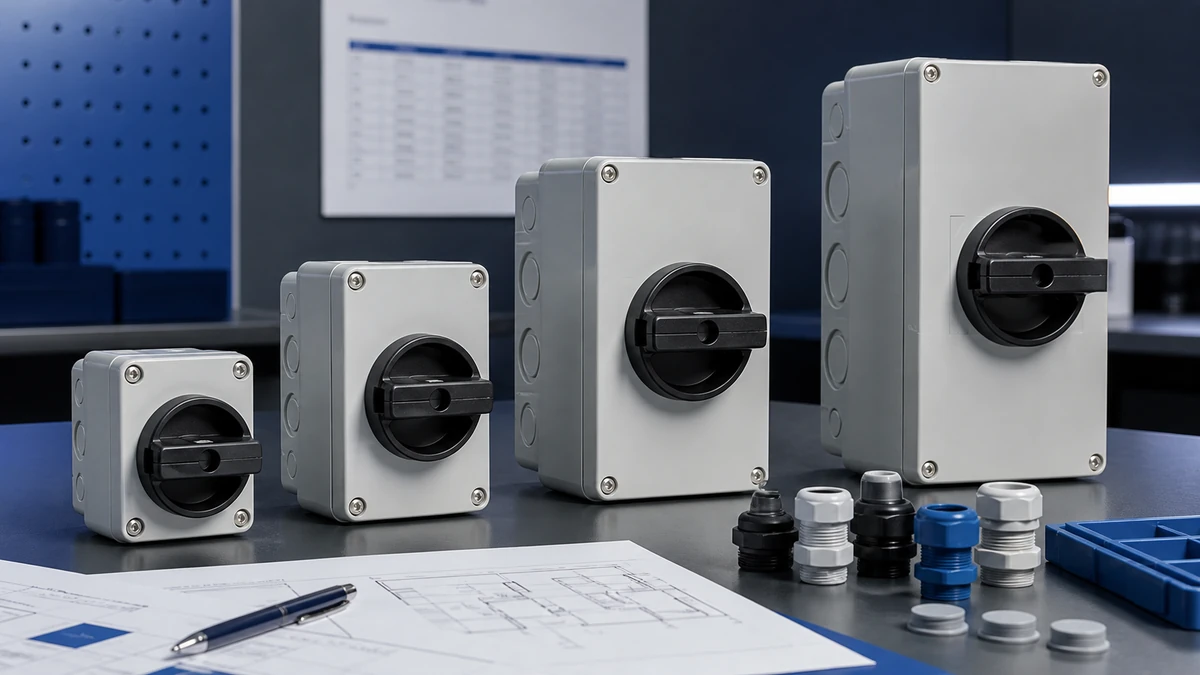
Shortlist by current band, then verify the exact model datasheet, drawing and certificate package.
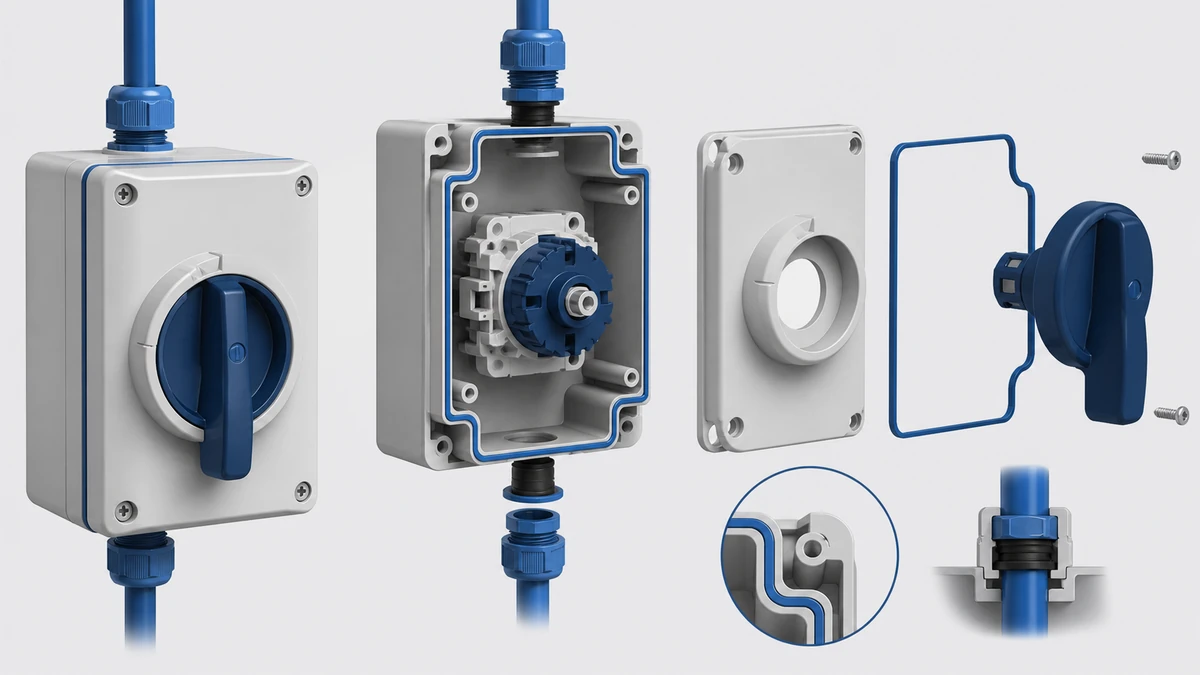
Treat IP requirement, cable entry, gasket path and handle access as part of the same selection, not as afterthoughts.
Do not use the isolator selection as a substitute for separate system design, upstream/downstream protection or machine safety validation.
Start with the load duty, not the number on the box
Select the current band from the load’s real operating duty before choosing the enclosure style or handle arrangement. A 32A box on one model route may not be equivalent to another 32A box under a different voltage, utilization category, ambient condition or switching duty.
For a foundation-level explanation of what these products are, use the waterproof isolator box basics. This article focuses on the commercial selection decision: which current band and model route should be reviewed for your application.
An exact drawing identifies the interfaces that must be controlled for the approved model route.
AC, DC and motor duty are not interchangeable
State whether the load is AC or DC, and whether the isolator is intended for local isolation, equipment servicing access or another defined isolation role. DC duty can require different contact arrangements or ratings than AC duty, depending on the exact model documentation.
For motors, pumps, fans and compressors, do not describe the requirement only by running current. Provide starting behavior, duty cycle and whether the device is expected to make or break load current in the buyer’s control philosophy.
Load data checklist
Before requesting a quotation, prepare:
Supply type: AC or DC
Voltage and frequency, where applicable
Full-load current and expected operating current
Motor, heater, pump, fan, compressor or other load type
Starting current or inrush information, if relevant
Необходимое количество столбов
Whether the isolator is normally operated under load or only used for isolation after shutdown
Ambient and enclosure location notes
Required drawing, datasheet and certificate expectations
Current-band selection: 16A, 32A, 63A or 125A
Use 16A, 32A, 63A and 125A as selection bands, then confirm the exact usable rating against the selected model and duty. The amp value is a shortlist tool, not a universal guarantee of suitability.
Sample review should connect the exact item to its current drawing and requested evidence package.
Current band
Typical buyer route
Selection signal
What to verify before release
16A
Smaller equipment disconnect points, compact auxiliary equipment, light-duty local isolation
Load current is comfortably below the selected model’s documented duty rating
Voltage, AC/DC duty, pole count, enclosure exposure and installation drawing
Move to the next band when the operating current, duty, installation temperature, cable arrangement or buyer margin requirement makes the lower band unsuitable on the exact model documentation. This is a documentation decision, not a visual size decision.
Do not assume that a larger enclosure automatically validates the electrical duty. The model’s rating table and installation conditions still control the selection.
When not to oversize automatically
Oversizing can create practical issues: larger cable entries, more enclosure space, different mounting requirements and a different cost position. For distributors and procurement teams, the better question is not “Can we quote bigger?” but “Which documented model route matches the buyer’s load and installation?”
Voltage, poles and isolation role change the usable rating
Confirm voltage, pole count and isolation role because the same current band can support different applications only when the exact product documentation allows it. Current without voltage and duty is incomplete purchasing data.
Pole configuration and supply architecture
Specify whether the application needs two-pole, three-pole, four-pole or another arrangement available in the target model route. The pole requirement may depend on the supply system, neutral treatment and buyer wiring standard.
If the project involves DC, do not reuse an AC selection without confirmation. DC voltage, current and pole usage must be checked against the datasheet and drawing for the exact model.
Isolation role in the equipment package
Define what the isolator is expected to do in the equipment design. For example, a local maintenance isolator beside a pump skid is a different selection conversation from a main incoming isolator on an outdoor control enclosure.
An isolator should not be positioned as a circuit breaker or as overcurrent protection. Coordinate separate protective devices as required by the buyer’s electrical design and destination-market rules.
Enclosure exposure and IP requirement are separate from current rating
Select the IP requirement from the exposure and installation conditions, then verify it against the exact model documentation. A high current band does not automatically decide the enclosure’s ingress-protection route.
Сайт IEC 60529 listing identifies IEC 60529 as the IP Code for degrees of protection provided by enclosures; however, an IP rating still depends on the exact product and installation conditions. For a broader explanation of IP terminology, use the IP65, IP66 and IP67 enclosure guide.
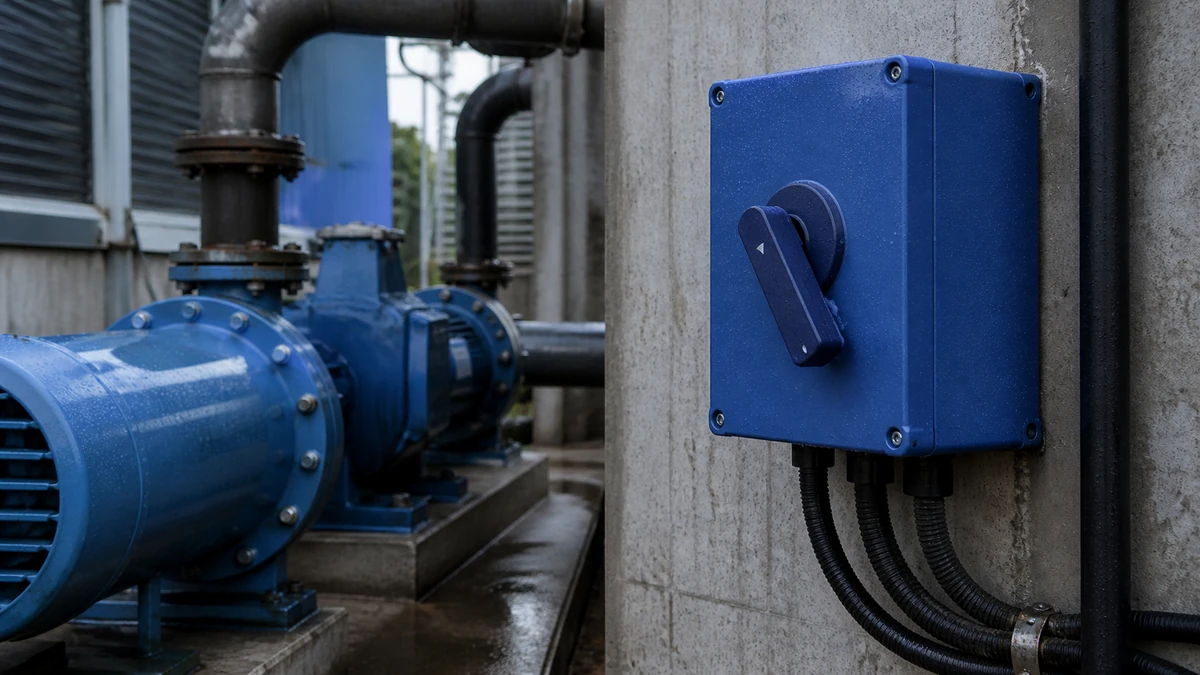
Installation conditions change the product-route and document questions a buyer must resolve.
Translate “waterproof” into a documented requirement
In procurement language, “waterproof” is often used as a shorthand for outdoor or washdown exposure. For engineering release, convert that wording into a documented IP requirement, installation orientation and cable-entry plan.
If the installation has direct rain, hose-down, dust, coastal exposure, UV exposure or periodic cleaning, state that in the RFQ. Final suitability must be checked against the selected model’s datasheet, drawing, certificate package and installation instructions.
Exposure checklist
Provide these details early:
Indoor sheltered, outdoor covered or outdoor exposed location
Expected water exposure: rain, spray, washdown or other condition
Dust, dirt, oil mist or process residue exposure
Ориентация при монтаже
Ambient temperature range, if specified by the project
Cable-entry direction and field sealing method
Required IP level and evidence format requested by the buyer
Destination market or project standard, if documentation must follow a specific route
Cable entry, gasket route and handle access can decide the model
Choose the current band together with cable-entry and operator-access requirements because the enclosure route may change when cable size, gland position or mounting clearance changes. This is especially important at 63A and 125A, where cable space can become a practical constraint.
Используйте weatherproof switch-box cable-entry guide for deeper design notes on entry position, gasket path and handle layout. The quotation should still be based on the exact model drawing requested for your project.
Cable-entry decisions
Confirm whether entries are bottom, top, side or buyer-specified. Also confirm whether the enclosure is supplied with pre-made entries or whether entries are prepared by the installer according to the selected model route and project practice.
Cable diameter, gland type and bend radius affect the practical fit. A current band can look correct electrically and still require a different enclosure route if the cable arrangement is not workable.
Handle, access and emergency-stop-style operators
Check the mounting height, door swing or cover access, handle clearance and padlocking requirement, if applicable to the selected model. These items are buyer-application dependent and should be confirmed on the drawing.
If an emergency-stop-style operator or color arrangement is requested, treat it as an operator-selection requirement only. Selecting an operator does not validate a complete machine safety function; that validation belongs to the complete machine or system safety design.
Cable and mounting action list
Before model confirmation, check:
Cable outside diameter and quantity
Entry direction and preferred gland location
Required cable bend space around the box
Mounting surface and fixing method
Handle clearance in the installed position
Door, cover or lid access for inspection
Gasket route and sealing responsibility after installation
Drawing revision required for buyer approval
Compare box families by model route, not by a generic amp label
Select from the product family that can document the required current band, duty, IP route, cable-entry layout and installation drawing. A generic “32A waterproof isolator” description is usually not enough for a commercial quotation or engineering approval.
Relevant product documentation or certificate package
Cable-entry plan
Can change enclosure size or preparation route
Drawing with entry details
Handle/operator requirement
Affects access, locking and user interface
Drawing and model description
Destination-market documentation
Procurement may need a specific evidence set
Certificate package available for the selected model
Distributor and procurement comparison points
For distributors, compare quoted alternatives by the exact model and document package, not only by amp rating and enclosure size. Two offers with the same nominal current band may differ in duty rating, cable-entry route, drawing detail and available documentation.
For procurement teams, keep buyer substitutions controlled. If a model changes, recheck current rating, IP evidence, dimensions, operator arrangement and any required certificates before releasing the substitute.
How Shieldhz confirms a weatherproof isolator switch box route
Shieldhz confirms a weatherproof isolator switch box route by matching the buyer’s electrical duty, enclosure exposure and documentation request to current product documentation before quotation. Final suitability is confirmed against current product documentation and the buyer’s application.
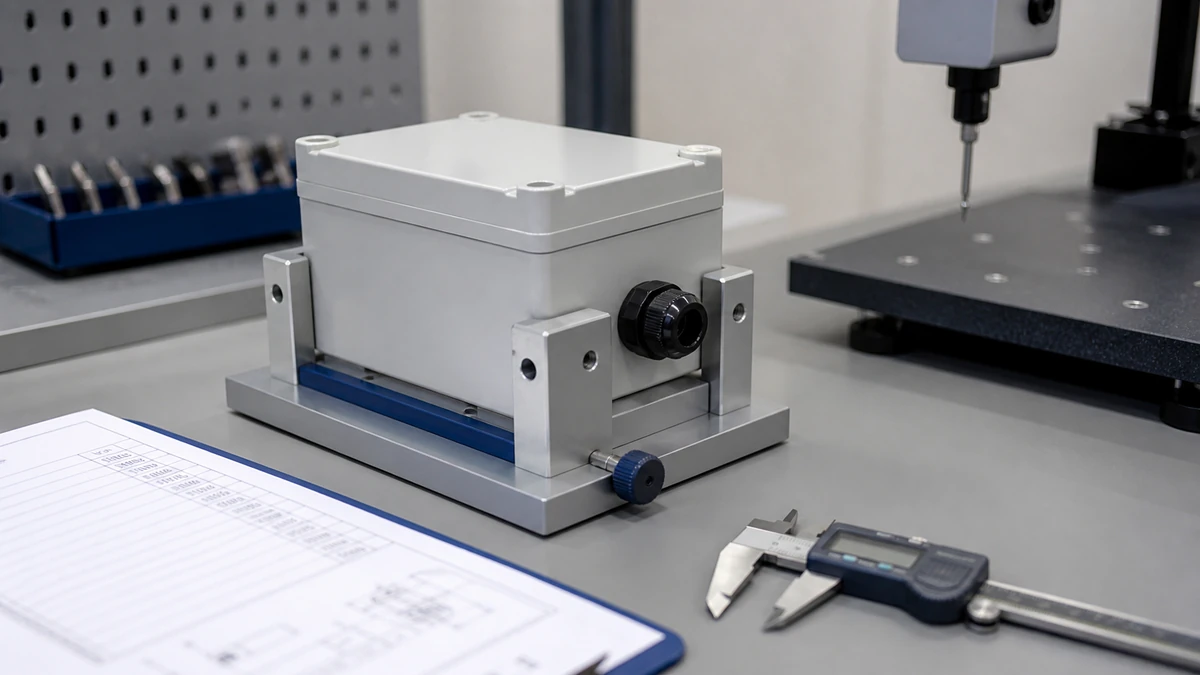
Documentation control, sample acceptance and protective packing are separate handover checks.
Pre-quotation confirmation inputs
For a practical model-route review, provide:
Load and isolation role
AC/DC duty
Напряжение и ток
Количество столбов
Enclosure exposure
Required IP level
Cable entry and gasket route
Mounting position and handle access
Destination market or project documentation requirement
Requested drawing, datasheet and certificate package
This information allows the quotation to focus on a viable model route rather than a broad amp-class guess. If any input is missing, the quotation may need assumptions that should be resolved before order release.
Drawing, datasheet and certificate package
The drawing confirms dimensions, mounting, handle position and cable-entry expectations. The datasheet confirms the rating basis for the selected model and duty.
The certificate package, where requested and available for the selected product route, should be checked against the destination market and buyer requirement. Do not assume that one model’s evidence package applies to another model or another installation condition.
Procurement checks before you release the order
Release the order only after the current band, model route and documentation package match the buyer’s application requirements. This reduces the risk of ordering by a convenient amp label that does not match the project.
Commercial approval checklist
Before purchase order release, confirm:
Exact model number or agreed model route
Current band: 16A, 32A, 63A or 125A
Voltage, AC/DC duty and pole count
Isolation role in the buyer’s equipment
IP requirement and installation condition
Cable-entry plan and gland responsibility
Mounting and handle-access requirements
Drawing revision accepted by the buyer, if applicable
Datasheet accepted by engineering or procurement
Certificate package requested and confirmed for the destination market, where applicable
Substitution control
If supply, pricing or project timing leads to a proposed substitute, treat it as a new technical check. Confirm the model documentation again rather than transferring approval from the previous selection.
A substitute may be acceptable only when the buyer’s required current rating, duty, IP route, dimensions, cable-entry plan and documentation evidence are still satisfied by the exact replacement model.
Conclusion
Selecting a 16A, 32A, 63A or 125A waterproof isolator box is not just an enclosure choice. It is a model-and-duty decision that combines current, voltage, AC/DC duty, pole count, isolation role, exposure, IP requirement, cable entry, handle access and documentation.
For a reliable quotation route, provide the load data and installation conditions first. Then verify the exact Shieldhz model, drawing, datasheet and requested certificate package against the buyer’s application before release.
Часто задаваемые вопросы
Is the highest amp rating always the safest choice?
No. A higher current band may create different size, cable-entry, mounting and cost implications, and it still must be verified against the exact model documentation and duty.
Select the current band that fits the load, voltage, AC/DC duty, installation and buyer margin requirement. Then confirm the chosen model’s datasheet and drawing.
Can I choose a waterproof isolator box by motor power only?
Motor power alone is not enough. Provide voltage, full-load current, starting behavior, duty cycle, AC/DC information and how the isolator will be used in the equipment.
The correct current band depends on the exact model rating and buyer application, not only the motor nameplate power.
Does an IP rating automatically apply after installation?
No. An IP rating depends on the exact product and installation conditions, including cable entry, gasket condition, mounting orientation and installer work.
The buyer should confirm the required IP level and request the relevant documentation for the selected model route.
Are 16A, 32A, 63A and 125A ratings interchangeable between product families?
No. The same nominal current band can have different documented duty details depending on the model, voltage, pole arrangement and application.
Compare product families using current datasheets, drawings and applicable documentation rather than only the amp label.
Can the isolator replace overcurrent protection?
No. The isolator selection should not be positioned as overcurrent protection or as a circuit breaker function.
Any required protective devices should be selected separately by the buyer’s electrical design team according to the system requirements and destination-market rules.
What should I send to get a faster model-route quotation?
Send the load type, AC/DC duty, voltage, current, pole count, isolation role, IP requirement, exposure details, cable-entry preference, mounting position and required documentation package.
With those details, Shieldhz can review a practical model route and confirm final suitability against current product documentation and the buyer’s application.
Ши, Мукси
Ши, Мукси пишет технические статьи Shieldhz для покупателей промышленных систем управления и электрических компонентов, охватывая поворотные кулачковые переключатели, разъединители, PV DC разъединители, кнопки, индикаторные лампы, водонепроницаемые корпуса и клеммные блоки. Статьи основаны на опыте производства и экспорта компании Zhejiang Shihe Electric Co., Ltd., с практическим акцентом на выборе модели, технических характеристиках, чертежах, сертификации, рейтингах IP и деталях запроса, которые покупатели должны подтвердить перед заказом.