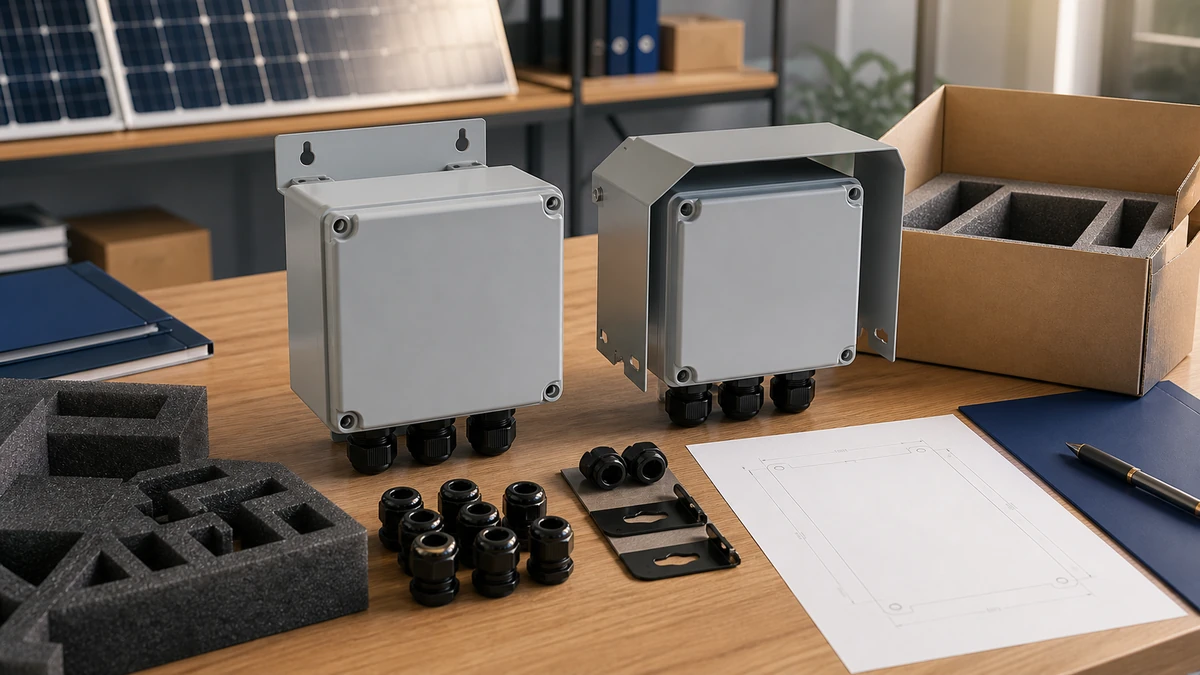
Rooftop vs Ground-Mount PV Isolator Enclosure: Installation-Condition Review
Use a practical buyer checklist to evaluate rooftop vs ground mount pv isolator enclosure inputs, documentation, approval controls and the exact PV DC isolator switch route.
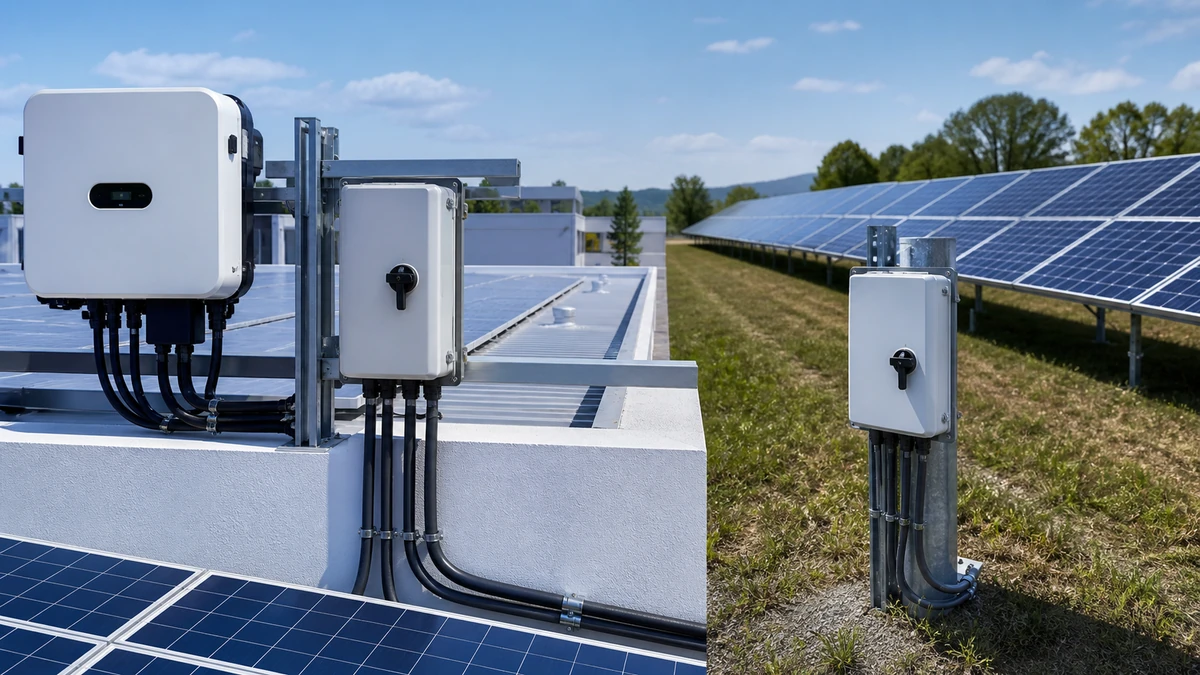
A rooftop vs ground mount pv isolator enclosure decision is mainly an environment and service-access decision, not just a catalog selection. Rooftop installations often put the enclosure closer to heat, roof work constraints, and restricted maintenance access, while ground-mount installations often increase exposure to people, equipment, vegetation, dust, and site drainage conditions.
Confirm where the enclosure will be serviced, not only where it will be mounted.
Review cable entry direction, mounting structure, and local exposure before requesting a quotation.
Ask for the drawing, datasheet, and certificate package for the exact model and destination market before release.
Rooftop vs ground-mount PV isolator enclosure: the core decision
The core decision is whether the enclosure must be optimized for roof access constraints or ground-level site exposure. Both installations can require robust enclosure planning, but the risks arrive from different directions.
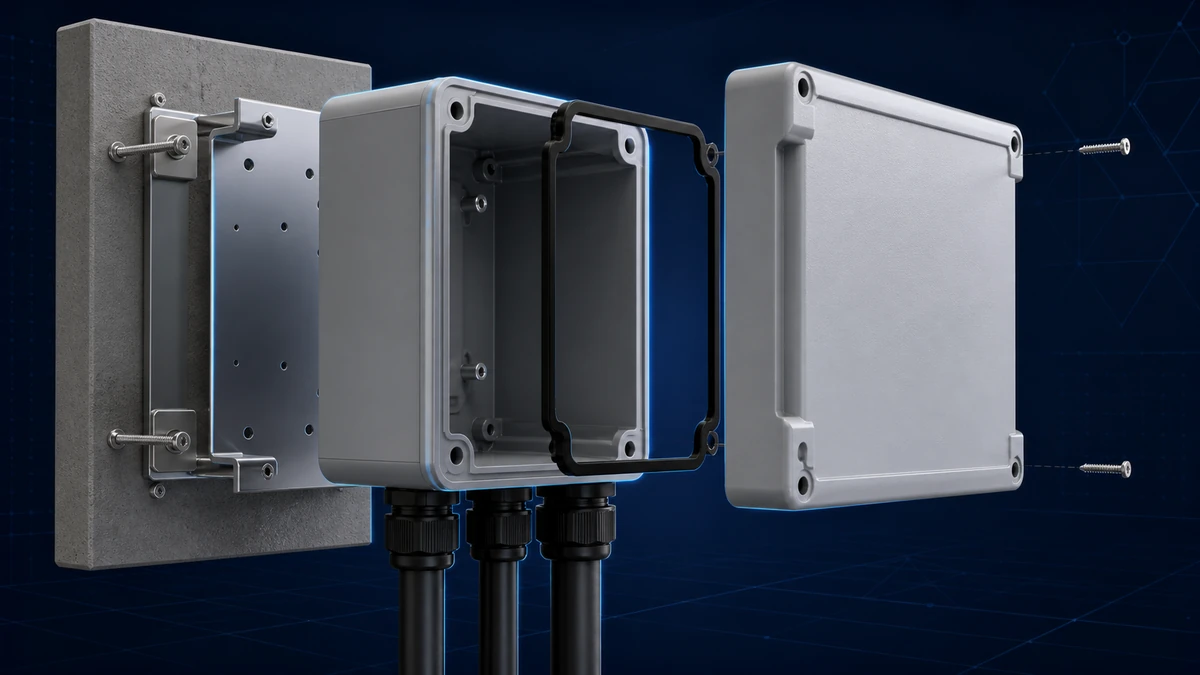
An exact drawing identifies the interfaces that must be controlled for the approved model route.
Rooftop conditions to review
Rooftop enclosures are commonly affected by elevated surface temperatures, limited technician movement, and restrictions on drilling or loading roof structures. A unit that looks acceptable on a drawing may be awkward to reach once installed behind modules, near parapets, or beside cable trays.
The buyer should confirm whether the isolator will be reached from a walkway, roof hatch route, maintenance corridor, or temporary access arrangement. If access is not practical, future inspection and operation become a project-level issue even when the device itself is correctly specified.
Ground-mount conditions to review
Ground-mount enclosures are usually easier to reach, but they may face more contact from people, maintenance tools, vehicles, vegetation, soil splash, animals, and drifting dust. The enclosure position can also be influenced by row layout, fence line, inverter skid position, and string combiner arrangement.
The buyer should review whether the enclosure is inside a controlled equipment area or exposed along a service path. This affects mounting height, visibility, protection from impact, and the practical cable route.
Decision point
Rooftop review
Ground-mount review
Buyer action
Access route
Roof hatch, ladder, walkway, module spacing
Service road, fence line, row corridor
Confirm how a technician reaches the operator
Local exposure
Heat, roof membrane limits, wind uplift zones
Dust, soil splash, vegetation, equipment contact
Share installation photos or layout drawings
Mounting base
Rail, wall, frame, or dedicated bracket
Post, rack, skid, wall, or fence-adjacent structure
Confirm fixing method before quotation
Cable approach
Often from tray, rooftop conduit, or module string route
Often from underground, trench, rack, or combiner route
Confirm entry side and gland plan
Maintenance impact
Access may require roof permit or shutdown planning
Access may be frequent but physically exposed
Decide whether relocation improves serviceability
Service access changes the enclosure decision
Service access should be treated as a specification input because an enclosure that is difficult to reach can increase inspection time and create avoidable site coordination problems. Rooftop access and ground-level access create different commercial tradeoffs.
Access frequency and shutdown planning
If the isolator is expected to be operated or inspected during routine service, place it where the technician can identify and reach it without moving PV modules or opening unrelated equipment. For rooftop projects, this may mean aligning the enclosure with a defined maintenance route rather than the shortest cable path.
For ground-mount projects, the concern is often not reachability but exposure. A convenient location beside a road or row gap may also be a higher-contact location for maintenance machinery or unauthorized handling, depending on the site.
Visibility and operator orientation
The enclosure position should allow the operator position and labeling to be read from the normal approach direction. A technically valid mounting face can still be commercially poor if the operator is hidden behind a rack member or faces away from the service route.
Panel builders and OEMs should confirm orientation on the assembly drawing. If the enclosure will be supplied as part of a larger assembly, the final operator direction may depend on the cabinet layout, bracket design, and cable entry side.
Service-access checklist
Confirm the normal approach direction for service personnel.
Check whether a technician can stand safely in front of the enclosure.
Confirm that the operator can be seen and reached without removing unrelated parts.
Review whether rooftop access permits, walkways, or fall-protection zones affect location.
For ground-mount sites, review exposure to vehicles, mowers, vegetation control, and public access.
Record the preferred mounting height and operator orientation in the quotation package.
Mounting structure and mechanical exposure drive different risks
The enclosure mounting method should be selected around the structure that will carry it and the forces it may experience during service and site life. Rooftop and ground-mount installations usually create different mechanical questions.
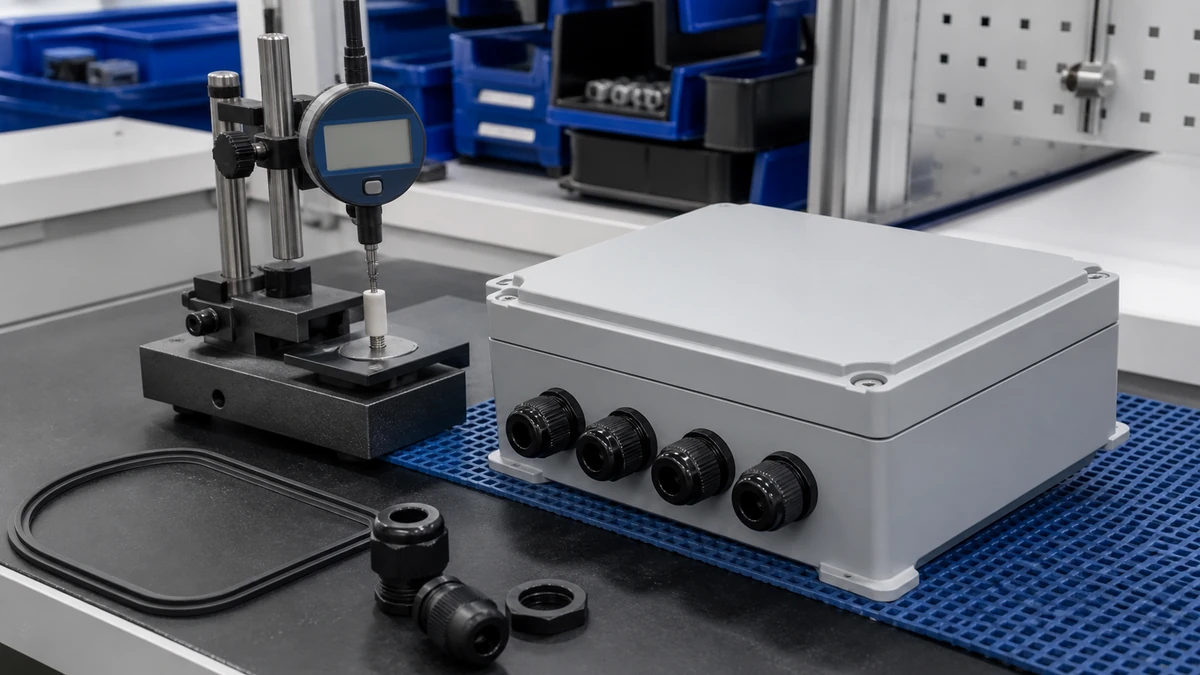
Sample review should connect the exact item to its current drawing and requested evidence package.
Rooftop rails, walls, and roof constraints
On rooftops, the mounting location may be limited by module rails, roof penetrations, parapet walls, cable trays, and roof membrane restrictions. A buyer may need to avoid unnecessary penetrations or coordinate with the racking supplier for a bracketed solution.
The project drawing should show the enclosure relative to the array edge, cable tray, walkway, and module frame. If the enclosure is mounted close to a roof surface, consider whether heat, water pooling, or service hand clearance becomes a concern for that exact layout.
Ground racks, posts, and exposed service areas
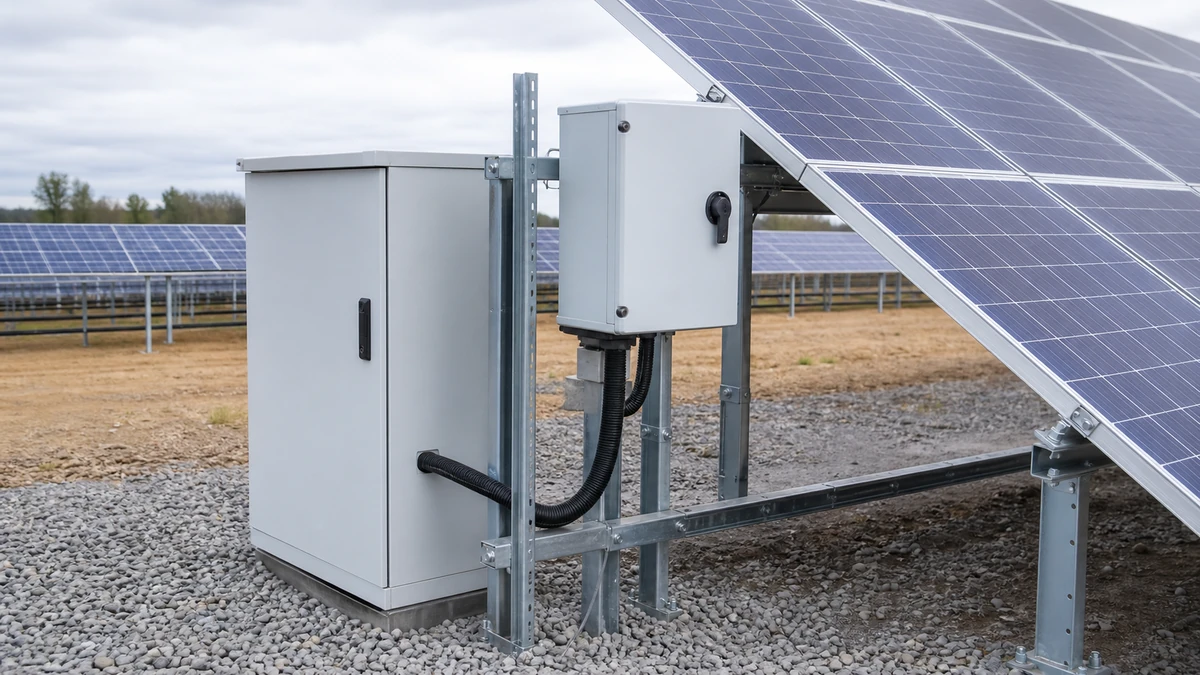
Ground-mount enclosures may be fixed to rack posts, dedicated posts, skid frames, inverter-area structures, or support walls. These locations can improve service access, but they may also introduce impact and vibration exposure from site maintenance activity.
A post-mounted enclosure should be reviewed for height, cable protection, and whether the support structure is part of the PV rack or a separate item. If the site has grazing, vegetation control, snow clearing, or vehicle traffic, those conditions should be shared during selection.
Mounting question
ما أهمية ذلك
Rooftop implication
Ground-mount implication
What carries the enclosure?
Determines bracket and fixing approach
Rail, parapet, wall, or roof support may limit options
Post, rack, skid, or wall can change impact exposure
Can the enclosure be opened and operated?
Affects service work
Module spacing and roof edges may restrict clearance
Rack members or posts may obstruct access
Where do cables enter?
Affects bend and sealing plan
Tray height and roof routing may control entry side
Underground or rack routing may control entry side
Is there likely physical contact?
Affects location review
Roof tools and maintenance movement
Vehicles, mowers, livestock, public access, or vegetation work
Is relocation cheaper than protection?
Commercial layout decision
Moving closer to walkway may simplify service
Moving inside equipment zone may reduce exposure
Mechanical review actions
Request the enclosure dimensional drawing before final bracket design.
Mark the opening clearance and operator clearance on the installation layout.
Confirm whether the mounting surface is rigid enough for operation and service.
Review whether additional shielding, relocation, or a different mounting position is more practical than accepting exposure.
Keep enclosure fixing details aligned with the buyer’s mechanical standard and local installation practice.
Cable entry and drainage should be reviewed before quoting
Cable entry direction is a buyer decision because enclosure performance and serviceability depend on the installed cable path, gland selection, and mounting orientation for the exact application. A rooftop route and a ground-mount route rarely create the same entry problem.
Rooftop cable paths
Rooftop cable paths often follow module strings, trays, and conduit routes across the array. The shortest electrical route can conflict with roof walking paths, water flow, or the practical place to operate the isolator.
The buyer should confirm whether cables enter from below, side, or rear, and whether the enclosure will be mounted vertically as shown in the drawing. If the final orientation differs from the product documentation, that should be checked before approval.
Ground-mount cable paths
Ground-mount cable paths may arrive from rack wiring, underground conduit, cable trenching, or inverter-area routing. This can make bottom entry attractive, but the final choice depends on bend radius, gland space, drainage strategy, and site practice.
Where cables rise from the ground, mechanical protection and splash exposure should be considered. The enclosure location should not force tight bends or place cable entries where they are difficult to inspect.
Cable-entry decision
Preferred evidence to request
Commercial risk if ignored
Entry side and number of entries
Drawing with cable-entry plan
Rework to enclosure, glands, or bracket
Cable size and bend space
Datasheet and layout review
Difficult assembly or field modification
اتجاه التركيب
Product drawing and installation note if available
Rating or service assumption may not match actual installation
Conduit or gland type
Buyer installation standard and supplier confirmation
Site mismatch or delayed approval
Drainage and water path
Site layout and enclosure orientation
Water accumulation concerns in the installed position
Pre-quotation cable-entry checklist
Provide the intended cable entry side.
Confirm cable size, quantity, and routing direction.
Share whether the enclosure is mounted on a wall, rack, post, rail, or inside another assembly.
Confirm whether cable entries are made by the buyer, panel builder, or enclosure supplier.
Ask whether any modified entry pattern affects the applicable drawing, marking, or documentation package.
Environmental exposure is not just an IP number
The environmental decision should combine the enclosure rating evidence with the real installation condition, because a rating is not a substitute for reviewing location, orientation, cable entry, and service exposure. This is especially important when comparing rooftop and ground-mount positions.
Installation conditions change the product-route and document questions a buyer must resolve.
IEC identifies IEC 60529 as the IP Code for degrees of protection provided by enclosures; see the IEC 60529 listing. A stated rating still depends on the exact product and installation conditions, so buyers should confirm the applicable model documentation and the intended mounting arrangement.
Sun, heat, and roof surface exposure
Rooftop enclosures may be exposed to reflected heat, direct solar radiation, and warm roof surfaces. These conditions can influence model selection, placement, and whether shading or relocation is worth considering for the buyer’s project.
The review should use project conditions instead of assuming one enclosure choice fits every rooftop. Provide ambient assumptions, mounting distance from hot surfaces, and whether the enclosure sits in open sun or behind structural shading.
Dust, splash, and ground-level contaminants
Ground-mount enclosures may face dust, splash from soil, irrigation overspray, vegetation debris, or cleaning activity. The exposure can change significantly between a fenced utility site, an agricultural edge, an industrial yard, and a rooftop commercial system.
The buyer should describe site contaminants and cleaning practice during quotation. If corrosive, coastal, chemical, or heavy-dust exposure is expected, request confirmation against current documentation for the exact product route and destination market.
Environment review checklist
Define rooftop, ground rack, wall, skid, or post mounting.
State whether the enclosure is in direct sun, shaded, or partly sheltered.
Identify dust, salt, chemical, irrigation, cleaning, or soil-splash exposure if relevant.
Confirm the mounting orientation and cable-entry direction.
Request current product documentation for the exact model rather than relying on a general enclosure description.
Model-route selection: match switch route to installation condition
The practical route is to shortlist the PV DC isolator switch family only after the installation condition is clear. A catalog range can support comparison, but the final route should be confirmed against the exact model documentation and buyer application.
Start from the range, then narrow by site condition
استخدم نطاق مفاتيح العازل الكهروضوئي للتيار المستمر as the starting point for comparing available PV DC isolator switch routes. For a rooftop versus ground-mount enclosure review, the useful questions are not only voltage and current; they also include enclosure style, mounting method, cable entry, and documentation needs.
A model route can be commercially suitable for quotation while still requiring final project approval. Panel builders and distributors should not treat a web page route as a substitute for the exact drawing, datasheet, certificate package, and application review.
Datasheet, certificate package, and buyer application fit
How Shieldhz confirms a PV DC isolator switch route
Shieldhz confirms a PV DC isolator switch route by checking the buyer’s installation and documentation requirements before quotation. Final suitability is confirmed against current product documentation and the buyer’s application.
Pre-quotation inputs to provide
The confirmation process should begin with the application and destination market. This helps define which documentation, markings, and model evidence the buyer expects to review.
Provide the maximum DC voltage and current for the intended circuit, plus the string or pole arrangement. Also provide the enclosure and environment description, including whether the installation is rooftop, ground-mount, wall-mounted, rack-mounted, post-mounted, or integrated into another assembly.
Drawing, datasheet, and certificate package
Shieldhz can review the requested drawing, datasheet, and certificate package according to the exact route being quoted. Buyers should state any approval or marking requirement early, because the available evidence depends on the exact model, current documentation, and destination-market expectations.
استخدم PV DC isolator documentation checklist to organize the file request before procurement approval. The checklist is most useful when paired with project conditions, not used as a generic document request.
Route-confirmation checklist
Application and destination market.
Maximum DC voltage and current.
String or pole arrangement.
Rooftop, ground-mount, panel, wall, rack, post, or skid installation.
Enclosure environment: sun, dust, splash, coastal, chemical, or other exposure if relevant.
Mounting orientation and cable-entry direction.
Requested drawing, datasheet, and certificate package.
Any required approval, marking, or buyer specification.
Target model route if already shortlisted.
Final confirmation against current documentation and buyer application.
Procurement and panel-builder review before release
Procurement should release the enclosure route only after engineering, documentation, and service-access questions are aligned. This prevents a low-friction purchase from becoming a site-level fit problem.
Documentation control, sample acceptance and protective packing are separate handover checks.
Questions engineering should close
Engineering should confirm the exact electrical arrangement, enclosure location, mounting method, cable entry, and service orientation. These are application details, so they should be controlled by the buyer’s project documentation rather than assumed from a general product description.
If the isolator is installed into a larger panel or OEM assembly, confirm the mechanical interface and operator position on the assembly drawing. The switch route should match both the electrical duty and the enclosure integration plan for that specific buyer application.
Records procurement should keep
Procurement should keep the quotation reference, model route, drawing revision, datasheet revision, and certificate package provided for the exact purchase. If the destination market, project specification, or installation condition changes, the documentation set may need to be reviewed again.
For distributors, the key commercial issue is traceability between the ordered item and the documentation supplied to the customer. For OEMs and panel builders, the key issue is that the enclosure route matches the assembly drawing and final installation condition.
Release actions before purchase order
Confirm the exact model route and quotation reference.
Attach the drawing and datasheet reviewed by engineering.
Confirm the destination-market documentation request.
Record rooftop or ground-mount installation notes.
Confirm cable-entry side, mounting orientation, and service-access direction.
Verify whether the buyer requires specific approval marks or certificates for the order.
Recheck suitability if voltage, current, string arrangement, enclosure location, or destination market changes.
Conclusion
A rooftop vs ground-mount PV isolator enclosure comparison should be decided by service access, mounting structure, cable entry, and environmental exposure. The correct commercial question is not only “which enclosure rating is listed,” but “which exact route fits this installation condition and documentation requirement.”
For rooftop projects, prioritize access, heat, mounting constraints, and cable routing around the array. For ground-mount projects, prioritize service visibility, impact exposure, dust, splash, vegetation, and cable protection from the ground or rack. Final selection should always be confirmed against current model documentation, buyer application details, and destination-market requirements.
الأسئلة الشائعة
Is a rooftop PV isolator enclosure different from a ground-mount enclosure?
It can be, depending on the exact model, enclosure design, mounting method, and application requirements. The main difference in selection is usually the installation condition: rooftop projects often emphasize access and heat, while ground-mount projects often emphasize exposure, impact risk, dust, and service visibility.
Can I choose by IP rating alone?
No. The rating evidence must be reviewed together with the exact product documentation, mounting orientation, cable entry, and site conditions. A rating does not remove the need to check how the enclosure is actually installed.
What should I provide before asking for a quotation?
Provide the application, destination market, maximum DC voltage/current, string or pole arrangement, enclosure location, mounting method, cable-entry plan, and requested documentation package. Photos, layout drawings, and bracket concepts are also useful when the installation is not standard.
Which is easier to service: rooftop or ground-mount?
Ground-mount installations are often easier to reach, but they can have more exposure to people, equipment, dust, and vegetation. Rooftop installations may be less exposed to ground activity, but access can be limited by roof routes, module spacing, and site safety procedures.
Should the enclosure be close to the array or close to the service path?
That depends on the project layout and buyer specification. A short cable route may reduce routing complexity, but a serviceable location can reduce future inspection and operation difficulties. The final position should be confirmed on the project layout.
When should documentation be reviewed?
Documentation should be reviewed before purchase order release and again if the model, destination market, voltage/current, string arrangement, enclosure location, or cable-entry plan changes. Use current drawings, datasheets, and certificate packages for the exact route being purchased.
شي، موكسي
يكتب شي، موكسي مقالات شيلدهز الفنية لمشتري التحكم الصناعي والمكونات الكهربائية، والتي تغطي مفاتيح الكامات الدوارة، ومفاتيح العازل، ومفاتيح فصل التيار المستمر الكهروضوئية، وأزرار الضغط، وأضواء المؤشر، والحاويات المقاومة للماء، والكتل الطرفية. تستند المقالات على خبرة شركة Zhejiang Shihe Electric Co., Ltd. في التصنيع والتصدير، مع التركيز العملي على اختيار الطراز وأوراق البيانات والرسومات والشهادات وتصنيفات IP وتفاصيل الاستفسار التي يجب على المشترين التأكد منها قبل الطلب.