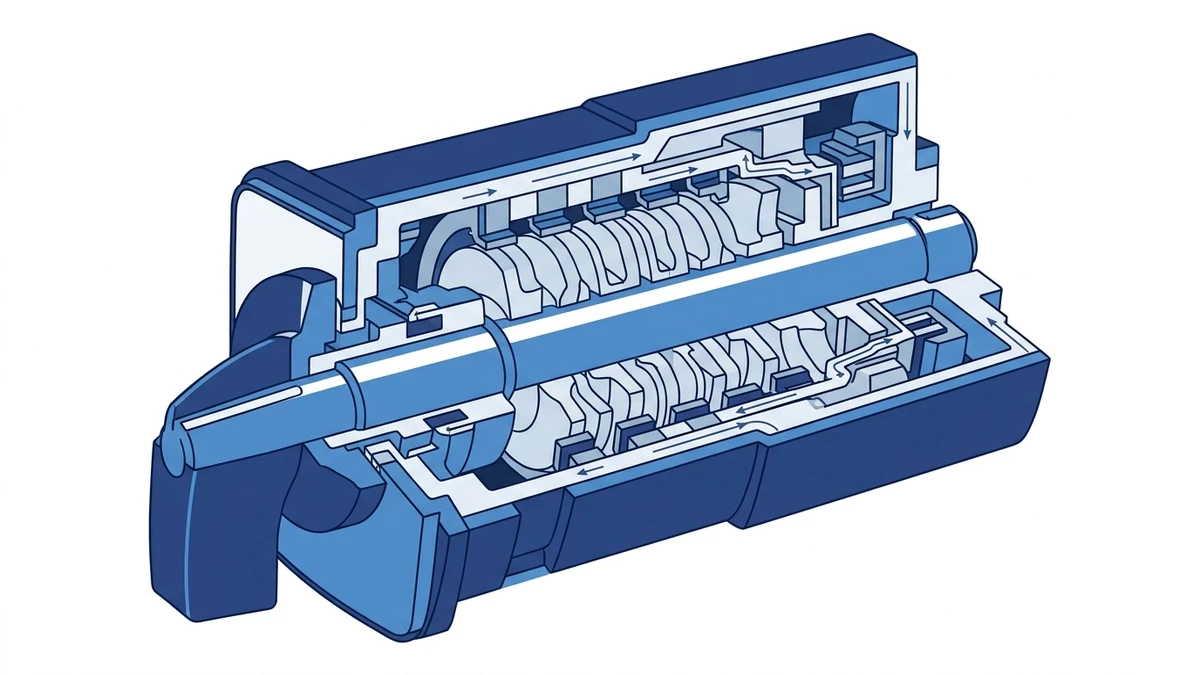
يتحكم مفتاح الكامات الدوارة في مسارات دوائر متعددة من خلال مشغل واحد عن طريق تدوير أقراص كامات دقيقة التشكيل مقابل حاملات تلامس مكدسة. هناك ثلاث معلمات تحدد ما يمكن لأي مفتاح معين القيام به: المواضع (عدد نقاط التوقف)، والأقطاب (عدد الدوائر المستقلة التي يتم تبديلها في وقت واحد)، ومراحل التلامس (عدد وحدات التلامس المكدسة على العمود). إن الحصول على هذه المعلمات الثلاث بشكل صحيح قبل الطلب هو الفرق بين لوحة تعمل من المرة الأولى وأخرى تتطلب إعادة تصميم مكلفة. تشرح هذه المقالة كل معلمة، وتوضح كيفية قراءة مخطط التلامس، وتتناول التكوينات الشائعة، وتمنحك قائمة مراجعة عملية للاختيار والتوصيل والشراء.
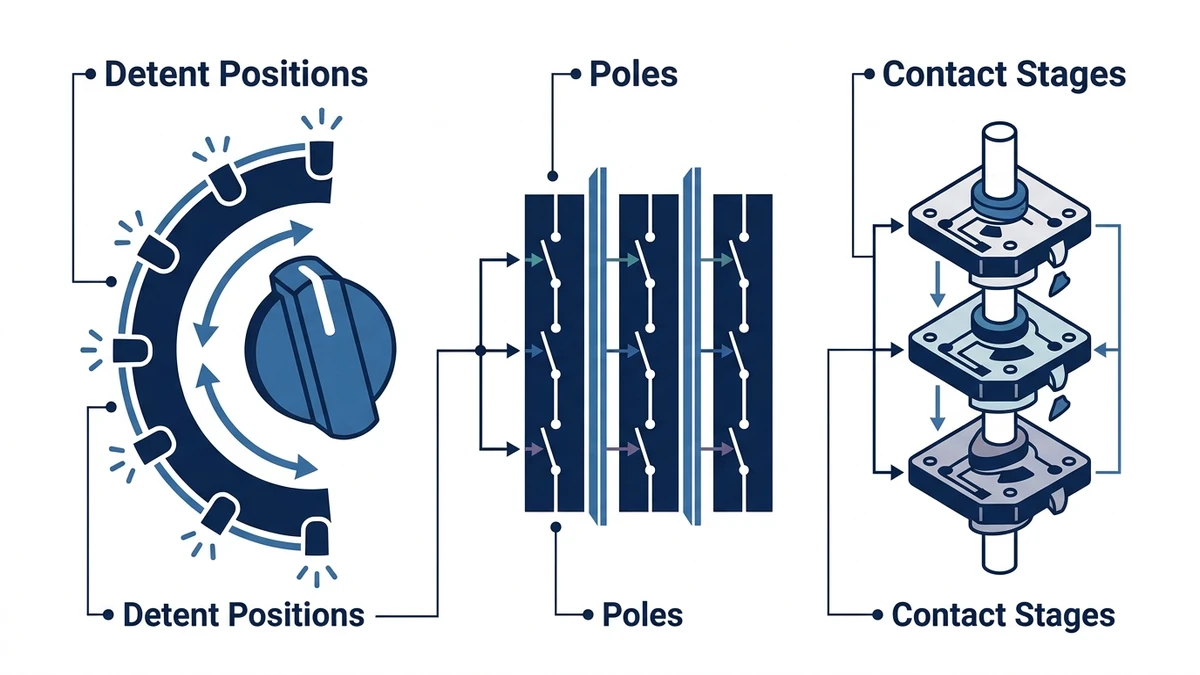
الشكل 1. تصف المواضع نقاط التوقف، وتصف الأقطاب الدوائر المستقلة، وتصف مراحل التلامس وحدات الكامة المكدسة.
المواقع والأقطاب ومراحل التلامس: التعريفات الأساسية
هذه المصطلحات الثلاثة متمايزة وكثيراً ما يتم الخلط بينها في المواصفات وأوامر الشراء.
المناصب هي نقاط التوقف المنفصلة التي يمكن أن يشغلها عمود المشغل. يحتوي المفتاح ثلاثي المواضع على ثلاث حالات مستقرة ميكانيكيًا، كل منها مثبتة بواسطة فاصل محمل بنابض. أعداد المواضع الشائعة هي 2 و3 و4 و6 و8 و12، مع زيادات زاويّة قدرها 30 أو 45 أو 60 درجة بين التوقفات اعتمادًا على سلسلة المفاتيح. يجب التأكد من التباعد الزاوي الدقيق وقوس الدوران الكلي لطراز معين من ورقة بيانات الشركة المصنعة.
الأعمدة هي عدد الدوائر المستقلة كهربائيًا التي يتحكم فيها المفتاح في عملية ميكانيكية واحدة. المفتاح ذو 4 أقطاب يفتح أو يغلق أربعة مسارات دوائر منفصلة في نفس الوقت. لكل قطب جسر تلامس خاص به ومعزول كهربائياً عن الأقطاب المجاورة. جهد العزل المقنن بين الأقطاب هو قيمة ورقة البيانات - لا تفترض ذلك من اسم السلسلة وحده.
مراحل الاتصال (وتسمى أيضًا طبقات التلامس أو الطوابق) هي مجموعات أقراص الكامة الفردية ومجموعات حاملة التلامس المكدسة محوريًا على طول العمود. تحتوي كل مرحلة على مجموعة واحدة من جسور التلامس لكل عمود. ويسمح تكديس مراحل متعددة لكل مرحلة بحمل كل مرحلة ملف تعريف فريد لفص الكامة بحيث يمكن للدوائر المختلفة أن تفتح وتغلق بتسلسلات مختلفة عبر نفس مجموعة المواضع. عادةً ما تتعامل المرحلة الواحدة مع قطب واحد أو قطبين؛ يمكن للمجموعة متعددة المراحل إدارة عدد أكبر من أزواج التلامس المستقلة.
طريقة مفيدة للتمييز: المواضع تصف المشغل، والأقطاب تصف العرض الكهربائي لحدث تبديل واحد، ومراحل التلامس تصف العمق الميكانيكي لمجموعة المفاتيح.
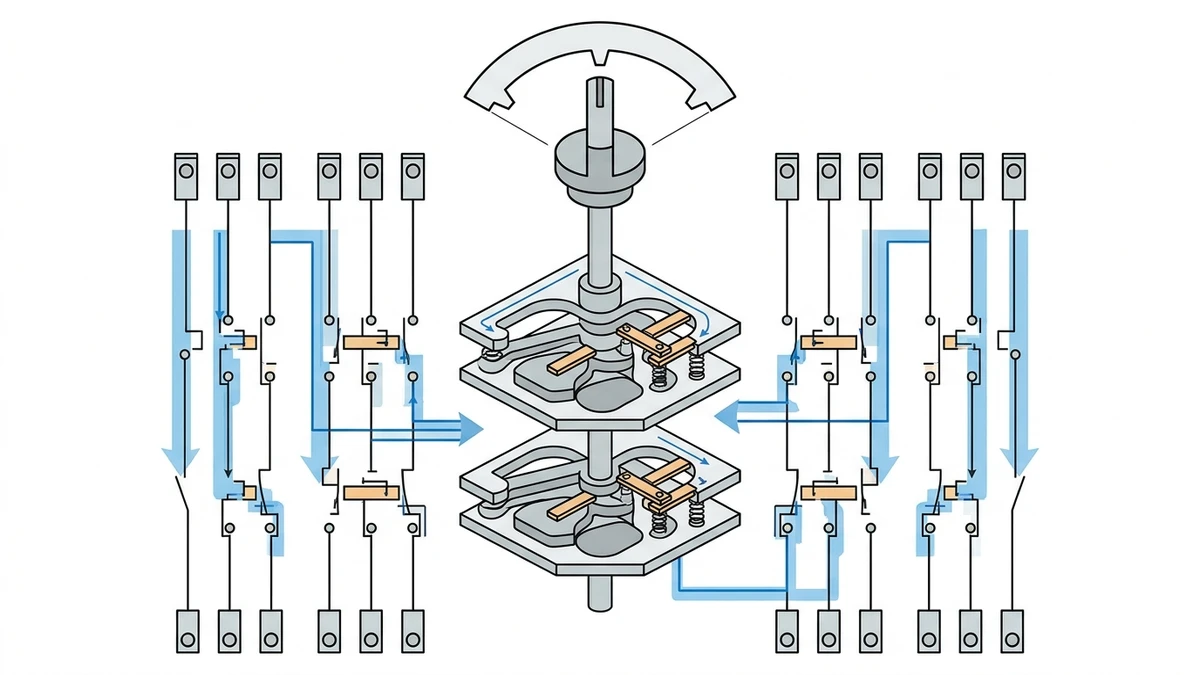
كل قرص كامة هو عبارة عن مقطع جانبي مقوى مثبت بشكل محوري على عمود المشغل. تتوافق الفصوص المرتفعة والوديان الغائرة على القرص مباشرةً مع الحالة المفتوحة والمغلقة لجسر التلامس في كل موضع. عندما يصطدم أحد الفصوص بحامل التلامس، فإنه يرفع جسر التلامس بعيدًا عن نظيره الثابت، مما يؤدي إلى فتح ذلك العمود. وعندما يدور العمود ليضع واديًا تحت الناقل، يدفع النابض الجسر إلى الإغلاق.
إن تكديس أقراص كامات متعددة على طول نفس العمود - لكل منها شكل فريد من نوعه - هو ما يمنح مفتاح الكاميرا الدوارة قدرته على تسلسل الدوائر المختلفة في مواضع مختلفة. وهذا مطلب بالغ الأهمية في بادئات تشغيل المحركات ذات النجم الدلتا ودوائر الملامس العكسي، حيث يجب أن تفتح أقطاب محددة قبل إغلاق أقطاب أخرى لمنع حدوث ماس كهربائي في الطور. يقوم مخطط التلامس الذي توفره الشركة المصنعة بتشفير الأقطاب المفتوحة أو المغلقة بالضبط في كل موضع، ومطابقة هذا المخطط مع متطلبات التبديل في دائرتك هي الخطوة الأساسية في المواصفات الصحيحة.
مقاومة التلامس عبر جسر من سبائك الفضة الممسوحة بشكل صحيح هي قيمة ورقة البيانات التي يجب التأكد منها قبل تحديد المفتاح لدوائر التحكم منخفضة الإشارة أو الحساسة. إذا سمح تآكل شكل الكامة بإغلاق غير كامل للتلامس، ترتفع المقاومة ويصبح سلوك الدائرة غير موثوق به. افحص جسور التلامس على فترات الصيانة المحددة في وثائق المنتج.
تنطبق المواصفة القياسية IEC 60947-3:2020+AMD1:2025 على المفاتيح والمفصلات ومفصلات المفاتيح ووحدات دمج الصمامات لدوائر التوزيع ودوائر المحركات، بجهد مقنن يصل إلى 1000 فولت تيار متردد أو 1500 فولت تيار مستمر. وتحدد المواصفة القياسية متطلبات جهد العزل المقنن وقدرة التصنيع والكسر والتحمل الميكانيكي. الإصدار الموحد الحالي متاح مباشرة من متجر IEC الإلكتروني. للاطلاع على ملخص بلغة بسيطة لكيفية تطبيق المعيار على اختيار مفتاح الكاميرا، انظر ما هو IEC 60947-3.
ملاحظات عملية لصيانة آلية الكامة:
عند طلب أقراص كامات بديلة، قم بمراجعة رمز ملف تعريف الفص من مخطط التلامس الأصلي. لا يمكن تبديل الأقراص المتشابهة بصريًا من أعداد مواضع مختلفة.
في الأحمال الاستقرائية، افحص حواف شحمة الكامة بحثًا عن وجود تقطيع دقيق في فترة الصيانة المحددة في ورقة البيانات. يتسبب تدهور الحواف في ارتداد التلامس قبل ظهور التآكل الميكانيكي الكامل.
إذا كان يجب أن يتعامل المفتاح مع كل من الأحمال المقاومة والاستقرائية على أقطاب مختلفة، فحدد كومة الكامة على التصنيف الاستقرائي في جميع المراحل. يؤدي خلط فئات الاستخدام على عمود مشترك إلى أنماط تآكل غير متساوية.
استخدم فقط نوع مادة التشحيم المحددة في وثائق المنتج لنقاط محور قرص الكامة. يمكن لمواد التشحيم غير المتوافقة أن تغير هندسة الفص بمرور الوقت.
كيف يتم الجمع بين المراكز والأقطاب والمراحل
المعلمات الثلاثة مستقلة ويمكن دمجها في مجموعة واسعة من التكوينات. يمكن أن يكون المفتاح الواحد، على سبيل المثال، 4 أقطاب، 3 مواضع، مرحلتين - مما يعني أنه يتحكم في أربع دوائر، عبر ثلاثة مواضع محددة، باستخدام طابقين من التلامس المكدس. في تطبيقات التحكم في المحركات، تُستخدم هذه البنية بشكل شائع لتنفيذ تسلسلات بدء التشغيل بنجمة-دلتا أو التشابك الأمامي-العكسي بدون مرحلات خارجية.
يلخص الجدول أدناه المعلمات ونطاقاتها النموذجية. تأكد من الحدود الدقيقة من ورقة البيانات للسلسلة المحددة التي تحددها.
المعلمة
ما يصفه
النطاق النموذجي
مثال على ذلك
الأعمدة
دوائر مستقلة يتم تبديلها في وقت واحد
1 إلى 12
4 أقطاب: عناصر التحكم L1، L2، L3، محايد
المناصب
توقفات التوقف المنفصلة المنفصلة
2 إلى 12
3 وضعيات: إيقاف التشغيل/إلى الأمام/إلى الخلف
مراحل الاتصال
وحدات تلامس مكدسة على العمود
1 إلى 6
2-مرحلتين: طبقتا تلامس لكل موضع
إن مفتاح الكامات الدوارة من سلسلة LW28 تدعم مجموعات الكامات المعيارية التي تسمح ببناء تسلسلات تلامس مخصصة من المكونات القياسية. تأكد من تركيبات القطب والموضع والمرحلة المتاحة للتكوين المستهدف مع مهندسي Shieldhz قبل وضع اللمسات الأخيرة على قائمة المواد.
الشكل 2. يمكن لمفتاح الكامة متعدد المراحل أن يجمع بين عدة أقطاب ومواضع مع الحفاظ على كل تسلسل تلامس محدد بشكل منفصل.
كيفية قراءة مخطط تلامس مفتاح الكاميرا الدوار
مخطط التلامس هو المستند الأساسي للتحقق من أن المفتاح سيؤدي تسلسل التبديل الذي تتطلبه دائرتك. يمكن أن يؤدي الخطأ في قراءة خلية واحدة إلى إنشاء مسار خطأ من طور إلى طور، لذا فإن هذه الخطوة ليست اختيارية.
هيكل الرسم البياني
المخطط عبارة عن شبكة. تمثل الأعمدة مواضع المفاتيح، وعادةً ما يتم ترقيمها من 0 إلى الحد الأقصى لعدد المواضع أو يتم ترقيمها حسب الوظيفة مثل OFF، I، II، III. تمثل الصفوف أزواج التلامس الفردية، مجمعة حسب القطب. ينتج مفتاح ذو 4 أقطاب مع 3 مواضع شبكة من 4 صفوف على الأقل في 3 أعمدة.
تستخدم العديد من المخططات التلامسية أطرافا ذات أرقام فردية للموصلات الواردة وأطرافا ذات أرقام زوجية للموصلات الصادرة، مثل 1-2 و3-4 و5-6 و7-8 أزواج تلامس. تأكد من اصطلاح الترقيم المستخدم في ورقة البيانات المحددة قبل توصيل الأسلاك، لأن بعض الشركات المصنعة ومجموعات الكامات المخصصة تستخدم مخططات بديلة.
قراءة الخلية
الرمز المملوء في الخلية - عادةً ما يكون دائرة مملوءة أو شريطًا مصمتًا أو X اعتمادًا على وسيلة الإيضاح الخاصة بالشركة المصنعة - يعني أن جسر التلامس مغلق ويمكن أن يتدفق التيار بين طرفي ذلك القطب في ذلك الموضع. الخلية الفارغة تعني أن التلامس مفتوح. تحقق دائمًا من وسيلة الإيضاح قبل التفسير؛ لا تفترض الاصطلاح.
بالنسبة لمفتاح محدد ثلاثي المواضع يتحكم في بادئ تشغيل محرك عكسي، يظهر مخطط نموذجي جهات الاتصال للاتجاه الأمامي مغلقًا في الموضع I فقط، وجهات الاتصال للاتجاه العكسي مغلقة في الموضع III فقط، وجميع جهات الاتصال مفتوحة في الموضع 0. هذا النمط يرمز مباشرة إلى منطق الإيقاف - الإعادة - الإيقاف - الإعادة.
التحقق من الرسم البياني مقابل دائرتك
الخطوة 1: ضع قائمة بكل حدث تبديل تتطلبه دائرتك في كل موضع.
الخطوة 2: قم بتعيين كل حدث إلى خلية صف-عمود في المخطط.
الخطوة 3: تأكد من عدم إغلاق ملامسين متنافيين في وقت واحد. هذا هو المصدر الأكثر شيوعًا لمخاطر الدائرة القصيرة في تطبيقات التحكم في المحركات.
الخطوة 4: بالنسبة للدوائر التي تتطلب تسلسل الانقطاع قبل الصنع، تحقق من مخطط الكامة لمعرفة الفجوة الزاوية بين أحداث الفتح والإغلاق. يجب التأكد من وجود فجوة ضيقة للغاية من خلال اختبار استمرارية الدوران البطيء قبل التنشيط. الحد الأدنى للفجوة المقبولة هي قيمة ورقة البيانات - لا تفترض رقمًا.
ملاحظات التحقق العملي:
اطبع مخطط التلامس بالحجم الكامل وقم بوضع علامة مادية على كل خلية أثناء التحقق من الاستمرارية. تفوت المراجعة الرقمية فقط الصفوف المنقولة تحت ضغط الوقت.
بالنسبة للمفاتيح متعددة المراحل، قم بترقيم كل مرحلة على جسم المفتاح المادي قبل توصيل الأسلاك. ترقيم المراحل في الرسم التخطيطي لا يتطابق دائمًا مع الترتيب المادي من أعلى إلى أسفل على العمود.
قم بتعليق كل سلك برقم طرفه وموضع المفتاح قبل التركيب. هذا يقلل من إعادة العمل بشكل كبير في التكوينات المعقدة متعددة المراحل.
التكوينات الشائعة وتطبيقاتها
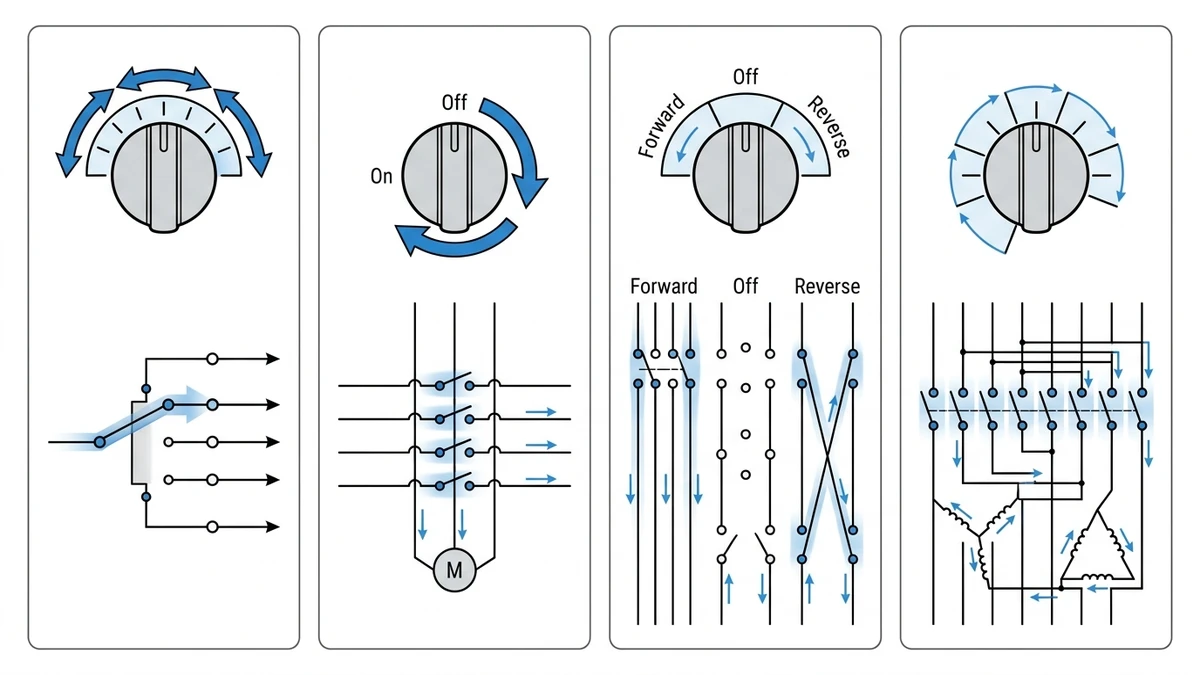
1-قطب 1، متعدد المواضع
يناسب مفتاح الكامة ذو القطب الواحد متعدد المواضع دوائر اختيار الإشارة ودوائر مصباح المؤشر في لوحات التحكم ذات التيار المنخفض. يقوم بتوجيه دائرة واحدة إلى واحد من عدة مخرجات. يستخدم هذا التكوين لاختيار نقطة الاختبار، وإعلان الوضع، وتبديل مدخلات HMI حيث يكون تيار التلامس منخفضًا. تأكد من التيار والجهد المقنن من ورقة البيانات للسلسلة المحددة.
3 أقطاب، 2 وضع: عزل المحرك وبدء تشغيل DOL
مفاتيح التبديل ثلاثية الأقطاب ثنائية المواضع هي الشكل القياسي لمبتدئات المحركات المباشرة على الخط. يتم تبديل جميع المراحل الثلاث في وقت واحد. يوفر هذا التكوين حالة إيقاف تشغيل محددة تسمح بالوصول الآمن إلى اللوحة عندما يحمل المفتاح تصنيف IEC 60947-3 المناسب لفاصل الفصل. تأكد من فئة الاستخدام - على سبيل المثال، AC-23A لأحمال تبديل المحرك - من ورقة البيانات قبل تحديد المواصفات.
4 أقطاب، 3 أوضاع: التحكم في المحرك للأمام-للخلف-للخلف-للخلف
يعالج المفتاح ذو 4 أقطاب و3 أوضاع التسلسل الأمامي والخلفي من خلال إعادة تكوين وصلات الطور عبر المواضع. يقوم قطبان بتبديل ترتيب الطور بينما يتعامل القطبان المتبقيان مع التلامسات المحايدة أو المساعدة. هذا هو أحد أكثر التكوينات المحددة في لوحات التحكم في الناقل والمضخة والمروحة. تأكد من جهد العزل المقدر والتحمل الميكانيكي للسلسلة المحددة من ورقة البيانات.
6 أقطاب، متعدد المواضع: تشغيل محرك نجمي دلتا ومتعدد السرعات
تدعم التكوينات سداسية الأقطاب تسلسلات بدء التشغيل بنجمة-دلتا، وتتدرج من خلال وضعيات التوصيل بنجمة والتوصيل الانتقالي والتوصيل الدلتا. هذا يحد من تدفق التيار الداخلي بالنسبة لبدء التشغيل المباشر على الخط. بالنسبة للمحركات متعددة السرعات، تعمل المواضع الإضافية على إعادة تكوين وصلات اللف في كل خطوة سرعة. إن سلسلة LW42 يعالج التطبيقات ذات العدد الأعلى من الأقطاب مع مراحل التلامس المصنفة لفئات الأحمال المقاومة والاستقرائية. قم بتأكيد التكوينات والتقييمات المتاحة مع مهندسي Shieldhz للتطبيقات الخاصة بمحركك المحدد.
الشكل 3. تشتمل التكوينات الشائعة على اختيار الإشارة، وعزل المحرك، والتحكم في الإيقاف-إلى-إلى-العكس، والتبديل النجمي الدلتا أو متعدد السرعات.
الخطوة 1 - اعزل الدائرة الكهربائية. تأكد من أن الإمداد مفصول عن التيار ومغلق. تحقق من ذلك باستخدام جهاز اختبار جهد مُعايَر ومقدر لجهد الدائرة.
الخطوة 2 - قم بمراجعة الرسم التخطيطي. حدد الأطراف التي تحمل تغذية الإمداد وأيها يتصل بدوائر التحميل لكل موضع. افعل ذلك قبل لمس أي موصلات.
الخطوة 3 - موصلات الإمداد الأرضية. قم بتوصيل خطوط الإمداد الواردة بأطراف المدخلات ذات الأرقام الفردية. يجب أن يتناسب حجم المقطع العرضي للموصل مع التيار المقنن للمفتاح. تأكد من نطاق حجم الموصل المقبول من ورقة البيانات.
الخطوة 4 - موصلات الحمل الأرضية. قم بتوصيل موصلات الخرج بالأطراف ذات الأرقام الزوجية وفقًا للرسم التخطيطي. في المفاتيح متعددة المواضع، يتم تنشيط أطراف الخرج المختلفة في مواضع مختلفة، لذلك يجب تتبع كل دائرة حمل على حدة من خلال مخطط التلامس.
الخطوة 5 - تحقق من عزم الدوران والاستمرارية. أحكم ربط البراغي الطرفية بقيمة عزم الدوران المحددة في وثائق المنتج. قم بالتدوير عبر كل موضع وتأكد من أن التلامسات الموضحة على أنها مغلقة في المخطط مفعلة والتلامسات الموضحة على أنها مفتوحة معزولة.
أخطاء الأسلاك الشائعة
يعد تبديل طرفي الإدخال والإخراج هو الخطأ الأكثر شيوعًا. فهو ينشئ دائرة معطلة في كل موضع ومن السهل تفويتها بدون فحص منهجي لكل طرف على حدة.
يعد التوصيل إلى مرحلة خاطئة على مفتاح متعدد المراحل ثاني أكثر الأخطاء شيوعًا. ترتيب المراحل الفعلي على العمود لا يتطابق دائماً مع ترقيم الرسم البياني. ضع علامة على كل مرحلة قبل توصيل الأسلاك.
يعد تخطي فحص الاستمرارية في كل موضع قبل التنشيط اختصارًا إجرائيًا يتسبب في حدوث أعطال ميدانية. يستغرق الفحص بضع دقائق ويكتشف معظم أخطاء الأسلاك قبل أن تتحول إلى أحداث عطل.
قائمة الاختيار للمشتريات
قبل تقديم طلب الشراء، تأكد مما يلي من ورقة البيانات أو من شركة Shieldhz الهندسية:
عدد الأعمدة يتطابق مع عدد الدوائر المستقلة التي يتطلبها تطبيقك
عدد المواضع والزيادة الزاوية تتطابق مع تسلسل التحكم الخاص بك
يتطابق تكوين مرحلة التلامس مع منطق التحويل في مخطط التلامس الخاص بك
التيار المقنن عند فئة الاستخدام المعمول بها (على سبيل المثال، AC-23A لأحمال المحركات) يفي بتيار الحمل أو يتجاوزه
يتوافق جهد العزل المقدر مع جهد الإمداد أو يتجاوزه
تصنيف التحمل الميكانيكي مناسب لتردد التبديل المتوقع وعمر الخدمة
يتطابق تصنيف IP مع بيئة الضميمة (تأكد من الحد الأدنى لتصنيف IP للمواقع الخارجية أو الرطبة من وثائق المنتج)
يستوعب نطاق حجم الموصل الطرفي المقطع العرضي للكابل الخاص بك
مخطط الاتصال متاح ويطابق تسلسل التحويل الذي تتطلبه دائرتك
بالنسبة للتكوينات المعقدة - المحركات متعددة السرعات، أو المحركات متعددة السرعات، أو بادئات التشغيل بنجمة دلتا، أو التطبيقات ذات أنواع الأحمال المختلطة على أقطاب مختلفة - اطلب تأكيدًا كتابيًا من مهندس Shieldhz بأن كومة الكامات المحددة تتطابق مع تسلسل التلامس المطلوب. الكامل مجموعة مفاتيح Shieldhz ذات الكامات الدوارة يغطي التكوينات القياسية والخاصة بالتطبيقات.
استكشاف الأعطال الشائعة وإصلاحها
متقطعة أو عدم الاستمرارية في موضع معين
السبب الأكثر شيوعًا هو أكسدة سطح التلامس أو تراكم الكربون من تكرار الانحناء على الأحمال الاستقرائية. افحص جسور التلامس تحت التكبير. نظف بكحول الأيزوبروبيل إذا كانت الأكسدة خفيفة. استبدل مجموعة مرحلة التلامس إذا كان الطلاء الفضي متآكلاً بالكامل أو كان التنقر مرئيًا. قم بتأكيد حدود التآكل المقبولة من وثائق المنتج - لا تفترض حد عمق التنقر.
ملامسات ملحومة أو منصهرة
السبب الجذري هو التيار الزائد المستمر أو تبديل الأحمال بما يتجاوز قدرة الكسر المقدرة. استبدل مرحلة التلامس المتأثرة وتحقق من تيار الحمل مقابل فئة استخدام المفتاح قبل إعادته للخدمة.
يدور المقبض ولكن حالة الدائرة لا تتغير
السبب الجذري هو وجود قرص كامات منفصل أو اقتران عمود عمود المشغل منفصل. قم بتفكيك جسم المفتاح، وفحص كومة الكامة، واستبدال أقراص الكامات البالية، والتأكد من أن اقتران عمود العمود بالكامات مثبتة بالكامل.
المقبض لا يثبت في موضعه
السبب الجذري هو نابض فصل بالٍ أو شق تموضع مكسور. يسمح زنبرك الفصل الذي فقد التحميل المسبق الكافي بانحراف الكامة بين المواضع، مما يؤدي إلى حالات تلامس غير محددة. استبدل آلية الفصل قبل إعادة المفتاح إلى الخدمة. الحد الأدنى للتحميل المسبق للنابض المقبول هو قيمة ورقة البيانات.
تم تحديد الموضع الصحيح ولكن دائرة المصب تتصرف بشكل غير متوقع
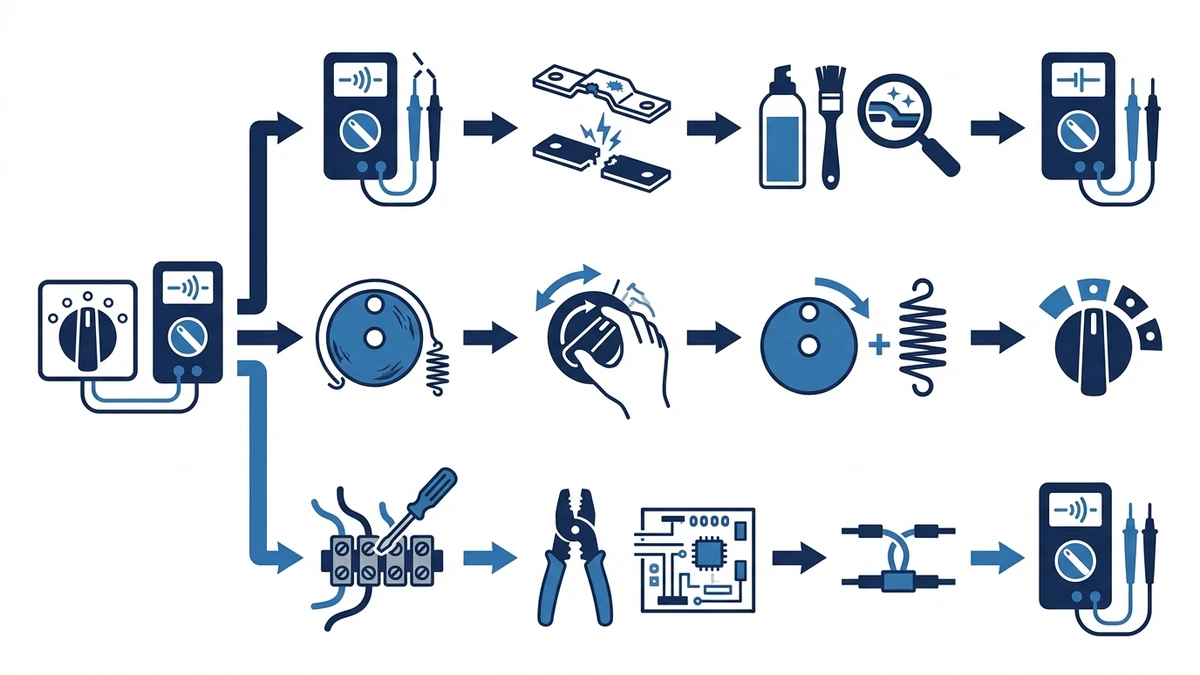
يكون السبب الجذري دائمًا تقريبًا هو التخصيص غير الصحيح للطرف أو خطأ في الأسلاك أثناء التركيب. قارن الأسلاك بمخطط تسلسل التلامس الخاص بالشركة المصنعة واستخدم جهاز اختبار الاستمرارية في كل زوج طرفي عبر جميع مواضع المفاتيح قبل إعادة التنشيط.
الشكل 4. عادةً ما يفصل استكشاف الأعطال وإصلاحها بين تآكل التلامس والفصل الميكانيكي أو تعطل الكامة وأخطاء الأسلاك أو تعيين الطرف.
الأسئلة الشائعة
ما الفرق بين مفتاح الكامة الدوار ومفتاح الاختيار الدوار القياسي؟
يستخدم مفتاح الكامة الدوارة أقراص كامات دقيقة التشكيل لتسلسل مراحل تلامس متعددة مستقلة في كل موضع، مما يتيح منطق تبديل معقد متعدد الأقطاب عبر عدة مواضع. عادةً ما يقوم مفتاح التبديل الدوَّار القياسي بتشغيل مجموعة ملامس واحدة لكل موضع وهو غير مصمم للتسلسل متعدد المراحل المطلوب في التحكم في المحرك أو دوائر بدء التشغيل بنجمة دلتا.
كم عدد المواضع التي يمكن أن يكون لمفتاح الكامة الدوارة؟
تدعم معظم مفاتيح الكامة الدوارة الصناعية ما بين 2 و12 موضعاً منفصلاً. يعتمد الحد الأقصى لعدد المواضع على هندسة قرص الكامة وقوس الدوران الكلي الذي صُمم عمود المشغل لقطعه. تأكد من عدد المواضع المتاحة لسلسلة معينة من ورقة البيانات.
ما الذي تغطيه المواصفة القياسية IEC 60947-3 لمفاتيح الكامة الدوارة؟
تنطبق المواصفة القياسية IEC 60947-3:2020+AMD1:2025 على المفاتيح والمفصلات ومفصلات المفاتيح ووحدات دمج الصمامات لدوائر التوزيع والدوائر الحركية، بجهد مقنن يصل إلى 1000 فولت تيار متردد أو 1500 فولت تيار مستمر. وهي تحدد المتطلبات المتعلقة بالتقييمات والأداء والتحقق من هذه الأجهزة. بالنسبة لمفتاح الكامة الدوارة القابل للتكوين، لا يزال مخطط التلامس الخاص بالشركة المصنعة من وثائق الشراء الأساسية لأنه يوضح ما إذا كانت مجموعة الكامة المزودة تتطابق مع تسلسل الدائرة التي تحتاجها.
هل يمكن استخدام مفتاح الكامة الدوارة كعازل للمحرك؟
نعم، شريطة أن يحمل المفتاح التصنيف المناسب لفاصل الفصل IEC 60947-3 وأن يفي تياره المقنن بتيار الحمل الكامل للمحرك أو يتجاوزه. يجب أن يوفر المفتاح في وضع إيقاف التشغيل فجوة عزل تفي بمتطلبات المعيار للوصول الآمن إلى اللوحة. تأكد من تصنيف الفاصل من ورقة البيانات قبل استخدام المفتاح في دور العزل.
ما الذي يتسبب في عدم ثبات مفتاح الكامة الدوارة في موضعه؟
والسبب الأكثر شيوعًا هو نابض الفصل البالي أو المكسور. عندما يفقد الزنبرك التحميل المسبق الكافي، ينجرف العمود بين المواضع، مما يؤدي إلى حالات تلامس غير محددة وسلوك دائرة غير منتظم. استبدل آلية الفصل قبل إعادة المفتاح إلى الخدمة.
كيف يمكنني تحديد عدد مراحل التلامس الصحيح لتطبيق محرك متعدد السرعات؟
احسب إجمالي عدد أحداث التبديل المستقلة المطلوبة عبر جميع خطوات السرعة. ثم تأكد من عدد الأقطاب التي توفرها كل مرحلة لسلسلة المفاتيح التي اخترتها. بالنسبة للمحرك ثنائي السرعات الذي يتطلب ستة تغييرات تلامس مستقلة لكل موضع، فإن المفتاح ثلاثي المراحل مع قطبين لكل مرحلة هو الحد الأدنى من التكوين. تحقق دائمًا من مخطط التلامس الخاص بالشركة المصنعة للتأكد من تطابق ملفات تعريف الفص مع التسلسل المطلوب، واطلب تأكيدًا كتابيًا من مهندسي Shieldhz للتكوينات غير القياسية.
ما هي الوثائق التي يجب أن أطلبها قبل طلب مفتاح كاميرا دوارة لتصميم لوحة جديدة؟
اطلب مخطط التلامس للقطب والموضع وتهيئة المرحلة المحددة التي تطلبها. اطلب مخطط قرص الكامات بجانبه. تأكد من فئة الاستخدام والتيار المقنن وجهد العزل المقننن وتصنيف التحمل الميكانيكي ومواصفات عزم الدوران الطرفي. بالنسبة لتطبيقات التحكم في المحرك، قم أيضًا بتأكيد فئة الاستخدام IEC 60947-3 المعمول بها كتابيًا. وجود هذه الوثائق قبل بدء توصيل الأسلاك يمنع معظم أخطاء التركيب ويدعم اعتماد اللوحة.
شي، موكسي
يكتب شي، موكسي مقالات شيلدهز الفنية لمشتري التحكم الصناعي والمكونات الكهربائية، والتي تغطي مفاتيح الكامات الدوارة، ومفاتيح العازل، ومفاتيح فصل التيار المستمر الكهروضوئية، وأزرار الضغط، وأضواء المؤشر، والحاويات المقاومة للماء، والكتل الطرفية. تستند المقالات على خبرة شركة Zhejiang Shihe Electric Co., Ltd. في التصنيع والتصدير، مع التركيز العملي على اختيار الطراز وأوراق البيانات والرسومات والشهادات وتصنيفات IP وتفاصيل الاستفسار التي يجب على المشترين التأكد منها قبل الطلب.