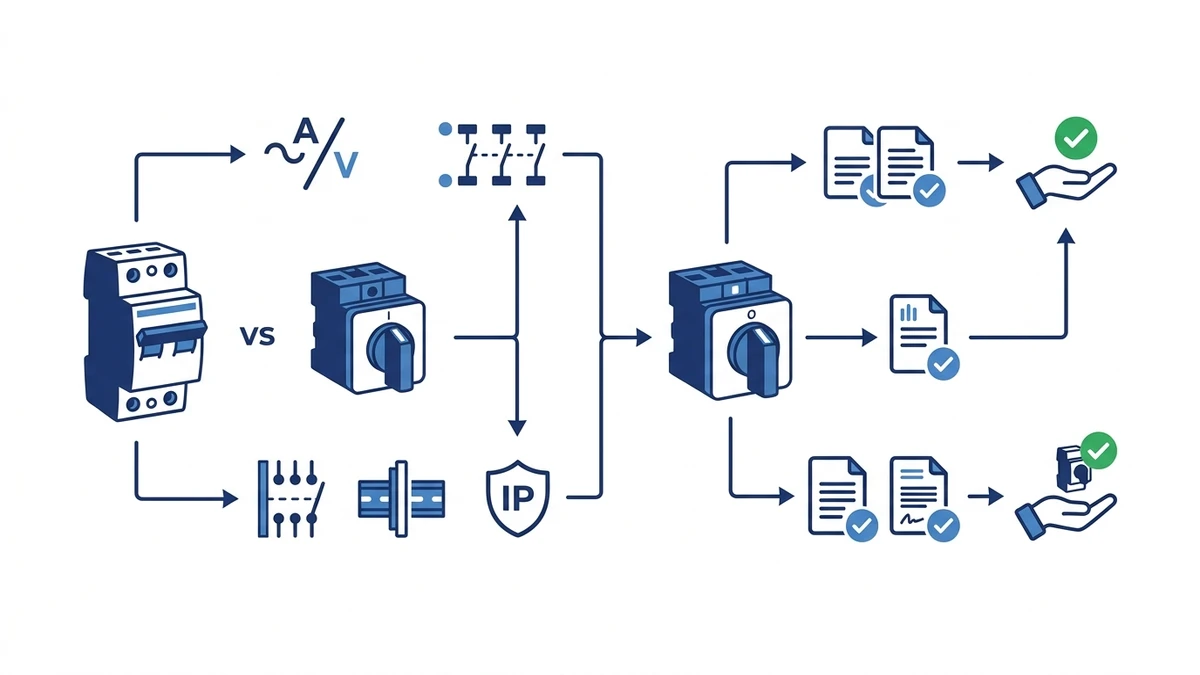
يعود الاختيار بين عازل الحمل ومفتاح الكاميرا الدوارة إلى سؤال واحد: هل يحتاج التطبيق إلى حالة إيقاف تشغيل محددة، أم يحتاج إلى مسارات دائرة قابلة للتحديد؟ يمنحك عازل الحمل نقطة فصل واحدة قابلة للقفل مصنفة للعزل الآمن تحت الحمل. يمنحك مفتاح الكامة الدوارة مواضع متعددة مفهرسة لتوجيه التيار عبر تكوينات دائرة مختلفة. أحدهما يعزل. والآخر يقوم بالتبديل. كلاهما يندرج تحت IEC 60947-3:2020+AMD1:2025, والتي تنطبق على المفاتيح ومفاتيح الفصل ومفصلات المفاتيح ووحدات دمج الصمامات لدوائر التوزيع ودوائر المحركات، بجهد مقنن يصل إلى 1000 فولت تيار متردد أو 1500 فولت تيار مستمر. يؤدي الخطأ في الاختيار إلى زيادة التكلفة، ويخلق ثغرات في الامتثال، ويمكن أن يؤدي إلى مخاطر السلامة على مستوى اللوحة.
لمحة سريعة عن الفروق الجوهرية
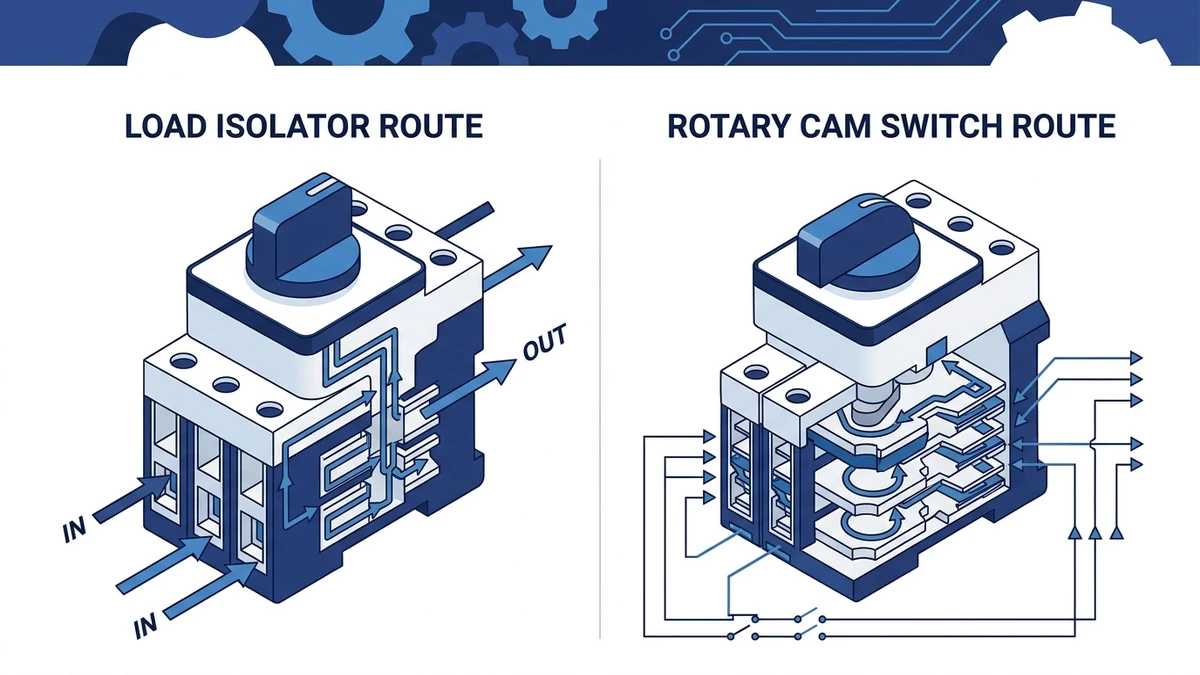
عازل الحمل SH30 هو جهاز ذو وضعين: تشغيل أو إيقاف تشغيل. وتتمثل مهمته في إنشاء حالة إلغاء تنشيط تم التحقق منها قبل بدء أعمال الصيانة. مسار الضميمة مخصص للتركيب المقاوم للعوامل الجوية، ولكن تصنيف IP الدقيق يعتمد على متغير الصندوق وتفاصيل التركيب؛ تأكد من تصنيف صندوق Shieldhz SH30 المقاوم للعوامل الجوية الحالي قبل تحديد لوحات التوزيع الخارجية أو غرف المحطات على الأسطح أو بيئات الغسيل.
يستخدم مفتاح الكامة الدوارة أقراص كامات دقيقة التشكيل مع خطوات فهرسة بزاوية 45 درجة أو 90 درجة لتعشيق جسور تلامس متعددة لكل موضع. في مركز التحكم في المحرك، تتيح هذه البنية لمفتاح واحد التعامل مع مفتاح واحد للتحكم في اختيار الأمام/إيقاف التشغيل/العكس، أو تسلسلات بدء التشغيل بنجمة دلتا، أو التحكم متعدد السرعات - وهي وظائف لم يصمم العازل ثنائي الموضع لأداءها.
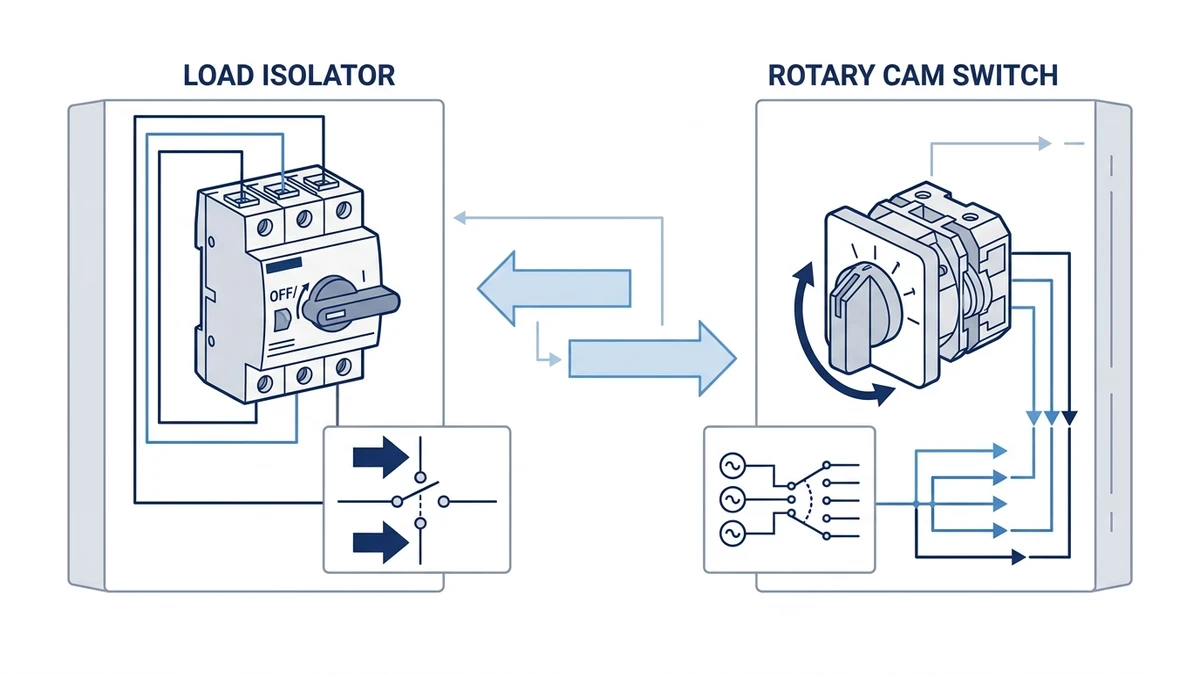
في ضميمة تحكم صناعية نموذجية، يوجد عازل الحمل في موضع المغذي الوارد. يحتل مفتاح الكامة الدوارة موضعًا في اتجاه المصب حيث يتم اتخاذ قرارات توجيه الدائرة أثناء التشغيل العادي. إن وضعها بشكل صحيح في التسلسل الهرمي للوحة هو الخطوة الأولى نحو بناء متوافق وقابل للصيانة.
الشكل 1. المفهوم الأساسي وراء اختيار عازل الحمل مقابل اختيار مفتاح الكامة الدوارة.
المواصفات الفنية جنباً إلى جنب
المعلمة
عازل الأحمال SH30
مفتاح كاميرا دوارة (سلسلة SH30)
التيار المقنن
حتى 100 أمبير
16 أمبير إلى 63 أمبير (حسب السلسلة)
الأعمدة
2P، 3P، 4P، 4P
1P إلى 4P، متعدد المواضع
فئة الاستخدام
AC-22A / AC-23A
AC-21A / AC-23A
جهد العزل المقدر (Ui)
حتى 690 فولت تيار متردد
حتى 690 فولت تيار متردد
تصنيف IP
IP65 / IP67
IP40 إلى IP65 (حسب الضميمة)
فجوة الاتصال
عزل كلفاني كامل، فجوة >= 3 مم
عادةً من 2 مم إلى 4 مم (تحقق من ورقة البيانات)
معيار IEC
IEC 60947-3
IEC 60947-3
التحمل الميكانيكي
تصنيف دورة أقل، مناسب لمهام العزل غير المتكرر
تصنيف دورة أعلى، مناسب لمهام التحويل التشغيلي
التركيب
تركيب على السطح أو على سكة DIN
فتحة اللوحة أو سكة DIN
ملاحظة: تختلف أرقام التحمل الميكانيكية وقيم فجوة التلامس الدقيقة ومواصفات عزم الدوران حسب حجم الإطار وتكوينه. تأكد دائمًا من ورقة بيانات Shieldhz الحالية قبل وضع اللمسات الأخيرة على قائمة المواد.
الفجوة الأكثر أهمية من الناحية التشغيلية في الجدول هي تصنيف IP. في البيئات الخارجية أو بيئات الغسيل، يمكن للحاوية المقاومة للعوامل الجوية SH30 المحددة بشكل صحيح أن تقلل أو تزيل الحاجة إلى مبيت منفصل مقاوم للعوامل الجوية. توفر مفاتيح الكامة الدوارة تبديلًا متعدد المواضع - حتى 12 موضعًا في بعض التكوينات - وقدرة تحمل أعلى للدورة، مما يجعلها المحدد المفضل في مراكز التحكم في المحرك حيث يكون اختيار مسار الدائرة من متطلبات التشغيل المستمر.
للحصول على نظرة عامة كاملة على عائلات مفاتيح الكامات المتاحة والتصنيفات الحالية، يمكن الاطلاع على مجموعة مفاتيح Shieldhz ذات الكامات الدوارة يغطي كلاً من السلاسل القياسية والثقيلة بدءاً من 16 أمبير وحتى أحجام الإطارات الأعلى.
نوع الحمولة يحدد الجهاز المناسب
تضيّق المعلمات المقدرة المجال. ملف تعريف التحميل يغلق القرار.
مصفوفة القرار
نوع الحمولة
الخصائص الكهربائية الرئيسية
الجهاز الموصى به
فئة الاستخدام
عنصر التسخين المقاوم
تدفق منخفض، عامل قدرة منخفض، عامل قدرة يقارب 1.0
عازل الأحمال SH30
AC-20A / AC-21A
محرك واحد، مباشر على الخط
تدفق يصل إلى 6 أضعاف إلى 8 أضعاف FLA
مفتاح كاميرا دوارة
AC-23A
تحكم تسلسلي متعدد المحركات
الدوائر المتعددة، والتبديل المرحلي
مفتاح كاميرا دوارة، متعدد المواضع
AC-23A
إضاءة الفلورسنت أو إضاءة مشغل LED
طفرات التدفق السعوي
عازل الأحمال SH30
AC-20A
عزل سلسلة التيار المستمر الكهروضوئي
تيار مستمر أحادي الاتجاه، حتى 1000 فولت تيار مستمر
سلسلة العوازل ذات التصنيف DC
DC-20A / DC-21A
عزل المحول الأساسي
تدفق استقرائي عالي الحث
مفتاح كاميرا دوارة
AC-23B
عزل اللوحة العامة للصيانة
حالة إيقاف التشغيل الآمن، لا يوجد تبديل تحت الحمل
عازل الأحمال SH30
AC-20A
كيفية قراءة المصفوفة
تحدد المواصفة القياسية IEC 60947-3 فئات الاستخدام حسب ظروف الصنع والكسر التي يجب أن يتعامل معها الجهاز. ويغطي AC-20A التصنيع والكسر في ظل ظروف عدم التحميل - سيناريو العزل القياسي للصيانة حيث يتم وضع عازل SH30 في مقدمة اللوحة قبل بدء أعمال الصيانة. يتطلب AC-23A أن يقوم الجهاز بعمل وكسر أحمال المحرك مع التدفق الاستقرائي، حيث توفر بنية قرص الكامة متعدد المواضع لمفتاح الكامة الدوار ميزة واضحة: يمكن لكل موضع مفصول أن يقوم بتسلسل الملامسات أو بادئات التشغيل النجمية الدلتا من خلال مسار تبديل محدد.
بالنسبة للأحمال التي لا تتطلب تبديلًا متسلسلًا أو تحكمًا متعدد الدوائر، فإن إضافة مفتاح كامات يقدم تعقيدًا ميكانيكيًا غير ضروري. يعالج عازل الأحمال المهمة بأجزاء متحركة أقل وملف صيانة أبسط.
إذا كنت جديدًا على كيفية إنشاء مفاتيح الكامات وكيفية عمل تسلسل التلامس، فإن ما هو مفتاح الكاميرا الدوارة يغطي الدليل الأساسيات قبل الوصول إلى مرحلة ورقة البيانات.
الشكل 2. يجب أن تربط فحوصات الاختيار الحمل وتسلسل التحويل والحاوية ومتطلبات التوثيق.
سيناريوهات التطبيق في العالم الحقيقي
تعمل مصفوفة القرار على تضييق المجال. توضح أمثلة النشر هذه كيف يتم ذلك على أرضية اللجنة.
عازل SH30: نقاط الفصل الثابتة
إن عازل الحمل SH30 مناسب تمامًا للتطبيقات التي تكون فيها حالة إيقاف تشغيل واحدة ومحددة هي المطلب الكامل. وتستخدمه فرق الصيانة لإنشاء حالة إلغاء تنشيط تم التحقق منها قبل فتح الضميمة - وهي ممارسة تتماشى مع متطلبات IEC 60947-3 للعزل الآمن تحت الحمل.
سيناريوهات نشر عازل SH30 النموذجي:
فصل السلسلة الكهروضوئية على السطح، حيث يجب أن يتعامل المفتاح مع جهد التيار المستمر ويقطع تيار السلسلة بشكل موثوق في ظل ظروف العطل (ملاحظة: تأكد من تصنيف التيار المستمر على المتغير المحدد قبل تحديده)
عزل ضاغط التدفئة والتهوية وتكييف الهواء في المباني التجارية، حيث يوفر عازل 32 أمبير أو 63 أمبير نقطة خدمة قابلة للقفل
لوحات توزيع خارجية مصنفة وفقًا لمعيار IP65 أو IP66، حيث تحمي الضميمة المقاومة للعوامل الجوية من دخول الغبار ونوافير المياه
عزل الدوائر الفرعية في منشآت معالجة الأغذية أو مرافق الغسيل حيث يكون التنظيف بالضغط العالي أمرًا روتينيًا
مفتاح كاميرا دوارة: تحكم متعدد المواضع
إن سلسلة مفاتيح الكامة الدوارة SH30 يناسب التطبيقات التي تتطلب أكثر من حالتين. في مراكز التحكم في المحركات، يوفر مفتاح الكامة عادةً اختياراً للأمام/إيقاف التشغيل/العكس أو تسلسل بدء التشغيل بنجمة-دلتا - وهي وظائف لا يمكن أن يؤديها العازل البسيط.
سيناريوهات نشر مفاتيح الكامات الدوارة النموذجية:
لوحات عكسية للمحرك ثلاثي الأطوار، حيث يتم تعيين مواضع كامات بزاوية 45 درجة أو 90 درجة لتكوينات مختلفة للموصلات
تبديل تحويل المولدات في أنظمة الطاقة الاحتياطية، والاختيار بين تغذية التيار الكهربائي والمولدات
محطات التحكم في أدوات الماكينات التي تتطلب مواضع محدد لنطاقات السرعة أو أوضاع التشغيل
لوحات منضدة الاختبار حيث يلزم تحديد تكوينات متعددة للإمداد دون إعادة توصيل الأسلاك
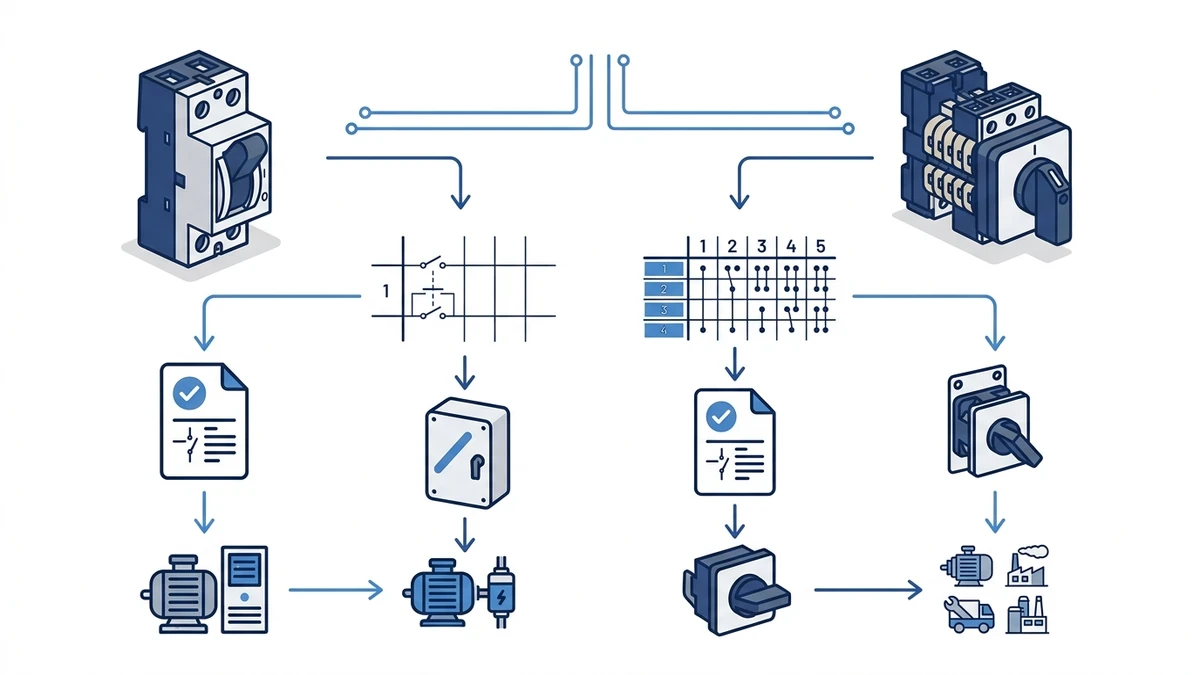
بالنسبة لتطبيقات التبديل على وجه التحديد، فإن ما هو مفتاح التحويل تشرح المقالة كيف تختلف دوائر التحويل المعتمدة على الكامات عن ترتيبات العازل البسيطة وما الذي يجب أن يوضحه مخطط تسلسل التلامس.
الشكل 3. يجب التحقق من سياق الأسلاك التطبيقية بالمقارنة مع مخطط التلامس الخاص بالشركة المصنعة قبل التنشيط.
اعتبارات التثبيت والامتثال
إن اختيار الجهاز بشكل صحيح هو الخطوة الأولى فقط. إن كيفية تركيب كل جهاز يحدد ما إذا كان الجهاز يجتاز الفحص ويعمل بشكل موثوق على مدى عمره التشغيلي.
قائمة التحقق من التوافق مع المواصفة القياسية IEC 60947-3
قبل تركيب أي من الجهازين، تحقق مما يلي مقابل المواصفة القياسية IEC 60947-3 ومعيار بناء اللوحة المعمول به لديك:
يجب أن يفي جهد العزل المقدر (Ui) بجهد النظام أو يتجاوزه - عادةً 690 فولت تيار متردد للوحات الصناعية
يجب أن تتطابق فئة الاستخدام مع نوع الحمل: AC-21A للأحمال المقاومة، AC-23A للأحمال الحركية ذات التبديل الحثي
يجب التأكد من قدرة الصنع والكسر عند التيار التشغيلي المقدر (Ie)، وليس فقط التيار الحراري (Ith)
يجب أن تتوافق مسافات الخلوص ومسافات الزحف مع درجة التلوث المعلنة من قبل الشركة المصنعة - تحقق من ذلك مقابل ورقة البيانات، وليس القيم المفترضة
يجب أن يحقق الجهاز إجراء فتح إيجابي وفقًا للمواصفة IEC 60947-3، مما يعني أن فصل التلامس مضمون ميكانيكيًا بغض النظر عن حالة النابض
للحصول على شرح تفصيلي لما تتطلبه المواصفة القياسية IEC 60947-3 وكيفية تطبيقها على اختيار الجهاز، يمكن الاطلاع على دليل IEC 60947-3 IEC 60947-3 يغطي نطاق المعيار وتعريفات فئة الاستخدام بلغة بسيطة.
المعزل SH30: ملاحظات التركيب
صُمم المعزل SH30 المقاوم للعوامل الجوية للتركيب المباشر على اللوحة أو على السطح. تختلف سعة إنهاء الأسلاك وأبعاد عمود المشغل حسب التصنيف الحالي - تأكد من ورقة بيانات حجم الإطار المحدد قبل قطع اللوحة. بالنسبة للتركيبات الخارجية، وجِّه مداخل الكابلات إلى أسفل أو استخدم تركيبات مانعة للتسرب في القناة. حتى الضميمة المقاومة للعوامل الجوية يمكن أن تتراكم الرطوبة إذا لم يكن للتكثيف مسار تصريف.
مفتاح كاميرا دوارة: ملاحظات التركيب
تتطلب مفاتيح الكامة الدوارة اهتمامًا دقيقًا بتكوين كتلة التلامس أثناء التجميع. المتغيرات متعددة المواضع - مثل تلك الموجودة في سلسلة LW28 - يجب أن تكون كل كتلة تلامس مثبتة بقيمة عزم الدوران المحددة من الشركة المصنعة لمنع اختلال التلامس تحت الاهتزاز. يعتمد رقم عزم الدوران الدقيق على حجم الإطار؛ لا تطبق قيمة عامة عبر سلاسل مختلفة دون التحقق من ورقة البيانات.
تختلف أبعاد فتحة اللوحة وأبعاد التركيب حسب حجم الإطار؛ تأكد من ذلك بمقارنتها بالرسم الحالي قبل التصنيع الآلي.
مزالق التثبيت التي يجب تجنبها
لا تعتمد أبدًا على وضع إيقاف تشغيل مفتاح الكامة كوسيلة عزل وحيدة لأعمال الصيانة. قم بإقرانه بعازل قابل للقفل في المنبع لاستيفاء متطلبات العزل والتبديل بموجب المواصفة IEC 60364-4-46.
اضبط عزم ربط مثبتات كتلة التلامس حسب المواصفات عند التجميع الأول. نادراً ما تؤدي إعادة الربط بعد التعرض للاهتزاز إلى استعادة ضغط التلامس الأصلي بشكل موحد عبر جميع الأقطاب.
تحقق من مخطط تسلسل تلامس مفتاح الكامة مقابل مخطط الدائرة الكهربية قبل التنشيط. يمكن أن يؤدي قرص كامة واحد غير محاذٍ إلى حدوث قصر من طور إلى طور أثناء انتقال الموضع.
تحقق دائمًا من تصنيف IP للمجموعة الكاملة، وليس الجهاز فقط. يؤدي إدخال كابل واحد غير محكم الغلق إلى انخفاض تصنيف الضميمة إلى IP00.
التكلفة، والتوريد، والصيانة طويلة الأجل
يحدد الامتثال للتركيب الأرضية. إن التكلفة الإجمالية للملكية على مدار دورة الصيانة هي ما يحدد ما إذا كان الجهاز المناسب هو الاستثمار المناسب أيضاً.
تكلفة الوحدة والمشتريات الأولية
إن عازل الحمل SH30 هو جهاز مصمم لغرض محدد، ذو وظيفة واحدة. إن بنيته الداخلية الأبسط - كتلة تلامس محملة بنابض داخل ضميمة محكمة الغلق - عادةً ما تضعه بسعر وحدة أقل من مفتاح كامات دوّارة ذات تصنيف مماثل. بالنسبة للتطبيقات التي تتطلب وظيفة التشغيل/إيقاف التشغيل في موضعين فقط، يضيف مفتاح الكامة متعدد المواضع تكلفة لإمكانية لا يتم استخدامها.
تحمل مفاتيح الكامة الدوارة تكلفة وحدة أعلى، مما يعكس بنية التلامس متعددة المواضع وتفاوتات أقراص الكامة الدقيقة المطلوبة لتلبية تصنيفات قدرة الصنع والكسر IEC 60947-3.
عمر الخدمة وقطع الغيار البديلة
تعتبر القدرة على التحمل الميكانيكية عامل مفاضلة ذات مغزى، ولكن المقارنة ذات الصلة هي ملف تعريف العمل، وليس عدد الدورات الخام. صُممت عوازل الأحمال لمهام العزل غير المتكررة - عمليات الصيانة، وليس للتبديل المستمر. أما مفاتيح الكامة الدوارة فهي مصممة لمهمة التبديل التشغيلي ويتم اختبارها وفقاً لذلك. سيؤدي تشغيل عازل الحمل بمعدلات دورات مفاتيح التبديل الكامة إلى استنفاد عمر التلامس قبل الأوان.
عائلات مفاتيح الكامات المعيارية - بما في ذلك سلسلة LW42 - دعم تجميعات كتل التلامس القابلة للاستبدال ميدانيًا، مما يطيل من عمر الخدمة دون تبديل الوحدة بالكامل. وهذا عامل ذو صلة في تطبيقات التحكم في المحركات عالية الدورة أو مفاتيح التبديل الاختيارية حيث تكون تكلفة وقت التعطل كبيرة.
اعتبارات التخزين
بالنسبة لمخططي الصيانة، يعني التصميم المعياري لمفتاح الكامة الدوارة تخزين كتل التلامس بدلاً من الوحدات الكاملة، مما يقلل من قيمة المخزون لكل وحدة احتياطية. إن انخفاض تكلفة الوحدة في العازل SH30 يجعل تخزين الوحدة الكاملة عمليًا حتى بالنسبة للمنشآت الأصغر حجمًا. يعمل ترقيم أجزاء Shieldhz المتسق على تبسيط عمليات إعادة الطلب عبر المواقع الموزعة - قم بتأكيد أرقام الأجزاء مع فريق Shieldhz الهندسي عند إنشاء قائمة قطع غيار متعددة المواقع لتجنب أخطاء الاستبدال المتقاطع.
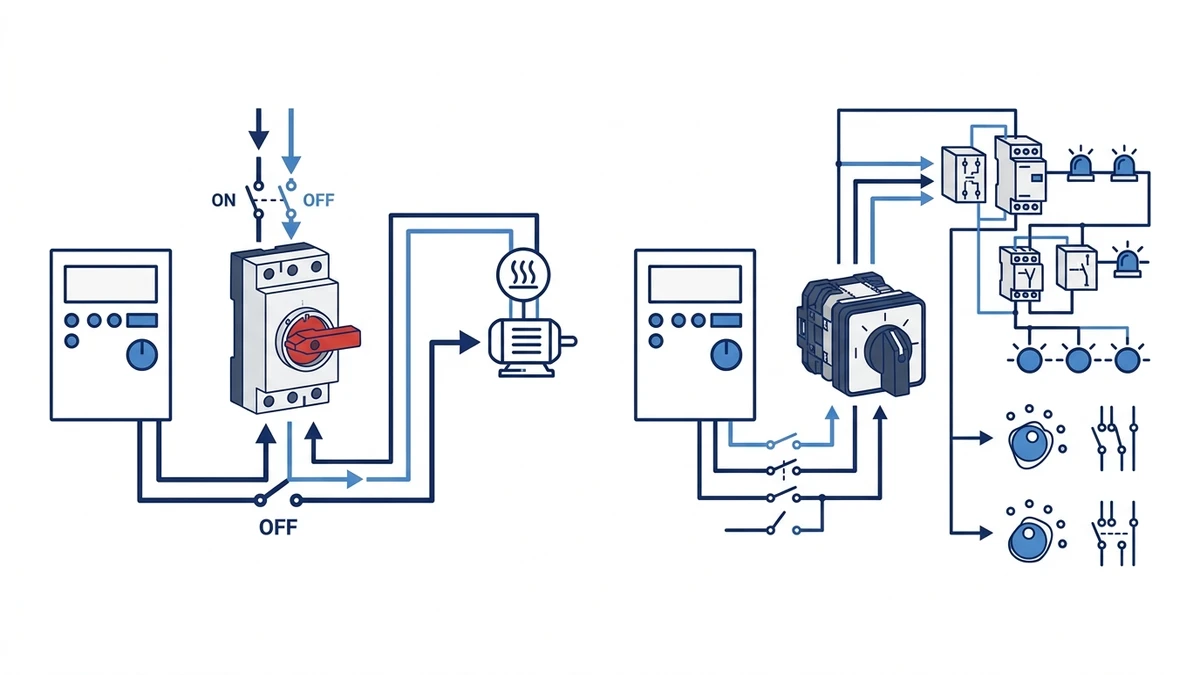
الشكل 4. يجب أن يتضمن الاستفسار الكامل التصنيف وتسلسل التلامس والتركيب والحاوية ومتطلبات المستند.
ما المسار الذي يناسب حمولتك؟ التوصية النهائية
هناك ثلاثة متغيرات تحسم المسألة في معظم عمليات بناء اللوحة: تصنيف الضميمة، وطوبولوجيا الدائرة، وتردد التحويل.
سيناريو التحميل
الجهاز الموصى به
السبب الرئيسي
حمولة تيار متردد أحادية الطور، لوحة خارجية، مطلوبة IP65+
عازل الأحمال SH30
ضميمة محكمة الغلق، مصنفة لمهام العزل غير المتكرر
محرك عكسي متعدد المواضع أو نجم دلتا
مفتاح كاميرا دوارة
مطلوب تسلسل كاميرا متعددة الأقطاب
عزل السلسلة الكهروضوئية على السطح، تيار مستمر حتى 1000 فولت
العازل المصنف للتيار المستمر (تأكيد المتغير)
مطلوب سعة كسر مصنفة حسب التيار المستمر
عزل المغذيات الصناعية العامة، MCC الداخلي
مفتاح كاميرا دوارة (LW28 أو LW42)
دورة تحمل عالية، استبدال وحدات التلامس المعيارية
عزل وحدة التغذية المقاومة للعوامل الجوية، والتبديل غير المتكرر
سلسلة العازل SH30 Series SH30
حماية ضد الدخول IP67، بصمة مدمجة
إذا كان التطبيق يحتاج إلى حالة إيقاف تشغيل محددة في ضميمة محكمة الغلق مع الحد الأدنى من تردد التبديل، فإن عازل الحمل SH30 هو الحل الأنظف والأقل تكلفة. إذا كان التطبيق يحتاج إلى مسارات دارة قابلة للتحديد، أو تسلسل المحرك، أو قدرة تحمل عالية لدورة التشغيل، فإن مفتاح الكاميرا الدوارة من سلسلة SH30 أو LW هو الخيار الصحيح.
ألست متأكداً أيهما يناسب تخطيط لوحتك؟ تواصل مع فريق Shieldhz الهندسي مع فريق Shieldhz الهندسي مع الجهد الكهربائي والتصنيف الحالي ونوع الحمل ومتطلبات IP وتردد التحويل. التوصية المباشرة بالمنتج مع تأكيد ورقة البيانات أسرع من العمل من خلال مصفوفة الاختيار وحدها.
كيف يقوم Shieldhz بتوجيه استفسارات SH30 ومفتاح الكاميرات
في مراجعة مشروع Shieldhz، يكون السؤال الأول هو ما إذا كان المستخدم بحاجة إلى عزل الحمل أو التبديل المبرمج. إذا كان المتطلب هو وضع إيقاف تشغيل مرئي لأعمال الخدمة، فعادةً ما تتم مراجعة مسار العازل SH30 أولاً. إذا كان المتطلب هو إعادة التوجيه/إيقاف التشغيل/العكس، أو اختيار المصدر، أو اختيار العداد، أو التحكم في التسلسل متعدد المواضع، يقوم الفريق بنقل الاستفسار نحو LW28 أو LW42 أو تكوين آخر لمفتاح الكامة.
لتجنب التوصية الخاطئة، قدم نوع الحمل، ومخطط الدائرة، وعدد مواضع التشغيل، وموقع التركيب، والحاوية/موقع التركيب، وتوقع الضميمة/مفتاح IP، ووثائق الامتثال المطلوبة. يمكن لشركة Shieldhz بعد ذلك تأكيد ما إذا كان مسار الشراء الأكثر أمانًا هو عازل أو مفتاح كام أو مجموعة فصل مغلقة، ويمكنها توفير ورقة البيانات والرسم المطابقين لاعتماد اللوحة.
الأسئلة الشائعة
ما الفرق الوظيفي الرئيسي بين عازل الحمل ومفتاح الكامة الدوارة؟
يوفر عازل الحمل نقطة فصل واحدة للتشغيل/إيقاف التشغيل لفصل التيار بشكل آمن. يقوم مفتاح كاميرا دوّار بتوجيه التيار عبر مسارات دائرة متعددة قابلة للاختيار. العازل هو جهاز أمان يستخدم لإنشاء حالة إيقاف تشغيل تم التحقق منها. مفتاح الكامة هو جهاز تحكم يستخدم للاختيار بين تكوينات الدائرة أثناء التشغيل العادي.
هل يمكن استخدام مفتاح كاميرا دوارة كعازل رئيسي في لوحة؟
يمكن لمفتاح الكامة الدوارة أن يقوم بالعزل في وضع إيقاف التشغيل إذا كان يفي بمتطلبات IEC 60947-3 الخاصة بإجراءات الفتح الإيجابي. ومع ذلك، فهو ليس الخيار المفضل لهذا الدور. يوفر العازل المخصص القابل للقفل في المنبع حالة إيقاف تشغيل آمنة أنظف وأكثر قابلية للتدقيق لأعمال الصيانة ويفي بمتطلبات العزل IEC 60364-4-46 بشكل مباشر أكثر.
ما هو معيار IEC الذي يغطي كلاً من عوازل الأحمال ومفاتيح الكامة الدوارة؟
يندرج كلا النوعين من الأجهزة تحت المواصفة القياسية IEC 60947-3:2020+AMD1:2025، والتي تنطبق على المفاتيح والمفصلات ومفصلات المفاتيح ووحدات دمج الصمامات لدوائر التوزيع والدوائر الحركية، بجهد مقنن يصل إلى 1000 فولت تيار متردد أو 1500 فولت تيار مستمر.
ما فئة الاستخدام التي يجب أن أحددها لحمل المحرك؟
AC-23A هي الفئة الصحيحة لصنع وكسر أحمال المحرك الاستقرائي. لم يتم اختبار الجهاز المقنن إلى AC-21A فقط لظروف التدفق الحثي التي يقدمها المحرك ولا ينبغي استخدامه في هذا العمل. تأكد من فئة الاستخدام في ورقة بيانات الجهاز، وليس فقط وصف المنتج.
هل يدعم المعزل SH30 تطبيقات التيار المستمر مثل الطاقة الشمسية الكهروضوئية؟
عازل التيار المتردد SH30 القياسي غير مصمم لقطع سلسلة التيار المستمر. تتطلب التركيبات الكهروضوئية عازلًا مخصصًا مصممًا للتيار المستمر أحادي الاتجاه مع قدرة كسر مناسبة عند جهد النظام. تأكد من تصنيف التيار المستمر على المتغير المحدد مع Shieldhz قبل تحديده للتطبيق الكهروضوئي.
كم مرة تحتاج عادةً كتل تلامس مفاتيح الكامات الدوارة إلى الاستبدال؟
يعتمد عمر خدمة كتلة التلامس على فئة الاستخدام، وتيار الحمل، وتردد التحويل. في تطبيقات التحكم في المحركات عالية الدورة عند تشغيل AC-23A، يجب فحص كتل التلامس على فترات زمنية محددة من قبل جدول الصيانة الخاص بالشركة المصنعة. تسمح تصاميم كتل التلامس المعيارية بالاستبدال الميداني دون إزالة جسم المفتاح من اللوحة، مما يقلل من وقت التعطل في التركيبات عالية الدورة.
ما هو تصنيف IP المطلوب للوحة توزيع خارجية في بيئة الغسيل؟
IP65 هو الحد الأدنى لمعظم المواقع الخارجية ومواقع الغسيل، مما يوفر استبعادًا كاملاً للغبار وحماية كاملة ضد نفاثات المياه من أي اتجاه. يتم ضمان IP66 أو IP67 عندما يكون التنظيف بالضغط العالي أو الغمر المؤقت ممكنًا. تحقق دائمًا من تصنيف IP للحاوية المجمعة بالكامل، بما في ذلك مداخل الكابلات وأي محولات للوحة الأمامية، وليس فقط تصنيف الجهاز بمعزل عن غيره.
شي، موكسي
يكتب شي، موكسي مقالات شيلدهز الفنية لمشتري التحكم الصناعي والمكونات الكهربائية، والتي تغطي مفاتيح الكامات الدوارة، ومفاتيح العازل، ومفاتيح فصل التيار المستمر الكهروضوئية، وأزرار الضغط، وأضواء المؤشر، والحاويات المقاومة للماء، والكتل الطرفية. تستند المقالات على خبرة شركة Zhejiang Shihe Electric Co., Ltd. في التصنيع والتصدير، مع التركيز العملي على اختيار الطراز وأوراق البيانات والرسومات والشهادات وتصنيفات IP وتفاصيل الاستفسار التي يجب على المشترين التأكد منها قبل الطلب.