Fundamentos do interruptor de came rotativo LW42 para comutação industrial compacta
O LW42 é compatível com painéis industriais compactos, nos quais o programa de contatos e o funcionamento da alavanca devem ser confirmados com base no desenho técnico antes do pedido.
A chave de came rotativa LW42 é uma chave seletora de várias posições criada para instalações compactas em painéis industriais. Ele usa um mecanismo de disco de came rotativo para abrir e fechar circuitos de contato discretos em posições angulares definidas, normalmente em etapas de 45 ou 90 graus, com variantes compactas do LW42 da Shieldhz geralmente posicionadas em aplicações de comutação de 20A, 25A e 32A; a tensão exata de isolamento, os dados AC-23A/AC-3 e as opções de montagem devem ser confirmados na folha de dados atual. Para os construtores de painéis e engenheiros de controle, o LW42 atende a uma necessidade específica: chaveamento confiável de vários circuitos em um painel pequeno, sem o número de componentes que os relés ou contatores separados exigiriam. Este artigo aborda como a chave funciona, como conectá-la, como ela se compara às séries adjacentes e o que verificar antes de fazer o pedido.
O que é o interruptor de came rotativo LW42?
O LW42 é um interruptor de came rotativo compacto projetado para montagem em painel frontal em gabinetes de controle industrial. Quando o operador gira o botão do atuador, um disco de came usinado com precisão gira contra uma pilha de suportes de contato estacionários. Cada passo angular engata ou desengata pontes de contato específicas de liga de prata, direcionando a corrente por caminhos de circuito predefinidos.
Essa relação entre o came e o contato é o que separa um interruptor de came rotativo de uma simples chave liga/desliga. Uma única rotação do eixo pode gerenciar vários circuitos independentes simultaneamente, razão pela qual o LW42 aparece em aplicações de controle de direção do motor, comutação de fonte e seletor de medição em que uma ação do operador deve controlar vários caminhos de circuito ao mesmo tempo.
Para obter uma introdução mais ampla sobre como os interruptores de came funcionam em diferentes séries e classificações de corrente, o Visão geral do interruptor de came rotativo abrange o contexto completo da família de produtos.
Assembléias primárias
O LW42 consiste em cinco conjuntos principais:
Botão do atuador - a alça voltada para o operador, disponível em configurações de 2 a 4 posições
Pilha de discos de came - discos moldados com precisão que definem a sequência de comutação por posição de retenção
Módulos de suporte de contato - unidades empilháveis que abrigam as pontes de contato de prata e os conjuntos de molas
Bloco de terminais - aceita conexões de fios até a seção transversal nominal do condutor
Colar de montagem - encaixa-se em um recorte de painel padrão de 22 mm ou 30 mm, dependendo da variante encomendada
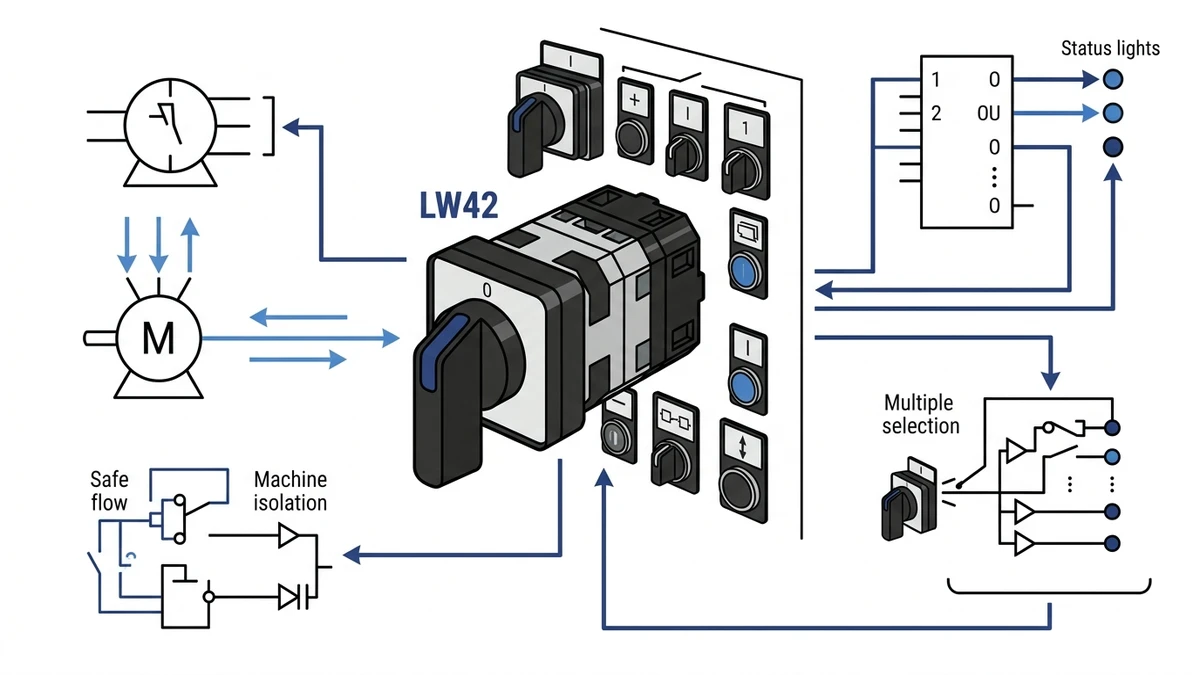
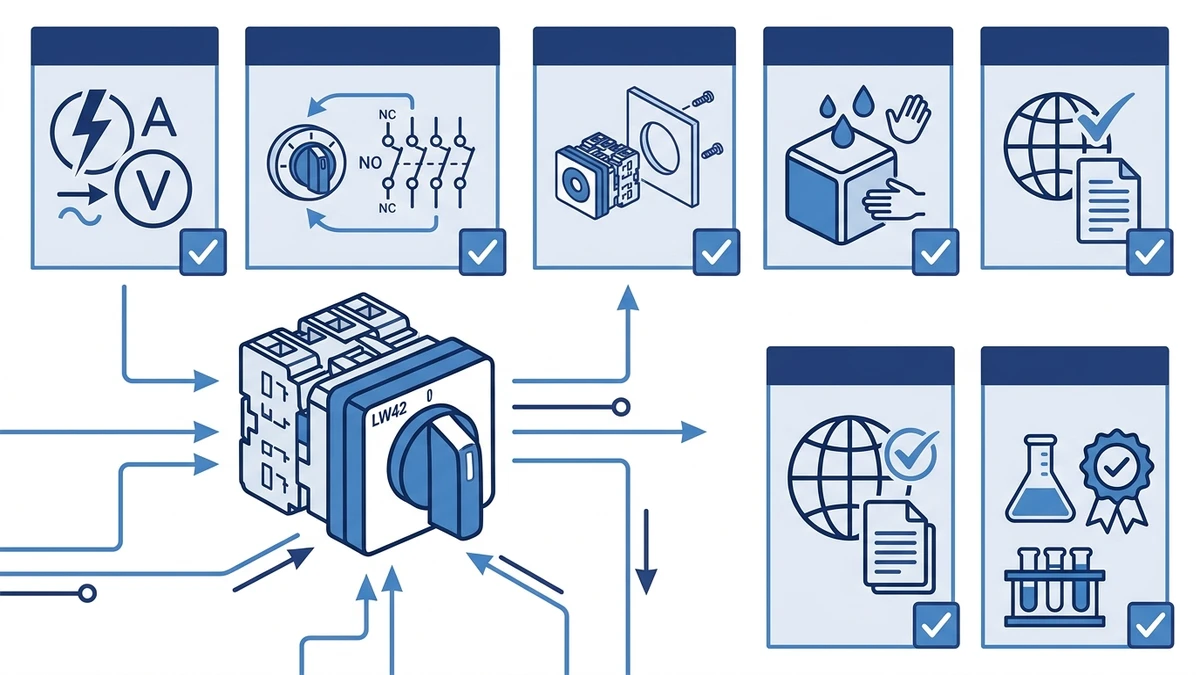
Figura 1. Conceito central por trás da seleção do interruptor de came rotativo LW42.
Como funciona o sistema de contato de came LW42
Mecânica de disco de came e ponte de contato
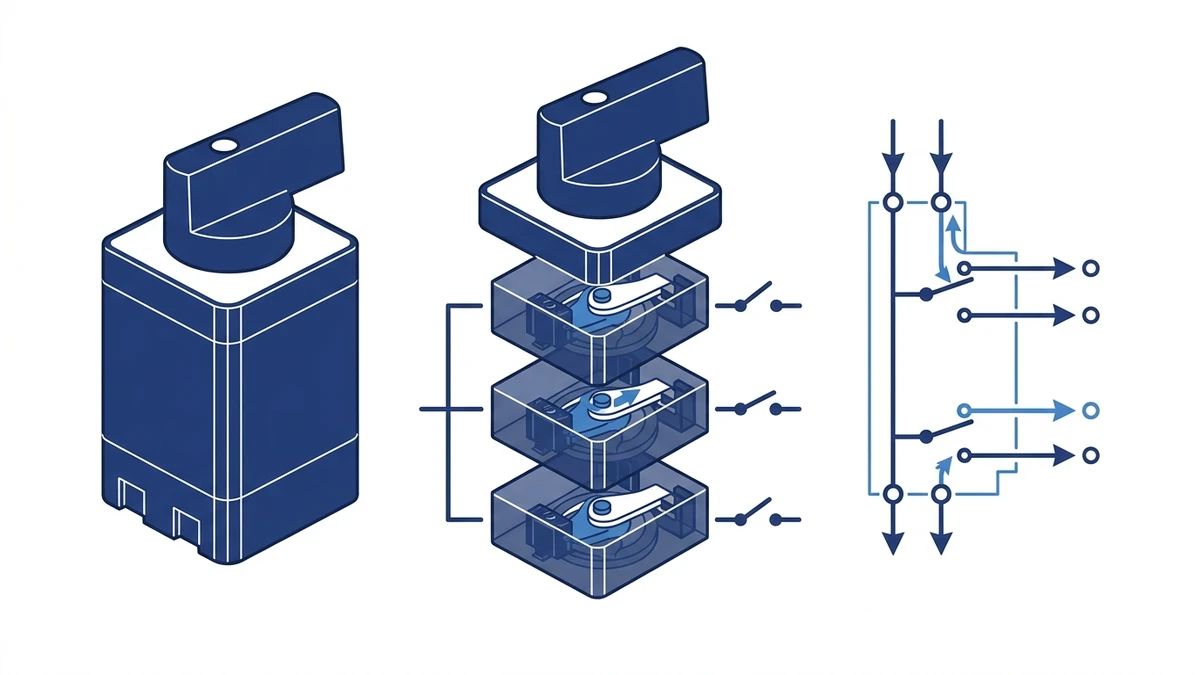
Cada disco de came é perfilado para um programa de comutação específico. À medida que o eixo do atuador gira em posições angulares discretas, cada lóbulo do came levanta ou libera uma ponte de contato com mola, abrindo ou fechando polos específicos do circuito em uma sequência definida.
Quando um lóbulo engata no seguidor do suporte de contato, ele comprime a mola de contato e separa a ponte de contato de liga de prata de sua contraparte estacionária, interrompendo o circuito. Quando o lóbulo sai, a mola faz com que a ponte volte a entrar em contato, completando o circuito. Em um comutador de came com manutenção adequada, a resistência de contato deve permanecer próxima à linha de base do comissionamento; os valores exatos aceitáveis dependem da folha de dados e do método de teste. Os valores exatos da pré-carga da mola e da resistência de contato para uma variante específica do LW42 devem ser confirmados na folha de dados do produto, pois variam de acordo com a configuração do polo e o grau do material de contato.
O material de contato no LW42 é uma liga à base de prata, escolhida pela baixa resistência de contato e resistência à soldagem sob comutação de carga indutiva. A IEC 60947-3:2020+AMD1:2025 aplica-se a chaves, seccionadores, chaves seccionadoras e unidades de combinação de fusíveis para circuitos de distribuição e motores, com tensão nominal de até 1000V CA ou 1500V CC. Ela define os requisitos de capacidade de abertura e fechamento que os contatos da chave de came devem atender em suas categorias de utilização nominal, incluindo AC-21A para cargas resistivas e AC-23A para cargas de motor. A norma completa está disponível no site Loja virtual da IEC.
Tabela de estado dos contatos por posição do interruptor
A tabela abaixo mostra um programa de chaveamento representativo de quatro posições, ilustrando quais polos estão fechados ou abertos em cada posição de retenção. O símbolo (C) indica fechado e (O) indica aberto.
Posição
Polo 1
Polo 2
Polo 3
Polo 4
0 (Desligado)
O
O
O
O
1
C
O
C
O
2
C
C
O
O
3
O
C
C
C
Os programas de contato reais variam de acordo com a configuração de comutação. Os Série de chaves de came rotativas LW42 suporta vários arranjos de discos de came para corresponder a sequências específicas de controle, comutação e isolamento do motor. Sempre verifique o diagrama de comutação do disco de came em relação ao seu circuito real antes de fazer a fiação. O diagrama de posição impresso no invólucro reflete o programa padrão de fábrica, que pode não corresponder a uma configuração encomendada sob medida.
Em um painel de controle de motor típico, a sequência de posições do interruptor de came é mapeada diretamente para a lógica de partida estrela-triângulo ou de avanço-recuo, com cada detentor fornecendo um estado de contato estável e resistente a vibrações que um simples botão de alternância ou de pressão não consegue reproduzir.
Verificações de comissionamento
Quatro verificações que os montadores de painéis experientes realizam no comissionamento:
Verifique se o diagrama de comutação do disco de came está de acordo com o esquema do circuito antes de iniciar a fiação.
Ao comutar cargas indutivas do motor, confirme se a categoria de utilização é AC-23A e não AC-21A. As classificações de contato subdimensionadas são a causa mais comum de soldagem prematura de contatos em chaves de came.
Meça a resistência de contato em cada ponte fechada com um ohmímetro de baixa resistência. Uma leitura notavelmente acima da linha de base de comissionamento em um novo switch pode indicar contaminação ou um problema de assentamento que piorará com o ciclo de carga.
A sensação do detentor se degrada antes que a falha de contato se torne visível. Se o botão não se encaixar mais de forma limpa entre as posições, inspecione a mola do seguidor do came antes do próximo intervalo de manutenção programada.
Especificações e opções de configuração do LW42
Classificações elétricas do núcleo
Para o LW42, não copie as classificações entre as variantes: as informações atuais da Shieldhz posicionam o LW42 em torno dos usos de comutação compactos de 20A, 25A e 32A, enquanto Ui, Uimp, Ith, resistência e dimensões permanecem campos específicos da folha de dados do número da peça. O material de contato e a resistência devem ser confirmados na folha de dados atual da Shieldhz. As contagens exatas de ciclos de resistência e as tolerâncias dimensionais devem ser confirmadas na folha de dados atual da Shieldhz, pois esses valores estão sujeitos a revisão entre as gerações de produtos.
Tabela de especificações do LW42
Parâmetro
Valor típico
Tensão nominal (CA)
Até 380V CA
Tensão nominal de isolamento (Ui)
500V CA
Impulso nominal suportável (Uimp)
6 kV
Corrente térmica (Ith)
20A
Categoria de utilização
AC-23A (IEC 60947-3)
Postes disponíveis
1P, 2P, 3P, 4P
Mudança de posição
2, 3 ou 4 posições
Classificação do gabinete
Face frontal IP65 (IEC 60529)
Certificações
CE, CCC
Todos os valores desta tabela são representativos. Confirme com a folha de dados do produto atual antes de especificar.
Opções de configuração
A série LW42 suporta configurações de 1 a 4 polos com 2, 3 ou 4 posições de comutação, abrangendo aplicações comuns, desde o simples isolamento liga/desliga até o sequenciamento do motor para frente e para trás. Os perfis dos discos de came são intercambiáveis dentro do mesmo tamanho de estrutura, de modo que a sequência de comutação dos contatos pode ser adaptada aos requisitos do circuito sem alterar o atuador ou o hardware de montagem.
A proteção contra ingresso IP65, de acordo com a norma IEC 60529, aplica-se à vedação do atuador montado no painel, tornando o LW42 adequado para ambientes industriais empoeirados ou levemente úmidos. As conexões dos terminais na parte traseira do switch não são cobertas por essa classificação. Os engenheiros que especificam o LW42 para locais externos ou de lavagem devem avaliar se é necessário um gabinete com classificação separada para manter a proteção no lado da fiação.
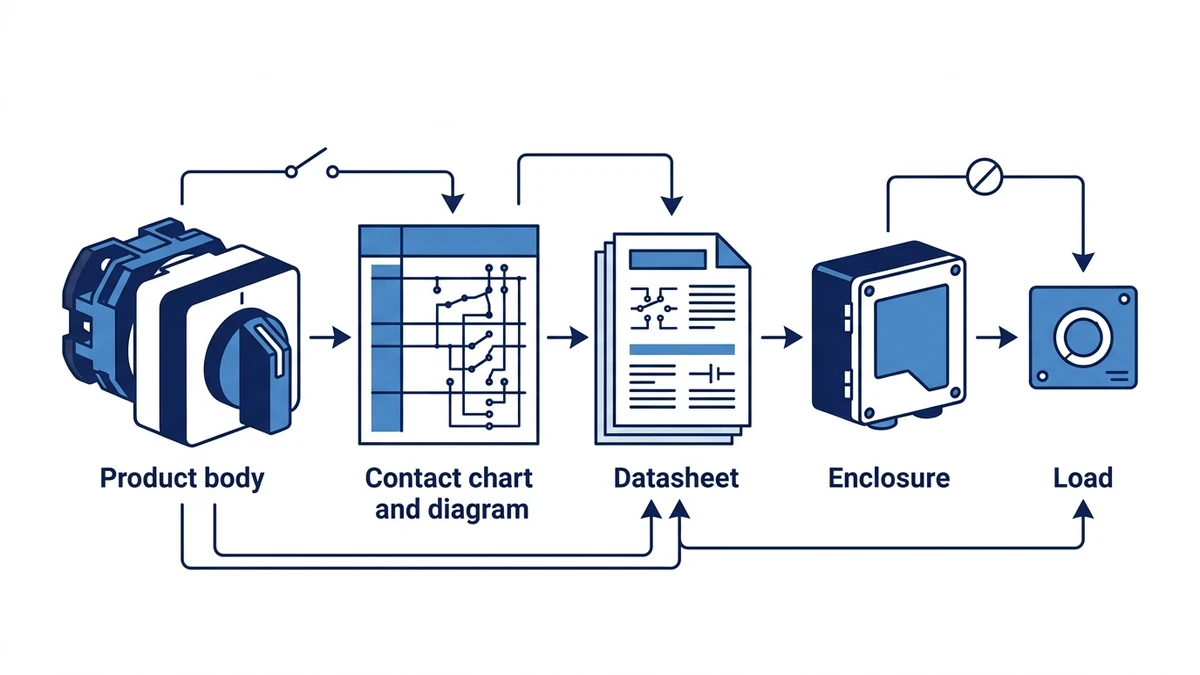
Figura 2. As verificações de seleção devem conectar a carga, a sequência de chaveamento, o gabinete e os requisitos de documentação.
Como fazer a fiação do LW42 para circuitos industriais comuns
Antes de tocar em qualquer fiação, verifique se a fonte está isolada e confirme se a tensão de isolamento listada na folha de dados do LW42 e a corrente nominal correspondem aos requisitos do seu circuito de acordo com a norma IEC 60947-3.
Caso de uso 1: Motor monofásico para frente/desligado/reverso
Essa é uma das aplicações mais comuns para uma chave compacta de várias posições em um painel de controle.
Etapa 1. Monte o LW42 no recorte do painel e prenda a porca da moldura com o valor de torque especificado na folha de dados do produto. Não estime o torque em um atuador vedado - o torque insuficiente compromete a vedação IP65.
Etapa 2. Conecte a fase de entrada (L1) ao terminal de entrada e o neutro (N) ao seu terminal correspondente, seguindo a numeração dos terminais no diagrama do disco de came fornecido com a chave.
Etapa 3. Na posição Forward (Avançar), o came fecha as pontes de contato que alimentam a bobina do contator de avanço do motor. Na posição Reverse (Reversa), o came fecha as pontes que energizam a bobina do contator de reversão. A posição central Off (Desligado) deixa todos os terminais de saída abertos.
Etapa 4. Confirme o intertravamento mecânico entre os contatores de avanço e de reversão. A sequência de comutação do LW42, por si só, não substitui o intertravamento no nível do contator. O interruptor de came controla o caminho do comando; o intertravamento do contator impede a energização simultânea.
Caso de uso 2: seletor de fonte trifásica (principal/desligado/gerador)
Etapa 1. Conecte as três fases principais de alimentação (L1, L2, L3) ao grupo de terminais de entrada em um lado do LW42, seguindo o diagrama do disco de came.
Etapa 2. Conecte as fases de alimentação do gerador ao segundo grupo de terminais de entrada.
Etapa 3. Conecte os terminais de saída ao barramento de distribuição a jusante. Na posição Main (Principal), o came fecha as pontes de contato da alimentação principal. Na posição Generator, ele fecha as pontes de contato da fonte de alimentação do gerador. O detentor Off isola as duas fontes simultaneamente.
Etapa 4. Verifique a resistência de contato em cada ponte fechada com um ohmímetro de baixa resistência antes de energizar e compare a leitura com a faixa de aceitação do fabricante ou com a linha de base do comissionamento. A IEC 60947-3 é o padrão do produto; ela não deve ser tratada como um limite de campo universal para cada chave instalada.
Em um circuito de avanço/desligamento/reversão, sempre conecte o detentor Off como a posição central. Isso força o operador a passar por Off ao mudar de direção, proporcionando uma interrupção natural que protege o motor da inversão direta de fase.
Para o seletor de fonte trifásica, adicione uma etiqueta física na face do painel mostrando qual detentor corresponde a Principal, Desligado e Gerador. Os interruptores de came não têm indicador visual do estado do contato, portanto, a etiqueta é a única confirmação em nível de campo disponível para o pessoal de manutenção.
Aperte os parafusos dos terminais de acordo com o valor especificado pelo fabricante. Os terminais com torque insuficiente podem desenvolver aquecimento por resistência após o comissionamento, especialmente sob vibração.
Depois de refazer a fiação, faça uma verificação de continuidade em cada posição do interruptor antes de reenergizar. Isso captura terminais cruzados que o diagrama do came sozinho não revelará.
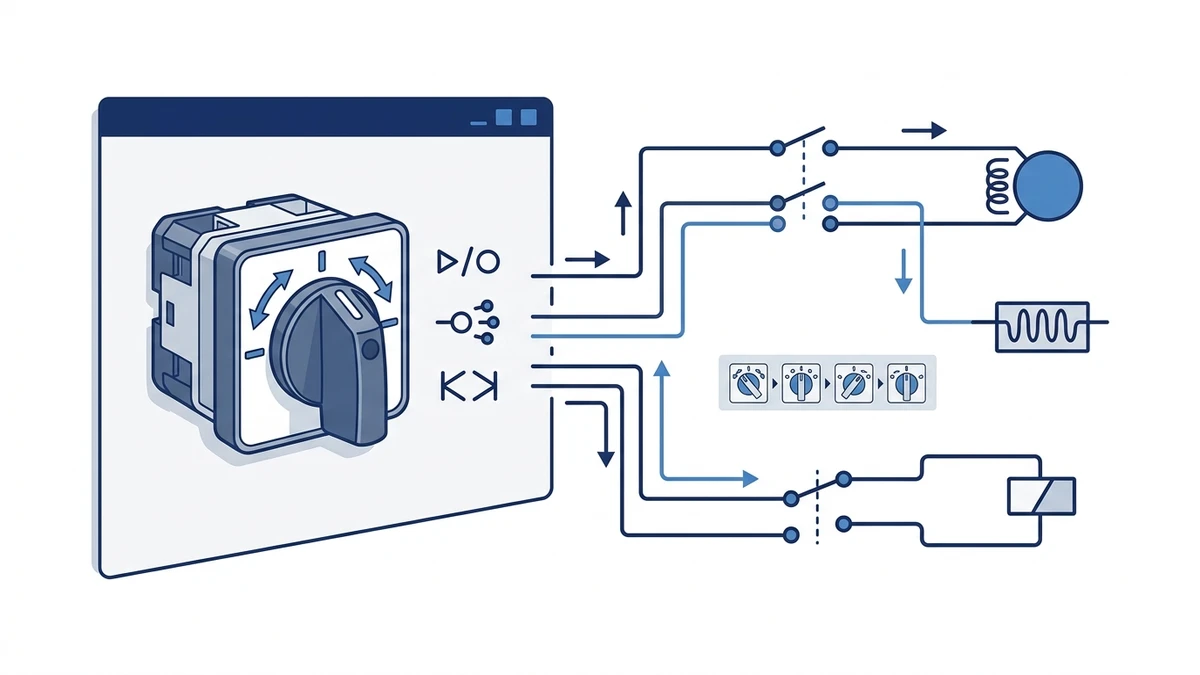
Figura 3. O contexto da fiação da aplicação deve ser verificado com base na tabela de contatos do fabricante antes da energização.
LW42 vs. LW26, LW28 e LW39: Escolhendo a série certa
Tabela de comparação de séries
Critério
LW26
LW42
LW28
LW39
Corrente nominal
Até 20A
Até 20A
Até 63A
Até 32A
Tensão nominal
440V CA
440V CA
690V CA
660V CA
Recorte do painel
22 mm
22 mm ou 30 mm
30 mm
25 mm
Contagem máxima de polos
4P
4P
8P
6P
Material de contato
AgNi
AgNi / AgSnO2
AgSnO2
AgSnO2
Classificação do gabinete
IP40
IP65 (face frontal)
IP65 (face frontal)
IP54
Aplicação típica
Controle de luz, sinalização
Controle de motor compacto, instrumentação
Comutação de motores pesados, painéis MCC
Controle industrial para serviços médios
Categoria de utilização do IEC
AC-21A / AC-22A
AC-22A / AC-23A
AC-23A
AC-22A / AC-23A
Os valores são representativos. Confirme as classificações e certificações atuais na folha de dados do produto relevante antes de especificar.
Como ler a tabela
Não presuma a intercambialidade de recortes entre as séries rotativas compactas; confirme o recorte exato do painel frontal e a profundidade traseira da variante LW42 solicitada antes de reutilizar um layout de painel existente. O principal diferencial é que o LW42 é compatível com a utilização de AC-23A - a categoria IEC 60947-3 que rege a criação e a interrupção de cargas de motor com altas correntes de inrush - enquanto o LW26 é geralmente limitado a cargas resistivas e mistas sob AC-22A.
Para aplicações fora da faixa de configuração de polos ou corrente LW42 compacta, o Série LW28 é o passo a passo adequado. A série de chassis superior selecionada deve ser verificada quanto à tensão necessária, à categoria de utilização e ao material de contato antes do uso em ambientes de centros de controle de motores.
Em um típico painel de controle compacto em que um recorte de 22 mm já foi usinado e a carga é um motor trifásico com menos de 15 A, o LW42 atende ao requisito sem um gabinete maior ou um retrabalho no recorte. É nesse ajuste prático que o LW42 ganha seu lugar no processo de seleção.
Para aplicações em que a função de comutação envolve o isolamento da carga em vez do controle do motor, o o que é uma chave comutadora A página de referência fornece um contexto útil sobre como os comutadores de came se relacionam com outros dispositivos de comutação de isolamento e transferência.
Aplicações típicas do LW42 em painéis de controle compactos
Controle de direção do motor
Em painéis de partida de motores trifásicos, o LW42 é comumente conectado como um seletor de avanço/desligamento/reversão. A sequência do disco de came abre e fecha pares de fases específicas para reverter a rotação do motor sem a necessidade de contatores separados para cada direção. Esse arranjo é típico em acionamentos de transportadores, pequenas estações de bombas e fusos de máquinas-ferramenta em que o operador precisa de controle direto e tátil sobre o estado do motor. As posições de retenção definidas da chave evitam estados intermediários ambíguos que poderiam causar conflitos de fase.
Comutação de transferência local/remota
Os painéis de controle que aceitam comandos de botões locais e sinais remotos do PLC geralmente usam um LW42 como chave de transferência local/remota. Nesse contexto de circuito, os contatos do came interrompem o caminho de comando do PLC quando a chave está no modo local e desconectam o circuito do botão de pressão local quando está no modo remoto. Isso evita que fontes de comando simultâneas entrem em conflito. Para painéis construídos de acordo com a norma IEC 60947-3, esse tipo de chave seletora deve interromper de forma confiável o circuito de controle na tensão nominal de isolamento sem solda de contato sob cargas indutivas.
Seleção de ventilador ou bomba de várias velocidades
Os painéis de HVAC e de ventilação de processos frequentemente usam o LW42 como seletor de velocidade para motores com vários enrolamentos. Cada posição do interruptor conecta um tap de enrolamento diferente - normalmente baixa, média e alta velocidade - enquanto a geometria do came garante que apenas um enrolamento seja energizado por vez. Essa função de intertravamento é incorporada ao perfil do came em vez de depender da lógica do relé externo, o que reduz o número de componentes em gabinetes compactos.
Seleção de fase do voltímetro e do amperímetro
Nos painéis de medição, um LW42 configurado como chave seletora de fase encaminha tensões ou correntes de fase individuais para um único medidor montado no painel. Um seletor de voltímetro típico de 7 posições abrange L1-N, L2-N, L3-N, L1-L2, L2-L3, L3-L1 e desligado - tudo em uma única chave. Essa é uma alternativa eficiente em termos de espaço para a instalação de três medidores separados e é uma configuração comum em quadros de distribuição em que o LW42 precisa lidar com correntes secundárias contínuas do transformador de medição sem aquecimento de contato.
Para painéis que exigem uma faixa de comutação mais ampla ou maior número de polos, o Série LW28 oferece uma plataforma alternativa de interruptor de came que vale a pena avaliar junto com a LW42.
Figura 4. Uma consulta completa deve incluir a classificação, a sequência de contatos, a montagem, o invólucro e os requisitos de documentação.
Seleção e fornecimento da configuração correta de LW42
A escolha da configuração correta do LW42 antes da aquisição evita retrabalho dispendioso e redesenho do painel. Use a lista de verificação abaixo para combinar os requisitos de sua aplicação com uma variante específica.
Lista de verificação de seleção
Contagem de polos e topologia do circuito - Confirme se sua aplicação requer comutação de 1 polo, 2 polos, 3 polos ou 4 polos. Os circuitos de reversão do motor normalmente precisam de uma configuração de 3 polos e 3 posições.
Classificação de corrente - Verifique se a corrente de carga contínua permanece dentro de 80% do valor nominal para permitir margem térmica. Não se baseie apenas na classificação da placa de identificação; verifique a curva de redução na folha de dados para a temperatura ambiente da instalação.
Posições de comutação - Identifique o número necessário de posições e se uma posição centralizada é necessária para isolamento ou serviço de troca.
Recorte do gabinete e do painel - Confirme a profundidade do painel disponível e a folga da face frontal antes de fazer o pedido. As variantes de 22 mm e 30 mm não são intercambiáveis, e a vedação da moldura que fornece proteção IP65 é dimensionada para o recorte.
Categoria de utilização - Para cargas resistivas, aplica-se AC-21A. Para chaveamento de motores, especifique AC-23A de acordo com a IEC 60947-3 para garantir a capacidade adequada de abertura e fechamento.
Programa do disco de came - Solicite o código correto do disco de came para sua sequência de comutação. Para um circuito de avanço/desligamento/reverso, o disco de came deve trocar duas das três conexões de fase entre as duas posições externas enquanto abre todos os polos no centro. Compare o diagrama de polos com o esquema de seu circuito antes de fazer o pedido.
Certificações necessárias - Confirme se a marcação CE, CCC ou outras certificações regionais são necessárias para seu mercado-alvo. Solicite os relatórios de teste relevantes à Shieldhz na fase de aquisição.
Onde obter
Para obter especificações verificadas e opções de configuração, o Página da série de chaves de came rotativo LW42 fornece parâmetros nominais, diagramas de polos e códigos para pedidos. Se a sua aplicação envolver componentes de painel adjacentes, a linha mais ampla de chaves de came rotativas abrange séries complementares, incluindo LW28 e SH30, para referência cruzada.
Para consultas sobre compras ou suporte à configuração de OEM, entre em contato diretamente com a equipe de engenharia da Shieldhz para confirmar prazos de entrega, programas de discos de cames personalizados e opções de montagem em painel. Solicite a folha de dados atual e todos os certificados de teste aplicáveis ao mesmo tempo - ter esses documentos em arquivo antes do início da montagem do painel evita disputas de especificação durante a inspeção.
Como a Shieldhz confirma uma seleção LW42
A Shieldhz trata a seleção do LW42 como uma verificação de engenharia de troca compacta, e não como um pedido genérico de chave seletora. A equipe técnica e de vendas confirma a rota exata de 20A, 25A ou 32A, o programa de contato necessário, o desenho de montagem, o formato da alça, a categoria de utilização e se a aplicação é um seletor simples, um seletor de medição, um circuito de avanço/desligamento/reverso ou um serviço de comutação compacto.
Ao solicitar uma cotação de LW42, inclua a função do circuito, o número de posições, o número de polos, os limites de espaço do painel, a tensão de operação, o tipo de carga e qualquer requisito de documentação CE, UL, CCC, TUV ou outro. Isso fornece à Shieldhz informações suficientes para retornar uma recomendação de número de peça com um desenho e uma tabela de contatos, em vez de deixar que o fabricante do painel deduza a lógica de comutação a partir de um título de catálogo.
Perguntas frequentes
Qual é a diferença entre uma chave de came rotativa e uma chave seletora padrão?
Uma chave de came rotativa usa um disco de came perfilado para abrir e fechar vários circuitos de contato independentes em uma sequência definida em várias posições. Uma chave seletora padrão normalmente opera um único conjunto de contatos entre dois estados. Isso faz com que a chave de came seja a escolha adequada quando uma única ação do operador precisa controlar simultaneamente vários caminhos de circuito, como a reversão de um motor trifásico ou a seleção entre fontes de alimentação.
O LW42 pode ser usado como um isolador principal para um circuito de motor?
O LW42 é classificado de acordo com a norma IEC 60947-3 para o serviço de chave seccionadora em AC-23A, que abrange a abertura e o fechamento da carga do motor. Se ele se qualifica como o único dispositivo de isolamento depende das normas locais de fiação e da classificação da corrente de falha da instalação. Sempre verifique a corrente de curto-circuito prevista no ponto de instalação em relação à corrente de curto-circuito condicional nominal da chave antes de usá-la como isolador principal. Esse valor está listado na folha de dados do produto e deve ser confirmado com a Shieldhz para a variante específica solicitada.
Quantos ciclos de operação uma LW42 pode suportar antes de ser necessária a substituição do contato?
O LW42 é classificado para um número definido de ciclos de operação mecânica sob condições de teste padrão - confirme o número exato na folha de dados atual, pois ele varia de acordo com a configuração do contato. A vida útil real em aplicações de chaveamento de motores pode ser menor se o interruptor for operado em sua capacidade de interrupção AC-23A ou próximo a ela em cada ciclo, pois a erosão do arco se acumula mais rapidamente em condições de carga indutiva. As medições da sensação de detonação e da resistência de contato em intervalos de manutenção programados são indicadores mais confiáveis da vida útil restante do que apenas a contagem de ciclos.
Qual é o tamanho do corte do painel exigido pelo LW42?
O LW42 está disponível em variantes que usam um recorte de painel redondo de 22 mm ou 30 mm, dependendo do modelo específico solicitado. Confirme o diâmetro do recorte na folha de dados do produto antes da usinagem. Os dois tamanhos não são intercambiáveis, e a vedação da moldura que fornece a proteção IP65 é dimensionada para o recorte.
O LW42 é adequado para gabinetes externos?
A vedação do atuador frontal do LW42 tem classificação IP65 de acordo com a norma IEC 60529, que protege contra a entrada de poeira e jatos de água de baixa pressão. Para instalações externas ou ambientes de lavagem, as conexões dos terminais na parte traseira do switch não são cobertas por essa classificação. É necessário um gabinete com classificação separada para proteger o lado da fiação. O Faixa do interruptor de came rotativo inclui orientações sobre o emparelhamento de gabinetes para diferentes ambientes de instalação.
O que é a categoria de utilização AC-23A e por que ela é importante para a comutação do motor?
AC-23A é a categoria de utilização da norma IEC 60947-3 para comutação de cargas de motores, definida pela capacidade de gerar e interromper correntes com alto conteúdo indutivo - normalmente até 10 vezes a corrente nominal na geração. A especificação de um interruptor classificado apenas como AC-21A ou AC-22A para o serviço do motor pode causar soldagem por contato ou erosão acelerada, pois essas categorias não são testadas com os mesmos níveis de energia de arco. Sempre confirme a categoria de utilização na placa de identificação e na folha de dados da chave antes de instalá-la em um circuito de motor.
Como faço para selecionar o programa correto do disco de cames para uma aplicação de avanço/retrocesso?
Um circuito trifásico de avanço/desligamento/reverso requer um programa de disco de came de 3 polos e 3 posições, em que a posição central abre todos os polos e as duas posições externas trocam duas das três conexões de fase. O código específico do disco de came para esse programa está listado na documentação do produto LW42. Encomendar o programa errado é o erro de configuração mais comum na aquisição de chaves de came. Verifique o diagrama de polos em relação ao esquema do circuito antes de fazer o pedido e solicite a confirmação da Shieldhz se a aplicação envolver uma sequência de comutação fora do padrão.
Shi, Muxi
Shi, Muxi escreve artigos técnicos da Shieldhz para compradores de controle industrial e componentes elétricos, abrangendo chaves de came rotativas, chaves isoladoras, seccionadores PV DC, botões de pressão, luzes indicadoras, gabinetes à prova d'água e blocos de terminais. Os artigos são baseados na experiência de fabricação e exportação da Zhejiang Shihe Electric Co., Ltd., com ênfase prática na seleção de modelos, planilhas de dados, desenhos, certificações, classificações de IP e detalhes de consulta que os compradores devem confirmar antes de fazer o pedido.