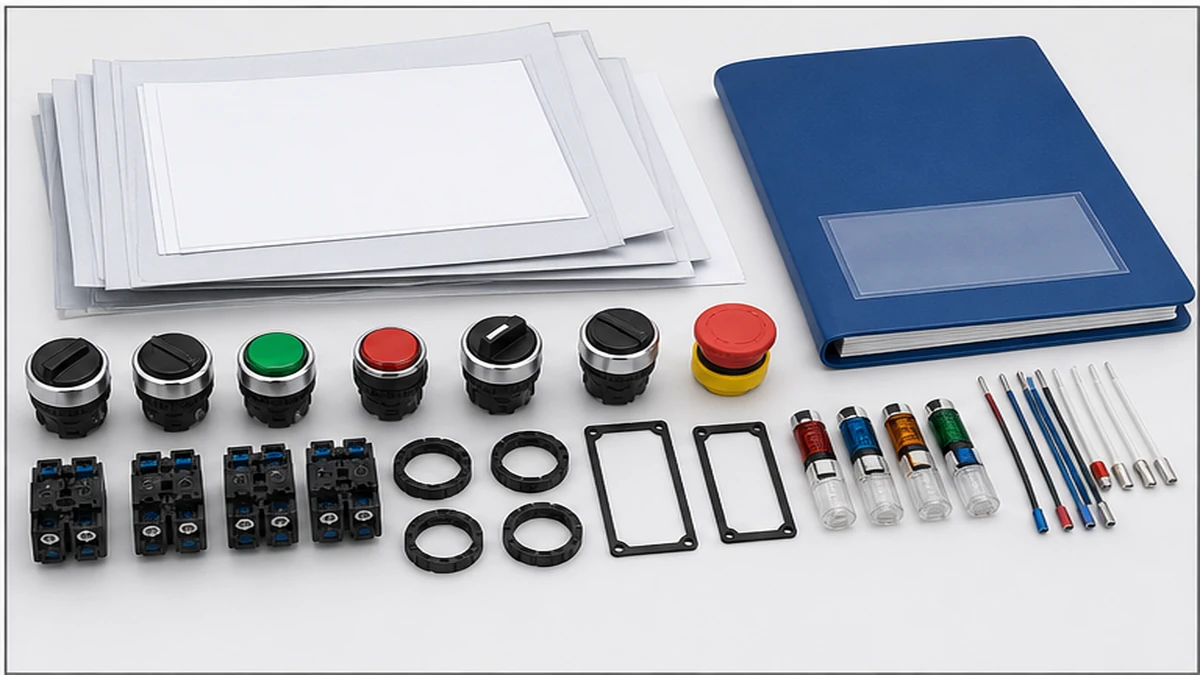
Panel builders who collect seven data points before requesting a quote eliminate the majority of component mismatches that stall final wiring: operating voltage and current rating, actuator type, contact configuration, mounting hole diameter, IP protection rating, legend or labeling requirements, and the applicable certification standard for the destination market. Missing even one of these fields creates revision cycles that cost hours on the floor. This checklist walks through every stage of a push button and indicator light specification, from initial electrical parameters through supplier sample evaluation, so your bill of materials is locked before any hardware ships.
Scope boundary: This checklist is an inquiry and model-confirmation tool, not a generic price list. Final model route, certificate scope, and delivery details depend on the confirmed datasheet, drawing, and documentation package.
Electrical Parameters: Where Every Quote Must Start
the applicable control-device standard governs low-voltage control circuit devices including push buttons and pilot lights. It defines rated operational voltage, rated operational current, and utilization categories that directly determine whether a contact can reliably make and break the load connected to it.
For push buttons in industrial control panels, utilization category AC-15 applies to circuits that switch inductive AC loads such as contactors and solenoid valves. DC-13 applies to inductive DC loads such as DC electromagnets. The distinction matters because breaking capacity differs significantly between AC and DC at equivalent voltage levels, and a contact selected on continuous current rating alone without verifying the utilization category can weld or wear prematurely under switching duty.
For indicator lights, the supply voltage — commonly 24V DC, 110V AC, or 230V AC — determines lamp holder compatibility and whether an integrated resistor or internal transformer is required inside the lamp body. LED forward current is typically in the low-milliamp range but varies between product families; confirm the exact value against each model’s datasheet rather than relying on wattage alone, because LED driver behavior differs between manufacturers even when the stated wattage is identical.
Pre-RFQ electrical checklist:
Operating voltage and tolerance band confirmed
Utilization category per the applicable control-device standard identified (AC-15 or DC-13)
Contact configuration listed per position (NO, NC, or NO+NC)
Indicator lamp type, supply voltage, and rated current recorded
Panel cutout diameter is the first dimensional constraint that must be locked before any other specification is evaluated. The dominant formats in industrial control panels are 22 mm and 30 mm. Specifying the wrong diameter at quote stage results in scrapped panels or field rework that adds hours per enclosure.
Beyond cutout diameter, the following mechanical parameters must be explicitly stated in every quote request:
Actuator style. Flush, extended, mushroom-head, and key-operated operators each occupy different panel depth and present different ergonomic profiles to the operator. IEC 60073 defines color-coding conventions for actuators and indicators; confirm that actuator color assignments match the function designations in IEC 60204-1 before ordering.
Operator type. Momentary, maintained, and key-return types are not interchangeable after assembly. State this explicitly — it is one of the most common omissions on quote requests.
Contact block program. In most modular push button systems, the actuator head and the contact block are ordered and assembled as separate components. Actuator type and contact configuration must therefore be stated independently. Receiving the wrong contact block on a 40-unit order can stall final wiring by several days.
Panel thickness range. Confirm that the bushing thread length clears the actual panel material thickness — typically 1.5 mm to 3 mm for steel enclosures, though this varies. Bushings that bottom out before clamping the panel create loose operators that fail vibration tests.
Bezel projection depth. Confirm that the actuator projection does not conflict with door gaskets or adjacent components in tight enclosure layouts.
Mechanical and enclosure checklist:
Cutout diameter (22 mm or 30 mm) matched to the enclosure punch schedule
Actuator style and operator type (momentary, maintained, key) confirmed
Contact block configuration (NO/NC/NO+NC) stated per position
Panel material and thickness range recorded
Bezel projection depth verified against enclosure layout
IP Rating and Environmental Requirements
Ingress protection rating per IEC 60529 is a selection filter that must be applied before price is considered for any panel installed in a wet, dusty, or washdown environment.
IP65 provides protection against low-pressure water jets from any direction and is the practical minimum for most industrial panel fronts exposed to coolant mist or routine cleaning sprays. IP67 adds temporary immersion capability. High-pressure cleaning environments in food and beverage processing may require IP69K — verify the specific jet pressure and distance in your cleaning procedure before finalizing the selection, because IP69K and IP67 are not interchangeable in their test methodology.
A critical point that is frequently overlooked: the assembled IP rating with the operator and contact block fitted must be confirmed, not the individual ratings of sub-components. An operator head rated IP67 mounted on a contact block rated IP20 does not produce an IP67 assembly. Request the assembled test report for the specific product configuration.
Environmental and certification checklist:
IP rating requirement documented against the installation environment
Assembled IP rating confirmed (operator plus contact block, fully mounted)
Certification requirements declared: CE, UL, CCC, RoHS, UKCA, or others
Destination market compliance confirmed before order placement, not after
Color Coding, Legends, and Illumination Specifications
Operator color and legend text are safety-critical specifications, not cosmetic choices. IEC 60204-1 (Safety of Machinery: Electrical Equipment of Machines) and NFPA 79 (Electrical Standard for Industrial Machinery) both assign specific functions to each actuator and indicator color. A panel that misassigns red to a start function or green to a stop function can fail inspection and create genuine operator hazard during emergencies.
Standard color assignments:
Cor
IEC 60204-1 Function
NFPA 79 Function
Uso típico
Vermelho
Stop, emergency off, danger
Stop / Emergency stop
E-stop buttons, fault indicators
Yellow / Amber
Abnormal condition, caution
Abnormal / Warning
Alarm lights, overload signals
Verde
Start, safe, normal condition
Start / Normal
Run buttons, ready indicators
Azul
Mandatory action
Mandatory action
Reset functions requiring operator acknowledgment
Branco
No specific safety meaning
General / Neutral
Power-on pilot lights, general commands
Black
No specific safety meaning
General / Neutral
General use where color is unassigned
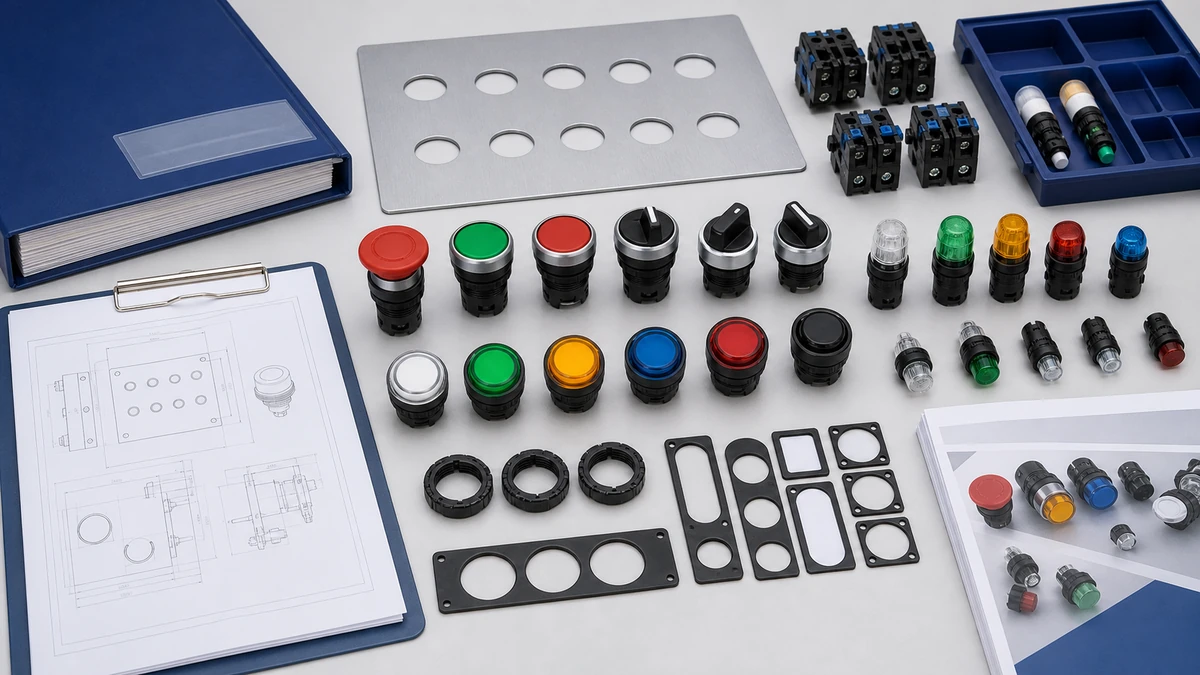
Figura 2. As verificações de seleção devem levar em conta o tamanho do operador, o tipo de contato, a tensão da lâmpada, a cor, a classificação IP, o recorte do painel e a documentação.
Legend text should be engraved or UV-resistant printed. Character height of at least 3 mm is the practical minimum for legibility at a 500 mm viewing distance in typical panel environments. Confirm legend content and language requirements at quote stage — custom engraving adds lead time and is not reworkable after the panel is wired.
For illuminated operators and standalone indicator lights, state the following explicitly in the quote request:
LED supply voltage and any required internal resistor configuration
Lens color per the IEC 60204-1 color assignment for that circuit function
Whether the lamp holder accepts a field-replaceable LED module or is a sealed unit
Rated forward current in milliamps (not just wattage)
On panels that mix 24V DC logic circuits with 110V AC or 230V AC power circuits, order indicator lights with voltage-specific lamp holders. Integrated resistor values differ between voltage variants, and cross-fitting causes premature LED failure that is difficult to diagnose in the field. Part number suffixes often encode lens color and voltage; confirm the full model code at quote stage and record it in the BOM.
Illumination and legend checklist:
LED supply voltage and forward current (mA) confirmed per position
Lens color matched to IEC 60204-1 function assignment
Legend text, language, and character height specified
Lamp replaceability requirement documented
Non-standard lens colors flagged for lead time confirmation
The Complete Quote Checklist: Stage-by-Stage
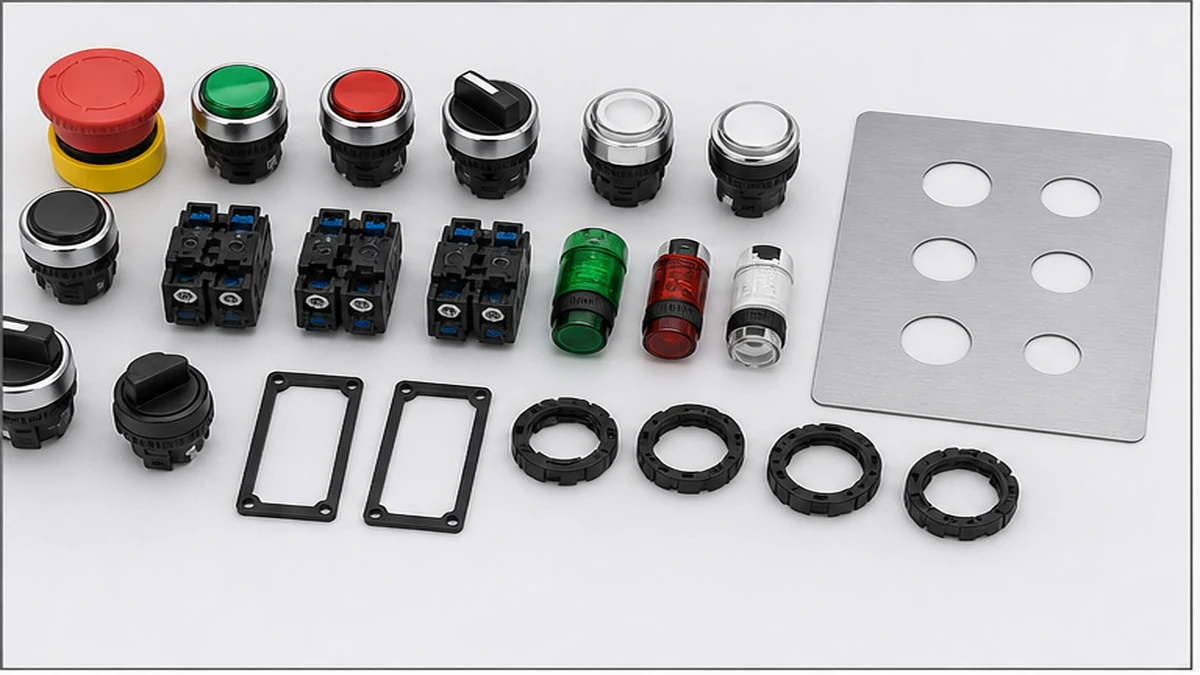
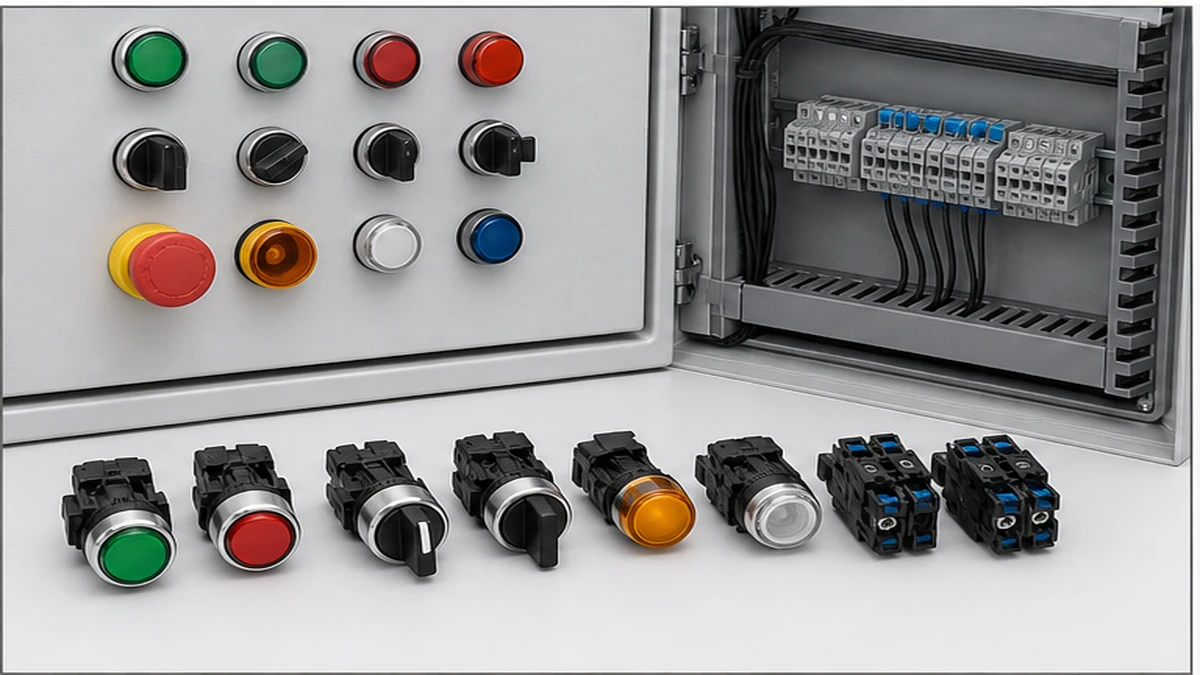
Figura 3. O contexto da fiação da aplicação deve ser verificado com base na tabela de contatos do fabricante antes da energização.
Stage 1: Pre-RFQ Electrical Parameters
Capture all electrical parameters before contacting any supplier. Incomplete electrical data at this stage is the single most common source of component reorder cycles.
Operating voltage and tolerance band confirmed (e.g., 24V DC, 110V AC, 230V AC)
Utilization category per the applicable control-device standard identified (AC-15 or DC-13)
Rated current per position confirmed
Contact configuration (NO/NC/NO+NC) listed per position
Indicator lamp supply voltage, current, and type recorded
Stage 2: Mechanical and Enclosure Fit
These parameters define physical compatibility with the enclosure and cannot be corrected after punching.
Cutout diameter (22 mm or 30 mm) matched to enclosure layout
IP rating requirement documented per installation environment
Assembled IP rating confirmed for operator-plus-contact-block combination
Stage 3: Color, Legend, and Illumination
Safety-critical specifications that drive compliance inspection outcomes.
Actuator and indicator colors confirmed against IEC 60204-1 assignments
Legend text, language, and character height specified
LED supply voltage, forward current, and lens color confirmed per position
Non-standard colors flagged for lead time and availability
Stage 4: Certification and Order Documentation
Do not approve a purchase order without this documentation in hand.
CE, UL, CCC, RoHS, or UKCA requirements declared and matched to model code
EU Declaration of Conformity received and filed (for CE-marked panels)
Test report referencing the applicable control-device standard on file
Dimensional drawing with panel cutout dimensions received
Wiring diagram received and verified against the panel schematic
BOM part numbers matched against datasheet model code suffixes
Five Quote Errors That Stall Panel Builds
The following errors appear repeatedly in panel build post-mortems. Each is preventable at the quote stage with the checklist above.
#
Quoting Mistake
Consequence
Correct Practice
1
Omitting operating voltage and rated current
Components arrive rated for 24V DC on a 110V AC circuit, forcing reorder and rewire
Specify nominal voltage and rated current on every line item before requesting price
2
Skipping IP rating
Standard IP40 push buttons installed in washdown zones fail ingress tests under IEC 60529
Confirm installation environment first; select IP65 or IP67 where moisture or dust applies
3
Leaving contact configuration undefined
Wrong contact blocks ship; reassembly adds hours per panel
Reference the contact program table from the product datasheet; state NO/NC/NO+NC per position
4
Omitting LED voltage and lens color
Mismatched LED supply voltages cause immediate field failure; wrong lens color fails inspection
List LED voltage, milliamp draw, and lens color per circuit function; match against the full model suffix
5
Missing cutout diameter and bezel projection
22 mm bodies ordered when the enclosure is punched for 30 mm; rework requires new drilling or new panels
Record panel cutout diameter before finalizing quantities
When a supplier quote references a model code that does not appear in their published datasheet, treat it as a non-standard variant. Request confirmation of lead time, minimum order quantity, and whether existing certifications apply to that specific suffix before committing to a panel delivery date. Non-standard lens colors frequently carry extended lead times that do not appear in standard catalog pricing; confirm availability in writing.
How Shieldhz Processes Push Button and Indicator Light Quote Requests
Shieldhz is the export brand of Zhejiang Shihe Electric Co., Ltd., founded in 2014 and based in Yueqing, Zhejiang. The company operates a factory of over 5,000 square meters with more than 100 employees and 40-plus production machines. Available certifications include ISO 9001, CE, RoHS, TUV, UL, UKCA, CCC, and CB, matched to specific product models and export markets.
When a quote request arrives, Shieldhz engineers review each line item against the buyer’s stated panel environment before any pricing is generated. The input validation step confirms: actuator type and operator mode, contact configuration and contact program table, rated operating voltage and utilization category (AC-15 or DC-13 per the applicable control-device standard), body diameter and panel cutout, IP rating requirement, and LED lamp voltage and lens color for indicator light positions.
For indicator light requests, the review also confirms whether the lamp holder accepts a field-replaceable module or is a sealed unit, because this affects long-term maintenance planning in the field.
Certification and compliance confirmation is built into the quote workflow rather than handled separately at order placement. If a buyer’s specification requires UL-listed components for a North American panel, or UKCA documentation for a UK installation, the applicable certification is matched to the confirmed model code at quote stage. Discrepancies between the requested certification and available documentation are flagged before pricing is issued.
The documentation package delivered with the confirmed quote includes: dimensional drawings with panel cutout dimensions, wiring diagrams, rated data tables, and certificate copies matched to the destination market. This allows panel builders to complete BOM review and enclosure layout simultaneously rather than waiting for post-order documentation.
For panels that also include rotary switching devices, the push button selection reference covers multiple frame sizes and contact programs that integrate with standard panel layouts. The SH-B2 push button route and GQ metal push button route are commonly specified alongside push button and indicator light arrays in motor control and distribution panels. Understanding selector switch reference is useful background when specifying these devices in the same panel build — the standard applies to switches, disconnectors, switch-disconnectors, and fuse-combination units for distribution and motor circuits with rated voltage up to 1000V AC or 1500V DC, as defined in official IEC control-device publication.
Submit your panel specification, including the completed checklist fields above, through the Shieldhz inquiry channel to receive a validated quote with full documentation.
Supplier Sample Evaluation Before Production Release
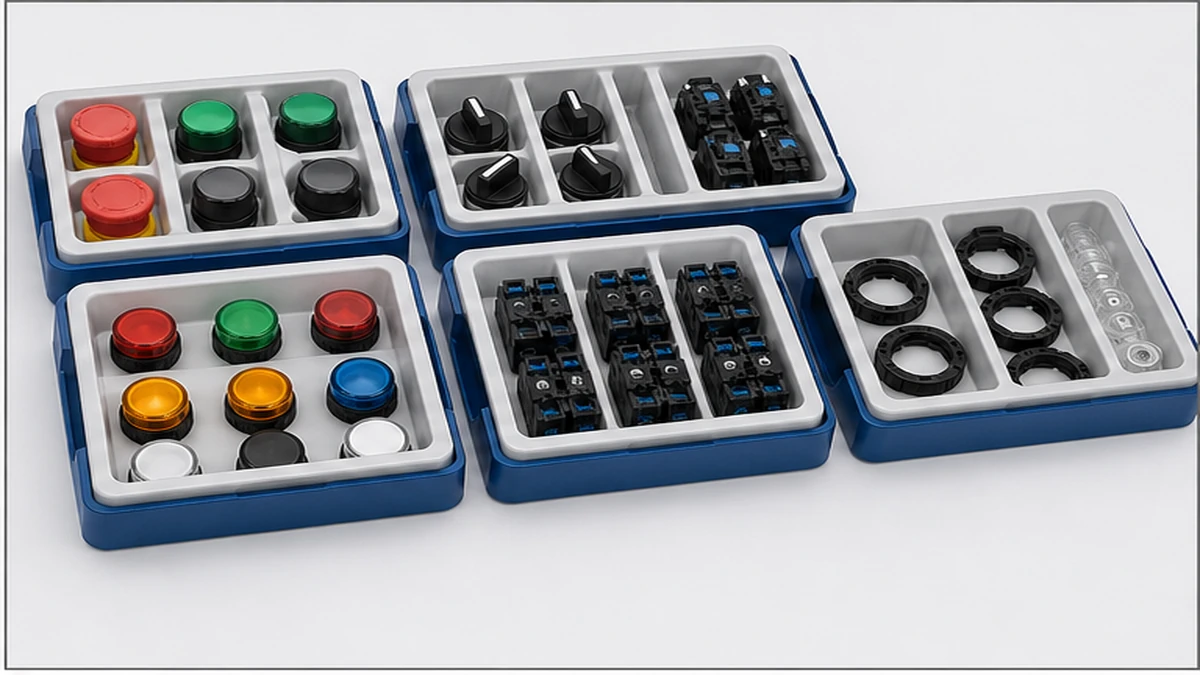
Figura 4. Uma consulta completa deve incluir a classificação, a sequência de contatos, a montagem, o invólucro e os requisitos de documentação.
Never approve a production order from a new supplier without evaluating a sample set against the following checks. The time invested at sample stage eliminates field failures that are exponentially more expensive to remedy after panels are installed.
Dimensional and Mechanical Checks
Measure panel cutout diameter against the specified value and confirm the tolerance is consistent. Check that actuator travel is smooth and return is positive with no perceptible sticking. Operate each actuator 20 to 30 times by hand and confirm the action remains consistent with no bezel loosening or IP seal deformation. Verify that the bushing thread length provides full clamping engagement at your panel’s actual material thickness.
Electrical Contact Checks
Using a low-resistance ohmmeter, measure contact resistance across NO and NC terminals with the actuator fully depressed. Accept only results consistent with the applicable control-device standard requirements for the rated utilization category — confirm the acceptance threshold against the product datasheet rather than applying a generic value. For indicator lights, apply rated voltage and measure forward current draw, confirming it falls within the tolerance stated on the sample datasheet.
IP Rating and Seal Verification
For panels destined for washdown or outdoor enclosures, request an IP65 or IP67 test report issued for the specific assembled configuration — not a generic model family certificate. Examine the front-seal gasket for uniform compression after a timed test consistent with the IP67 protocol under IEC 60529. Any gap in the seal impression is a rejection criterion.
LED Color and Binning Consistency
Energize all indicator light samples simultaneously and evaluate color uniformity side by side across units of the same specified color. Visible wavelength shift between units indicates inconsistent LED binning. Reject samples showing inconsistency and request replacements specified to a tighter bin range, documented in the supplier’s quality record for the batch.
Perguntas frequentes
What is the difference between AC-15 and DC-13 utilization categories for push buttons?
AC-15 applies to push buttons switching inductive AC loads such as contactors and solenoid valves. DC-13 applies to inductive DC loads such as DC electromagnets. Breaking capacity differs significantly between AC and DC circuits at equivalent voltages, and selecting the wrong category can cause premature contact wear, contact welding, or erratic operation under switching duty. Confirm the utilization category against the applicable control-device standard and the specific product datasheet before finalizing your selection.
Which IP rating should I specify for a food and beverage washdown panel?
Most food and beverage washdown environments require at minimum IP65 for resistance to directed water jets. High-pressure cleaning lines may require IP69K depending on jet pressure and distance. Verify the specific cleaning procedure in your facility before finalizing the selection, because IP69K and IP67 are distinct test protocols under IEC 60529 and are not interchangeable. The assembled IP rating with operator and contact block fitted must be confirmed — not the rating of individual sub-components.
Can I mix 22 mm and 30 mm push buttons on the same panel?
Mixing cutout sizes is technically possible but adds complexity to enclosure punching, layout planning, and spare-parts stocking. Most panel builders standardize on one series per project to reduce tooling changes and simplify reorder management. If mixing is unavoidable, document both cutout dimensions in the BOM and confirm them with the enclosure manufacturer before fabrication begins.
How do I verify that an LED indicator light will achieve its rated service life?
Rated LED service life is based on junction temperature and drive current both remaining within the manufacturer’s specified limits throughout operation. Exceeding rated voltage or operating above the maximum ambient temperature accelerates lumen depreciation and shortens usable life below the rated figure. Request the thermal derating curve from the product datasheet and confirm that your installed ambient temperature falls within the acceptable operating range before approving the selection.
What documentation should I receive with a push button order for a CE-marked panel?
At minimum, the supplier should provide the EU Declaration of Conformity, a test report referencing the applicable control-device standard, dimensional drawings with panel cutout dimensions, and a wiring diagram. If the panel is also subject to RoHS Directive 2011/65/EU, a separate RoHS declaration of conformity must accompany the order. File all documentation against the purchase order number at the time of receipt, not after delivery — panels that move to final wiring without accessible documentation create delays during compliance audits.
Why must contact configuration be stated separately from actuator type?
In most modular push button systems, the actuator head and the contact block are specified and ordered as separate components that are assembled at installation. Actuator type defines the operator function (momentary, maintained, key-return), while contact configuration defines the switching circuit (NO, NC, or NO+NC). Omitting either means the supplier cannot assemble a complete, functional unit. Receiving the wrong contact block on a multi-unit order is one of the most time-consuming single-component errors to correct mid-build.
Is LED lens color a functional specification or a cosmetic choice?
Lens color is a functional safety specification under both IEC 60204-1 and NFPA 79. Each color maps to a defined machine state or operator instruction — red for stop and emergency functions, green for run and safe conditions, yellow or amber for abnormal conditions, and so on. Ordering an incorrect lens color can result in a panel failing inspection and, in some installation contexts, requires lens replacement and rewiring of the associated indicator circuit to correctly represent the machine state. Always confirm lens color assignments against the applicable standard before finalizing the quote.
Shi, Muxi
Shi, Muxi escreve artigos técnicos da Shieldhz para compradores de controle industrial e componentes elétricos, abrangendo chaves de came rotativas, chaves isoladoras, seccionadores PV DC, botões de pressão, luzes indicadoras, gabinetes à prova d'água e blocos de terminais. Os artigos são baseados na experiência de fabricação e exportação da Zhejiang Shihe Electric Co., Ltd., com ênfase prática na seleção de modelos, planilhas de dados, desenhos, certificações, classificações de IP e detalhes de consulta que os compradores devem confirmar antes de fazer o pedido.