Inverter-Integrated vs External PV DC Isolator: Documentation and Service-Access Trade-Offs
Use a practical buyer checklist to evaluate inverter integrated vs external pv dc isolator inputs, documentation, approval controls and the exact PV DC isolator switch route.
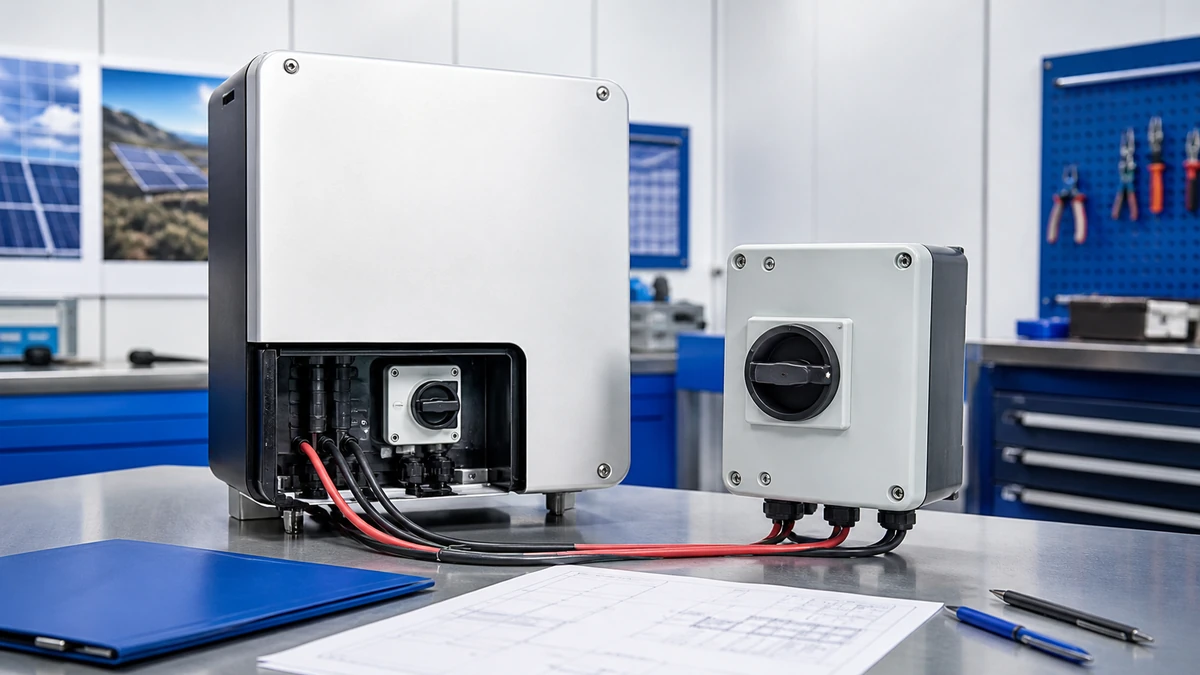
For the inverter integrated vs external pv dc isolator decision, the practical difference is not a universal placement rule. It is who owns the isolator documentation, how service teams access the device, and how easily procurement can verify the exact model evidence package.
Confirm whether the isolator is documented as part of the inverter assembly or as a separate purchasable component.
Compare service access, drawing responsibility, replacement path and marking requirements before comparing unit price.
Verify voltage, current, pole arrangement, enclosure, mounting and certificate requests against the exact current model documentation.
Why this decision is about documentation ownership, not a universal placement rule
The right comparison is to decide who controls the isolator evidence pack and who can access it during service, while leaving placement to the buyer’s equipment design and applicable destination-market requirements.
An inverter-integrated device may be covered inside the inverter maker’s documentation set. An external PV DC isolator usually needs its own drawing, datasheet references, marking details and installation interface controlled by the panel builder, OEM or distributor.
Evidence boundary for switch documentation
The relevant product evidence should stay tied to the exact model and declared application. IEC describes the IEC 60947-3 scope as switches, disconnectors, switch-disconnectors and fuse-combination units within stated distribution- and motor-circuit AC/DC limits.
That scope statement does not replace model-specific ratings, drawings, destination-market requirements or the buyer’s equipment validation. For document review structure, use the PV DC isolator documentation checklist as a buying control, not as a substitute for current product evidence.
Commercial question to settle first
Before comparing model routes, decide whether your procurement file needs a separate isolator line item. If the isolator is integrated into the inverter, your evidence trail may follow the inverter supplier. If it is external, the isolator supplier and panel builder normally need clearer interface control.
An exact drawing identifies the interfaces that must be controlled for the approved model route.
Buyer decision
Inverter-integrated route
External PV DC isolator route
Documentation owner
Often tied to inverter documentation
Separate component documentation is normally required
Service access review
Reviewed through inverter service plan
Reviewed through panel or enclosure access plan
Drawing responsibility
Usually inside inverter assembly drawings
Usually requires interface drawings from the panel builder or OEM
Replacement path
May depend on inverter supplier procedure
May be managed as a separate component, subject to exact model availability
Quotation evidence
Inverter package may be primary
Datasheet, drawing and certificate package should be requested for the switch route
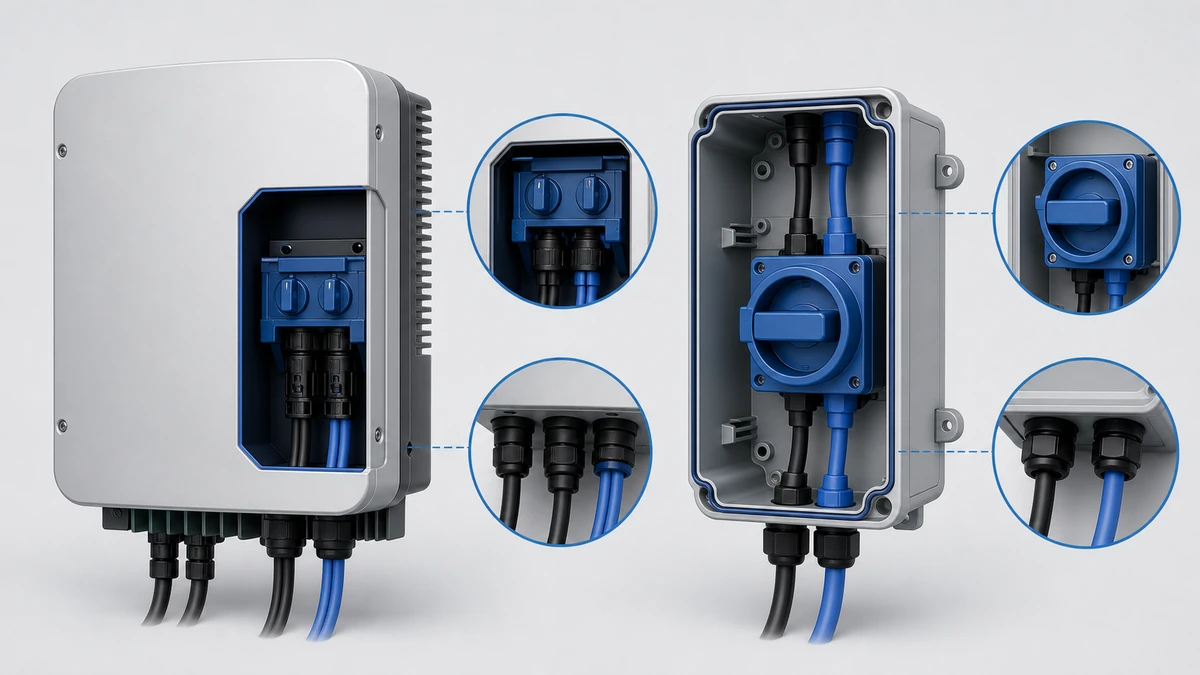
Inverter-integrated PV DC isolator: service-access trade-offs
An inverter-integrated PV DC isolator can reduce separate component handling, but it also ties service access and replacement evidence to the inverter assembly.
This route can be attractive when the buyer wants fewer external device interfaces and prefers one equipment package from the inverter supplier. The trade-off is that the service team may need to follow inverter-specific access procedures and documentation controls.
When integrated access can simplify service planning
Integrated access can simplify purchasing records when the inverter maker provides the needed drawings, markings and service instructions in one package. It can also reduce separate enclosure design work for the panel builder.
This benefit is only useful if the inverter package provides enough evidence for the buyer’s market and application. Procurement should not assume that all documentation needed for the final equipment file is automatically included.
Where integrated access can complicate replacement
If the isolator is not treated as a separately documented spare, replacement may depend on the inverter supplier’s service route. The buyer should check whether drawings, spare-part references and markings are visible enough for maintenance and audit records.
A practical service review should include:
Confirm whether the isolator is separately identified in the inverter documentation.
Ask whether the service procedure allows component-level replacement or only inverter-level service.
Verify how markings, model references and revision changes are recorded.
Check whether access requires removing inverter covers or following supplier-specific steps.
Confirm who updates the buyer’s technical file when the inverter documentation changes.
Sample review should connect the exact item to its current drawing and requested evidence package.
External PV DC isolator: service-access trade-offs
An external PV DC isolator can make the switching device a separately documented and separately accessible item, but it adds interface decisions for the panel builder or OEM.
This route is useful when buyers want a clear component identity, a separate drawing and a visible service-access point in the equipment design. It also requires more attention to enclosure selection, conductor routing, mounting position and marking responsibility.
Separate access point and inspection path
A separately mounted isolator can be listed as its own part in the equipment bill of materials and service documents. That can help procurement and maintenance teams track replacements, drawing revisions and certificate references.
However, separate access does not automatically mean the application is suitable. The selected model, enclosure, environment, mounting method and destination-market requirements still need confirmation against current product documentation.
Extra interface ownership
The panel builder or OEM usually owns more of the external interface. That includes the mounting cutout or mounting method, handle or operator orientation, conductor routing, cable entry and label location.
Service-access factor
Integrated route question
External route question
Visibility of model marking
Is it visible or documented inside the inverter file?
Is the marking visible after installation?
Replacement reference
Is there a supplier part reference?
Is the exact isolator model controlled in the BOM?
Access procedure
Is inverter-specific service access required?
Is enclosure access defined in the panel documentation?
Drawing update
Does the inverter supplier control it?
Does the panel builder or OEM control it?
Site documentation
Is the inverter package sufficient?
Are switch drawings and datasheets attached to the equipment file?
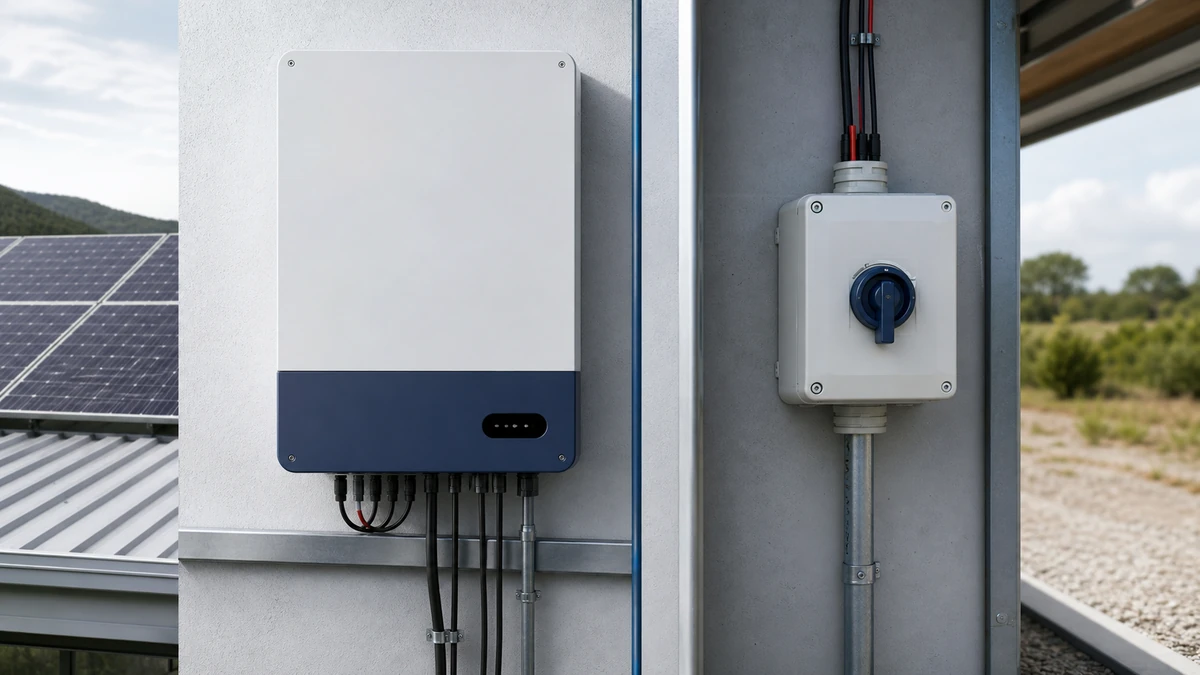
Installation conditions change the product-route and document questions a buyer must resolve.
Documentation packages: what changes between integrated and external routes
The documentation difference is that integrated devices usually sit inside the inverter evidence set, while external devices require their own controlled drawings, datasheets and certificate references.
For commercial comparison, the buyer should request equivalent evidence depth from each route. A low-friction quote is not enough if the final equipment file later lacks the required model, drawing or marking information.
Integrated documentation pack
For an integrated route, ask the inverter supplier which documents identify the isolator function, rating assumptions and service method. Confirm whether model-specific evidence is available or whether the isolator is documented only as part of the inverter assembly.
A buyer should also check revision control. If the inverter supplier changes the integrated device or assembly drawing, the buyer needs to know whether that change affects procurement records, spare references or destination-market evidence.
External documentation pack
For an external route, request the isolator’s current datasheet, outline or mounting drawing, applicable certificate package and any marking details required for the buyer’s destination market. These items should match the exact selected model and configuration.
A practical document request should include:
Exact model or route under consideration.
Current datasheet with electrical and mechanical details relevant to the application.
Mounting or outline drawing for panel integration.
Certificate or declaration package requested by the buyer.
Marking or approval requirements for the destination market.
Revision status of the documents supplied.
Any special configuration details requested in the quotation.
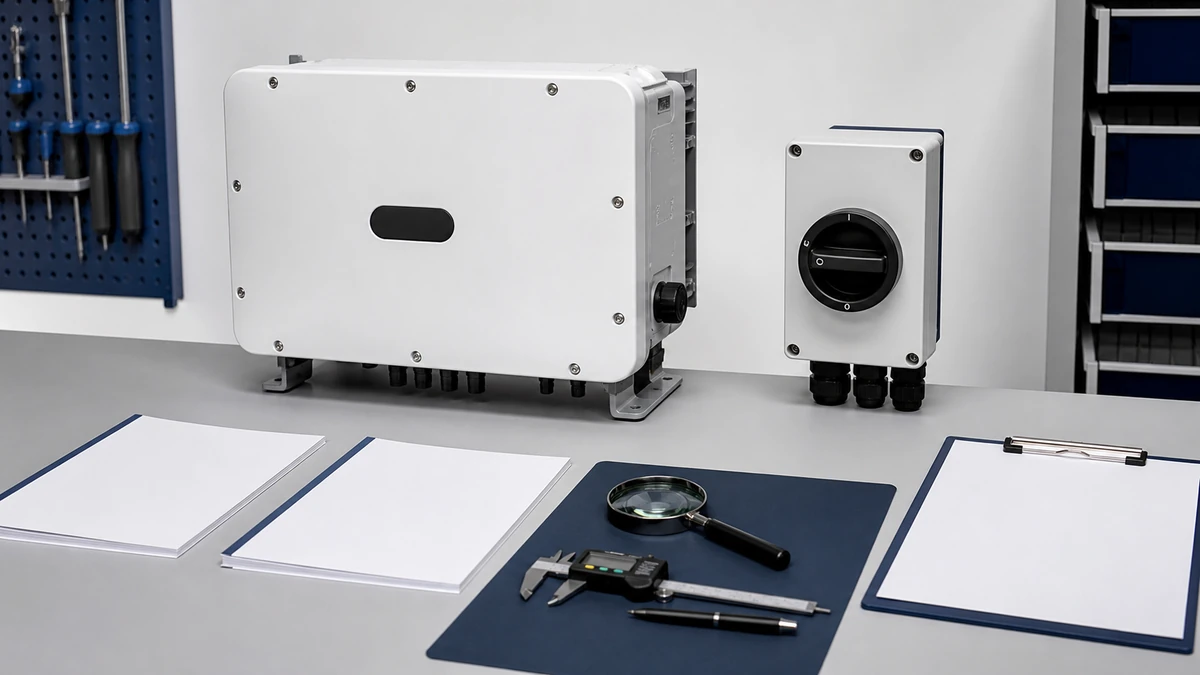
Documentation control, sample acceptance and protective packing are separate handover checks.
Document item
Integrated route
External route
Buyer control point
Folha de dados do produto
May be within inverter package
Requested for the exact isolator model
Match to application assumptions
Mechanical drawing
Inverter assembly drawing may dominate
Separate isolator drawing is needed
Check mounting, clearance and operator interface
Certificate package
May be supplied at inverter level
Requested for the specific switch route
Verify destination-market relevance
Marking evidence
May be hidden inside inverter file
Should be checked on product and documents
Confirm buyer marking requirements
Revision control
Controlled by inverter supplier
Controlled by switch supplier and buyer BOM
Record document version before release
Model-route selection: when a separate Shieldhz switch route is being evaluated
A Shieldhz route is useful when the buyer wants the PV DC isolator to be a separate purchasable and documented component, not only an inverter sub-item.
Use route pages as starting points, not final approval
A route page helps the buyer identify the family or configuration direction. It should not be treated as final confirmation for a destination market, enclosure, current level, voltage level or approval request.
Final model suitability depends on the buyer’s application and current product documentation. The quotation file should state the exact model, required documents and any requested marking or approval evidence.
Questions before naming a route
Before specifying a route in a procurement file, ask:
What maximum DC voltage and current must be considered?
What string, pole or conductor arrangement is intended?
Is the isolator mounted inside an enclosure or supplied as an enclosed device?
What environment and enclosure expectations apply?
What mounting and cable-entry arrangement is required?
What drawing, datasheet and certificate package must accompany the quote?
Are any destination-market markings or buyer-specific approvals required?
Who will own the final equipment drawing and service documentation?
Drawing and enclosure-interface implications for panel builders
For panel builders, the main drawing impact is the mechanical and conductor-routing interface around the selected model, not a generic statement that one architecture always fits better.
An integrated route places more interface detail inside the inverter supplier’s package. An external route moves more interface control to the panel builder’s drawing set.
Mounting and operator interface
For an external isolator, the drawing should show the mounting method, operator position, access direction and any enclosure interface that affects assembly. These details are exact-model and configuration dependent.
Panel builders should avoid releasing a layout based only on a catalog image. A current drawing should be checked before cutouts, labels or enclosure hardware are committed.
Cable entry and internal space
External mounting also affects conductor routing and service clearance. The enclosure layout should account for bend space, entry direction and access to the device according to the selected model documentation and the buyer’s assembly standard.
Panel-builder action list:
Request the current outline or mounting drawing.
Confirm the selected model and operator configuration.
Check enclosure depth, access direction and cable-entry position.
Align labeling with the buyer’s drawing and destination-market needs.
Freeze the drawing revision before purchasing enclosure hardware.
Recheck the documentation package if the model route changes.
Procurement comparison: cost is not only unit price
Procurement should compare total evidence and service cost, not only unit price, because the integrated and external paths assign work to different parties.
An integrated solution may reduce separate sourcing activity. An external isolator may add a line item, but it can also provide a clearer component identity, replacement reference and documentation package when those are required by the buyer.
Integrated purchasing path
In an integrated path, the inverter supplier may provide the primary commercial and technical package. Procurement should check whether the isolator-related evidence is sufficient for the final equipment file.
Useful questions include whether spare references are available, whether the isolator function appears in the service documentation and whether documentation changes are communicated with revision control.
External purchasing path
In an external path, procurement can request switch-specific evidence before order release. This can improve traceability, but it requires clearer specification from the buyer.
Procurement factor
Integrated route
External route
What to ask before PO
Line-item control
Usually inside inverter purchase
Separate isolator line item
Who owns model traceability?
Evidence package
Inverter package may dominate
Switch package must be requested
Which documents are required?
Spare handling
May follow inverter supplier process
May be stocked as a separate component
What exact model reference is used?
Drawing workload
Lower for panel builder in some designs
Higher interface control for panel builder
Are current drawings approved?
Change control
Supplier-driven at inverter level
Buyer can control switch BOM revision
How are substitutions reviewed?
Procurement checklist:
Compare quotations using the same voltage, current, pole and enclosure assumptions.
Request the same class of evidence from each supplier route where possible.
Confirm whether certificate or marking requests are included in the quote.
Record the document revision used for approval.
State whether substitutions require buyer approval.
Align service-spare references with the final BOM.
How Shieldhz confirms a PV DC isolator switch route
Shieldhz confirms a route by matching buyer inputs to current product documentation before quotation or release, not by assuming a generic PV isolator fit.
The confirmation is practical and model-specific. Final suitability is confirmed against current product documentation and the buyer’s application.
Pre-quotation inputs Shieldhz needs
For a useful quotation and route check, provide:
Buyer application and destination market.
Maximum DC voltage and current.
String arrangement or pole arrangement.
Enclosure and environmental expectations.
Mounting method and cable-entry direction.
Requested drawing, datasheet and certificate package.
Any approval, marking or buyer-specific documentation requirement.
These inputs allow Shieldhz to discuss a route against the actual configuration. If the inputs change, the route and documentation package should be reviewed again.
What the buyer should verify before release
Before releasing a purchase order or panel drawing, the buyer should verify that the quoted model matches the equipment file. The datasheet, drawing and certificate package should refer to the same route and revision status.
Buyer verification actions:
Confirm the exact model name or route in the quotation.
Match the voltage, current and pole arrangement to the buyer application.
Check the mounting drawing against the enclosure design.
Confirm requested markings and destination-market evidence.
Record document revisions in the procurement file.
Confirm who must approve any later model or document change.
Conclusion
The inverter-integrated versus external PV DC isolator decision is mainly a documentation and service-access decision. Integrated routes can reduce separate component handling, while external routes can give buyers clearer component identity, drawing control and service-spare traceability.
Neither route should be approved by assumption. The practical buying step is to define the application, destination market, electrical arrangement, enclosure interface and documentation package, then confirm the exact model against current product evidence.
Perguntas frequentes
Is an inverter-integrated PV DC isolator always easier to document?
No. It can be easier if the inverter supplier’s documentation package includes the evidence the buyer needs. If isolator details, service references or markings are not clear enough, the buyer may still need additional confirmation.
Does an external PV DC isolator automatically give better service access?
No. It can provide a separate access point and clearer component identity, but actual service access depends on the enclosure design, mounting method, cable entry and buyer’s maintenance procedure.
What is the main procurement difference between the two routes?
The integrated route usually follows the inverter purchasing and documentation path. The external route creates a separate component line item and usually requires separate drawings, datasheets and certificate references.
Can one document package be reused across different isolator models?
Do not assume that. Documentation should be checked against the exact model, configuration, revision status, destination market and buyer application.
Does selecting an isolator validate the complete equipment design?
No. Component selection is only one part of the equipment file. Complete equipment validation, installation review and destination-market compliance remain dependent on the buyer’s application and applicable requirements.
What should a buyer send before asking for a quotation?
Send the application, destination market, maximum DC voltage and current, pole or string arrangement, enclosure details, mounting and cable-entry requirements, and the requested drawing, datasheet and certificate package. This helps confirm the route before commercial release.
Shi, Muxi
Shi, Muxi escreve artigos técnicos da Shieldhz para compradores de controle industrial e componentes elétricos, abrangendo chaves de came rotativas, chaves isoladoras, seccionadores PV DC, botões de pressão, luzes indicadoras, gabinetes à prova d'água e blocos de terminais. Os artigos são baseados na experiência de fabricação e exportação da Zhejiang Shihe Electric Co., Ltd., com ênfase prática na seleção de modelos, planilhas de dados, desenhos, certificações, classificações de IP e detalhes de consulta que os compradores devem confirmar antes de fazer o pedido.