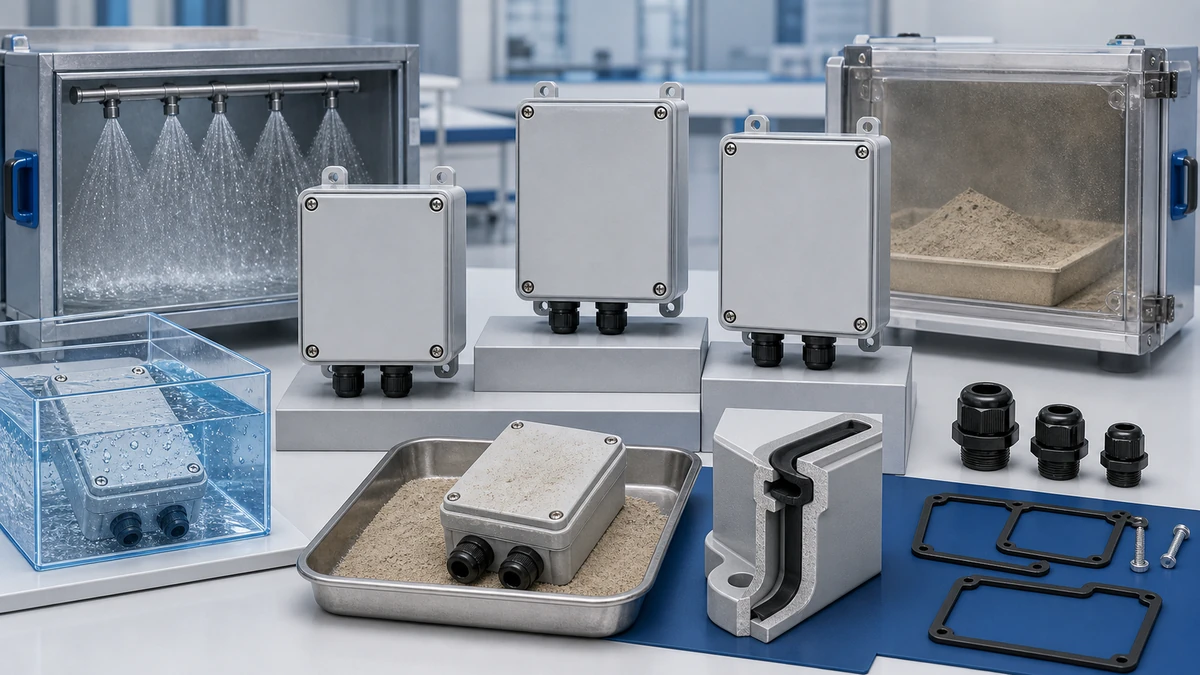
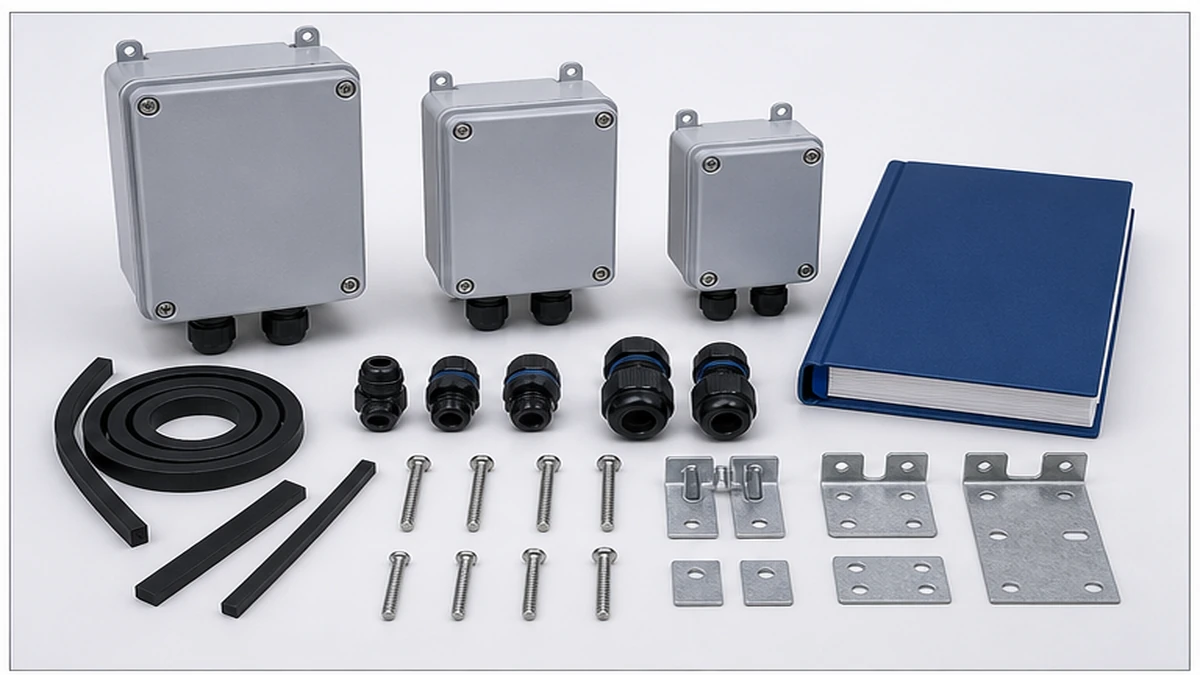
IP65, IP66, and IP67 ratings define how well an electrical enclosure resists water and dust ingress under IEC 60529. IP65 withstands low-pressure water jets at approximately 30 kPa; IP66 resists high-pressure jets at approximately 100 kPa; IP67 tolerates temporary submersion to 1 m depth for 30 minutes. All three carry a first-digit rating of 6, meaning complete dust exclusion. For panel builders and OEM buyers selecting a caixa isoladora à prova d'água or rotary cam switch enclosure, knowing which test each rating actually requires — and which the site hazard actually demands — is the starting point for a defensible specification.
What the IP Code Numbers Actually Mean
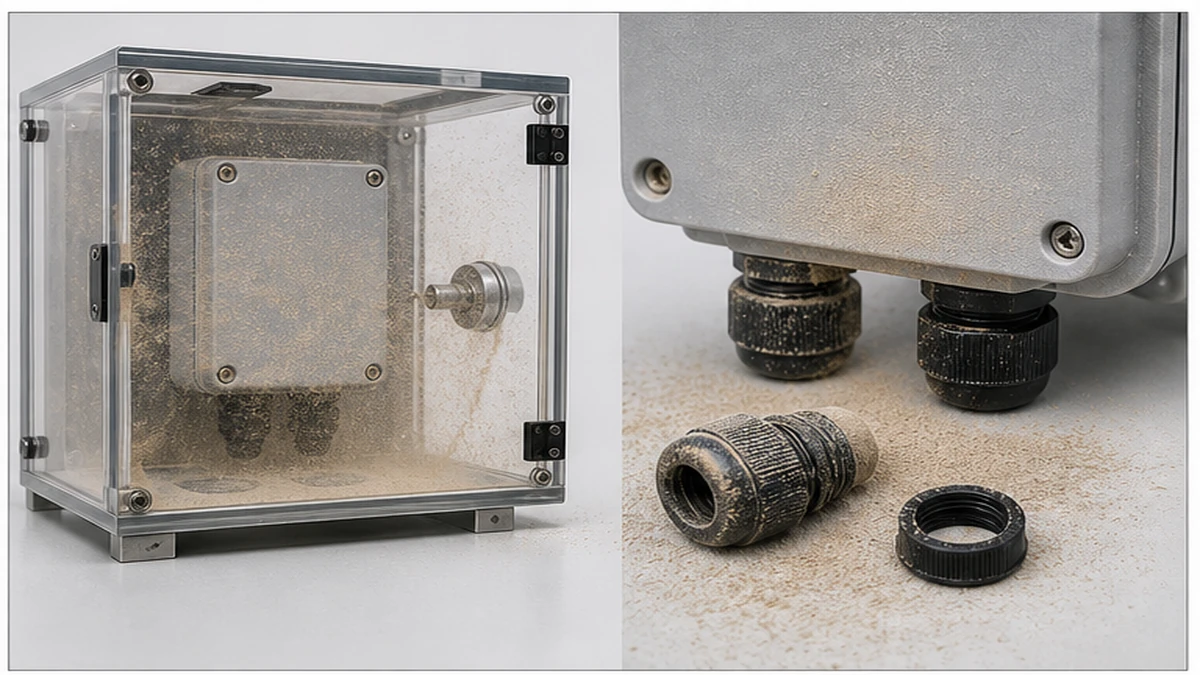
The Ingress Protection code defined by IEC 60529 uses two digits. The first digit covers solid particle protection on a scale of 0 to 6; the second covers liquid ingress protection on a scale of 0 to 9K. For IP65, IP66, and IP67, the first digit is always 6 — meaning no dust particle ingress is permitted under any test condition. The second digit is where these three ratings diverge in ways that directly affect enclosure selection.
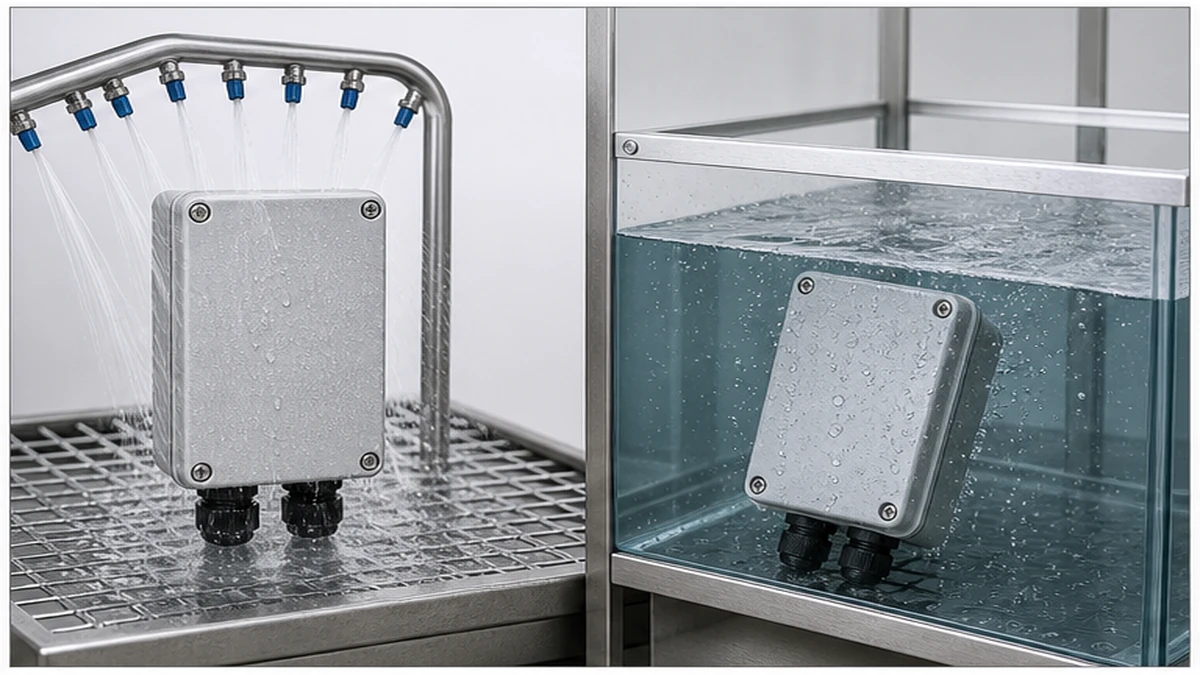
IP65: The enclosure must withstand water projected from a 6.3 mm nozzle at a flow rate of approximately 12.5 L/min from any direction for at least 3 minutes. This covers outdoor splash exposure, wash-down areas supplied by a standard low-pressure hose, and rain-exposed mounting positions.
IP66: A more demanding test uses a 12.5 mm nozzle delivering approximately 100 L/min at higher impact pressure from any direction for at least 3 minutes. This addresses heavy sea spray, industrial wash-down with pressurized hoses, and outdoor locations subject to driving rain or direct water impact.
IP67: The enclosure must survive temporary immersion at a depth of 1 m for a minimum of 30 minutes without harmful ingress. This rating addresses flood risk, surface runoff pooling, and installations near drainage channels or water treatment areas.
A key point that many buyers overlook: IP66 and IP67 are independent tests. A product can pass IP67 submersion and still fail the IP66 jet test if its sealing geometry deforms under high-pressure impingement. When a datasheet lists “IP66/IP67,” verify the certificate covers both test procedures separately.
Side-by-Side Comparison: IP65 vs IP66 vs IP67 Test Parameters
Test Parameter
IP65
IP66
IP67
Test Method
Water jet (nozzle)
Powerful water jet (nozzle)
Temporary submersion
Nozzle Diameter
6.3 mm
12.5 mm
-
Water Flow Rate
~12.5 L/min
~100 L/min
-
Water Pressure
~30 kPa at 3 m distance
~100 kPa at 3 m distance
-
Test Duration
3 minutes minimum
3 minutes minimum
30 minutes
Submersion Depth
Not applicable
Not applicable
1 m (top of enclosure)
Water Temperature Differential
5 K maximum
5 K maximum
5 K maximum
Acceptance Criterion
No harmful ingress
No harmful ingress
No harmful ingress
IP65 enclosures resist low-pressure directional jets typical of hose-down cleaning or moderate rainfall. IP66 enclosures face an approximately eightfold increase in flow rate, making them suited for heavy wash-down environments such as food processing or marine deck equipment. IP67 switches to a completely different methodology: static water pressure resistance at 1 m depth rather than jet impingement.
Figure 1. Core concept behind IP65 vs IP66 vs IP67 electrical enclosure selection.
Where Each Rating Belongs: Matching IP Level to Installation Environment
IP65 Environments: Controlled Outdoor and Light Industrial
IP65 enclosures suit locations where water exposure is incidental rather than sustained — ventilation equipment housings, light-duty outdoor control panels mounted under structural overhangs, indoor food-processing zones with periodic rinse-down from a standard hose, and rooftop HVAC disconnect boxes protected from standing water. For solar string circuits where the enclosure sits on a sheltered tilt frame, a waterproof isolator box rated IP65 typically covers the wash-down risk without over-specifying.
IP66 Environments: Exposed Industrial and Marine-Adjacent
IP66 raises the water-jet pressure to approximately 100 kPa, meaning the enclosure withstands sustained, high-force spray. Appropriate installations include outdoor electrical panels on building facades with no canopy coverage, offshore support structures above the splash zone, car-wash equipment cabinets, and agricultural irrigation control stations subject to direct hosing. When a rotary cam switch enclosure for a ground-mount PV array faces seasonal pressure washing of the surrounding structure, IP66 is a more defensible selection than IP65.
IP67 Environments: Temporary Submersion Zones
IP67 adds a submersion requirement: 1 m depth for 30 minutes. This makes it appropriate for underground cable junction boxes in landscaped trenches, enclosures at or below grade level in flood-prone utility vaults, dock-side control boxes, and pool plant rooms. IP67 is not a blanket upgrade over IP66 — high-pressure jet resistance is governed by the second-digit test, and some IP67 designs are not validated to the same jet-pressure threshold as IP66. Buyers should confirm both test conditions from the datasheet before finalising a specification.
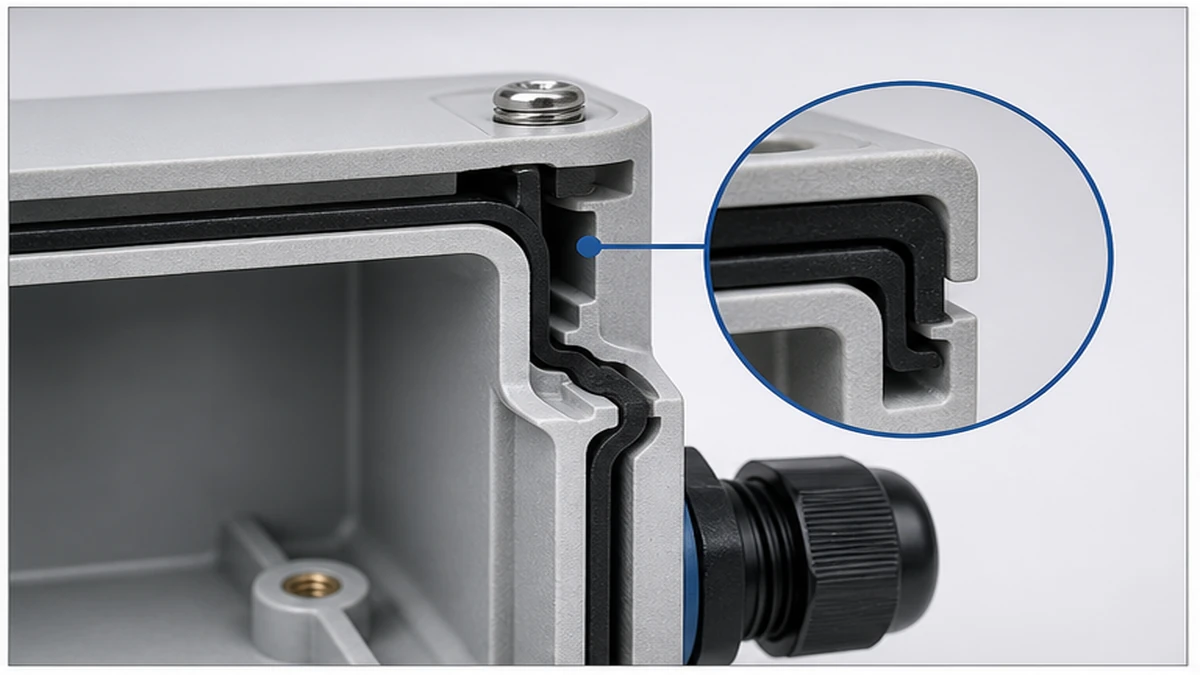
Figure 2. Selection checks should connect box route, current rating, IP rating, cable entry, gasket condition, handle type, mounting, and documentation.
What Buyers Should Actually Inspect on the Enclosure Specification Sheet
Before issuing a purchase order for any IP-rated enclosure — whether a standalone housing or an assembly around a interruptor de came rotativo — verify the following eight fields on the datasheet.
1. IP Rating With Test Standard Reference: Confirm the IP rating is declared against IEC 60529. A rating printed without a standard reference may reflect a manufacturer’s internal test, not a third-party-verified result.
2. Material Grade and Finish: Polycarbonate, glass-reinforced polyester, and die-cast aluminium enclosures carry different UV, impact, and chemical resistance profiles. Confirm material grade, not just the generic description.
3. Gland Entry Locations and Knockout Dimensions: Unused cable entry points are a common IP failure site. Verify that blank plugs rated to the same IP level as the enclosure are supplied, and confirm gland thread sizes against your cable diameter.
4. Gasket Material and Compression Specification: Neoprene, EPDM, and silicone gaskets differ in temperature tolerance and chemical resistance. Check the gasket material declaration and confirm the enclosure lid applies adequate uniform clamping pressure. Any fastener torque specification on the datasheet is model-specific and should be followed exactly rather than estimated.
5. Temperature Rating: Many IP-rated enclosures are tested within a declared ambient temperature range. If your installation environment falls outside the range stated on the datasheet — rooftop solar arrays often reach surface temperatures exceeding 60 degrees C — the gasket may degrade and void the declared rating.
6. Third-Party Test Certificate Number: Require the actual certificate number, not a logo. Cross-reference against the issuing body’s online registry to confirm validity, scope, and expiry status.
7. Wall Thickness: For polycarbonate enclosures, insufficient wall thickness can allow lid flexion that breaks the seal under mechanical load or thermal cycling. The acceptable minimum depends on the enclosure dimensions and design; confirm against the manufacturer’s structural specification.
8. Mounting Orientation Restriction: Some enclosures achieve their rated IP level only in a specific mounting orientation. If the datasheet includes an orientation restriction symbol, installation in any other orientation invalidates the declared protection level.
Figura 3. O contexto da fiação da aplicação deve ser verificado com base na tabela de contatos do fabricante antes da energização.
Specification Sheet Red Flags
If the datasheet lists a temperature range ending at 55 degrees C and the enclosure will be mounted on a dark metal structure in a high-solar-irradiance climate, request a supplementary thermal test report before accepting the IP declaration.
Blank gland plugs supplied loose in the shipping box rather than pre-installed are a common source of field IP failures; confirm they are torqued to the manufacturer’s specification during installation.
A certificate number that returns no result in the issuing body’s online registry almost always indicates an expired or fraudulent certification; escalate before order placement.
Wall deformation under vibration loading can gradually reduce gasket compression and degrade the IP seal over service life; check whether the datasheet addresses cyclic mechanical load conditions.
Common Buying Mistakes That Change the Selection
Choosing IP67 for a Fixed Outdoor Cabinet
IP67 certifies temporary immersion up to 1 m depth for 30 minutes. For a static rooftop distribution cabinet or an outdoor motor control panel exposed to rain and hose-down cleaning, IP66 — which certifies sustained high-pressure water jets at approximately 100 kPa from any direction — is typically the correct and more cost-appropriate rating. IP67 adds cost for an immersion capability the installation will never use.
Specifying IP65 for Wash-Down Zones
IP65 permits low-pressure water jets at approximately 30 kPa — adequate for light rain but insufficient for food-processing lines, chemical wash-down areas, or marine deck equipment where cleaning uses high-pressure hoses. In these environments, IP65 enclosures regularly admit moisture at gasket interfaces during cleaning cycles. IP66 or IP67 is the minimum defensible specification for sustained wash-down exposure.
Assuming Higher IP Always Means Better Thermal Performance
A sealed IP67 enclosure traps heat generated by internal components. In a control cabinet running at high ambient temperatures with no ventilation allowance, component temperatures can exceed rated limits faster than in a lower-IP cabinet with filtered ventilation. Buyers upgrading from IP65 to IP67 solely for water protection must account for thermal derating or specify internal cooling.
Ignoring the Dust Digit
Both IP65 and IP66 carry a first-digit rating of 6 — total dust exclusion. Applications requiring only splash resistance sometimes receive IP66 unnecessarily. Confirming that the first digit matches the actual particulate environment avoids over-sealing components that need periodic inspection access.
IP68 and IP69K: When Buyers Should Consider Going Beyond IP67
IP68: Continuous Submersion Beyond 1 Meter
IP67 certifies protection against immersion to 1 m for up to 30 minutes. IP68 extends this by requiring the manufacturer to declare a specific depth and duration the enclosure withstands continuously — the exact parameters are manufacturer-declared and must be confirmed on the product datasheet, since they are not fixed by the standard itself. IP68 is appropriate when enclosures may be flooded for extended periods, such as underground junction boxes, submersible pump controls, or cable entry points in tidal zones.
IP69K: High-Pressure, High-Temperature Wash-Down
IP69K originates from DIN 40050-9 and is now incorporated into ISO 20653. It tests enclosures against jets of water at 80 degrees C delivered at pressures of 80 to 100 bar from a nozzle held 100 to 150 mm from the enclosure surface. This simulates steam cleaning and high-pressure wash-down typical in food and beverage processing, pharmaceutical production, and agricultural equipment.
IP69K does not imply IP68 compliance. An enclosure can pass high-pressure jet testing and still fail sustained immersion testing. Wash-down environments that also carry flooding risk demand dual-rated products confirmed against both test protocols independently.
Classificação
Test Medium
Pressure or Depth
Duration
IP67
Fresh water immersion
1 m depth
30 minutes
IP68
Fresh water immersion
Manufacturer-declared, typically exceeds 1 m
Manufacturer-declared, typically exceeds 30 minutes
IP69K
High-pressure hot water jet
80 to 100 bar at 80 degrees C
Approximately 30 seconds per nozzle position
O IEC 60529 standard is maintained and published by the International Electrotechnical Commission. Buyers should source enclosures with test certificates referencing this standard directly, and confirm whether IP69K testing has been conducted independently where steam cleaning is a site requirement.
Figura 4. Uma consulta completa deve incluir a classificação, a sequência de contatos, a montagem, o invólucro e os requisitos de documentação.
How Shieldhz Confirms IP Rating, Enclosure Route, and Documentation for Rotary Cam Switch Applications
Shieldhz is the export brand of Zhejiang Shihe Electric Co., Ltd., founded in 2014 and located in Yueqing, Zhejiang — a region with deep roots in low-voltage electrical component manufacturing. The facility covers more than 5,000 square meters, employs over 100 personnel, and operates 40-plus production machines. Certifications available across the product range include ISO 9001, CE, RoHS, TUV, UL, UKCA, CCC, and CB, depending on the product model and target market; buyers should confirm the applicable certification scope for their specific product at the quotation stage.
When an inquiry arrives for an IP-rated enclosure or a waterproof isolator assembly incorporating a rotary cam switch, Shieldhz confirms the following before accepting a production order:
Declared IP rating (IP65, IP66, or IP67) and the target installation environment description
Enclosure material, gasket specification, and cable entry or gland configuration
Operating voltage, rated current, pole count, and applicable utilization category
Required third-party certifications and market-specific documentation (CE declaration, IEC 60529 test report, or others as needed)
Wiring diagram, mounting drawing, and panel cutout constraints where relevant to the assembly
For waterproof isolator products in the rotary cam switch family — including the Chave de came rotativa LW28, Chave de came rotativa LW42, e Interruptor de came rotativo SH30 series — the enclosure IP target directly affects gasket durometer, cover torque specification, and gland plug selection. All of these are confirmed at the quotation stage, not assumed from a generic product page.
The documentation package available to buyers includes test reports referencing IEC 60529 with stated IP classification, CE declarations of conformity, product datasheets with dimensional drawings and rated parameters, and packing and inspection records per order. Pre-shipment enclosure sealing checks are carried out against IEC 60529 test criteria, including gasket compression integrity and confirmation that IP-rated gland entries maintain the declared protection level across shipped units.
Submit application details — IP rating requirement, installation environment, voltage and current parameters, and any market certification requirements — at the inquiry stage to receive a confirmed product route and documentation checklist before order placement.
Perguntas frequentes
Is IP67 always better than IP66 for outdoor electrical enclosures?
Not necessarily. IP67 certifies temporary submersion while IP66 certifies resistance to high-pressure water jets, and many outdoor environments involve sustained spray rather than immersion. An enclosure optimised for IP67 may not have been independently validated to the full IP66 jet-pressure threshold. Always confirm both ratings separately on the datasheet when the site involves pressurised wash-down alongside any flooding risk.
Can an enclosure lose its IP rating after installation?
Yes. Physical damage to the gasket, improperly torqued lid fasteners, unsealed cable gland entries, or installation in an orientation not covered by the original test can all reduce or eliminate the declared protection level. Periodic re-inspection of gasket condition and gland plug integrity is recommended, particularly after any maintenance work that requires opening the enclosure.
What is the practical difference between IP67 and IP68?
IP67 defines a fixed test condition of 1 m depth for 30 minutes. IP68 requires the manufacturer to declare a specific depth and duration that exceeds those minimums — commonly 1.5 m to 3 m for longer periods, though the exact values are product-specific and must be read from the datasheet. For most above-grade outdoor installations, IP67 is sufficient. IP68 becomes relevant when flooding risk involves deeper or prolonged inundation.
Do IP65, IP66, and IP67 ratings apply to the entire enclosure or just the housing body?
The IP rating applies to the complete assembled enclosure as tested, including all installed cable glands, blank plugs, and fastened covers. Substituting an ungasketed gland, leaving a knockout open, or using a replacement cover without the original gasket invalidates the declared rating even if the housing itself is undamaged.
How do I verify that an IP rating claim is legitimate before purchasing?
Request the test certificate number from the supplier and cross-check it against the online registry of the issuing body — TUV, SGS, or Bureau Veritas. A valid certificate will specify the product model, the standard used (IEC 60529), and the exact IP classification confirmed during testing. A logo or self-declaration without a traceable certificate number should be treated as unverified until the supplier provides the certificate document itself.
Is IP69K a replacement for IP67 in food processing environments?
IP69K addresses high-pressure, high-temperature steam cleaning, which IP67 does not cover. However, IP69K does not test for submersion resistance. Food processing facilities that use both steam cleaning and floor flooding need enclosures carrying independent certification for both IP67 (or IP68) and IP69K. A single rating does not guarantee performance under both conditions.
Why do some rotary cam switch enclosures specify IP66 rather than IP67?
Rooftop and ground-mount PV installations and industrial control panels in exposed outdoor locations primarily face pressurised cleaning of panel surfaces and surrounding structures — a sustained jet hazard that IP66 directly addresses. Submersion risk is absent in most above-grade installations, so specifying IP67 adds cost for a protection mode the installation is unlikely to encounter, while IP66 directly matches the actual maintenance and environmental exposure conditions. For applications where IEC 60947-3:2020+AMD1:2025 — which applies to switches, disconnectors, switch-disconnectors, and fuse-combination units for distribution and motor circuits with rated voltage up to 1000 V AC or 1500 V DC — governs the internal switching device, confirming the enclosure IP rating against both the installation standard and the site cleaning method is the correct engineering step before finalising the specification.
Shi, Muxi
Shi, Muxi escreve artigos técnicos da Shieldhz para compradores de controle industrial e componentes elétricos, abrangendo chaves de came rotativas, chaves isoladoras, seccionadores PV DC, botões de pressão, luzes indicadoras, gabinetes à prova d'água e blocos de terminais. Os artigos são baseados na experiência de fabricação e exportação da Zhejiang Shihe Electric Co., Ltd., com ênfase prática na seleção de modelos, planilhas de dados, desenhos, certificações, classificações de IP e detalhes de consulta que os compradores devem confirmar antes de fazer o pedido.