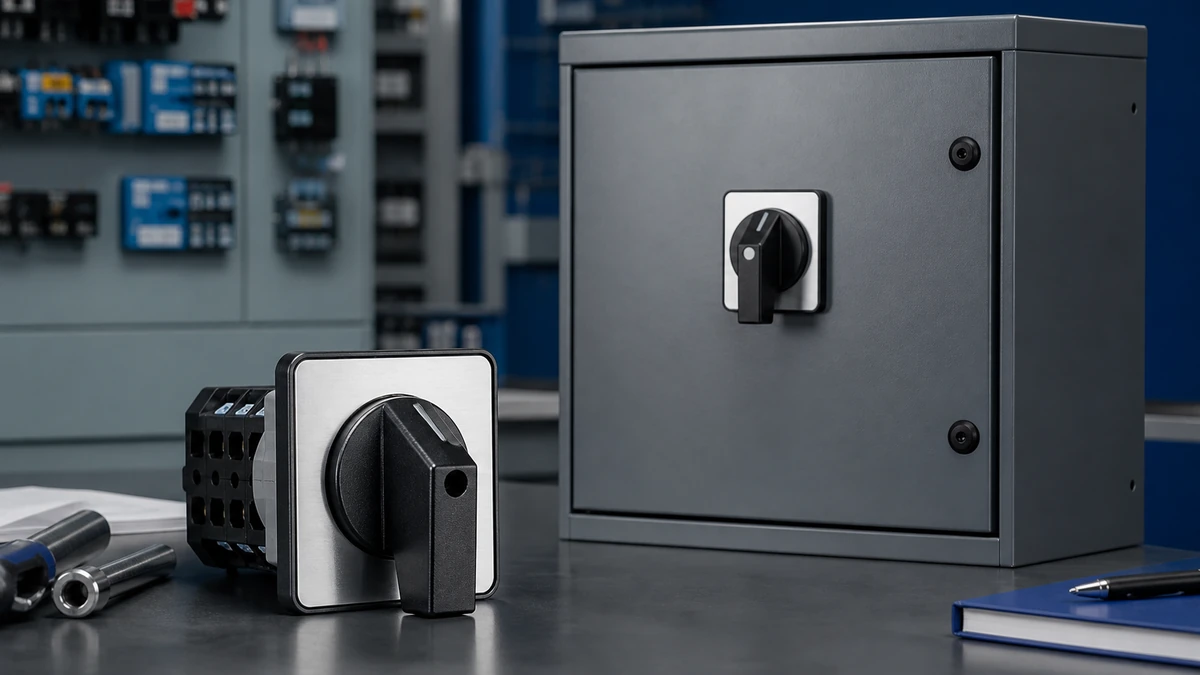
An i-0-ii cam switch can be documented as a manual changeover switching component inside a generator bypass panel, but it does not by itself define, validate, or certify the complete transfer equipment.
Confirm the exact switching program: I, 0 and II positions; make-before-break or break-before-make behavior where relevant; poles; and contact stages.
Request the current drawing, datasheet, and applicable certificate package for the exact model, destination market, and buyer application.
Keep the purchase decision focused on the cam switch route; panel-level compliance, generator integration, interlocking, and system validation remain separate engineering responsibilities.
What an I-0-II cam switch can document in a generator bypass panel
An I-0-II cam switch route documents a manual source-selection component, not a complete generator bypass system. In a typical documentation package, the cam switch drawing shows the handle positions, contact program, mounting details, and model-specific electrical data that the panel builder can reference in its own assembly documentation.
An exact drawing identifies the interfaces that must be controlled for the approved model route.
The commercial decision is whether a rotary cam switch is the right manual changeover component for the buyer’s panel concept. If the project requires automatic transfer logic, synchronization control, remote operation, or a complete listed transfer assembly, those are outside the cam switch documentation route.
For model exploration, buyers can start from the Shieldhz Faixa do interruptor de came rotativo and then narrow the route by duty, poles, stages, mounting format, handle type, and requested documentation.
What “I-0-II” means for documentation
“I” and “II” identify two selected positions, while “0” identifies the off or neutral position between them. The important documentation point is not only the front-plate marking, but also the contact state behind each position.
A buyer should verify whether the project needs all relevant circuits open in the 0 position and whether any auxiliary contacts are required for indication or control logic. These choices are model- and contact-program dependent.
What it should not be claimed to do
The switch should not be described as validating the complete generator bypass panel. It should also not be presented as the source of panel-level code compliance, generator compliance, interlocking compliance, or utility-connection approval.
A cam switch selection can support the bill of materials and assembly documentation, but final system suitability depends on the buyer’s circuit, enclosure, wiring method, protection scheme, load profile, standards route, and destination-market requirements.
When a manual changeover route is commercially reasonable
A manual changeover route is commercially reasonable when the buyer needs a documented, operator-driven source-selection component and accepts that system-level transfer design remains outside the switch quotation. This is common in quotation discussions where the panel builder already owns the schematic and needs a switch model, drawing, and datasheet to complete procurement review.
Buyer condition
Manual I-0-II cam switch route may fit when
Escalate beyond component selection when
Source selection
The panel concept calls for human-operated I / 0 / II selection
The project requires automatic transfer or controller-based operation
Documentação
The buyer needs a component drawing, contact program, and datasheet
The buyer asks for complete transfer-equipment certification
Engineering ownership
The panel builder owns the circuit and validation
The supplier is expected to design the full bypass panel
Application review
Load, voltage, duty, poles, and environment are known
Application data is missing or still changing
Approval route
Component documentation is enough for purchasing review
Authority, utility, or project approval depends on a complete certified assembly
Good-fit buying scenarios
A good-fit scenario is a panel builder with a defined manual changeover schematic who needs the correct switch variant and documentation set. The buyer can provide voltage, current, AC/DC duty, utilization category, pole count, contact sequence, and mounting requirements.
Another good-fit case is an OEM standardizing a manual bypass panel family and wanting consistent documentation for different current ranges or handle formats. The final model still needs to be checked against current Shieldhz product documentation and the buyer’s application.
Red-flag buying scenarios
A red flag is a request that treats the cam switch as a complete generator transfer solution. Another is a request that omits load type, duty, voltage, current, contact sequence, or panel-mounting constraints.
If the buyer cannot define whether the switch must open one source before closing the other, or which conductors must be switched, the quotation should pause until the circuit intent is clear.
Documentation inputs panel builders should request before buying
Panel builders should request documentation that proves the quoted model matches the intended manual changeover function, mounting route, and electrical duty. The purchase file should identify the exact switch model rather than relying only on a generic “I-0-II” description.
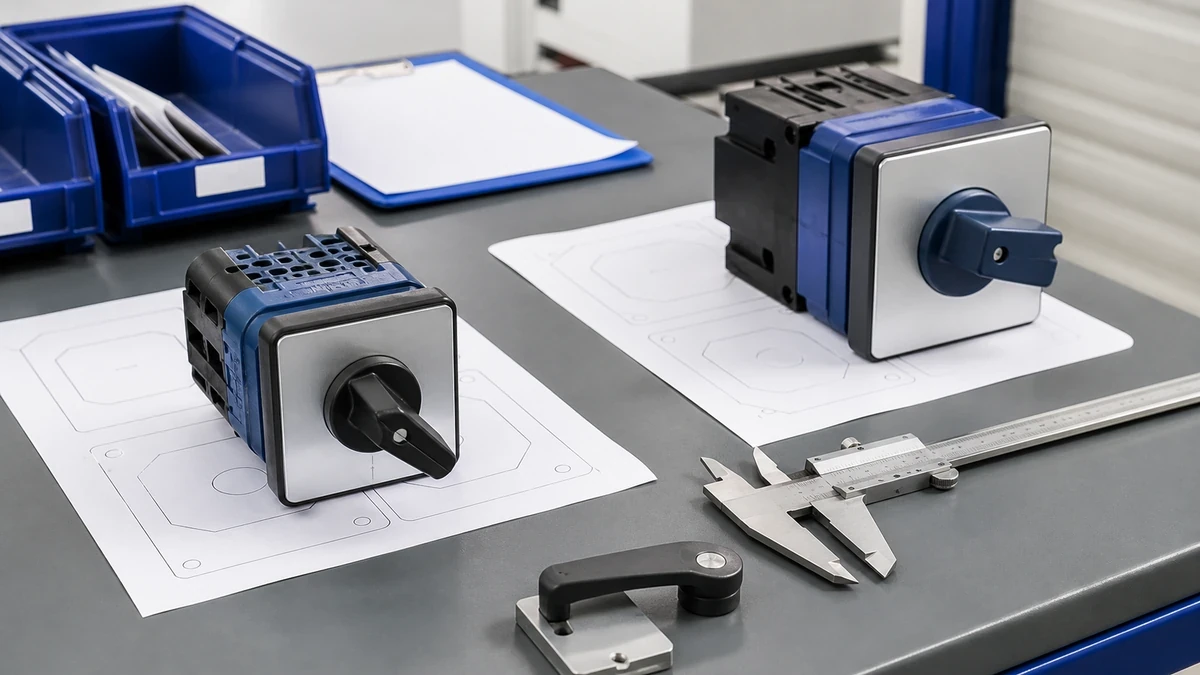
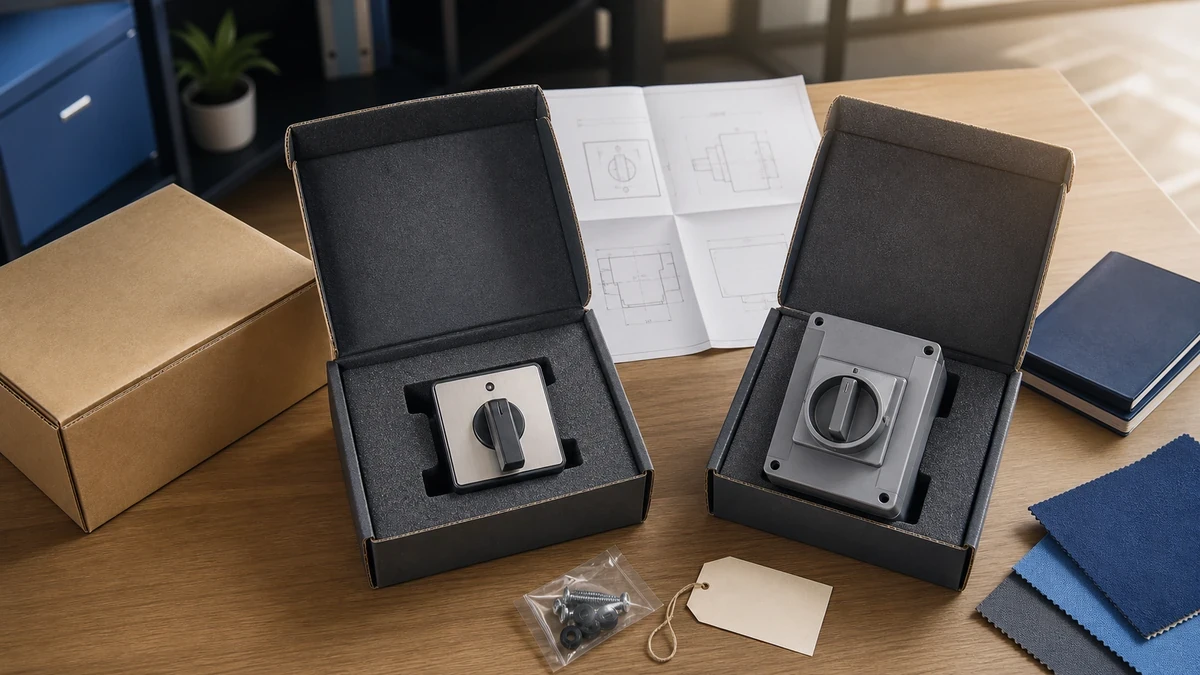
Sample review should connect the exact item to its current drawing and requested evidence package.
Use the Shieldhz rotary cam switch selection guide for the broader selection logic, then build a bypass-panel-specific document checklist around the exact model.
Minimum pre-purchase document set
Request documents that are current for the model being quoted. The availability and content of datasheets, drawings, and certificates can depend on model family, specification, and destination-market requirements.
Practical checklist:
Exact model reference and configuration code.
Front-plate position marking: I / 0 / II.
Contact program or switching diagram for each position.
Rated voltage, current, AC/DC duty, and utilization category as applicable to the model.
Pole count and contact-stage arrangement.
Mounting dimensions, panel cutout route, and handle style.
Environmental and enclosure-interface notes relevant to the buyer’s panel.
Current datasheet, drawing, and available certificate package for the intended market.
Drawing details that prevent quotation errors
The drawing should make the switch function visible enough for engineering review. A front view alone is usually not enough for a manual changeover decision.
Ask for position indexing, contact numbering, shaft or handle orientation, panel mounting dimensions, and any model-specific spacing or installation notes. If the buyer has a preferred door layout or handle direction, include it before quotation.
Contact program decisions: positions, poles and stages
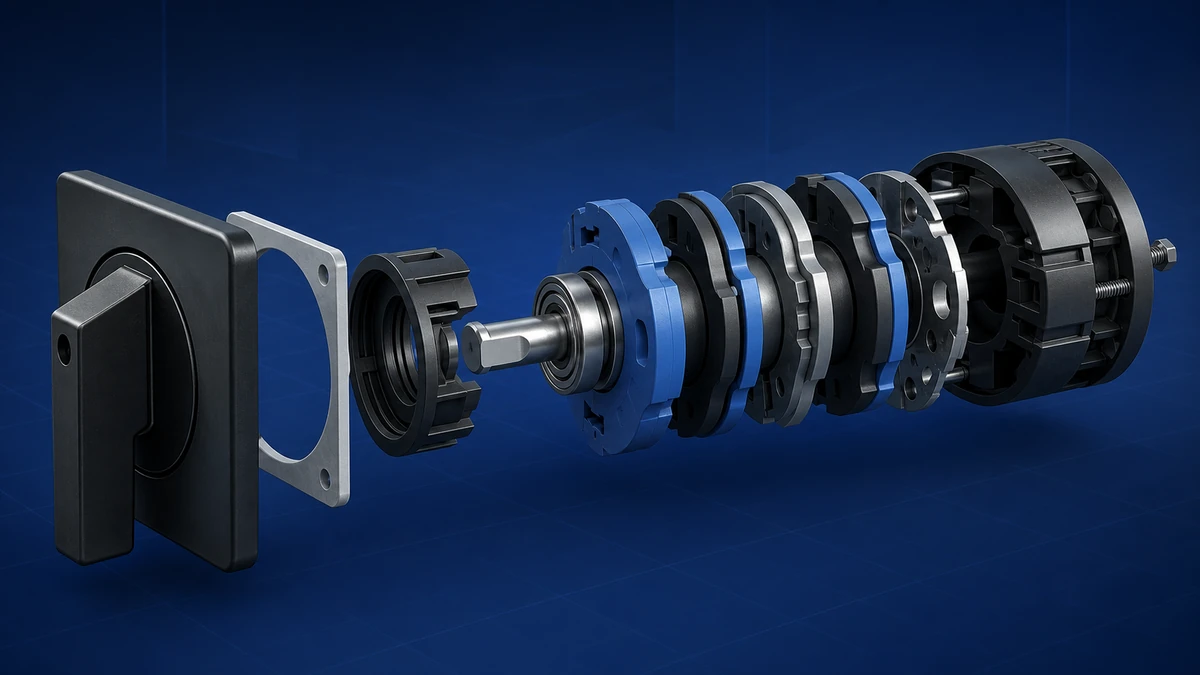
The contact program is the core decision because the same I-0-II marking can represent different internal switching arrangements. Buyers should confirm what opens, what closes, and in which handle position before approving the model for a generator bypass panel.
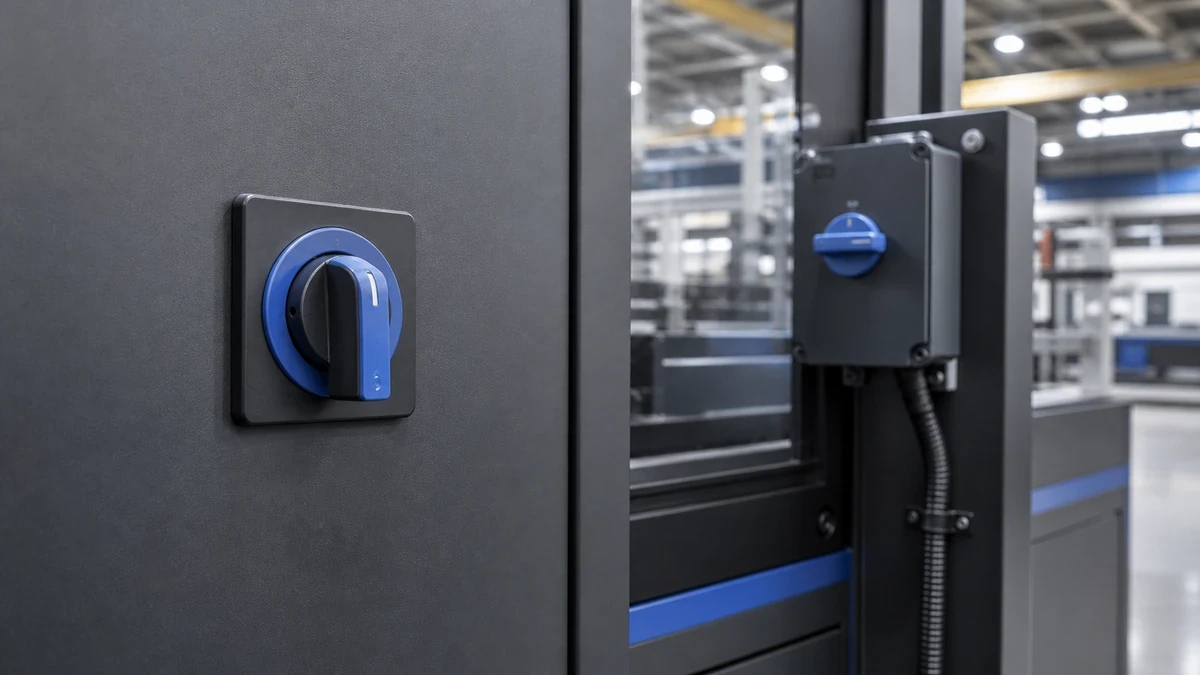
Installation conditions change the product-route and document questions a buyer must resolve.
In many manual source-selection discussions, buyers need a clear 0 position where the relevant circuits are open. If the application depends on break-before-make operation or a defined open transition, this must be stated and confirmed in the contact program.
Do not infer the sequence from the handle legend alone. The internal cam arrangement is the evidence that confirms the function for the exact model.
Pole count and switched conductors
Pole count depends on the buyer’s circuit design and local requirements. The switch supplier can document the model’s pole and contact arrangement, but the panel builder must decide which conductors are switched as part of the overall system design.
This is especially important in generator bypass documentation because source arrangements, earthing systems, neutral treatment, and site rules can differ. Those decisions should be made by the responsible electrical designer and reflected in the requested switch program.
Auxiliary contact stages
Auxiliary stages may be requested for indication, controller input, lamp logic, or interlock signaling. Their role should be documented separately from the main switching contacts.
If auxiliary contacts are included, the buyer should verify their electrical duty, position behavior, and drawing references for the exact model. They should not be assumed to carry the same duty as main contacts unless the current documentation states that for the selected configuration.
Rating and utilization-category checks without overclaiming
The rating check should match the exact model, load type, voltage, current, AC/DC duty, and utilization category rather than relying on a single headline ampere value. A sourcing team should treat ratings as application- and documentation-dependent.
O IEC 60947-3 scope is relevant evidence for low-voltage switching-device discussions; IEC describes this scope as switches, disconnectors, switch-disconnectors and fuse-combination units within stated distribution- and motor-circuit AC/DC limits. That scope reference does not, by itself, certify a specific model, installation, or generator bypass panel.
AC and DC duty are not interchangeable
A switch route suitable for one AC duty should not be assumed suitable for a different DC duty. Arc behavior, utilization category, voltage, current, and contact program all matter.
Ask the supplier to confirm the quoted model against the buyer’s stated duty. If the project includes mixed power and control duties, list them separately.
Motor, transformer and mixed-load considerations
A generator bypass panel may feed downstream equipment with starting, inrush, or mixed-load behavior. The panel designer should define the load assumptions before finalizing the switch route.
Where motor-control duties influence the application, the Shieldhz rotary cam switch motor-control guide can help frame the questions. Final suitability still depends on the exact switch documentation and the buyer’s circuit.
Practical rating checklist
Before approving the quotation, verify:
Rated operational voltage for the intended circuit.
Rated current for the exact duty, not only a catalog headline value.
AC or DC operation and the relevant utilization category.
Number of poles and simultaneous contact operation.
Frequency of operation if it affects the buyer’s application review.
Ambient and enclosure conditions used by the buyer for panel design.
Any derating or installation notes stated in the current datasheet.
Panel interface and operator decisions
The panel interface should be decided before quotation because handle format, mounting depth, door arrangement, and labeling affect the usable switch route. A technically correct contact program can still become a poor fit if the operator and mounting route do not match the panel design.
Mounting route and handle format
Confirm whether the switch will be mounted through a panel door, behind a door, or on an internal plate with an extended shaft or specific handle arrangement. The available options depend on the exact model and accessory route.
The drawing should show the required cutout, fixing method, shaft or handle dimensions, and any orientation limits. If the panel uses a standardized front layout, provide the layout constraints before model selection.
Labeling and human operation
The visible legend should match the documented contact positions. Do not let the panel label create a functional claim that the contact program does not support.
For an I-0-II route, buyers often request clear position marking and a handle feel that suits manual operation. Handle style, color, locking options, and marking details should be treated as model- and application-dependent.
Environment and enclosure interface
The switch documentation may include environmental or ingress-related information for a model or operator route, but the completed panel’s environmental performance depends on the full enclosure design. Do not transfer a component-level statement to the whole panel without verification.
Buyer action list:
State indoor, outdoor, humid, dusty, or corrosive exposure assumptions.
Provide enclosure type and door thickness if relevant.
Confirm whether the operator route must support sealing, locking, or specific labeling.
Request only model-specific environmental documentation that is current for the quoted configuration.
How Shieldhz confirms a rotary cam switch route
Shieldhz confirms a rotary cam switch route by checking the buyer’s requested function and documentation needs against current product information for the exact configuration. Final suitability is confirmed against current product documentation and the buyer’s application.
Documentation control, sample acceptance and protective packing are separate handover checks.
This pre-quotation process is designed to keep the scope clear: Shieldhz can help identify and document the cam switch route, while the buyer remains responsible for the complete bypass-panel design and validation.
Pre-quotation confirmation inputs
Provide these inputs with the inquiry:
Switching function: I-0-II manual changeover, off position behavior, and any sequence requirement.
AC/DC duty: power, control, or mixed duty.
Voltage/current and utilization category: values tied to the buyer’s circuit, not only a desired ampere size.
Pole and contact program: number of switched poles, contact states by position, and auxiliary stages if required.
Panel mounting and handle route: door or plate mounting, shaft/handle format, orientation, and labeling needs.
Environment: enclosure conditions, ambient assumptions, and any operator-interface requirements.
Requested package: drawing, datasheet, and applicable certificate package for the model and destination market.
What Shieldhz can confirm before quotation
Shieldhz can confirm whether a model route is available for the stated switching function, duty, mounting arrangement, and documentation request. The response should tie the recommendation to a specific configuration rather than a generic switch description.
If the buyer’s application data is incomplete, the correct next step is clarification rather than assumption. This reduces the risk of ordering a switch with the wrong contact sequence, insufficient documented duty, or unsuitable operator arrangement.
Purchase file and sourcing-team verification
The purchase file should make the selected i-0-ii cam switch traceable from inquiry to quotation, drawing review, and incoming inspection. This is especially important when engineering, purchasing, and panel assembly teams are in different locations.
Verification item
What to compare
Por que é importante
Model code
Quotation, drawing, datasheet, and purchase order
Prevents ordering a similar but different configuration
Position marking
Front legend and drawing
Confirms I / 0 / II operator intent
Programa de contato
Switching diagram and buyer schematic
Confirms actual circuit behavior
Electrical data
Datasheet and application requirements
Aligns duty with voltage, current, AC/DC, and utilization category
Mounting route
Drawing and panel layout
Avoids door, shaft, depth, or handle conflicts
Pacote de documentação
Requested datasheet, drawing, and certificate documents
Supports procurement and project records
Incoming-document checklist
Before releasing the purchase internally, check:
The quotation identifies the exact configuration.
The drawing revision is visible and matches the quoted model.
The contact program matches the buyer schematic.
Electrical data is applicable to the buyer’s stated duty.
The handle, legend, and mounting dimensions match the panel plan.
Requested certificates or declarations, if applicable, are current for the model and market.
Any exclusions or assumptions are recorded in the project file.
Questions to resolve before placing the order
Resolve open questions while the switch is still a quotation item. A small ambiguity in contact sequence or mounting depth can become costly after panel layout or wiring documentation is released.
Ask who owns final panel approval, whether the switch is part of a standard panel family or a one-off build, and whether the destination market requires a specific document format. Confirm that the purchase order references the approved model and drawing revision.
Common documentation mistakes in generator bypass panel sourcing
Most sourcing mistakes come from treating “I-0-II” as a complete specification. The position marking is only the start; the buyer must verify the internal contact program, duty, mounting, and documentation route.
Mistake 1: Buying by ampere size alone
A current value without duty, voltage, AC/DC type, utilization category, and contact program is not enough for a careful selection. Two switches with similar headline current descriptions may have different documented application limits.
State the full electrical condition and request the current datasheet for the exact model. If the load profile is unusual, ask for review before purchase.
Mistake 2: Assuming the off position proves the system design
A 0 position can document the switch state, but it does not validate the complete generator bypass arrangement. The panel builder must still verify the overall circuit, interlocking concept, isolation requirements, protection coordination, labeling, and applicable approval route.
Keep component documentation and panel-level compliance evidence separate in the project file. This avoids overclaiming what the switch documentation proves.
Mistake 3: Ignoring operator and enclosure details
A correct electrical program can still fail a project review if the handle route, panel cutout, marking, or environment is wrong. These are not cosmetic details when the panel door layout and operator access are fixed.
Include mechanical constraints in the first inquiry. Do not wait until after model selection to ask whether the handle route matches the panel.
Conclusion
An i-0-ii cam switch can be a practical manual changeover component for generator bypass panel documentation when the buyer already owns the panel design and needs a specific, traceable switch route. The correct commercial decision is to document the switching function, rating basis, contact program, mounting route, and requested datasheet/drawing/certificate package for the exact model.
Do not use the switch selection to imply complete generator transfer compliance or full panel validation. Treat the cam switch as one documented component inside a separately engineered and approved system.
Perguntas frequentes
Is an I-0-II cam switch the same as a complete generator transfer switch?
No. An I-0-II cam switch is a manual switching component with defined handle positions and contact behavior for the selected model. A complete generator transfer arrangement includes broader system design, validation, installation rules, and approval requirements.
What information should I send for a quotation?
Send the switching function, AC/DC duty, voltage, current, utilization category, pole count, contact program, mounting route, handle requirements, environment, and requested documentation package. Include the buyer schematic or contact-state requirement if available.
Can the same I-0-II marking have different internal contact programs?
Yes. The front marking does not fully define the internal cam arrangement. Always verify the contact program or switching diagram for the exact model before purchase.
Does a component certificate prove the generator bypass panel is compliant?
No. A component document may support the panel builder’s file, but it does not certify the complete panel or generator installation. Panel-level compliance depends on the full design, assembly, destination market, and approval route.
Should I choose the switch only by rated current?
No. Rated current must be reviewed with voltage, AC/DC duty, utilization category, contact program, pole count, environment, and model-specific documentation. A headline current value is not enough for a responsible purchase decision.
Who confirms final suitability?
Final suitability is confirmed against current product documentation and the buyer’s application. Shieldhz can help confirm the rotary cam switch route and documentation package, while the buyer or responsible designer validates the complete generator bypass panel.
Shi, Muxi
Shi, Muxi escreve artigos técnicos da Shieldhz para compradores de controle industrial e componentes elétricos, abrangendo chaves de came rotativas, chaves isoladoras, seccionadores PV DC, botões de pressão, luzes indicadoras, gabinetes à prova d'água e blocos de terminais. Os artigos são baseados na experiência de fabricação e exportação da Zhejiang Shihe Electric Co., Ltd., com ênfase prática na seleção de modelos, planilhas de dados, desenhos, certificações, classificações de IP e detalhes de consulta que os compradores devem confirmar antes de fazer o pedido.