Private Label Industrial Components: Artwork, Marking, and Traceability Requirements
Use a practical buyer checklist to evaluate private label industrial components inputs, documentation, approval controls and the exact industrial control component portfolio route.
Private label industrial components should be approved as a controlled engineering and commercial package, not as a logo-only purchasing request. The buyer owns the private-label approval requirements, including application fit, destination-market acceptance, artwork release, required documentation, traceability expectations, and change-control rules.
Confirm the exact product family and model route before artwork, packaging, or catalog copy is approved.
Freeze brand artwork, marking content, traceability format, and documentation requirements before sample release.
Treat ratings, certificates, markings, and suitability as exact-model, datasheet, drawing, certificate, destination-market, and buyer-application dependent.
What Private-Label Approval Should Cover Before Artwork Starts
Private-label approval should define who approves the brand, technical record, marking content, and destination-market requirements before any component is quoted as a labeled product.
Private label work often fails when a buyer approves a logo but has not approved the model, marking space, label content, or documentation boundary. For private label industrial components, the approval record should connect the commercial brand request to the exact component route and the evidence available for that route.
Approval ownership: buyer, supplier, and distributor roles
The buyer should own the brand release, destination-market review, and application approval. The supplier can confirm the feasible product family, exact model route, available marking method, drawing basis, and document set.
A distributor or sourcing partner may coordinate packaging, catalog data, and resale requirements. However, that does not transfer responsibility for buyer-side market claims, machine integration decisions, or final use-case suitability.
Decision table: approvals to close before quotation
Approval item
Buyer decision required
Supplier confirmation required
Product family
Which function is needed in the equipment or panel
Which product family can be routed for review
Exact model route
Which rating, configuration, mounting, pole/contact, enclosure, or operator variant is under review
Whether the requested exact model is available for private-label discussion
Destination market
Where the product will be sold, installed, or incorporated
Which current documents can be shared for that destination review
Artwork and logo
Approved brand files, colors, placement rules, and restricted text
Marking method, printable area, and sample feasibility
Technical marking
Required model-specific marking content
Marking layout based on current datasheet, drawing, or approved label file
Traceability
Batch, order, date, drawing, or serial expectations
Practical coding format and record retention route if agreed
Change control
What changes require reapproval
Which supplier-side changes can be notified or held under the agreed record
Artwork and Brand-Control Inputs the Supplier Needs
Artwork should be supplied as a controlled file set with revision status, placement rules, and approval authority clearly identified.
A private-label request is not complete when it only includes a brand name. The supplier needs to know what may be printed, engraved, labeled, or packed, and what must not be changed without written approval.
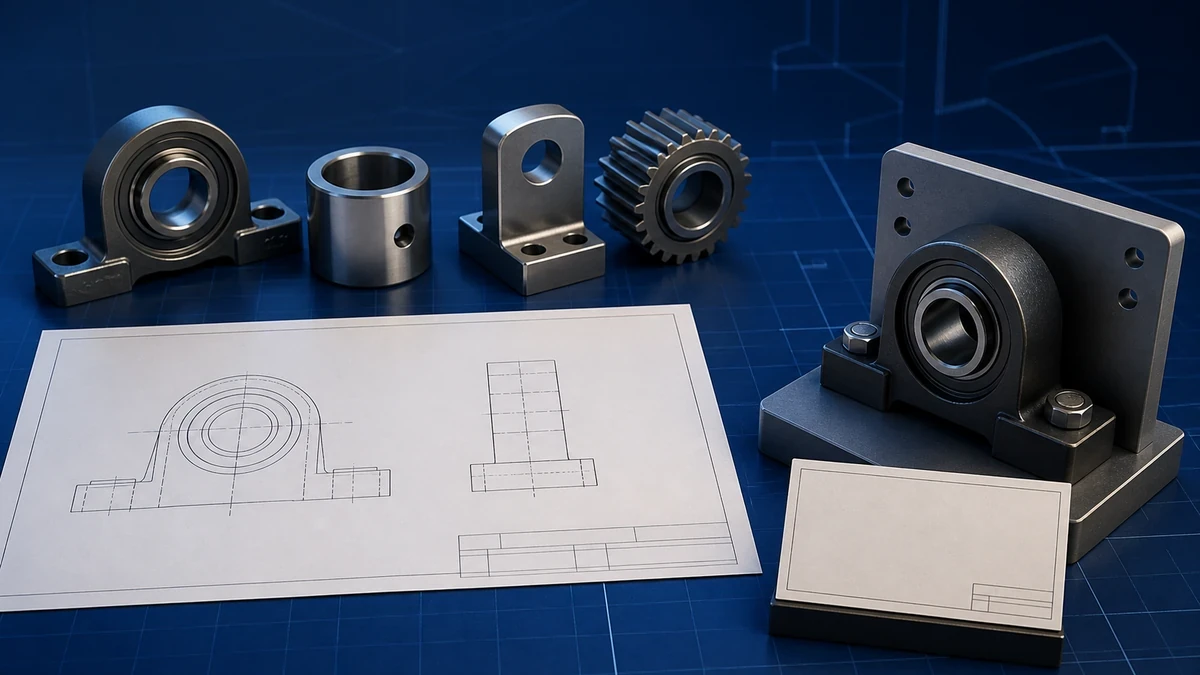
An exact drawing identifies the interfaces that must be controlled for the approved model route.
Artwork pack requirements
A practical artwork pack should include vector logo files, approved color references, font rules, spacing rules, and any mandatory packaging text. If the buyer has regional language requirements, these should be supplied as approved text rather than translated during production preparation.
Color matching, surface finish, print sharpness, and wear appearance can depend on material, marking method, component geometry, and sample approval. These should be reviewed against the exact model and the approved marking process, not assumed across every component family.
Buyer action checklist: artwork release
Before requesting a private-label quotation, prepare:
Approved logo files in editable vector format.
Artwork revision number and release date.
Brand owner or buyer approver name.
Permitted and prohibited product claims.
Packaging artwork, if private packaging is required.
Language and destination-market text requirements.
Rules for replacing, resizing, or omitting artwork on small parts.
A clear instruction on whether supplier branding is allowed, hidden, removed, or retained where required by documentation or law.
Product Marking: What Must Stay Model-Specific
Product marking should preserve required model-specific information first and place private branding around it second.
Private labeling should not overwrite electrical, mechanical, safety-related, or identification information that is required by the drawing, datasheet, instruction, certificate, or destination-market review. The approved marking layout should show both brand artwork and required technical content.
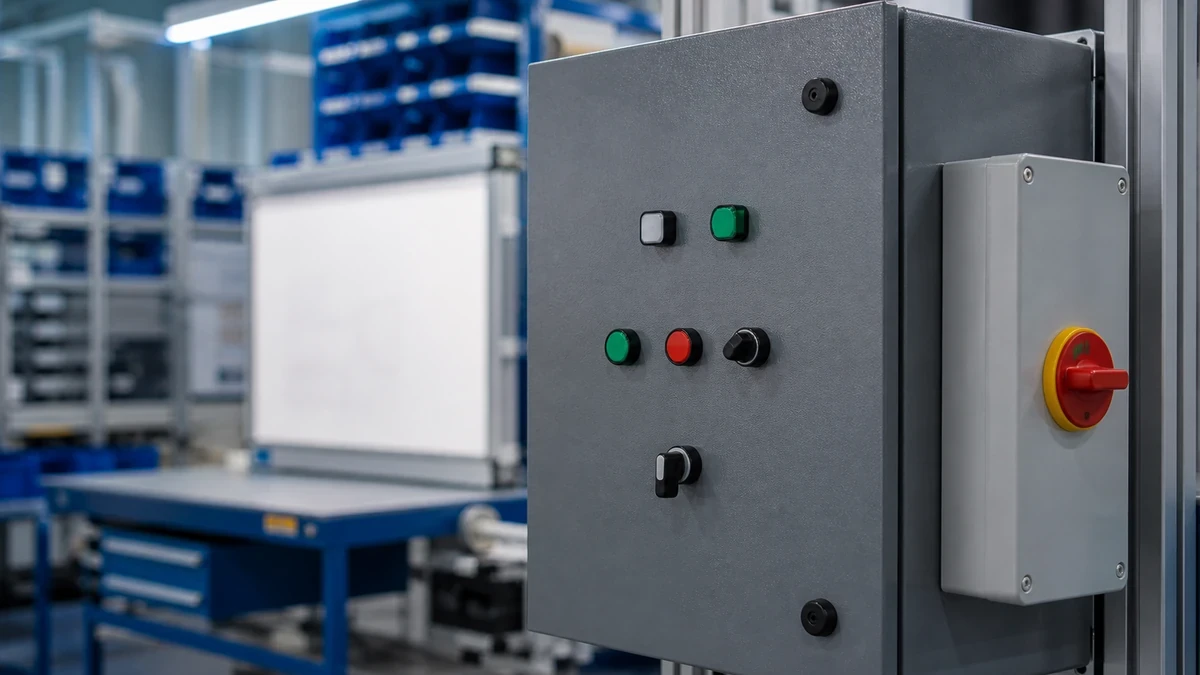
Sample review should connect the exact item to its current drawing and requested evidence package.
Marking hierarchy for private label industrial components
The first layer is the exact model identity and technical marking required for that product route. The second layer is traceability, such as batch, date, lot, drawing revision, or order reference where agreed. The third layer is private-label branding and packaging presentation.
If there is not enough physical space for all desired content, the buyer should decide which brand elements move to packaging, instruction sheets, or external labels. Technical and legally required content should not be compressed or removed without documented review.
Decision table: marking content and evidence
Marking element
Approval question
Evidence boundary
Model number or type reference
Which exact model is being private-labeled?
Current drawing, datasheet, and quotation route
Electrical data
What voltage, current, utilization, or other values may appear?
Exact-model documentation; not transferable by assumption
Wiring or contact information
Is a diagram, terminal reference, or contact code needed on the product or sheet?
Exact configuration drawing or instruction
Brand logo
Where can the buyer logo appear without blocking required data?
Approved artwork layout and sample
Traceability code
What code format is needed for order or batch investigation?
Agreed record plan and marking method
Certification or compliance marks
May any mark or claim be used on this exact product?
Current exact-model certificate or authorized documentation, if applicable
Packaging label
What resale, SKU, barcode, or language text is required?
Buyer-approved packaging file and destination-market requirements
Traceability: Batch, Model, Drawing, and Change Records
Traceability should connect the shipped product to the approved model route, artwork revision, drawing basis, and order record.
Traceability is a practical record system for investigation and repeat ordering. It should not be presented as anti-counterfeit proof, market certification, or a substitute for destination-market compliance review.
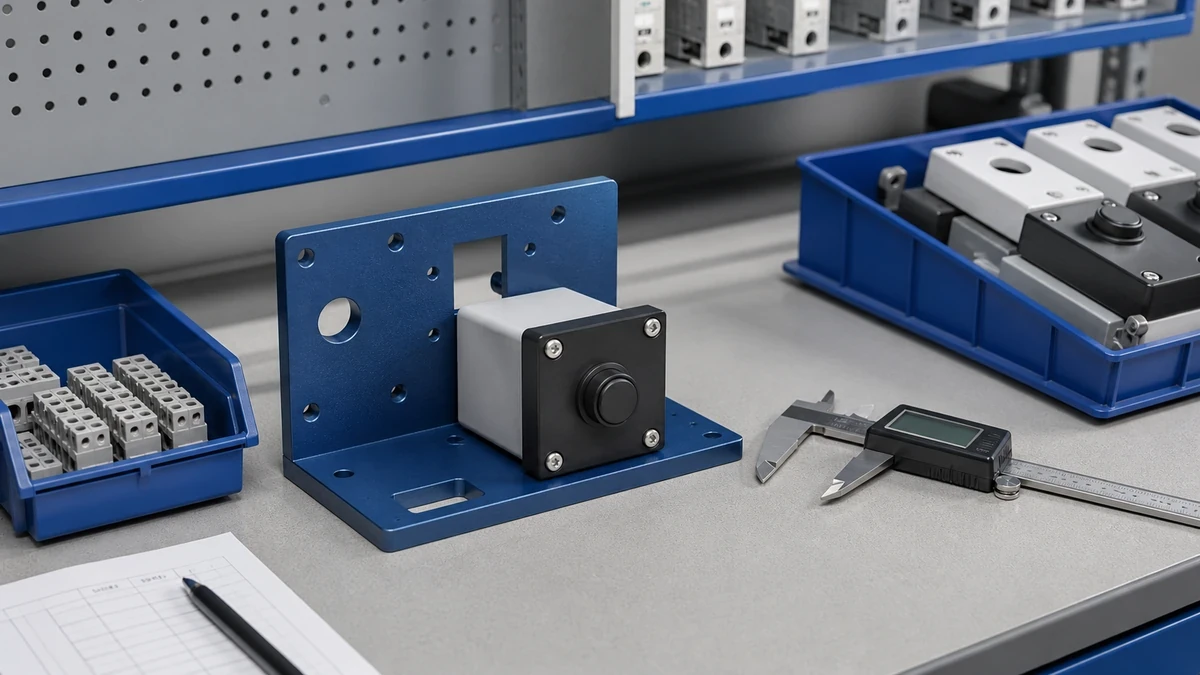
Installation conditions change the product-route and document questions a buyer must resolve.
Traceability levels to choose from
A buyer may only need order-level traceability for repeat purchasing, or may need batch and artwork revision traceability for private-brand control. The correct level depends on the buyer’s application, resale model, quality system, and documentation expectations.
Traceability level
Typical record link
When it may be useful
Order level
Purchase order, quotation, model route
Basic repeat purchasing and commercial reference
Batch or lot level
Production batch, shipment batch, inspection record if agreed
Field inquiry, distributor inventory separation, batch investigation
Artwork revision level
Logo file, packaging file, marking layout
Private-label brand control and reprint control
Drawing or configuration level
Product drawing, configuration code, approved option set
Engineering-controlled parts and repeat panel builds
Change-control level
Approved change notices, sample approvals, release records
Programs where substitution or marking changes require buyer approval
Records checklist for buyer verification
Define the following before production release:
The exact model reference used in the quotation.
The buyer SKU or private-label part number, if different.
Artwork revision and marking layout revision.
Drawing, datasheet, or configuration revision used for approval.
Batch, date, or lot code format where required.
Packaging label revision and barcode rules, if applicable.
Sample approval record and approver.
Change-control triggers and notification contacts.
Documentation and Destination-Market Review
Documentation review should prove what can be supported for the exact model and destination market, not create broad claims for the private label.
A private brand does not automatically inherit every statement a buyer wants to place in a catalog. Ratings, certificates, declarations, instructions, and marking rights must be checked against the current exact-model documentation and the market where the component will be sold or used.
Document pack to request
The document pack may include drawings, datasheets, wiring diagrams, operating instructions, material information, packaging label files, and certificates where current and applicable to the exact model. The buyer should specify which documents are needed for engineering review, purchasing approval, distributor onboarding, or destination-market review.
Do not assume one product family has the same documentation route as another. Even within one family, options such as mounting style, contact arrangement, enclosure, handle, operator, or DC/AC application route may change what must be reviewed.
Standards references and evidence boundaries
For switch-disconnector type discussions, the IEC 60947-3 scope is relevant only as a standards-scope reference: IEC describes this scope as switches, disconnectors, switch-disconnectors and fuse-combination units within stated distribution- and motor-circuit AC/DC limits.
That scope statement does not mean every private-label item is covered, certified, or suitable for a buyer’s application. Any standard reference, certificate claim, or catalog statement should be confirmed against the current exact model, documentation, certificate status where applicable, and destination-market requirements.
Destination-market review checklist
Before approving a private-label launch, confirm:
Countries or regions where the component will be sold or installed.
Required language for labels, instructions, and packaging.
Whether the buyer will resell the item standalone or install it into equipment.
Whether existing certificates, if any, apply to the exact private-label route.
Whether private branding affects label layout or allowed claims.
Who approves catalog text, web listings, and distributor data.
Whether the buyer needs engineering drawings, product photos, or packaging samples for internal release.
Family-Specific Private Label Considerations
Family selection should start from the component function and exact model route, not from the logo position or packaging concept.
A buyer can review the Shieldhz industrial control component range to identify the relevant family, then narrow the request to an exact model, configuration, and documentation route. The private-label approval package should follow the family-specific risks and marking limits.
Switching and isolation model routes
For cam switching applications, start from the rotary cam switch range and confirm the exact switching program, contact arrangement, handle type, panel mounting, marking plate, and electrical data required for the buyer’s application.
For photovoltaic DC isolation discussions, review the PV DC isolator switch range and confirm the exact DC application route, pole configuration, enclosure or mounting format, destination-market documentation, and label requirements. Do not treat an isolator or switch as a circuit breaker or as overcurrent protection.
For enclosed isolation formats, the waterproof isolator box range should be reviewed by exact box, switch route, enclosure format, cable entry expectations, marking space, and installation environment described by the buyer.
Operator and indication model routes
For panel operators and indicators, the push button and indicator light range should be reviewed by mounting diameter, operator style, contact or lamp arrangement, legend, color, illumination, and marking requirement.
If the request involves an emergency-stop operator, selecting the operator does not validate a complete machine safety function. The complete safety function depends on the machine design, risk assessment, architecture, monitoring, wiring, validation, and applicable standards selected by the machine builder or system designer.
Is the operator only one element of a wider safety function?
Machine risk assessment owner, safety architecture owner, validation plan owner
How Shieldhz confirms a industrial control component portfolio route
Shieldhz confirms a private-label route by narrowing the request to the application, destination market, product family, and exact model before artwork or commercial release.
This avoids treating private labeling as a generic decoration step. Final suitability is confirmed against current product documentation and the buyer’s application.
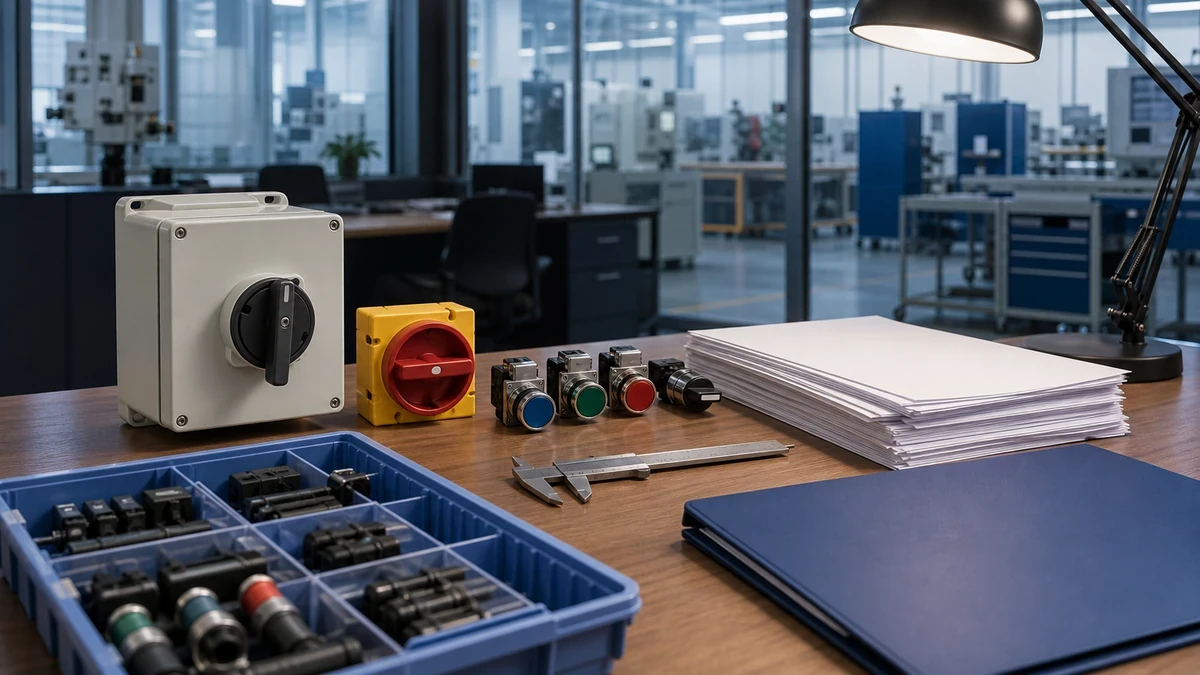
Documentation control, sample acceptance and protective packing are separate handover checks.
Pre-quotation confirmation inputs
A practical pre-quotation review should capture:
Application: how the buyer intends to use or resell the component.
Destination market: where it will be sold, installed, or incorporated into equipment.
Product family and exact model route: the family, configuration, options, and model under review.
Electrical inputs: voltage, current, AC/DC context, contact arrangement, utilization or duty information where relevant.
Mechanical inputs: mounting style, panel cutout, handle/operator type, enclosure, dimensions, cable entry, and installation constraints where relevant.
Requested documentation: datasheet, drawing, wiring diagram, instruction, packaging label, certificate, or declaration requests where applicable and available.
Marking requirements: logo, model reference, technical marking, traceability code, language, barcode, and packaging label.
Sample and change-control plan: sample quantity, approval criteria, reapproval triggers, and change notification contacts.
Commercial handover requirements: buyer SKU, packaging quantity, documentation language, shipping mark, invoice description, and distributor data needs.
Approval records and quotation output
The quotation should identify the proposed product route, known documentation boundaries, artwork assumptions, sample requirements, and open approval items. If a request depends on a certificate, drawing, datasheet, or destination-market requirement, the quotation should make that dependency visible.
The buyer should not approve catalog text, web listings, or resale packaging until the exact model route and marking file are confirmed. This protects both the brand presentation and the technical record behind the private label.
Sample Approval, Change Control, and Production Release
Production release should follow an approved sample, a controlled record set, and written change rules.
The approved sample is the bridge between artwork intent and repeatable purchasing. It should be reviewed as a component and as a branded item, not only as a photograph.
First-sample approval checklist
Review the sample against:
Exact model and configuration.
Artwork position, scale, color, and orientation.
Technical marking content and readability.
Traceability code location and format.
Packaging label, barcode, and buyer SKU.
Instruction sheet or document pack, if included.
Mechanical fit against the buyer’s drawing or panel.
Electrical data against the current datasheet and buyer’s stated requirement.
Any deviations listed by the supplier before approval.
Change-control triggers
A written change-control plan should define when reapproval is required. Typical triggers include changes to the exact model route, drawing, artwork revision, marking method, packaging file, traceability format, supplier-approved substitute, or documentation basis.
Change trigger
Why it matters
Buyer action
Artwork or logo revision
Brand presentation changes
Approve new file and sample if needed
Marking layout change
Technical data or readability may change
Review against current documentation
Exact model route change
Fit, function, rating, or documentation may differ
Reconfirm application and datasheet
Packaging change
Distributor data, barcode, or language may differ
Approve packaging file and label
Documentation change
Catalog or compliance statements may need review
Update internal release records
Traceability format change
Investigation and repeat order records may be affected
Approve new code format
Conclusion
Private label industrial components require more than a logo file. The buyer should own the approval package: exact model route, artwork, technical marking, traceability, destination-market documentation, sample approval, and change control.
Shieldhz can support the route confirmation process by aligning the product family, exact model, marking approach, document request, and quotation assumptions. Final suitability remains dependent on current product documentation and the buyer’s application.
Frequently Asked Questions
Who owns private-label approval requirements?
The buyer owns the private-label approval requirements. This includes brand approval, application fit, destination-market review, catalog claims, documentation needs, sample release, and change-control expectations.
Can private labeling change a product’s ratings or technical status?
No. Private labeling should not be used to change ratings, certificates, or technical status. Any rating, marking, certificate, or documentation claim must be checked against the current exact model and applicable evidence.
Is traceability the same as anti-counterfeit protection?
No. Traceability links a shipment or product to records such as model route, order, batch, drawing, artwork revision, or packaging file. It should not be presented as anti-counterfeit certification or proof of market compliance.
What information is needed before a private-label quotation?
The buyer should provide the application, destination market, product family, target model or function, electrical and mechanical requirements, artwork files, marking rules, requested documents, sample needs, traceability expectations, and commercial handover details.
Does selecting an emergency-stop operator validate a machine safety function?
No. Selecting an emergency-stop operator does not validate a complete machine safety function. The complete function depends on machine design, risk assessment, wiring, monitoring, architecture, validation, and applicable standards selected by the machine builder or system designer.
How should artwork changes be handled after approval?
Artwork changes should be handled as controlled revisions. The buyer should issue a new artwork file, update the revision record, confirm whether a new sample is required, and approve any related marking or packaging changes before production release.
Shi, Muxi
Shi, Muxi writes Shieldhz technical articles for industrial control and electrical component buyers, covering rotary cam switches, isolator switches, PV DC disconnects, push buttons, indicator lights, waterproof enclosures, and terminal blocks. The articles are based on Zhejiang Shihe Electric Co., Ltd.'s manufacturing and export experience, with practical emphasis on model selection, datasheets, drawings, certifications, IP ratings, and inquiry details buyers should confirm before ordering.