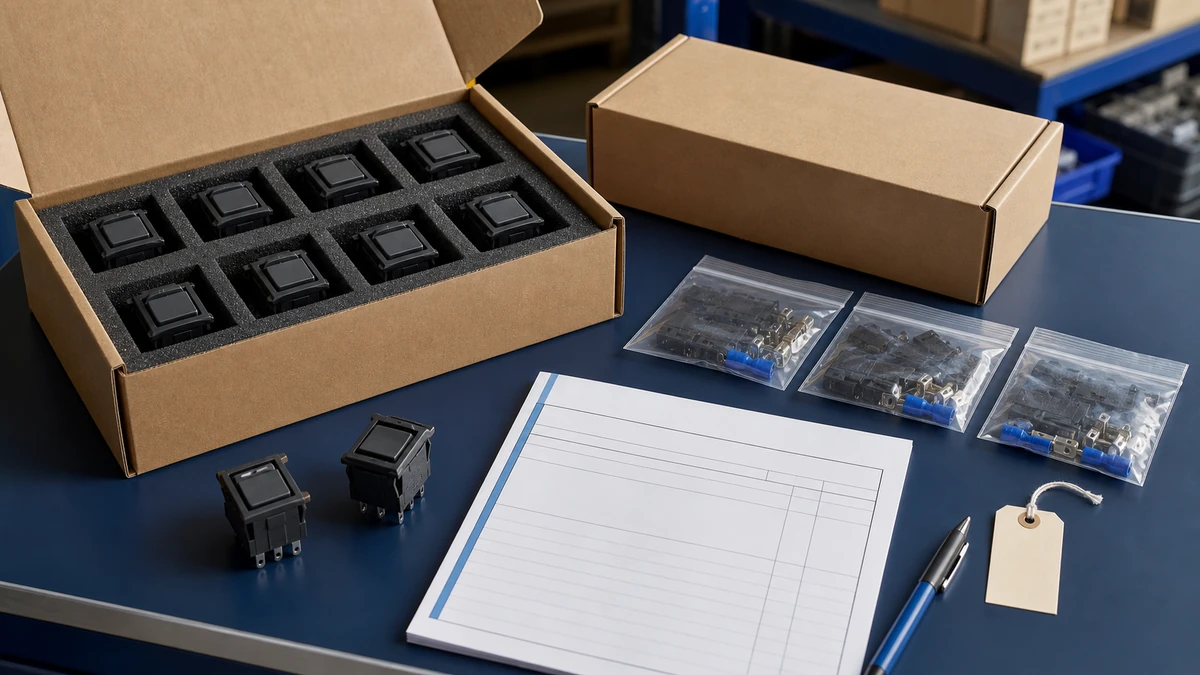
Industrial Control Component Sample Approval: A Buyer Checklist Before Bulk Order
Use a practical buyer checklist to evaluate industrial control component sample approval inputs, documentation, approval controls and the exact industrial control component portfolio route.
Industrial control component sample approval should confirm that the selected model, documentation, markings, fit, and commercial controls are ready for repeatable production purchasing before a bulk order is released.
Approve the exact model route, not only the product category.
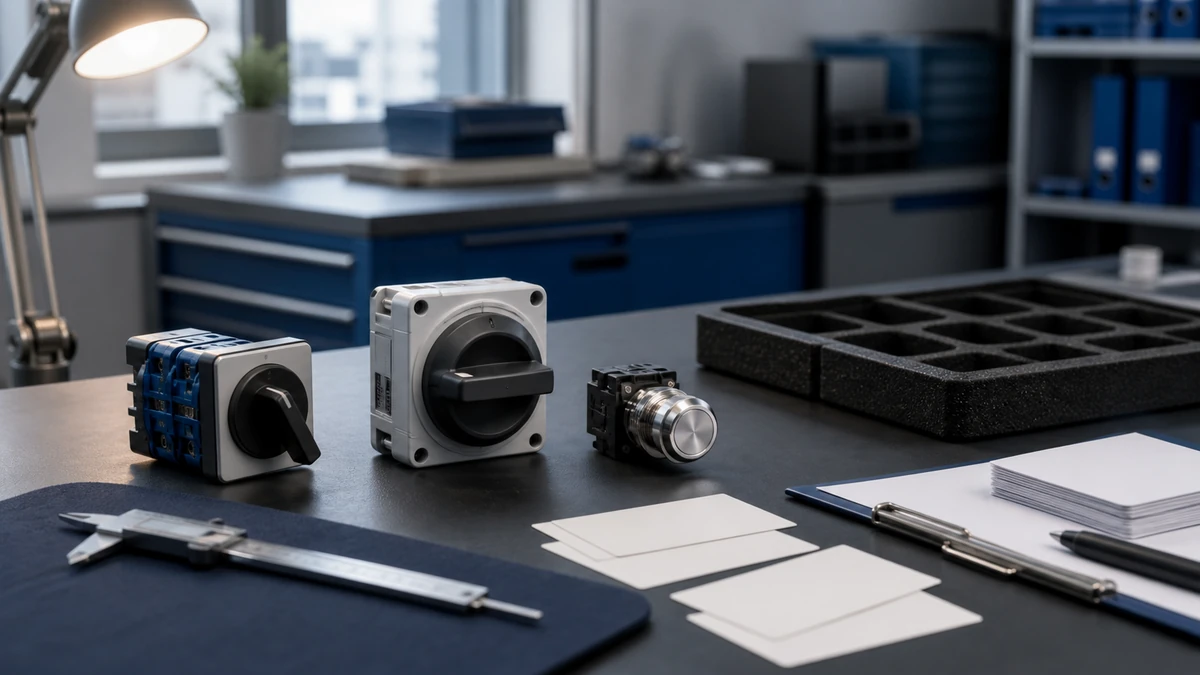
Compare the physical sample against the current drawing, datasheet, quotation, and destination-market requirements.
Record the approved sample status, packaging, labeling, change-control rule, and bulk-order handover conditions.
Why sample approval matters before bulk order
Sample approval is the buyer’s control point between product interest and production purchasing. It turns a general sourcing discussion into a documented decision about one exact component route for one defined application.
For OEMs, panel builders, engineering distributors, and procurement teams, the key decision is not whether the supplier has a broad product family. The key decision is whether the sampled model, its documentation, and the agreed commercial conditions are suitable to release for a controlled bulk order.
Shieldhz product selection can start from the Shieldhz industrial control component range, but the sample approval file should narrow that range to an exact model, configuration, and order description.
What sample approval should decide
A practical industrial control component sample approval should decide whether the buyer can proceed to pilot build, production release, or distributor stock purchase.
It should confirm:
The product family and exact model code.
Electrical and mechanical inputs used for selection.
Drawing or datasheet revision checked by the buyer.
Marking, packaging, and labeling expectations.
Required documents for quotation and purchasing.
Whether any buyer-specific approval conditions remain open.
What sample approval should not decide
Sample approval should not invent performance evidence that is not in the current product documentation, certificate, or buyer test record.
It also should not replace the buyer’s system design responsibility. For example, selecting an emergency-stop operator does not validate a complete machine safety function; the full safety function depends on the machine design, risk assessment, wiring architecture, monitoring, validation, and applicable destination-market requirements.
Define the sample-to-production approval path
A sample should move through named approval gates before a bulk order is released. This prevents the common problem where a sample is accepted informally, but purchasing later orders a different model, marking, accessory, or packaging condition.
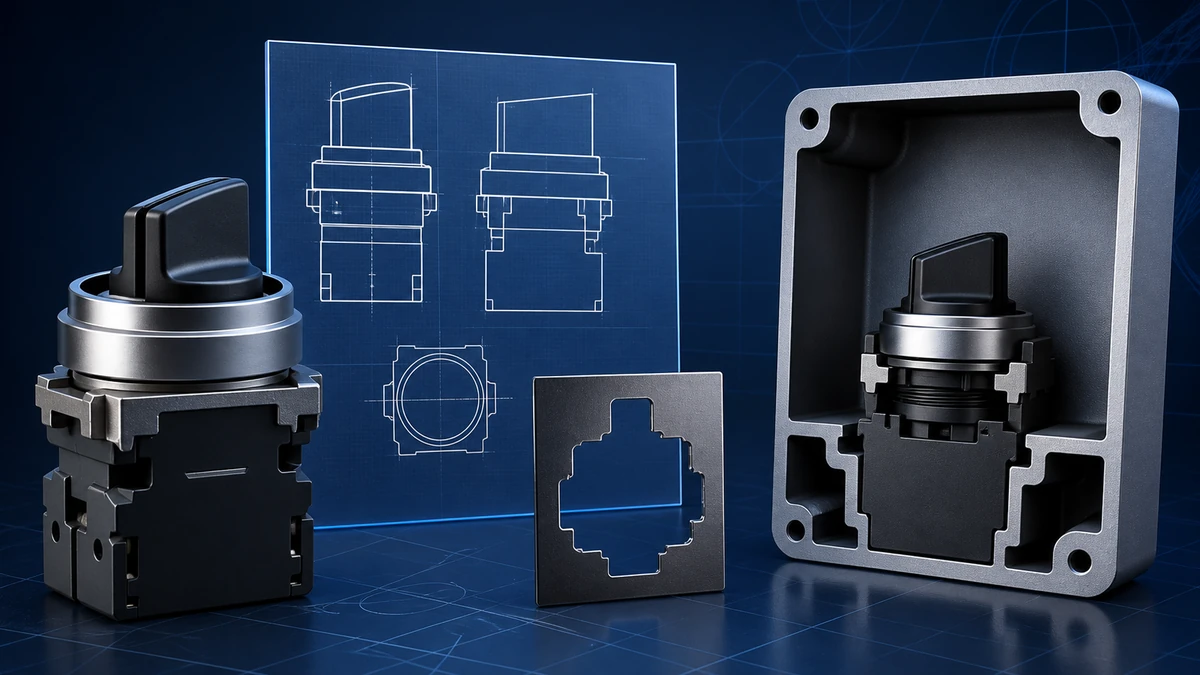
An exact drawing identifies the interfaces that must be controlled for the approved model route.
Approval gate structure
A controlled path can be simple. The important point is that engineering, quality, and procurement all work from the same approved record.
Use these gates:
Application intake — define where the component will be used.
Model route selection — select product family, exact model, and configuration.
Sample request — agree sample quantity, marking, accessories, and documents.
Buyer verification — check the sample against drawing, datasheet, and project requirements.
Conditional or full approval — record open items or release status.
Bulk-order handover — convert the approved file into a quotation and purchase order basis.
Decision table: sample status and purchase action
Sample status
What it means
Buyer action before bulk order
Not reviewed
Sample received but not checked against documents
Do not release bulk order
Engineering review open
Fit, function, marking, or documentation still under review
Hold purchasing or order only for agreed evaluation purpose
Conditionally approved
Minor open items remain, such as label format or document confirmation
Release only if the condition is written into the quotation or approval file
Approved for pilot build
Sample may be used for limited build verification
Keep pilot and mass-production approval separate
Approved for bulk order
Exact model, documents, marking, packaging, and commercial handover are agreed
Release purchase order using the approved model and revision basis
Match the product family to the buyer application
The sample request should start with the application route, because different product families require different approval evidence. A selector, isolator, operator, indicator, or enclosure route should not be treated as interchangeable only because they are all industrial control components.
Rotary cam switch route
For switching or selector functions, buyers can review the rotary cam switch range as a product-family route.
Before requesting a sample, define the intended switching function, positions, contact arrangement, mounting style, handle type, electrical inputs, and panel interface. Final suitability depends on the exact model documentation and the buyer’s circuit design.
PV DC isolator route
For photovoltaic or DC isolation applications, buyers can review the PV DC isolator switch range as a route to narrow.
The sample approval should confirm the exact model, DC application inputs, enclosure or mounting arrangement if applicable, marking, and destination-market documentation requested by the buyer. A PV DC isolator should be selected and applied according to its current product documentation and the buyer’s application conditions.
Push button and indicator route
For machine interface, control station, indication, or operator functions, buyers can review the push button and indicator light range as a starting point.
Approval should identify operator type, color, legend, illumination requirement if any, contact arrangement if applicable, mounting hole interface, and panel layout. If the operator is used for an emergency-stop interface, selecting the operator alone does not validate the complete machine safety function.
Waterproof isolator box route
For enclosed isolation or outdoor-style mounting routes, buyers can review the waterproof isolator box range and then confirm the exact model.
The approval should verify enclosure format, cable-entry expectations, mounting arrangement, markings, accessory needs, and destination-market document requests. Any ingress, environmental, or installation suitability must be checked against the exact model documentation and the buyer’s installation conditions.
Verify the physical sample against the approval file
The sample should be checked as a controlled object, not only as a visual reference. The buyer should compare what arrived with what was requested, quoted, and documented.
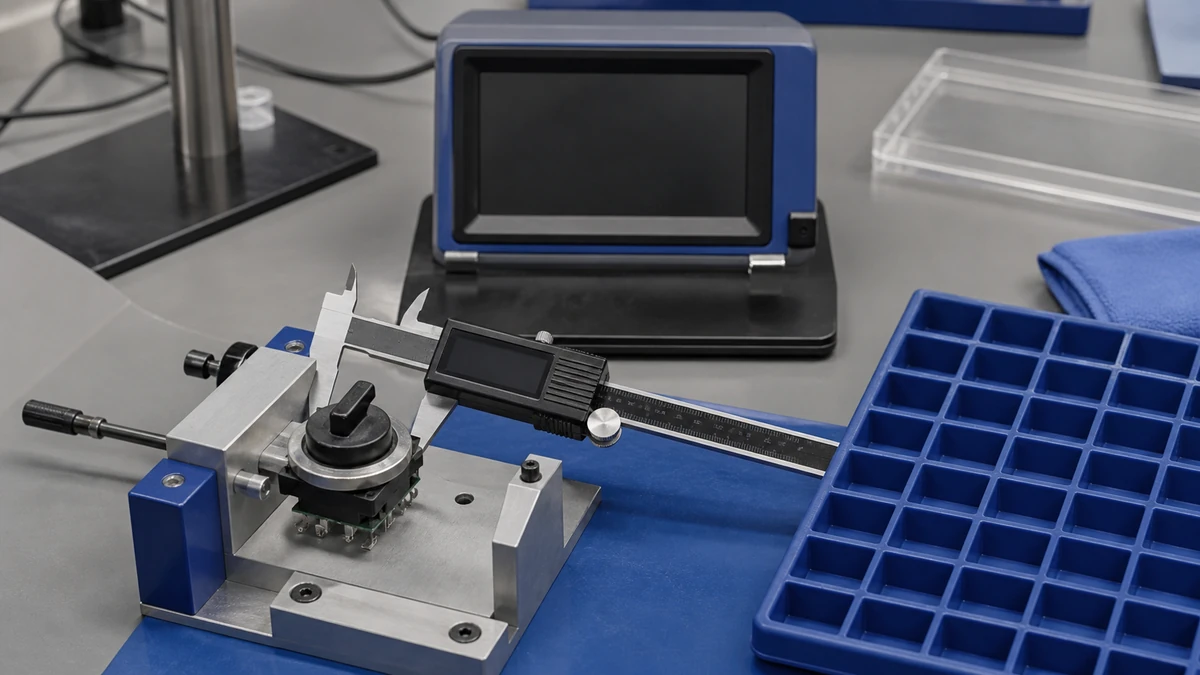
Sample review should connect the exact item to its current drawing and requested evidence package.
Nameplate, label, and model identity
Start with identity. A sample that looks correct but has a different model code, marking, or accessory configuration can create production risk later.
Check:
Model code and product family.
Rating and marking information shown on the sample.
Handle, button, lens, enclosure, or mounting configuration.
Accessory or contact configuration where applicable.
Packaging label and carton identification.
Any buyer-requested legend, logo, or label rule.
Fit, mounting, operation, and interface
Then check the mechanical and electrical interface relevant to the buyer’s design. Do not rely on catalog family photos for release.
Buyer verification checklist:
Compare key dimensions against the drawing supplied for the exact model.
Confirm panel cutout, mounting depth, mounting orientation, and clearance needs.
Check handle, button, indicator, or enclosure operation for the intended user interface.
Confirm conductor entry or connection interface according to the exact model documentation.
Verify that the sample can be assembled into the buyer’s panel, enclosure, or equipment layout.
Record any deviation with photos, drawing notes, and a disposition decision.
Request documentation before approving the sample
Documentation should be requested before sample sign-off, because purchasing cannot control repeat orders from a sample photo alone. The document set depends on the exact model, destination market, and buyer application.
Drawing, datasheet, and certificate comparison
A practical sample file should include the documents that procurement will later use to order the same item again.
Request and compare, where applicable:
Current datasheet for the exact model.
Dimensional drawing or installation drawing.
Electrical and mechanical configuration information.
Marking or nameplate information.
Certificate or declaration requested for the destination market, if available for that exact model.
Quotation description matching the approved model route.
Packaging or labeling requirement if relevant to production or distribution.
Standards and market evidence boundary
Standards references must be handled carefully. The fact that a product family is associated with a standard does not automatically approve every configuration for every buyer application or market.
For switching and isolation categories, the IEC 60947-3 scope describes switches, disconnectors, switch-disconnectors and fuse-combination units within stated distribution- and motor-circuit AC/DC limits. Buyers should still confirm the exact model documentation, certificate status where required, and the destination-market acceptance path before bulk order.
How Shieldhz confirms a industrial control component portfolio route
Shieldhz confirms a portfolio route by narrowing the buyer’s request from application need to exact model, document basis, and quotation handover requirements. Final suitability is confirmed against current product documentation and the buyer’s application.
Pre-quotation confirmation inputs
Before quotation, the useful confirmation is practical and model-specific.
Provide:
Application description.
Destination market or shipment market.
Product family being considered.
Exact model route if already known.
Electrical inputs relevant to the component selection.
Mechanical inputs such as mounting, panel layout, handle or operator format, enclosure need, and space limits.
Requested documentation, such as datasheet, drawing, certificate, declaration, or marking information.
Sample quantity and sample purpose.
Required packaging, labeling, or distributor stock identification rules.
Approval records, marking, change control, and handover
The quotation should reflect the approved route clearly enough for procurement and quality teams to control repeat orders.
Handover checklist:
Record the approved model description and configuration.
Attach or reference the drawing and datasheet revision used for approval.
Confirm commercial conditions such as order description, packing basis, and delivery request as quotation-dependent items.
Keep sample approval records with the first bulk purchase order.
Use an engineering and procurement decision table before sign-off
The final sign-off should combine engineering release and purchasing control. A sample can be technically acceptable but still not ready for bulk order if the quotation, model code, or documentation record is incomplete.
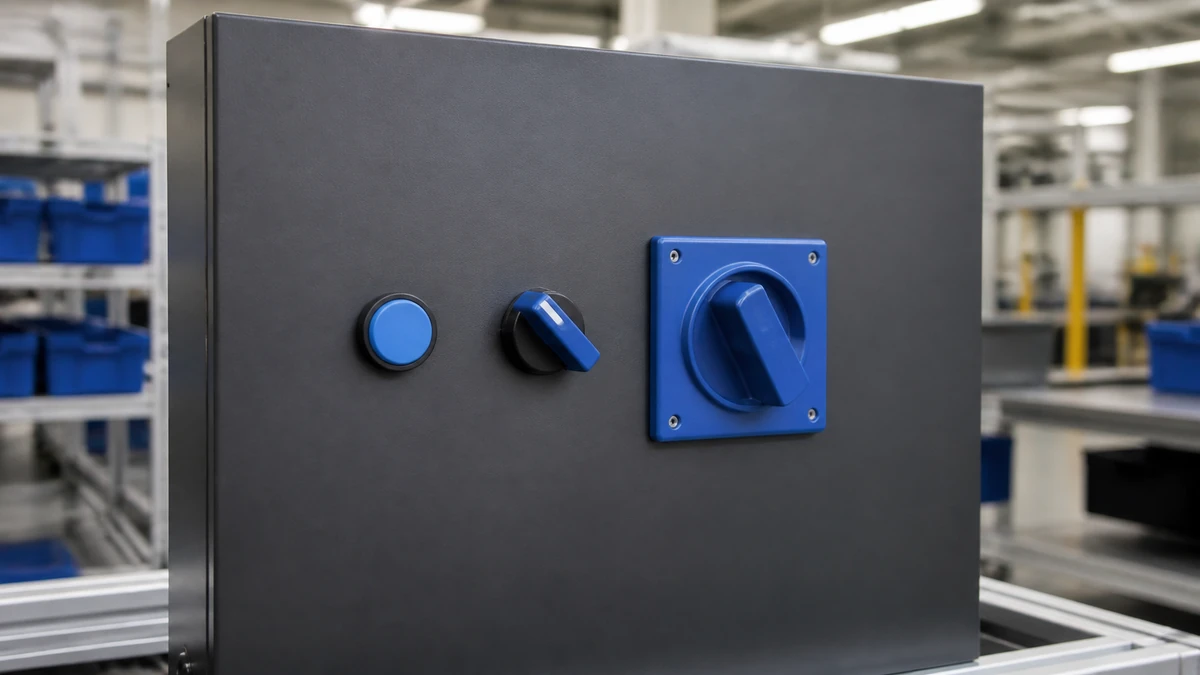
Installation conditions change the product-route and document questions a buyer must resolve.
Engineering release controls
Engineering should release the sample only after the exact application assumptions are written down. This includes the electrical role, panel or enclosure interface, operator requirements, installation context, and any destination-market document needs.
If the design changes after approval, the sample status should be reviewed again. A change in handle type, contact arrangement, enclosure format, marking, or mounting condition can affect the approval file.
Commercial release controls
Procurement should release the bulk order only when the approved item can be purchased without ambiguity.
Decision area
Release question
If not confirmed
Model identity
Does the PO description match the approved exact model?
Hold order until model route is corrected
Documentation
Are the drawing, datasheet, and requested documents identified?
Request document confirmation before release
Marking and label
Are buyer-required markings or labels written into the file?
Treat as open approval condition
Packaging
Is any special packaging or distributor label requirement defined?
Confirm before bulk order
Change control
Is supplier-side or buyer-side change approval rule clear?
Add written approval rule
Commercial handover
Does the quotation match the approved sample basis?
Reconcile quotation before PO issue
Control conversion from sample to production order
Bulk-order conversion should preserve the approved sample conditions. The main risk is not that the first sample was reviewed; it is that the production purchase order later describes the item differently.
Golden sample and controlled file
For repeat production, many buyers keep a golden sample or approved sample record. The record should be good enough for a new buyer, inspector, or engineer to understand what was approved.
Include:
Sample photos showing identifying marks.
Approved model code and configuration.
Drawing and datasheet references.
Approval date and approver.
Open conditions, if any.
First bulk PO reference.
Change-control instruction.
Incoming checks for first bulk order
Incoming inspection should be proportionate to the buyer’s risk and application. It should not create invented certification or test claims; it should compare the delivered goods against the approved file.
Documentation control, sample acceptance and protective packing are separate handover checks.
First bulk-order checklist:
Confirm carton label and model identity.
Compare visible marking against approved sample record.
Check selected dimensions or mounting interfaces defined by the buyer.
Confirm accessories, handles, lenses, operators, or enclosures match the approved configuration.
Verify documentation supplied with the shipment or held in the purchasing file.
Record deviations and quarantine affected items until disposition.
Manage changes after approval
Post-approval changes should be controlled before the next purchase order. Even a small difference can matter when a component is built into a panel, machine, or stocked as a distributor item.
Buyer-side changes
Buyer-side changes include design updates, destination-market changes, enclosure revisions, panel layout changes, or a new customer specification.
If any of these occur, repeat the relevant part of the sample approval path. Do not assume the earlier approval still applies to the revised application.
Supplier-side or quotation changes
Supplier-side changes that affect model route, marking, accessory configuration, drawing, documentation, packaging, or quotation description should be reviewed before production release.
A practical purchase rule is simple: if the delivered item would no longer match the approved sample file, buyer approval is required before shipment.
Conclusion
Industrial control component sample approval is a decision system, not a formality. It protects the transition from product selection to controlled purchasing by confirming the exact model, documentation, marking, fit, sample record, and commercial handover before bulk order.
For OEMs, panel builders, distributors, and procurement teams, the strongest approval file is concise but specific. It identifies the application, destination market, product family, exact model route, drawing basis, documentation request, sample status, and change-control rule. Final suitability remains dependent on the current product documentation and the buyer’s application.
Frequently Asked Questions
What is industrial control component sample approval?
It is the buyer’s documented review of a sample before releasing a bulk order. The review should confirm the exact model, configuration, documentation, markings, fit, packaging, and purchasing description.
Can a sample approval replace system or machine validation?
No. A component sample approval only supports the component purchasing decision. System design, machine validation, safety function validation, and destination-market compliance remain separate buyer responsibilities.
Should procurement wait for engineering approval before bulk order?
Yes, if the component affects fit, function, marking, documentation, or customer specification. Procurement should order against the approved model and approval file, not only a product photo or informal sample comment.
What documents should be checked before approval?
Common documents include the current datasheet, drawing, quotation description, marking information, and any certificate or declaration requested for the exact model and destination market. Availability and relevance depend on the specific component route.
What happens if the sample is acceptable but the quotation description is unclear?
Treat the sample as not ready for bulk order. The quotation and purchase order should clearly match the approved model, configuration, packaging, and documentation basis.
When should a new sample approval be required?
A new approval should be considered when the model, configuration, marking, mounting condition, enclosure route, destination market, buyer application, or relevant documentation basis changes.
Shi, Muxi
Shi, Muxi writes Shieldhz technical articles for industrial control and electrical component buyers, covering rotary cam switches, isolator switches, PV DC disconnects, push buttons, indicator lights, waterproof enclosures, and terminal blocks. The articles are based on Zhejiang Shihe Electric Co., Ltd.'s manufacturing and export experience, with practical emphasis on model selection, datasheets, drawings, certifications, IP ratings, and inquiry details buyers should confirm before ordering.