IP65, IP66, and IP67 are ingress protection ratings defined by IEC 60529. All three are fully dust-tight. The difference is water resistance: IP65 handles low-pressure jets, IP66 handles powerful jets, and IP67 handles temporary submersion up to 1 metre for 30 minutes. For most outdoor electrical enclosures, IP65 is the minimum practical baseline. IP66 suits washdown and exposed coastal sites. IP67 is required where standing water or flooding is a realistic risk. Choosing the wrong rating is one of the most common causes of premature enclosure failure in the field.
First digit (0-6): Protection against solid particles, including dust and tools.
Second digit (0-9K): Protection against water ingress.
A rating of IP65 means: first digit 6 (dust-tight), second digit 5 (low-pressure water jets from any direction).
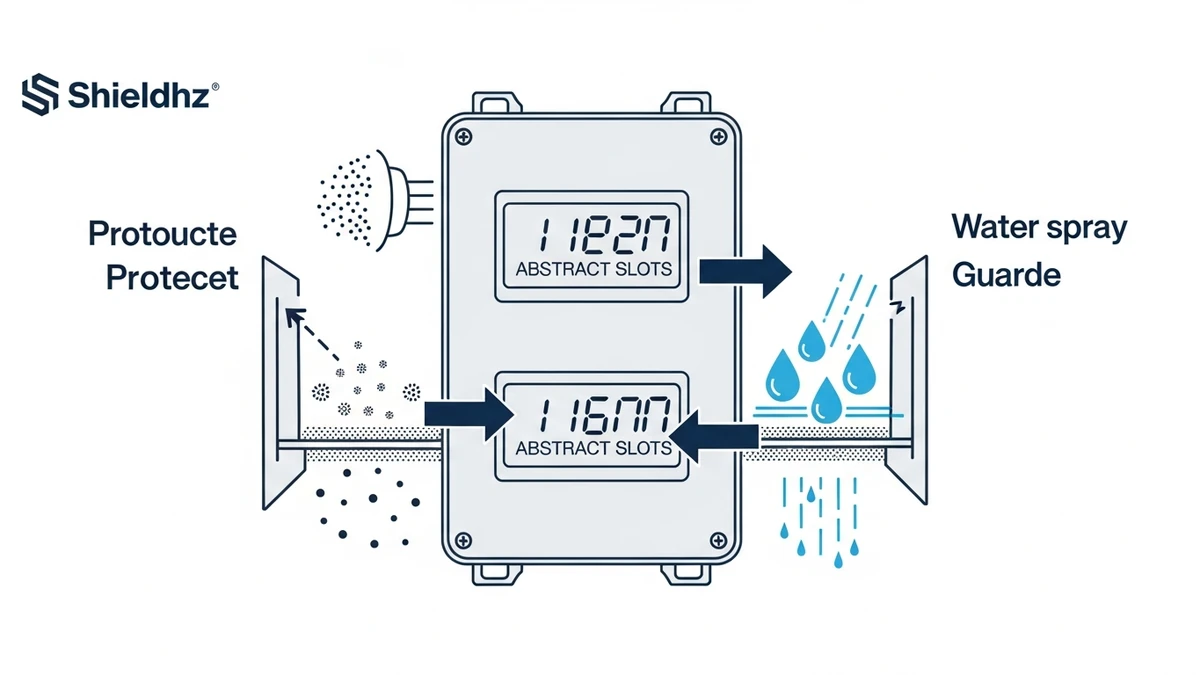
Figure 1. The first IP digit describes solid particle protection, while the second digit describes water ingress protection.
First Digit: Solid Particle Protection
First Digit
Protection Level
0
No protection
1
Objects larger than 50 mm
2
Objects larger than 12.5 mm
3
Objects larger than 2.5 mm
4
Objects larger than 1 mm
5
Dust-protected (limited ingress, no harmful deposit)
6
Dust-tight (no ingress)
IP65, IP66, and IP67 all carry a first digit of 6. This means no dust enters the enclosure under test conditions. For electrical components in industrial or outdoor environments, dust-tight is the correct minimum. Anything below 6 is unsuitable for most panel or outdoor isolation applications.
Second Digit: Water Ingress Protection
Second Digit
Test Condition
4
Splashing water from any direction
5
Low-pressure jets (12.5 L/min, 30 kPa, 3 m distance)
6
Powerful jets (100 L/min, 100 kPa, 3 m distance)
7
Temporary immersion: 1 m depth, 30 minutes
8
Continuous immersion beyond 1 m (manufacturer-specified)
9K
High-pressure, high-temperature jets
IP65 vs IP66 vs IP67: Direct Comparison
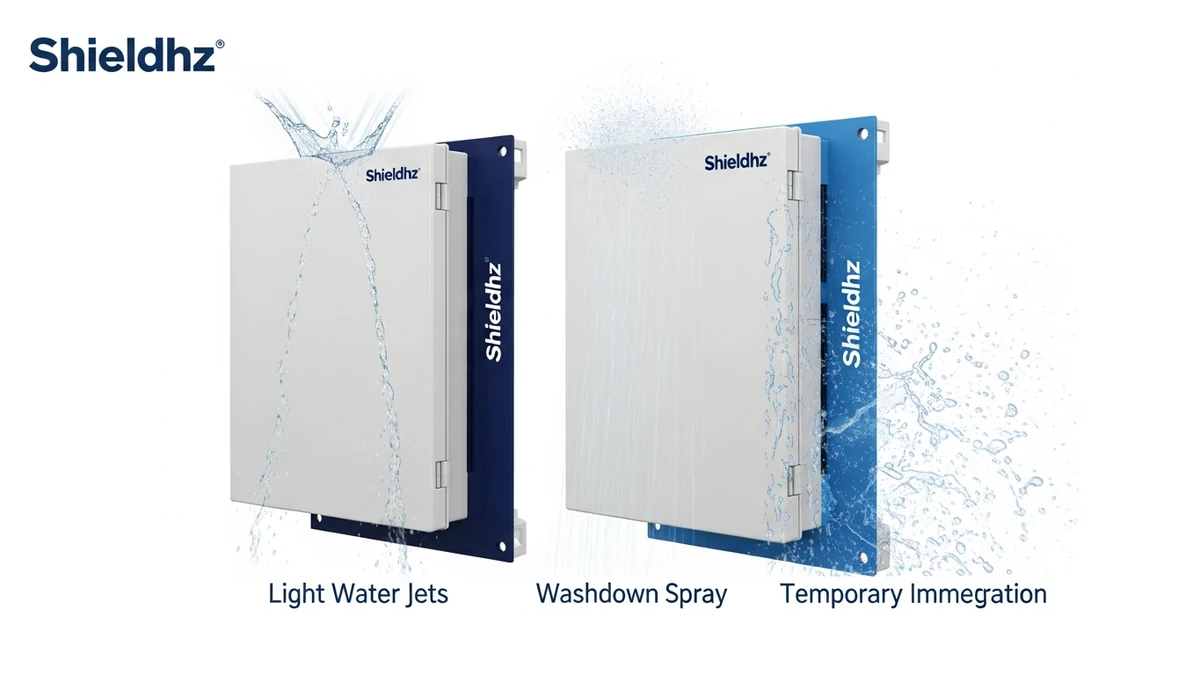
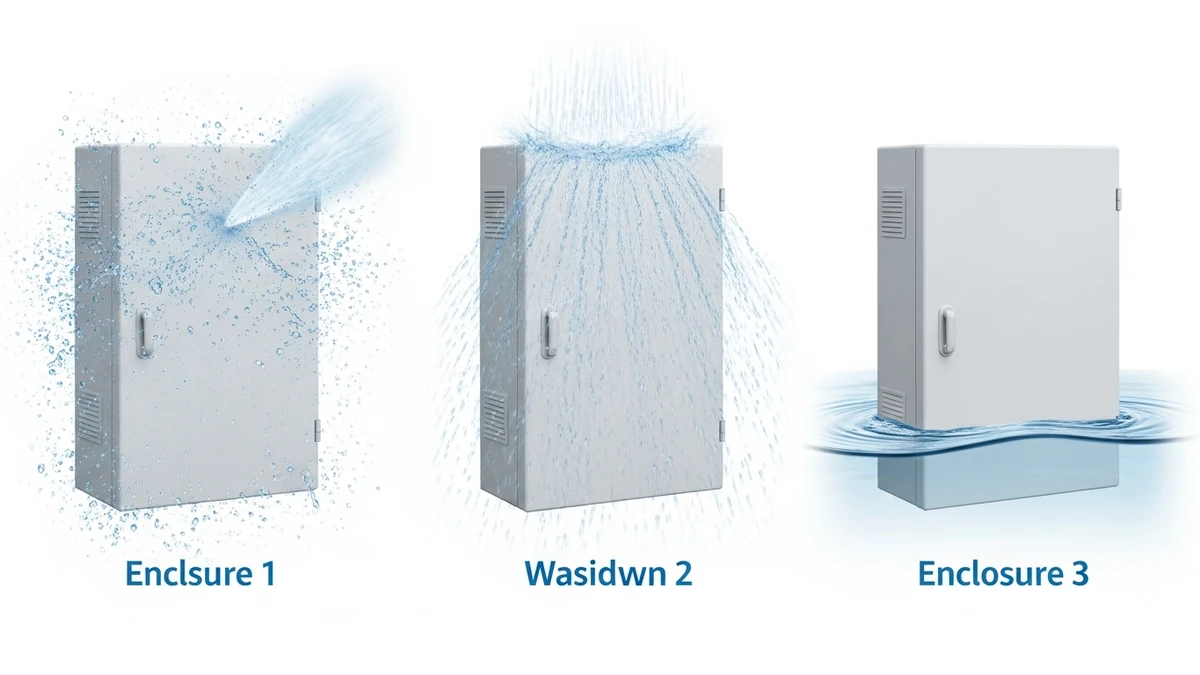
Figure 2. IP65, IP66, and IP67 are different exposure ratings, not a single universal waterproof level.
Rating
Dust-Tight
Water Test
Typical Use Case
IP65
Yes
Low-pressure jet, any direction
Outdoor enclosures, light rain, general industrial
A higher second digit does not automatically include the lower test. An IP67-rated enclosure has been tested for immersion but not necessarily for the sustained jet pressure of IP66. If your site involves both washdown and potential flooding, look for a product rated IP66/IP67 or IP67 with confirmed jet resistance in the datasheet.
This is not a minor technicality. It matters when specifying enclosures for pump stations, solar array combiner boxes, or outdoor isolation points near drainage channels.
What Each Rating Does and Does Not Prove
IP ratings are test results, not guarantees of long-term field performance. The test is conducted on a new, correctly assembled enclosure under controlled laboratory conditions.
What an IP rating does not cover:
Aging and UV degradation. Polycarbonate and ABS enclosures degrade under prolonged UV exposure. The IP test does not simulate years of sunlight. Check whether the enclosure material is UV-stabilised.
Thermal cycling. Repeated heating and cooling compresses and relaxes gaskets. A gasket that seals correctly at installation may lose compression over two or three years.
Drilled knockouts and cable entries. The IP rating applies to the sealed enclosure as tested. Once you drill a knockout or add a cable gland, the rating of the assembly depends entirely on the gland and its correct installation.
Mounting orientation. Some enclosures are tested and rated for a specific mounting orientation. A lid-up enclosure mounted on its side may allow water to pool against a gasket joint not designed for that load.
Condensation. IP ratings address external water ingress. They do not prevent internal condensation caused by temperature differentials. In sealed outdoor enclosures, condensation is a separate design problem requiring breather vents or desiccant.
Always verify the specific product datasheet. Do not assume that a product described as “IP65” in a catalogue meets IP66 or IP67 without confirmation.
Cable Glands, Gaskets, Knockouts, and Installation Details
The enclosure rating is only as good as the weakest point of the assembly. In practice, that weak point is almost always the cable entry.
When the enclosure itself is sourced separately from the switch or indicator device, compare weatherproof electrical enclosures by housing material, gasket compression, gland plan, knockout treatment, and IP test evidence instead of relying on the IP label alone.
Cable Glands
A cable gland must carry an IP rating equal to or greater than the enclosure. An IP68-rated enclosure fitted with an IP54 gland gives you an IP54 assembly. Specify glands with a matching or higher rating and confirm the gland is correctly sized for the cable outer diameter. An oversized gland with a loose seal is a common field failure.
For armoured cables, use glands designed for armoured termination. The armour clamp and the IP seal are separate functions; not all glands provide both.
Gaskets
Enclosure gaskets are typically closed-cell foam, EPDM, or silicone. Check:
Compression set. Over time, gaskets take a permanent set and lose sealing force. EPDM and silicone resist compression set better than polyurethane foam.
Chemical compatibility. In washdown environments with cleaning agents, confirm the gasket material is compatible.
Lid torque. Enclosure lids with multiple fasteners require even torque to compress the gasket uniformly. Uneven tightening leaves gaps.
Inspect gaskets during maintenance. A gasket that looks intact may have lost enough compression to allow ingress under jet conditions.
Drilled Knockouts
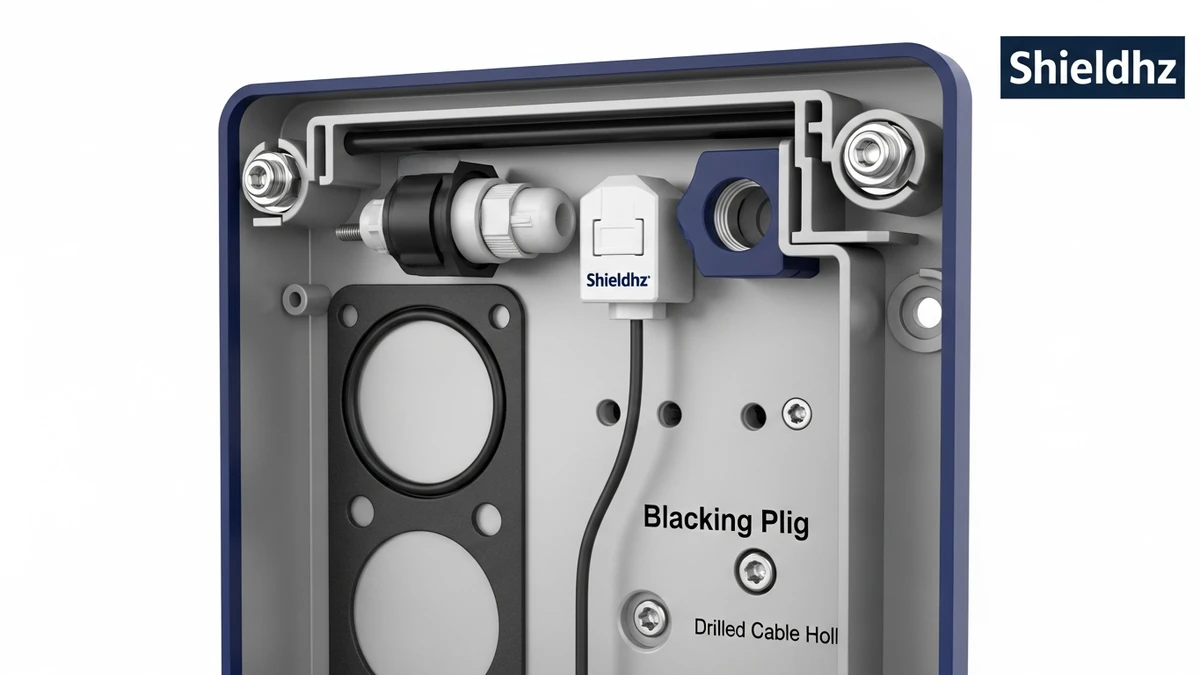
Pre-drilled or field-drilled knockouts that are not used must be sealed with rated blanking plugs. An open knockout invalidates the IP rating entirely. This is a frequent oversight during panel modifications when a cable route changes and the original entry is abandoned.
Figure 3. The final enclosure rating depends on glands, gaskets, knockouts, plugs, and installation quality.
Choosing by Environment
Indoor Dust-Heavy Environments
IP65 is sufficient for most indoor industrial environments with dust, fibres, or light spray. Dust-tight protection prevents contamination of terminals and switching contacts.
Outdoor Rain Exposure
IP65 is the practical minimum for any enclosure mounted outdoors. For enclosures in exposed positions without overhead shelter, IP66 provides a meaningful margin against driven rain and wind-blown water.
Washdown Areas
Food processing, agriculture, and chemical plant washdown areas require IP66 as a minimum. The test pressure for IP66 (100 kPa) reflects realistic hose-down conditions. IP65 is not adequate for direct hose exposure.
Coastal and UV-Exposed Sites
The IP rating does not address corrosion or UV degradation. For coastal sites, specify enclosures in UV-stabilised polycarbonate or marine-grade stainless steel, and use stainless or nickel-plated glands. Verify the enclosure material specification separately from the IP rating.
Temporary Immersion Risk
Ground-level enclosures in flood-prone areas, pump stations, or below-grade installations require IP67 as a minimum. If the installation is subject to sustained submersion, IP68 with a manufacturer-specified depth and duration is required.
Application Context: Isolator Boxes and Outdoor Switch Disconnectors
Outdoor electrical isolation is one of the most common applications where IP rating selection directly affects safety and service life.
A waterproof isolator box houses a switch disconnector in a sealed enclosure designed for outdoor mounting. The IP rating of the box determines whether the internal switching components remain protected from rain, dust, and washdown. For rooftop solar, ground-mount PV arrays, and outdoor machinery isolation points, IP65 is the accepted minimum. Sites with direct weather exposure or near-ground mounting should use IP66 or IP67.
Understanding what a waterproof isolator box is helps clarify why the enclosure and the internal switch must both be specified correctly. The enclosure IP rating protects the switch; the switch itself must be rated for the voltage, current, and isolation category of the circuit.
For enclosed switch disconnectors used in outdoor distribution or motor isolation, the same logic applies. An enclosed switch disconnector combines the switching mechanism and enclosure in a single unit. Verify the IP rating of the complete assembled unit, not just the enclosure body.
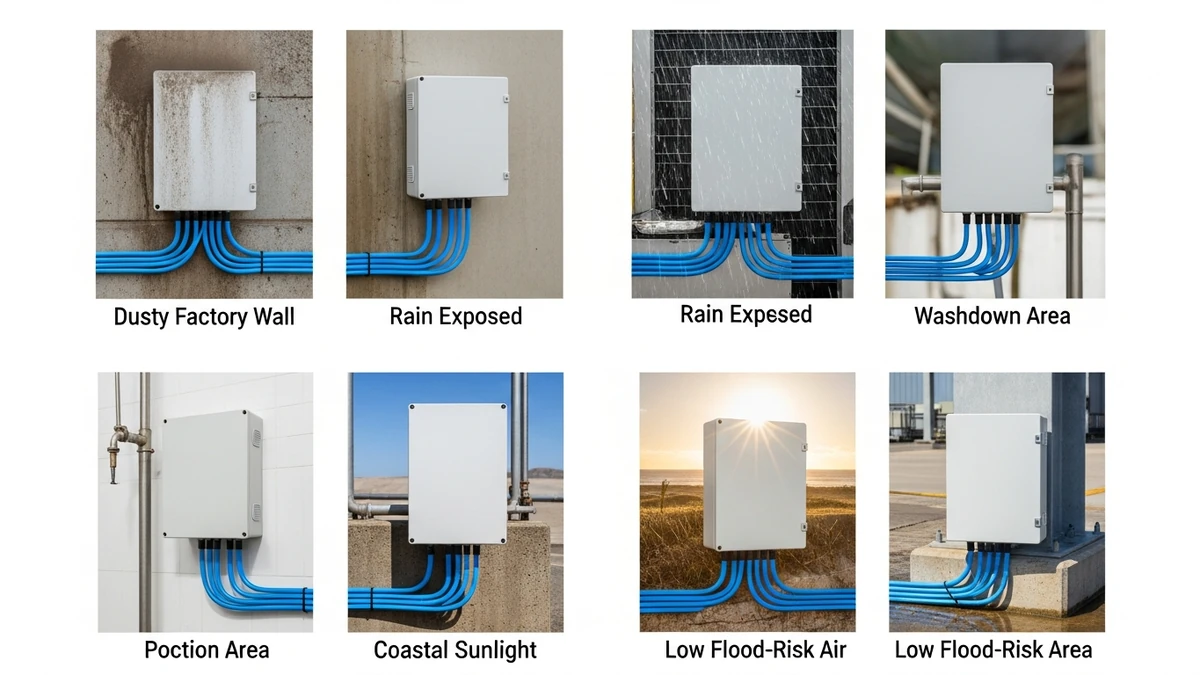
Figure 4. Select enclosure protection by the real site exposure: dust, rain, washdown, UV, condensation, and flood risk.
DC applications, particularly solar PV, introduce additional requirements. DC arcing behaviour differs from AC, and the switch must be rated for DC voltage and current. DC isolator switches for PV applications are typically specified at IP65 or IP66 for string-level isolation. Confirm the IP rating applies to the complete unit including the operating handle and any cable entries.
Always verify the IP rating against the specific product datasheet before specifying. Do not rely on category-level descriptions. Final compliance must be checked against the datasheet, local electrical code, and project requirements.
Common Selection Mistakes
1. Specifying IP65 for washdown. IP65 is not rated for direct hose pressure. Use IP66 for any washdown application.
2. Assuming IP67 covers IP66. IP67 tests immersion, not sustained jet pressure. If both risks exist, confirm the product is rated for both or specify IP66/IP67.
3. Ignoring cable entry ratings. The assembly IP rating is limited by the lowest-rated component. Glands, blanking plugs, and conduit fittings must all match or exceed the enclosure rating.
4. Not accounting for UV degradation. An IP65 polycarbonate enclosure without UV stabilisation may become brittle and crack within two to three years of outdoor exposure, compromising the seal.
5. Overlooking condensation. A sealed IP67 enclosure in a high-humidity outdoor environment will accumulate internal condensation. This is not an IP failure; it is a separate design consideration requiring breather vents or desiccant packs.
6. Accepting catalogue descriptions without datasheet verification. “Weatherproof” and “waterproof” are marketing terms. Only the IP rating with a test standard reference is a verifiable specification.
7. Ignoring mounting orientation requirements. Check whether the enclosure IP rating was tested in the intended mounting orientation. Some products are rated only for vertical mounting with the cable entries at the bottom.
Practical Buying Checklist
Before specifying or purchasing an enclosure or outdoor isolator:
Confirm the IP rating is stated with reference to IEC 60529 on the product datasheet.
Identify the second digit required for your environment: 5 for general outdoor, 6 for washdown or heavy exposure, 7 for immersion risk.
Check the enclosure material for UV stabilisation if the installation is outdoors.
Specify cable glands with a matching or higher IP rating and confirm correct sizing for your cable.
Confirm all unused knockouts will be sealed with rated blanking plugs.
Check gasket material for compatibility with the operating environment (temperature range, chemical exposure).
Verify the IP rating applies to the complete assembled unit, including operating handles and accessories.
For DC applications, confirm the switch is rated for DC voltage and current, not just AC.
Check local electrical code requirements for outdoor enclosure ratings in your jurisdiction.
Do not assume a higher IP number in one digit compensates for a lower number in another.
Frequently Asked Questions
Is IP65 waterproof?
IP65 is resistant to low-pressure water jets from any direction. It is not waterproof in the sense of submersion resistance. It is suitable for rain and light spray but not for direct hose-down or flooding.
Can I use an IP65 enclosure outdoors?
Yes, IP65 is the accepted minimum for most outdoor electrical enclosures. For sites with heavy rain exposure, no overhead shelter, or near-ground mounting, IP66 or IP67 is a better choice.
What is the difference between IP66 and IP67?
IP66 is tested against powerful water jets (100 L/min at 100 kPa). IP67 is tested for temporary immersion at 1 metre depth for 30 minutes. They test different failure modes. An IP67 enclosure is not automatically IP66-compliant. If both risks apply, look for a product rated IP66/IP67.
Does drilling a cable entry change the IP rating?
Yes. Once you drill a knockout or add a cable gland, the IP rating of the assembly depends on the gland and its installation. Use glands rated equal to or higher than the enclosure and ensure correct sizing and torque.
What standard defines IP ratings?
IP ratings are defined by IEC 60529, “Degrees of protection provided by enclosures.” The standard specifies test methods and conditions for each digit value.
How do I check if a product is genuinely IP65 or IP66?
Request the product datasheet and confirm the IP rating is stated with reference to IEC 60529. Ask whether the rating applies to the complete assembled unit. If the product has been independently tested, ask for the test report reference. Do not rely on catalogue descriptions alone.
Do IP ratings cover corrosion resistance?
No. IP ratings address ingress of solid particles and water only. Corrosion resistance depends on enclosure material, surface treatment, and hardware specification. For coastal or chemically aggressive environments, specify enclosure material and hardware separately.
Need Help Matching the Rating to the Site?
If you are specifying outdoor isolation for a solar, industrial, or infrastructure project and need to confirm the right enclosure rating for your application, contact the Shieldhz team with your site conditions and circuit requirements.
Final Takeaway
IP65, IP66, and IP67 are not interchangeable. They define specific test conditions, and the difference between them is meaningful in the field. IP65 covers general outdoor and light industrial use. IP66 is required for washdown and heavy weather exposure. IP67 covers temporary immersion. None of them address UV degradation, condensation, corrosion, or the integrity of cable entries after installation.
The IP rating on the enclosure label is the starting point, not the end of the specification process. Verify the rating on the product datasheet, match your cable glands and accessories to the same standard, and check the complete assembly before installation. For any outdoor electrical isolation point, getting the enclosure rating right is one of the lowest-cost decisions with the highest impact on long-term reliability.
Shi, Muxi
Shi, Muxi writes Shieldhz technical articles for industrial control and electrical component buyers, covering rotary cam switches, isolator switches, PV DC disconnects, push buttons, indicator lights, waterproof enclosures, and terminal blocks. The articles are based on Zhejiang Shihe Electric Co., Ltd.'s manufacturing and export experience, with practical emphasis on model selection, datasheets, drawings, certifications, IP ratings, and inquiry details buyers should confirm before ordering.