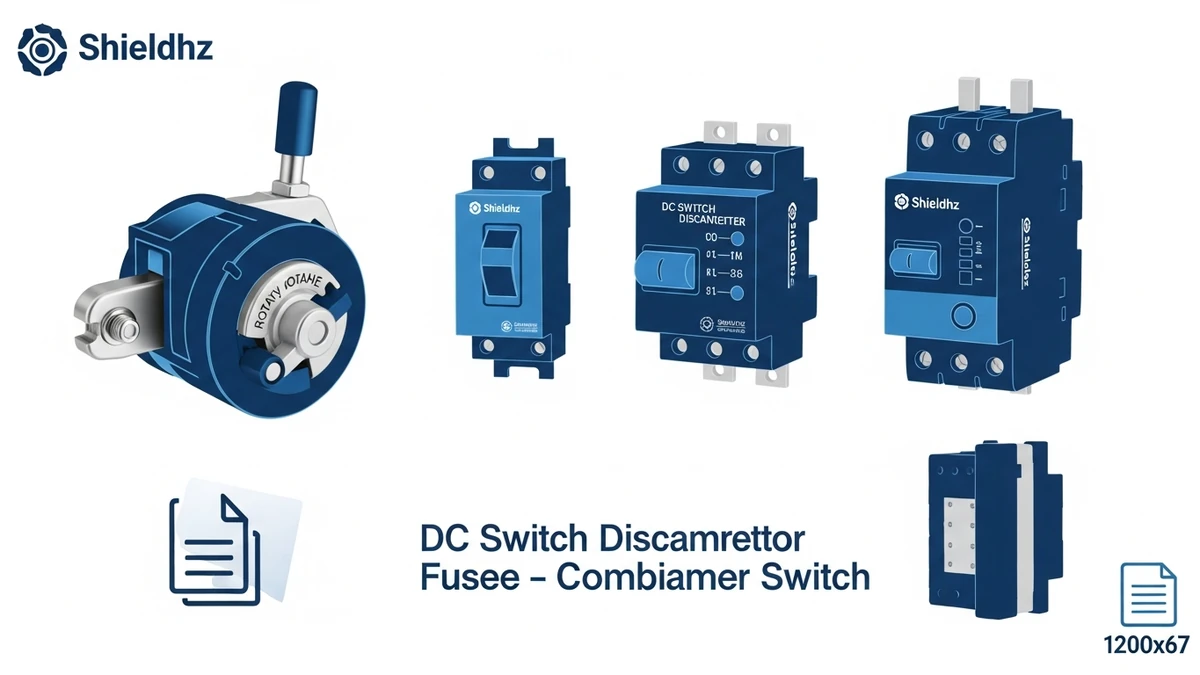
IEC 60947-3 is the international standard that defines how switches, disconnectors, switch-disconnectors, and fuse-combination units must be designed, rated, and tested for use in low-voltage distribution and motor circuits up to 1000 V AC or 1500 V DC. If you are specifying, buying, or installing any of those devices, this standard is the baseline that determines whether a product is fit for purpose. This article explains what the standard covers, how its key concepts apply to real purchasing and installation decisions, and what to verify on a datasheet before committing to a device.
What Is IEC 60947-3?
IEC 60947-3 is Part 3 of the broader IEC 60947 series on low-voltage switchgear and controlgear. Its full current title is “Low-voltage switchgear and controlgear – Part 3: Switches, disconnectors, switch-disconnectors and fuse-combination units.” The current consolidated edition is IEC 60947-3:2020+AMD1:2025 CSV, available on the official IEC 60947-3 publication page.
The standard replaced IEC 60947-3:2008 and its amendments. It sets requirements for:
Rated voltages up to 1000 V AC and 1500 V DC
Distribution circuits and motor circuits
Devices used as main switches, isolators, emergency switching devices, and functional switching devices
Fuse-combination units that integrate switching and overcurrent protection in one assembly
The 2020 edition and its 2025 amendment introduced several practically important changes: critical load current tests for DC switches, updated conditional short-circuit rating requirements when the device is protected by a circuit-breaker rather than fuses, new utilization categories for high-efficiency motor switching, an annex covering aluminium conductor connections, and a power loss measurement annex.
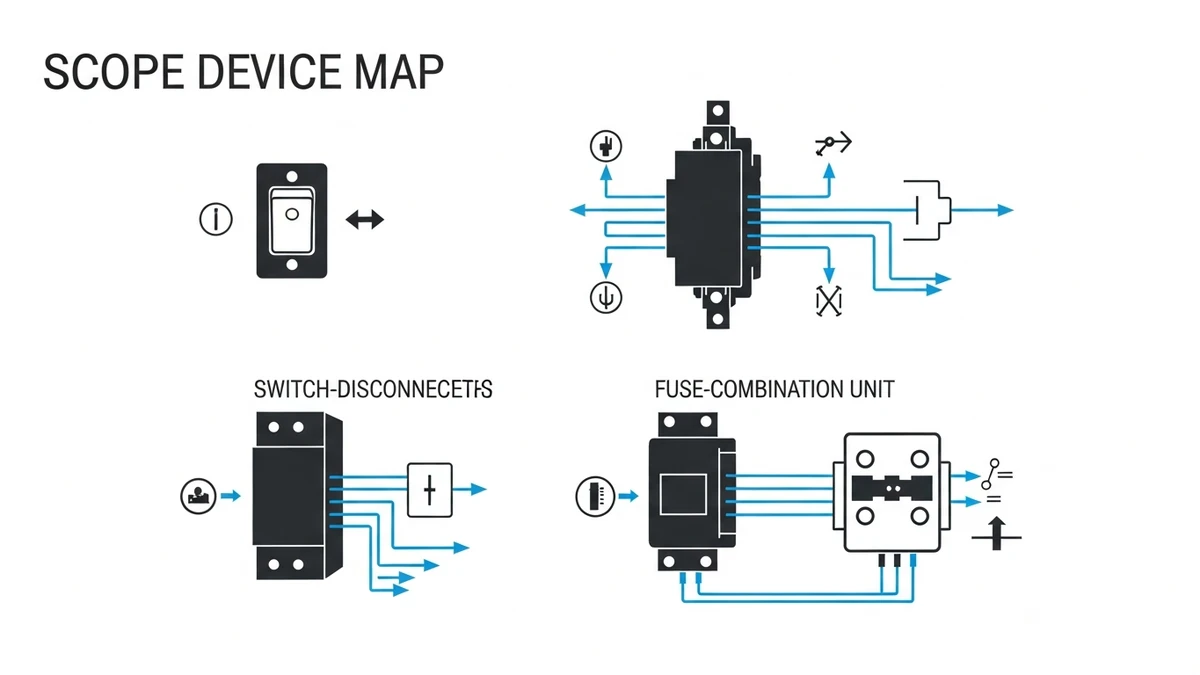
Figure 1. IEC 60947-3 covers several related switching and isolation device types, each with a different function.
What Equipment Does IEC 60947-3 Cover?
The standard applies to four main device types, plus their dedicated accessories such as auxiliary contacts, padlocking attachments, and shaft extensions.
Switches make and break current under normal load conditions. They are not required to provide isolation.
Disconnectors provide isolation — a visible or positively indicated open gap that meets defined leakage and withstand requirements — but are not rated to make or break load current under normal operating conditions.
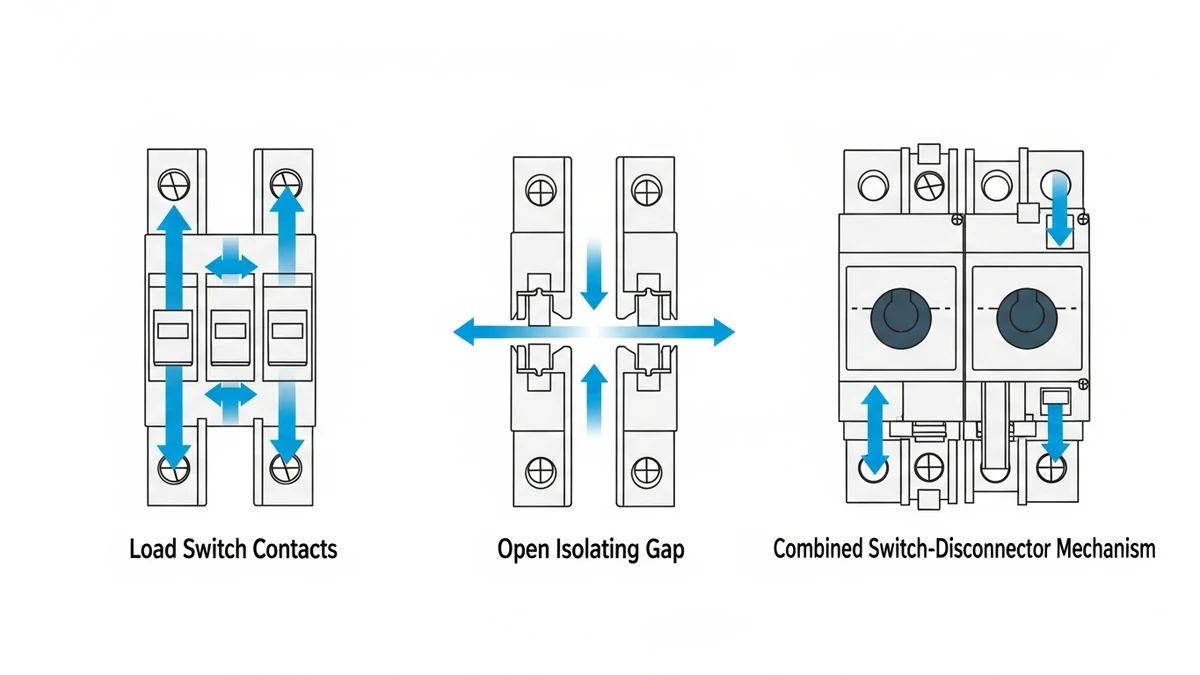
Switch-disconnectors combine both functions. They can make and break load current and also satisfy the isolation requirements of a disconnector. This is the most common device type in industrial panels and distribution boards.
Fuse-combination units pair a switch or switch-disconnector with fuse holders in a single assembly, providing switching, isolation, and overcurrent protection together.
Accessories covered include auxiliary contact blocks, mechanical interlocks, door-coupling rotary handles, and terminal shields. These must be tested and rated as part of the complete assembly, not independently.
The naming matters because it determines what the device is legally and functionally permitted to do in a circuit.
A plain disconnector must never be operated under load. Opening it while current is flowing can cause arcing that destroys the contacts and creates a hazard. Disconnectors are used downstream of a switch that has already interrupted the circuit.
A switch can open and close under load but does not guarantee isolation. You cannot lock out a plain switch and rely on it to prevent hazardous re-energization unless it also meets the isolation criteria.
A switch-disconnector is the practical workaround for most panel applications. It handles load switching and provides a certified isolation function in one device. When a maintenance engineer locks out the panel, the switch-disconnector gives them both the electrical break and the isolation assurance.
For motor circuits, the distinction also affects which utilization category applies and therefore which making and breaking tests the device must pass.
Why AC and DC Ratings Must Be Checked Separately
This is one of the most common specification errors in the field. A device rated at 400 V AC / 32 A is not automatically rated at 400 V DC / 32 A. DC is harder to interrupt because there is no natural current zero crossing. The arc in a DC circuit is sustained longer, which means the contacts must do more work to extinguish it.
IEC 60947-3 requires separate test sequences for AC and DC applications. The 2020 edition strengthened the DC requirements by introducing critical load current tests, which target the current level at which arc extinction is most difficult — not just the rated maximum.
For solar PV systems, battery storage, EV charging infrastructure, and DC bus applications, you must confirm:
The device carries an explicit DC voltage and current rating on the nameplate
The rated DC voltage matches or exceeds your system voltage
The number of poles used in series matches the manufacturer’s DC rating (many DC ratings assume two poles in series)
The utilization category is appropriate for DC load type
Figure 2. A switch-disconnector combines load switching capability with an isolation function, but protection still depends on the upstream device.
Shieldhz publishes separate AC and DC ratings for applicable products. For DC-specific applications, the DC switch disconnector product range covers the key selection criteria in more detail.
Utilization Categories and What They Mean
IEC 60947-3 assigns utilization categories to define the electrical duty a device must handle. The category determines the making and breaking test conditions — specifically the current magnitude and power factor (AC) or time constant (DC) used during type testing.
Common AC categories under IEC 60947-3:
Category
Application
AC-20A / AC-20B
Connecting and disconnecting under no-load conditions
AC-21A / AC-21B
Switching resistive loads, including moderate overloads
AC-22A / AC-22B
Switching mixed resistive and inductive loads
AC-23A / AC-23B
Switching motor loads or other highly inductive loads
The A/B suffix indicates the test duty: A is for infrequent operation (fewer than 2 operations per hour or fewer than 25 per day), B is for frequent operation.
Common DC categories:
Category
Application
DC-20A / DC-20B
No-load switching
DC-21A / DC-21B
Resistive or slightly inductive DC loads
DC-22A / DC-22B
Mixed resistive and inductive DC loads
DC-23A / DC-23B
Highly inductive DC loads
When you see a utilization category on a datasheet, it tells you what load type the device was tested against. A device rated AC-21 has not been tested against motor inrush. If your application involves motor starting, you need AC-23 or a device with a separate motor circuit rating.
For cam switches used in control and selector applications, the rotary cam switch product range lists the applicable utilization categories per contact block configuration.
Conditional Short-Circuit Rating and Upstream Protection
The conditional short-circuit rating (Iq) is the prospective short-circuit current that a device can withstand without becoming a hazard, provided it is protected by a specified upstream overcurrent protective device (OCPD) — typically a fuse or circuit-breaker of a defined type and rating.
This is not the same as the device’s own breaking capacity. The switch-disconnector itself does not interrupt the fault. The upstream OCPD clears the fault, and the switch-disconnector must survive the let-through energy without welding contacts, rupturing, or creating a fire or shock hazard.
The 2020 edition of IEC 60947-3 updated the requirements for conditional short-circuit ratings when the protecting device is a circuit-breaker, reflecting the different let-through characteristics of circuit-breakers versus fuses.
What this means in practice:
The datasheet must state the Iq value and the specific OCPD type and rating required to achieve it
You cannot mix and match: using a different fuse type or a circuit-breaker where fuses are specified invalidates the rating
The upstream OCPD must be installed and coordinated as specified
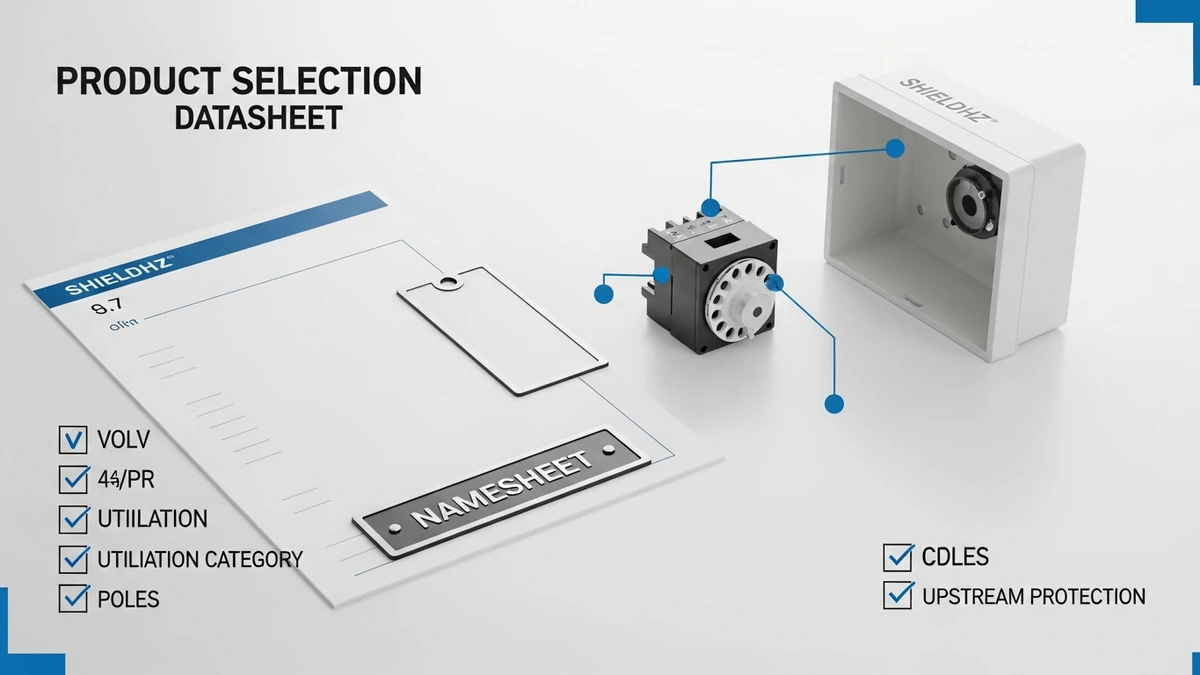
Figure 3. Buyers should verify rated voltage, current, utilization category, pole count, and conditional short-circuit rating on the datasheet.
For enclosed switch-disconnectors used in outdoor or harsh-environment distribution, the enclosed switch disconnector overview covers how enclosure ratings interact with the electrical ratings.
What to Check on a Datasheet or Nameplate
When evaluating a switch-disconnector or isolator switch against IEC 60947-3, work through these parameters systematically.
Rated operational voltage (Ue): The voltage the device is designed to operate at continuously. Confirm it matches your system voltage for both AC and DC if applicable.
Rated operational current (Ie): The current the device can make, carry, and break at the rated voltage and utilization category. This is not the same as the thermal current (Ith), which is the maximum continuous current without switching duty.
AC and DC ratings listed separately: If the device is intended for DC use, both ratings must appear. A device with only an AC rating is not rated for DC.
Utilization category: Confirm the category matches your load type. Do not assume a higher current rating compensates for a lower utilization category.
Conditional short-circuit rating (Iq): Note the value and the required upstream OCPD. Verify your installation matches the specified protection.
Isolation function: Confirm the datasheet explicitly states the device meets the isolation requirements of IEC 60947-3. Not all switches do.
Pole count and configuration: Single-pole, two-pole, three-pole, and four-pole versions have different applications. DC ratings often depend on poles being used in series.
Enclosure and IP rating: IEC 60947-3 covers the device itself. The IP rating of the enclosure or housing is a separate parameter. For outdoor or wet-location use, confirm the IP rating of the complete assembly.
Auxiliary contacts: If you need status signaling or interlocking, confirm the auxiliary contact rating and whether it is included or requires a separate accessory block.
Compliance documentation: Request the test report or declaration of conformity referencing IEC 60947-3. A CE mark alone does not confirm which edition of the standard was used or which tests were performed.
Local code requirements: IEC 60947-3 is an international standard. Your local electrical code (NEC, BS 7671, AS/NZS 3000, or others) may impose additional requirements. Verify with your authority having jurisdiction.
For general isolator switch selection, the load isolator switch guide provides application-specific guidance.
Common Specification Mistakes
Using AC current ratings for DC circuits. The DC current rating is almost always lower than the AC rating at the same voltage. Check the DC column explicitly.
Ignoring utilization category for motor loads. Specifying AC-21 for a motor starter application means the device was not tested against inductive making and breaking. It may fail prematurely or weld contacts.
Assuming the conditional short-circuit rating is unconditional. The Iq value only applies with the specified upstream protection in place. Without it, the device has no validated fault withstand rating.
Treating a switch as an isolator. A device that can only switch load current does not satisfy isolation requirements. If your procedure requires lockout/tagout with isolation assurance, the device must explicitly meet the isolation criteria.
Overlooking pole configuration for DC. A four-pole device rated at 1000 V DC may achieve that rating only with all four poles in series. Using two poles in series may give a lower voltage rating. Read the wiring diagram in the datasheet.
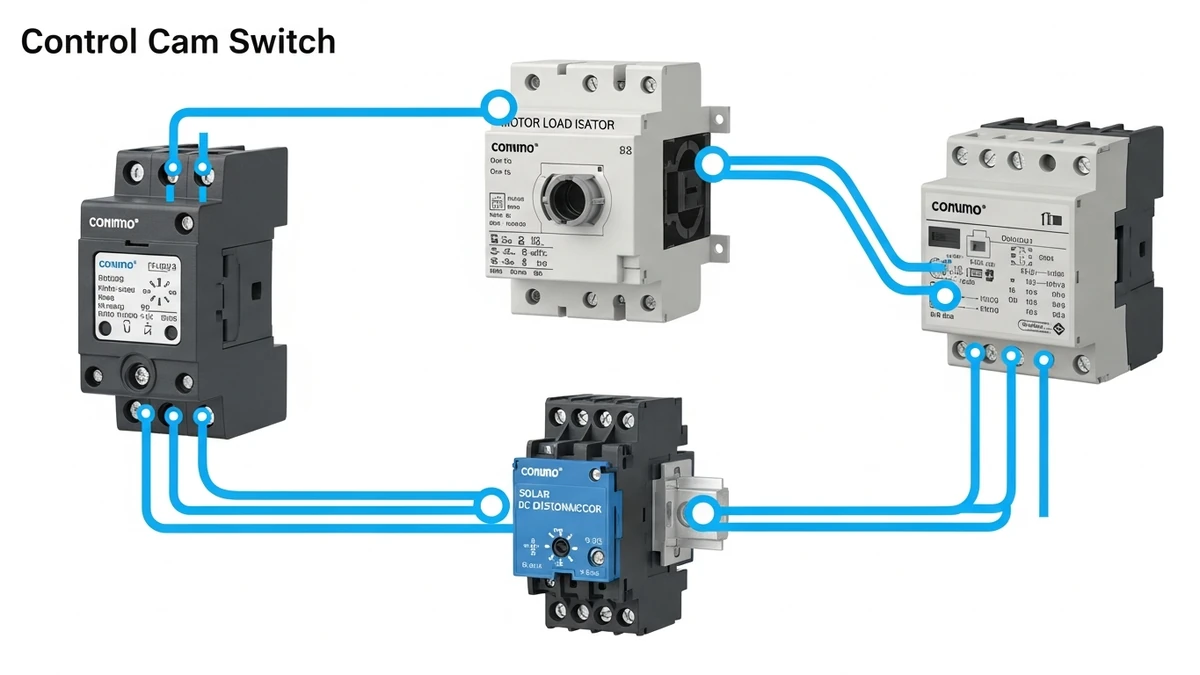
Figure 4. IEC 60947-3 context appears across cam switch, load isolator, DC disconnector, and enclosed outdoor isolation applications.
Practical Buying Checklist
Before placing an order for any switch-disconnector or isolator switch, confirm the following:
Rated operational voltage (Ue) meets or exceeds system voltage for the correct supply type (AC or DC)
Rated operational current (Ie) at the correct utilization category for your load
DC rating explicitly stated if the application is DC
Conditional short-circuit rating (Iq) and required upstream OCPD identified and available
Isolation function confirmed in the datasheet
Pole count and series configuration verified for DC voltage rating
IP rating of the complete assembly confirmed for the installation environment
Auxiliary contacts specified if needed for signaling or interlocking
Declaration of conformity or test report referencing IEC 60947-3 available from the supplier
Local code compliance verified with the authority having jurisdiction
Find the Right Device for Your Application
Shieldhz supplies cam switches, isolator switches, DC switch disconnectors, and enclosed switch disconnectors for industrial, commercial, and renewable energy applications. Product datasheets include rated operational voltage and current, utilization categories, conditional short-circuit ratings, and available accessories. Check the specific product datasheet and certificate for compliance details relevant to your installation.
Browse the SH30 load isolator switch range or contact the Shieldhz technical team with your application voltage, current, load type, and environment to confirm the right selection.
Frequently Asked Questions
What is IEC 60947-3 and what does it cover?
IEC 60947-3 is the IEC standard for switches, disconnectors, switch-disconnectors, and fuse-combination units used in low-voltage circuits up to 1000 V AC or 1500 V DC. It defines construction, performance, and test requirements for these devices in distribution and motor circuit applications.
What is the difference between a switch and a switch-disconnector?
A switch can make and break load current but does not necessarily provide isolation. A switch-disconnector does both: it switches load current and meets the isolation requirements that allow it to be used as a lockout point. For maintenance isolation, you need a switch-disconnector, not a plain switch.
Why does a DC rating matter separately from an AC rating?
DC circuits have no natural current zero crossing, so arcs are harder to extinguish. A device rated for AC may not safely interrupt DC at the same voltage and current. IEC 60947-3 requires separate test sequences for DC, and the DC rating is typically lower than the AC rating at equivalent voltage.
What is a utilization category in IEC 60947-3?
A utilization category defines the electrical duty the device was tested against, including the load type, current magnitude, and power factor or time constant used in type tests. AC-21 covers resistive loads; AC-23 covers motor loads. Specifying the wrong category means the device was not tested for your actual switching duty.
What is the conditional short-circuit rating (Iq)?
Iq is the prospective short-circuit current a device can withstand without becoming a hazard, provided a specified upstream overcurrent protective device is installed. The device does not clear the fault itself — the upstream OCPD does. The Iq value is only valid with the exact protection type and rating stated in the datasheet.
Does IEC 60947-3 apply to solar PV and battery storage systems?
The standard applies to DC switch-disconnectors used in PV and battery systems where the system voltage is within the 1500 V DC limit. For PV applications, confirm the device carries an explicit DC voltage rating, check the pole series configuration, and verify the utilization category is appropriate for the DC load characteristics. Some PV-specific requirements may also be addressed in IEC 60364-7-712 or local grid codes.
How do I verify that a product actually complies with IEC 60947-3?
Request the declaration of conformity and, where available, the type test report from the supplier. The declaration should reference the specific edition of IEC 60947-3 used. A CE mark indicates self-declaration or third-party certification under the applicable EU directive but does not by itself confirm which tests were performed or which edition of the standard was applied. For critical applications, ask for the test report from an accredited laboratory.
Final Takeaway
IEC 60947-3 is the technical foundation for specifying and verifying switches, disconnectors, switch-disconnectors, and fuse-combination units in low-voltage installations. Understanding its key concepts — utilization categories, AC versus DC ratings, isolation function, and conditional short-circuit rating — lets you read a datasheet critically rather than taking a product’s compliance claim at face value. The 2020 edition and its 2025 amendment raised the bar on DC switching and upstream protection coordination, which matters directly for solar, storage, and DC industrial applications. Use the checklist in this article as a starting point, verify against the specific product documentation, and confirm local code requirements with your authority having jurisdiction.
Shi, Muxi
Shi, Muxi writes Shieldhz technical articles for industrial control and electrical component buyers, covering rotary cam switches, isolator switches, PV DC disconnects, push buttons, indicator lights, waterproof enclosures, and terminal blocks. The articles are based on Zhejiang Shihe Electric Co., Ltd.'s manufacturing and export experience, with practical emphasis on model selection, datasheets, drawings, certifications, IP ratings, and inquiry details buyers should confirm before ordering.